
WORKS
UNNO HOUSE (Natori Model House)
株式会社ウンノハウスモデルハウス『FORE』
記憶に刻まれる空間づくり
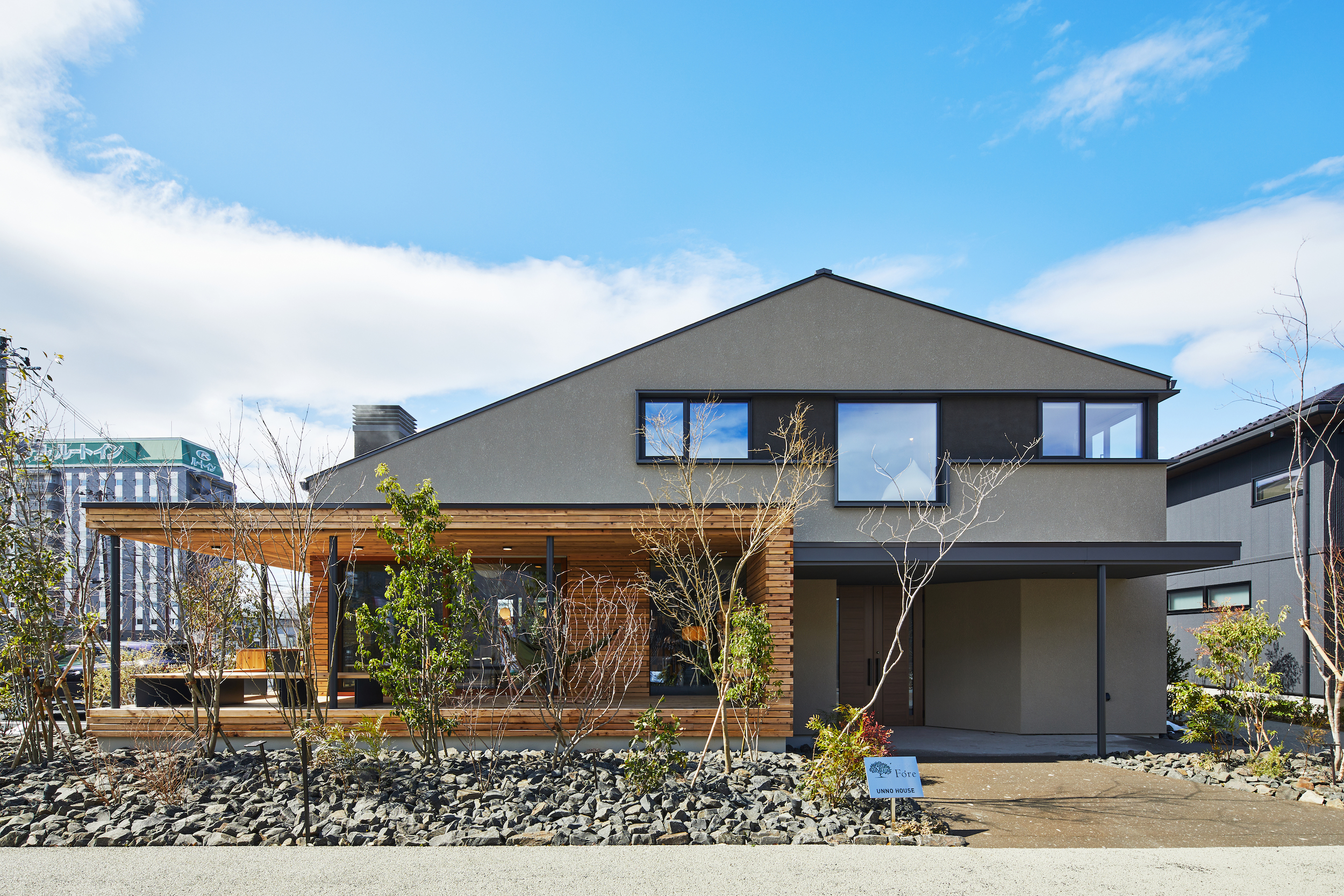
宮城県名取市の総合住宅展示場に完成した、株式会社ウンノハウスのモデルハウス『Fore』の設計を担当した。
提示されたコンセプトは「おうちリトリート」。森林浴のような非日常の体験を通して心身を整え、日常へと戻るための活力を得られる住まいを表現したい、という要望であった。
モデルハウスは、特定の一家族のための住宅ではない。多様な来場者に「見てみたい」と思わせ、「ここで暮らしたい」と感じてもらうことが求められる。そのため本計画では、空間の探索性と体験価値を重視し、訪れた記憶に深く残る建築とすることを主眼に置いた。
手が届くスケールと、入りたくなる親しみ
延床面積は約57坪。総合住宅展示場のモデルハウスとしては決して大きすぎず、一般的な住宅としては十分な広さを持つ規模である。
過度に大きく見える住宅は、来場者に現実感のない印象を与え、心理的な距離を生んでしまう。そこで本計画では、実際の大きさを感じさせすぎないよう、視覚的スケールの調整を随所に施した。
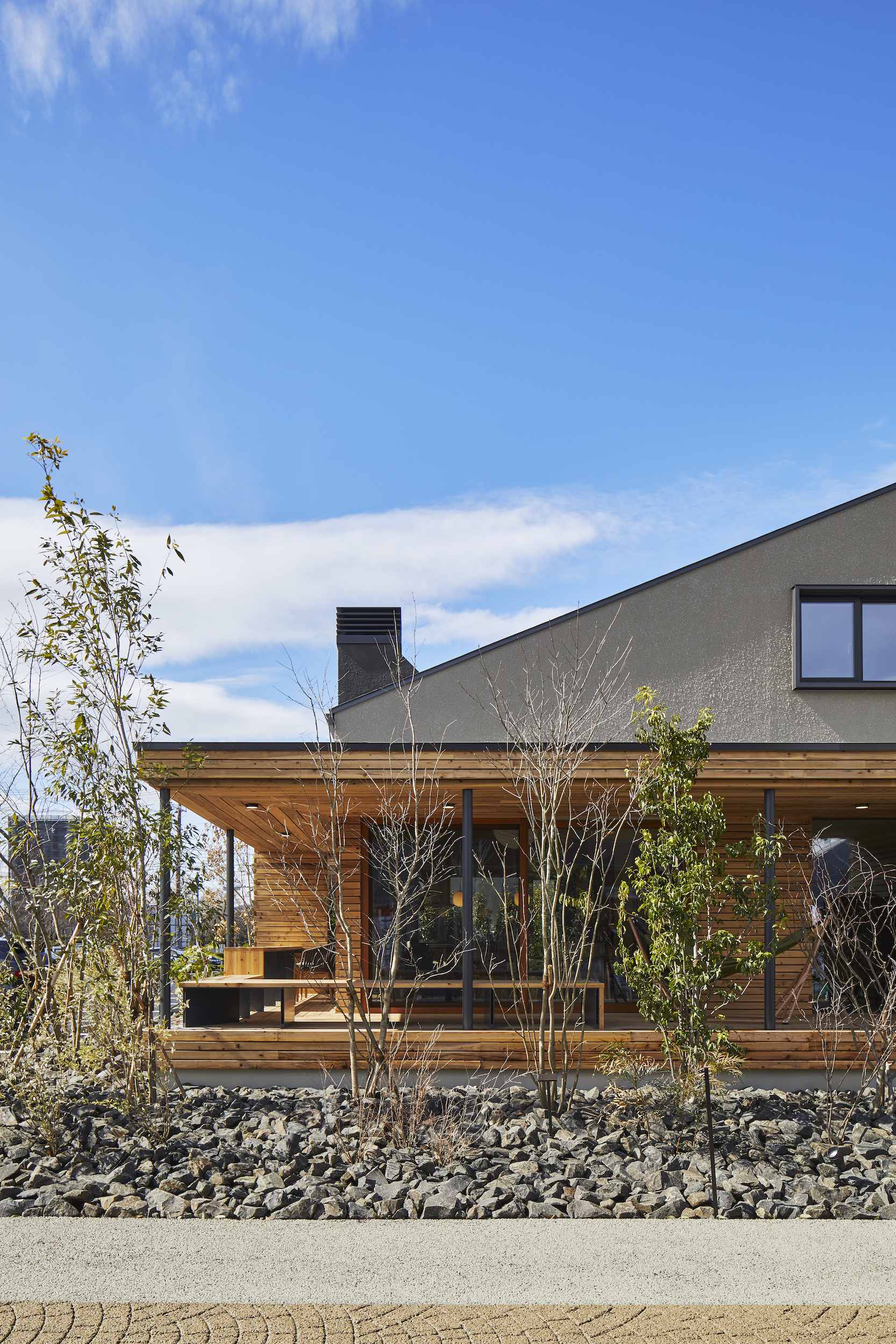
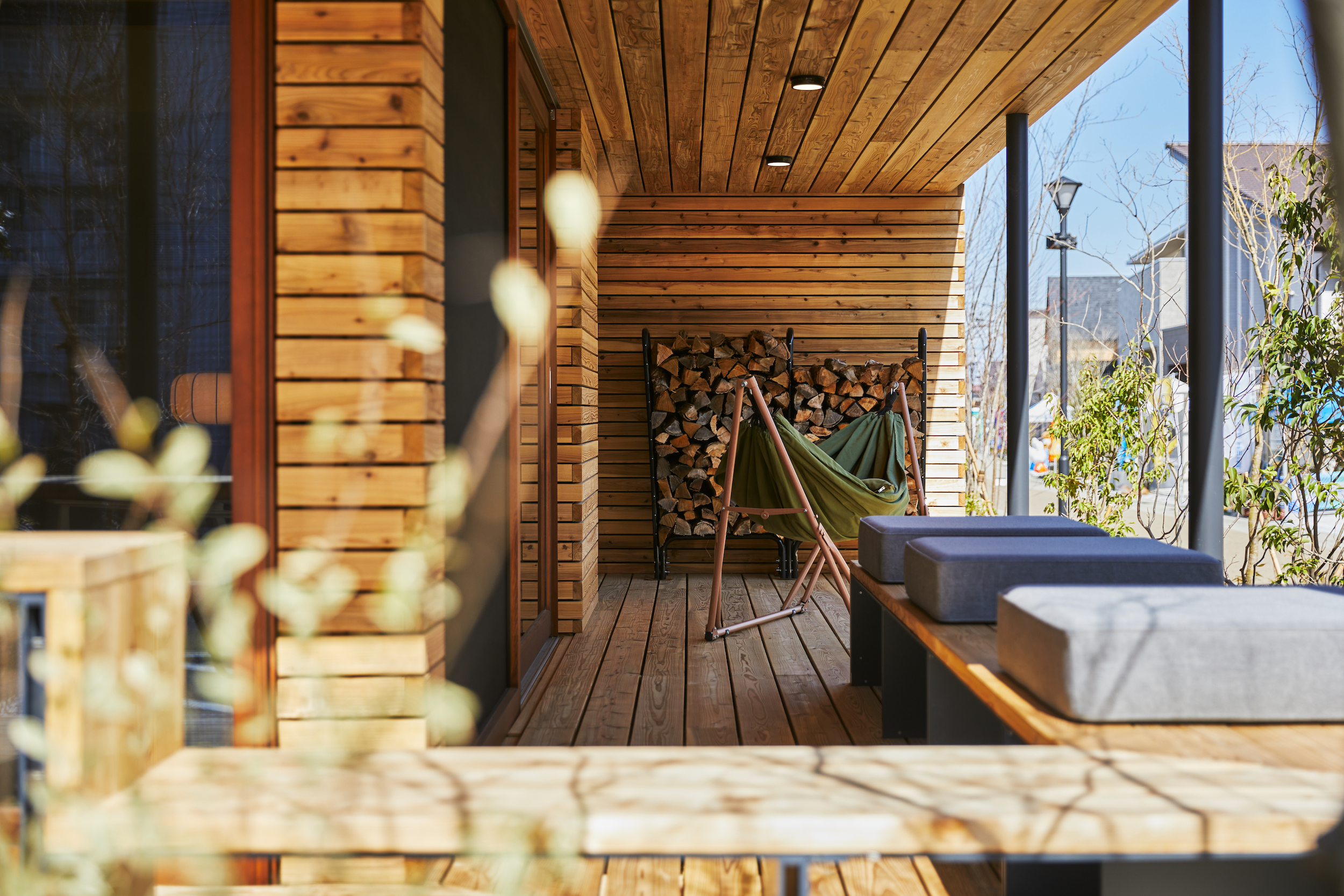
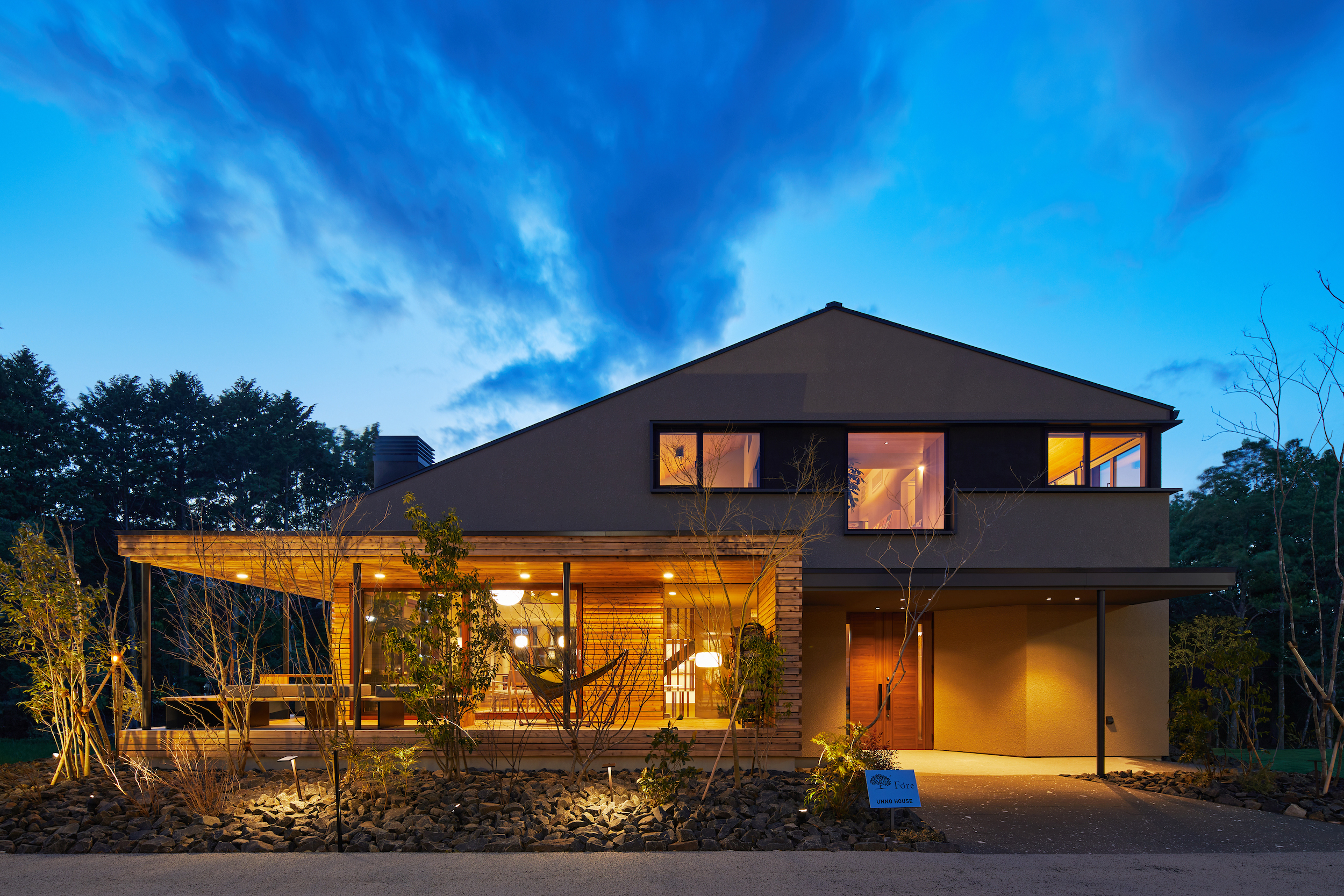
大屋根と低い軒によりボリュームを抑え、平屋のような落ち着いた外観とした点もその一つである。さらに、L字状に大きく張り出したテラスを設け、内部の様子が自然に伝わる開放的な構えとすることで、気軽に足を踏み入れやすい雰囲気をつくっている。
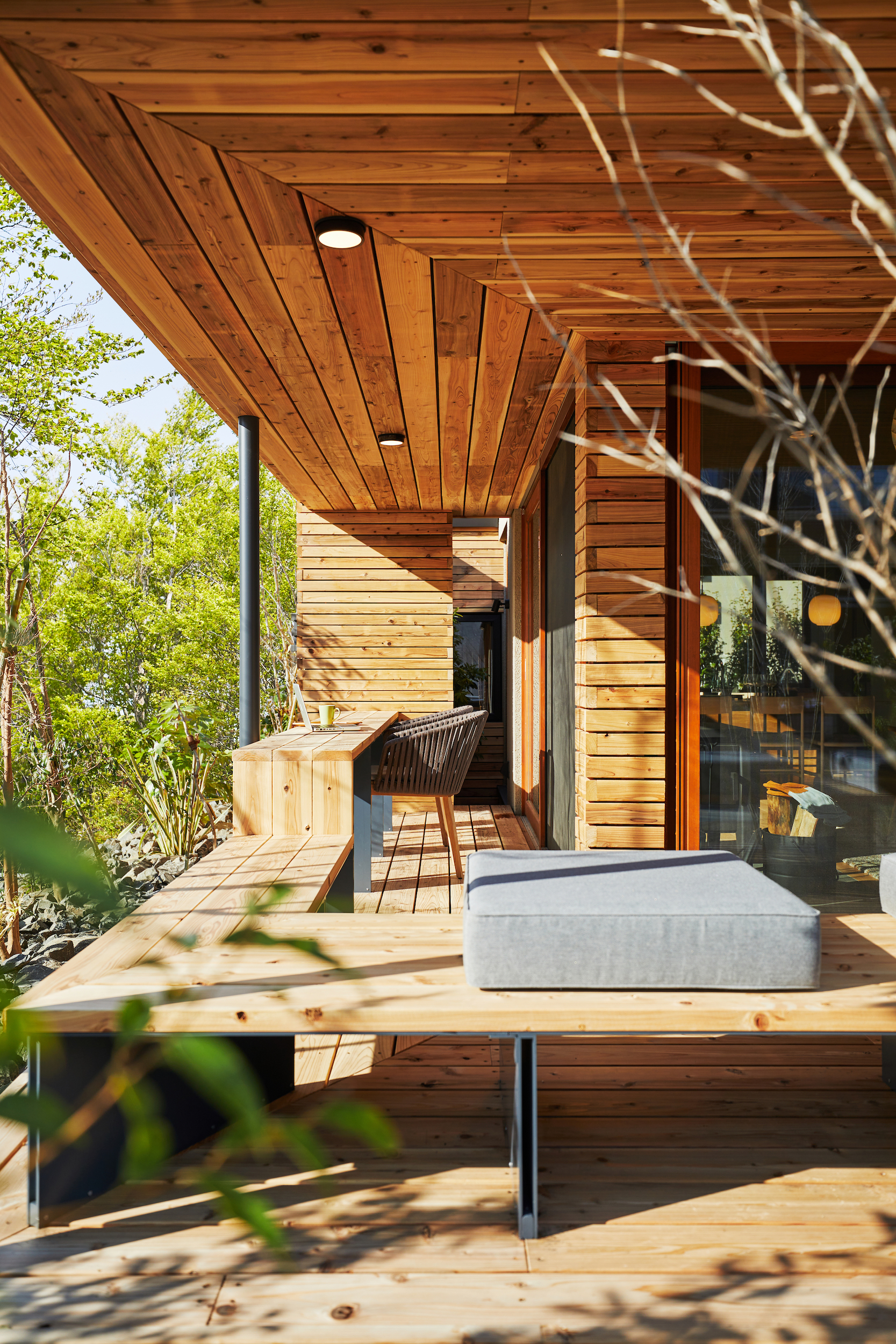
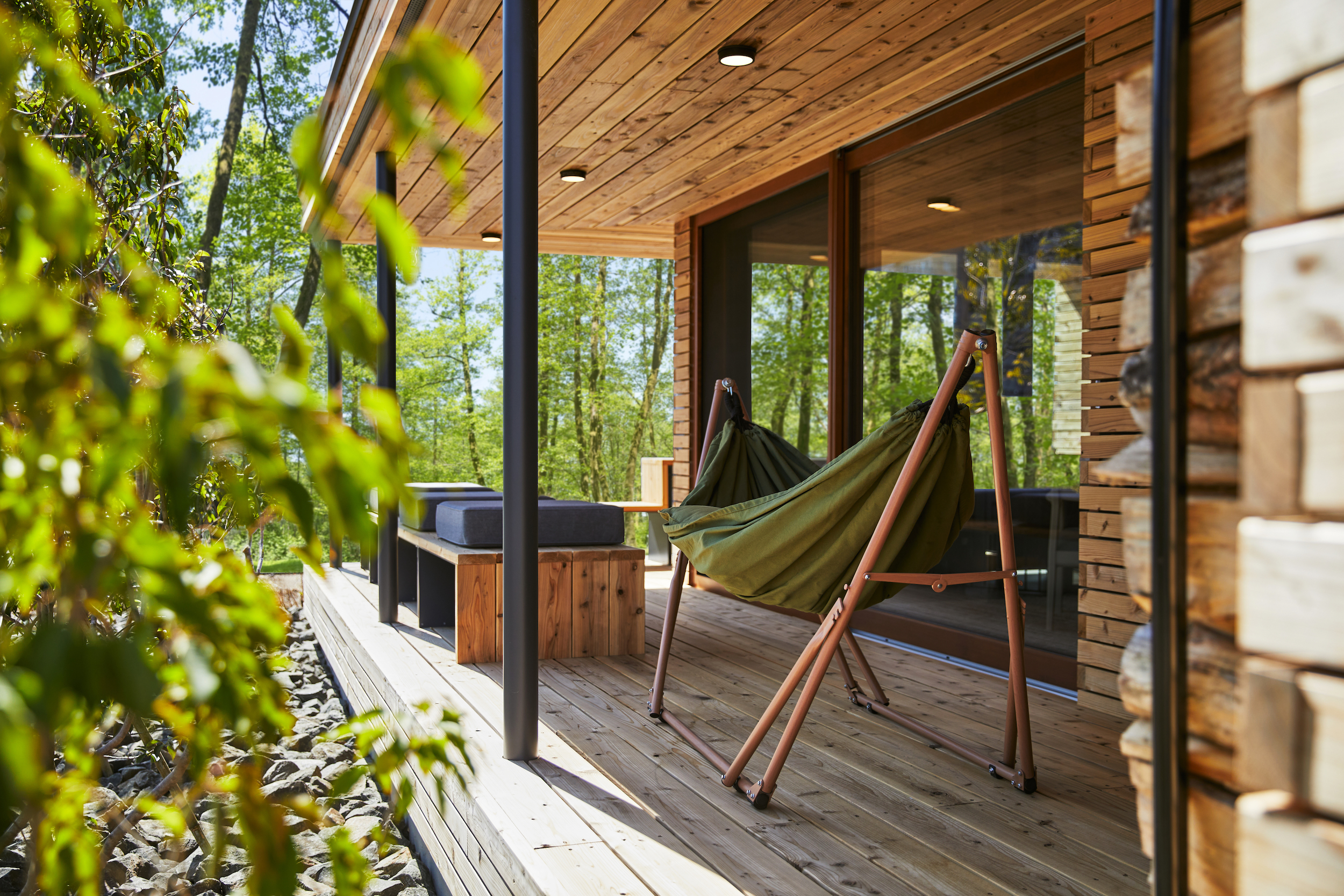
テラスにはハンモックやデスク、薪棚などを配置し、外部からも「暮らしの気配」が感じ取れる、展示性の高い外部空間とした。
滞在時間を伸ばす回遊動線と視線誘導の仕掛け
内部空間は、一度に全体が見渡せない構成を意識して計画している。
展示場では滞在時間が長いほど住まいへの理解が深まり、検討の質も高まる。本モデルハウスでは、歩を進めるごとに新たな発見が生まれるよう、視線の切り替わりや空間の重なりを重層的に組み込んだ。
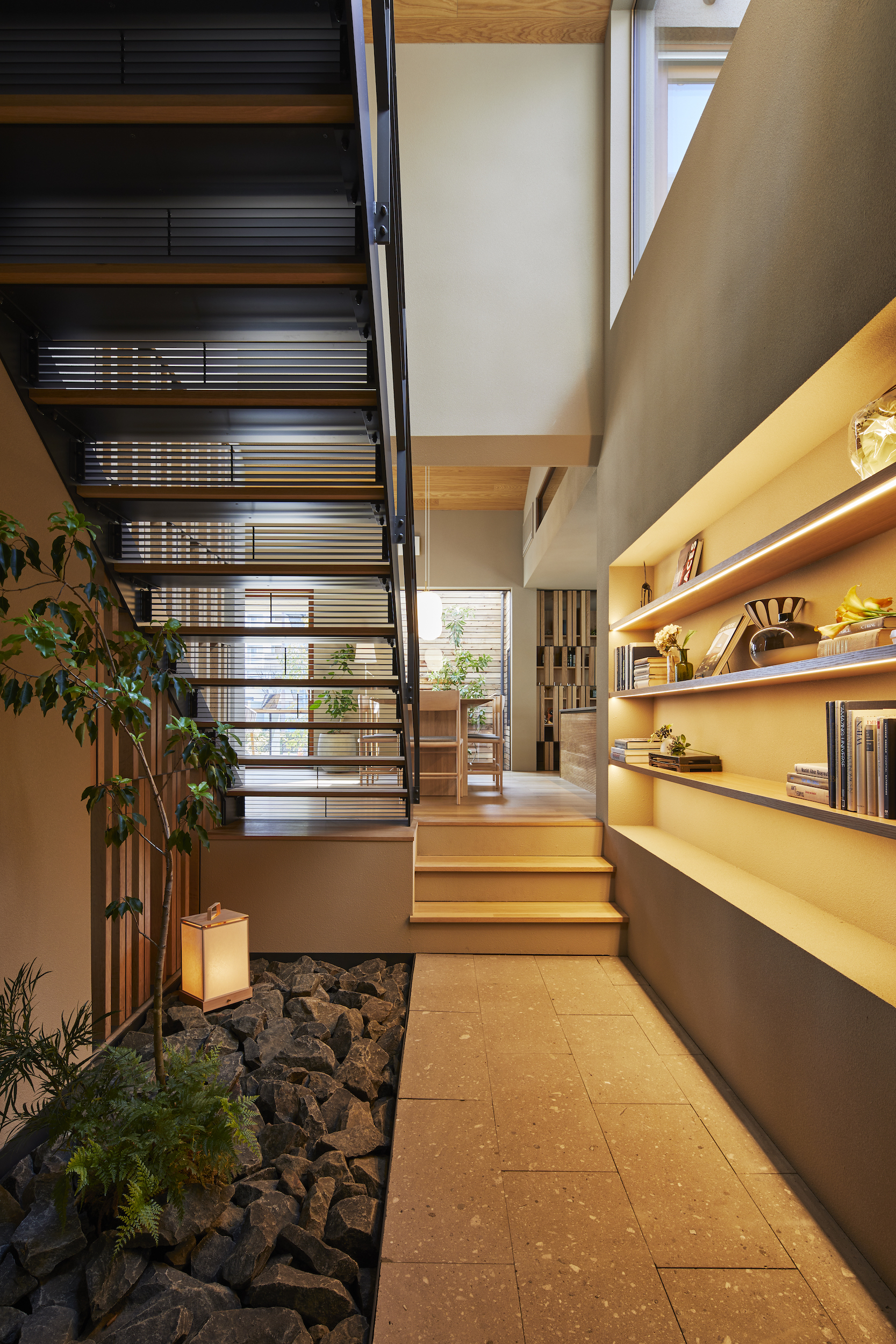
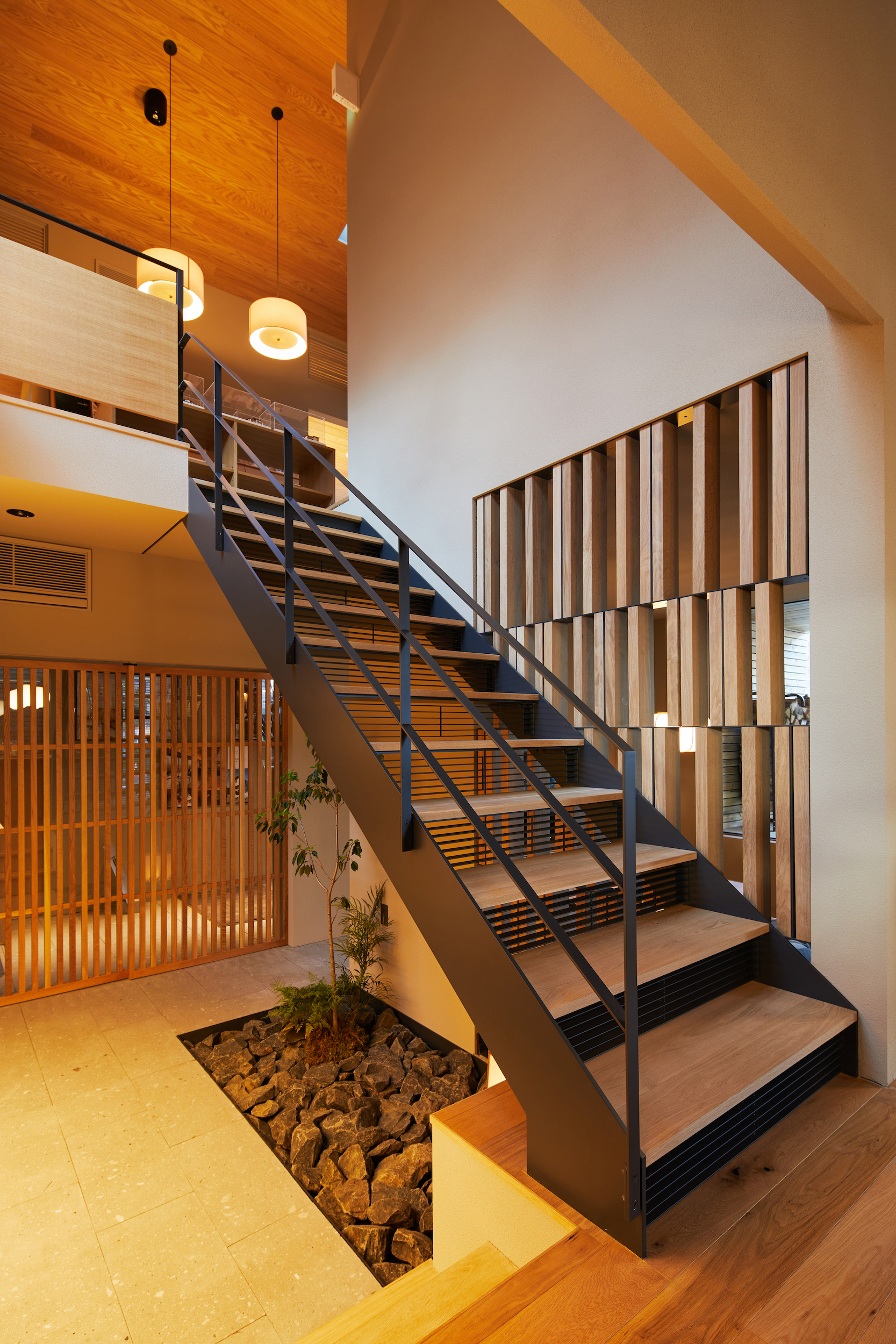
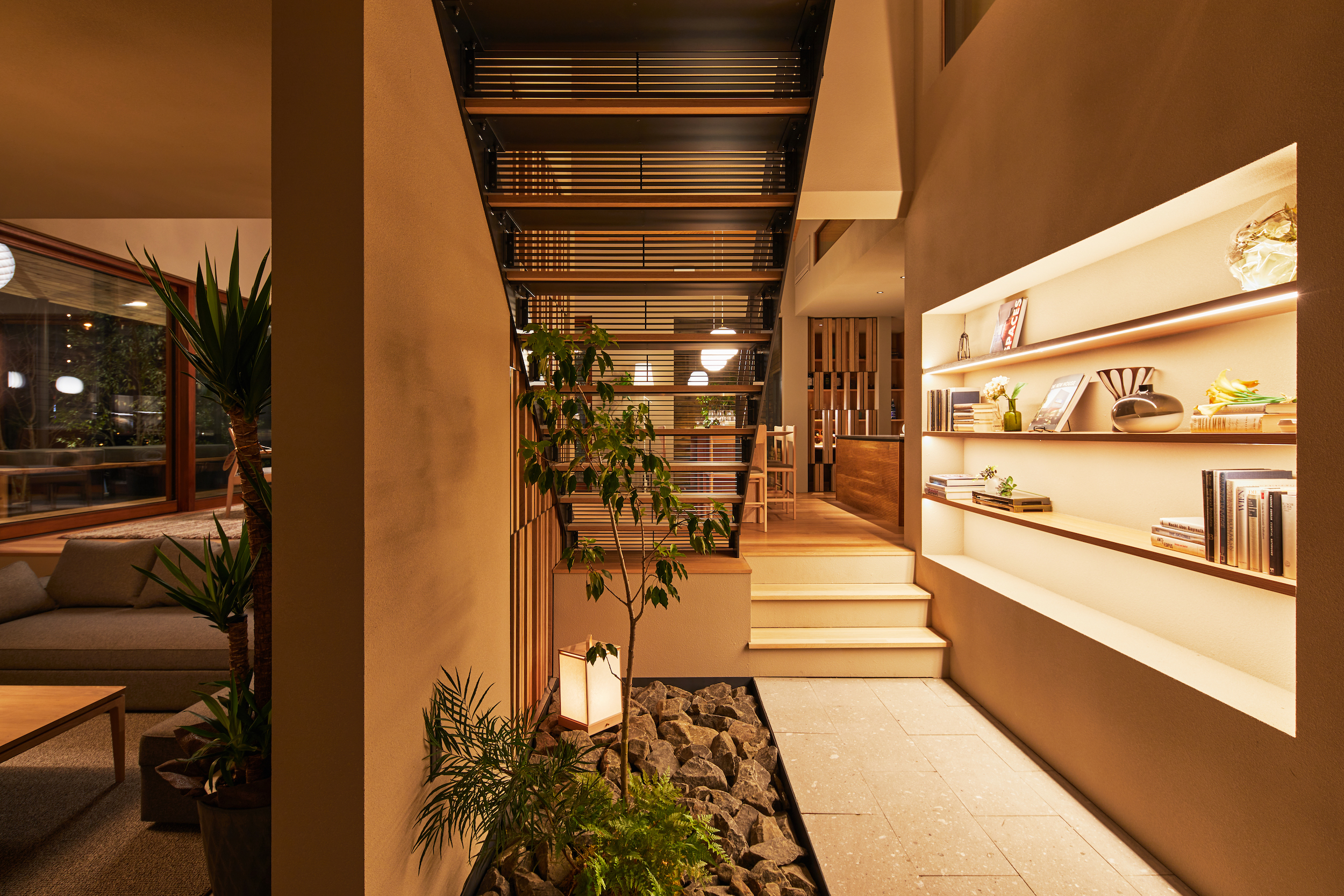
玄関は段差のない広いホールとし、住宅の枠を超えた「迎え入れの場」として構成。階段は単なる上下移動の装置ではなく、吹き抜けや植栽、間接照明と一体化した展示的な空間要素としている。
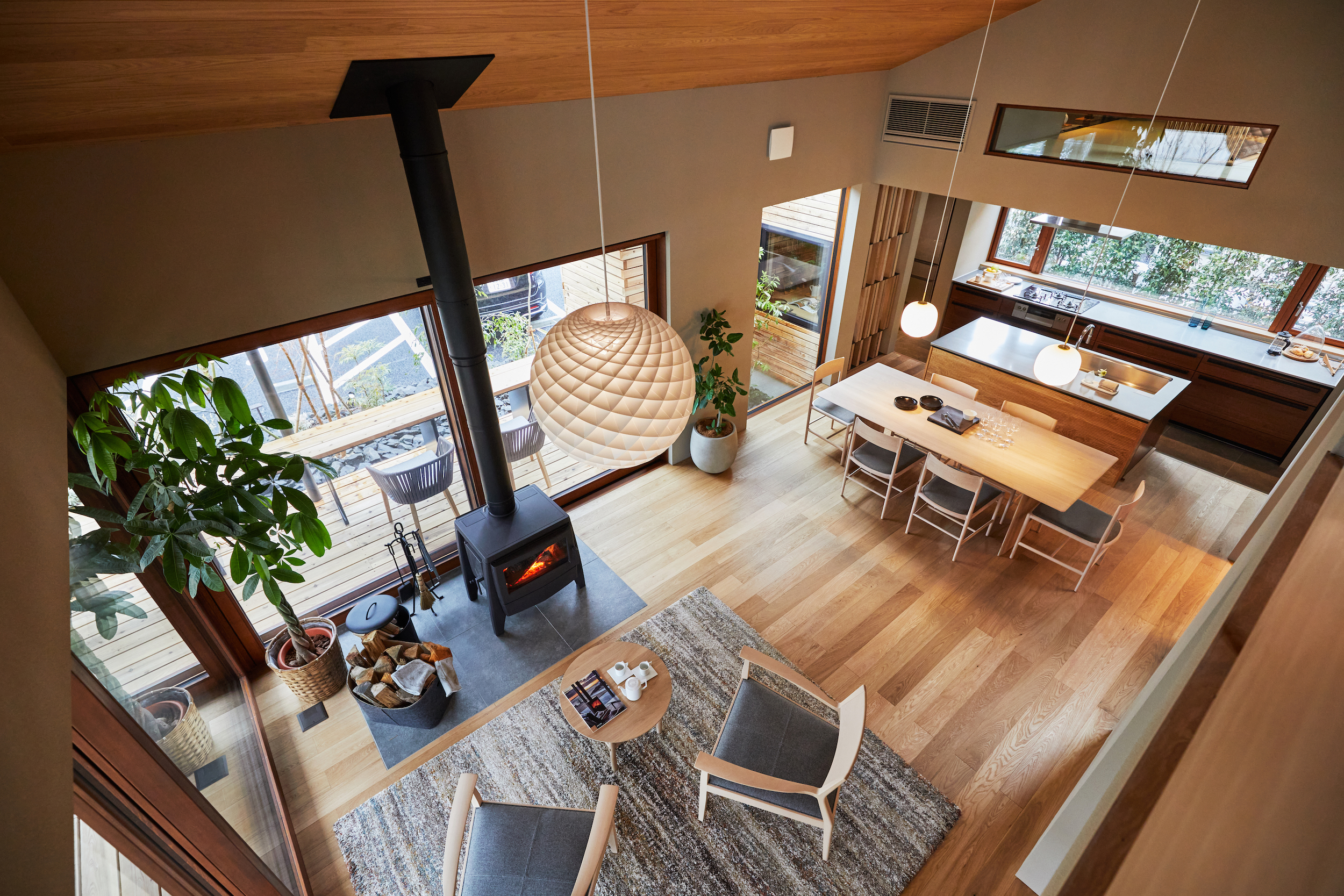
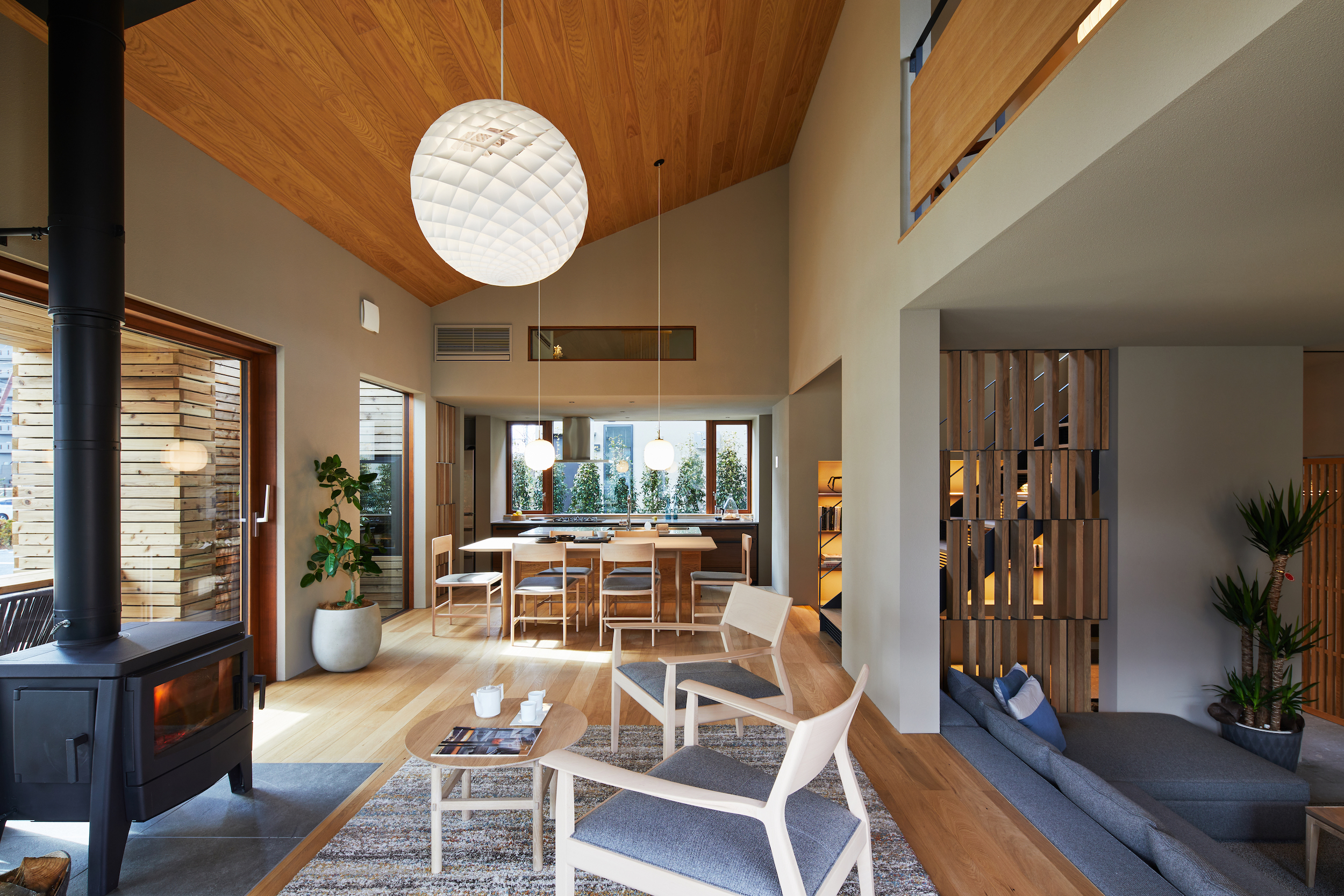
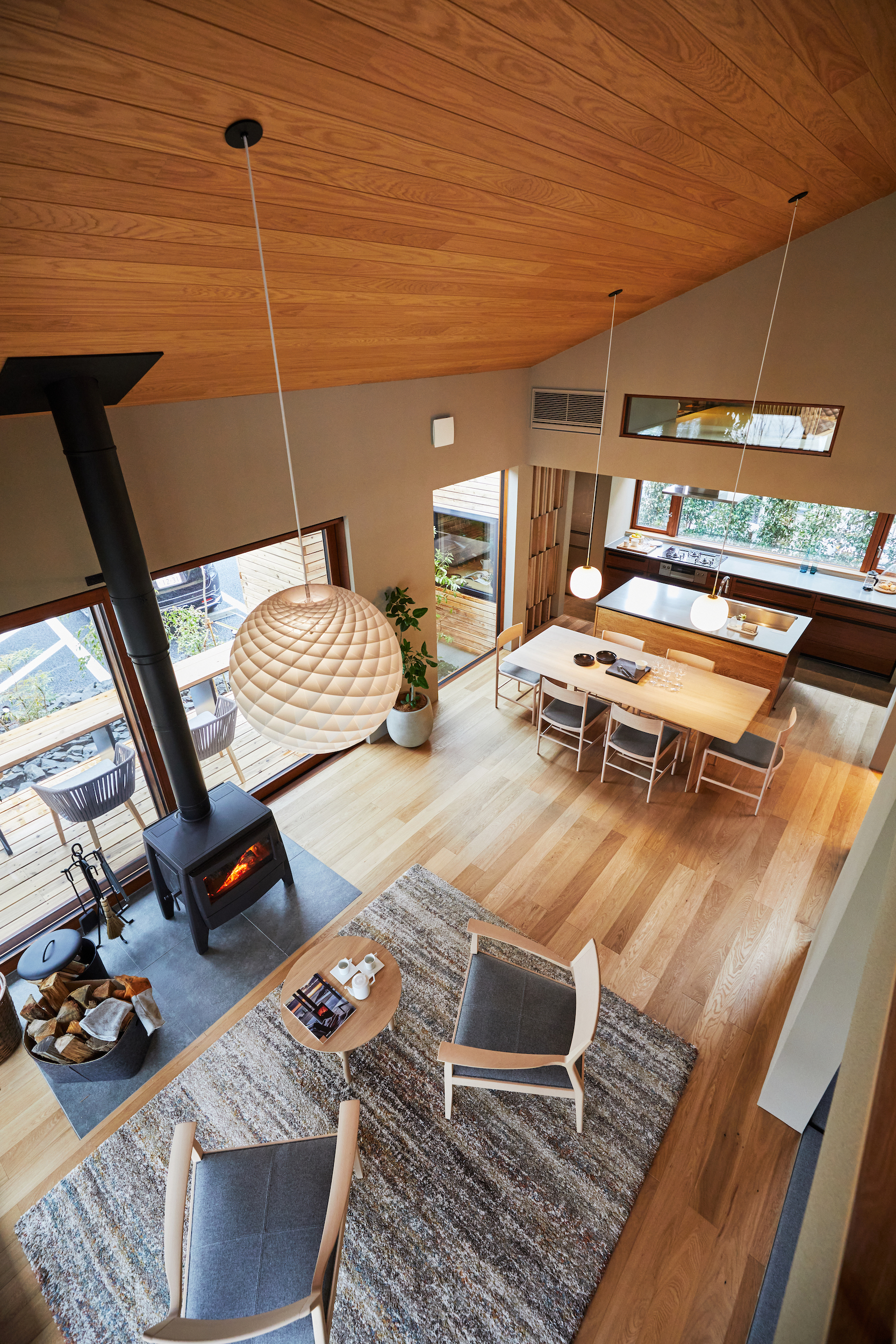
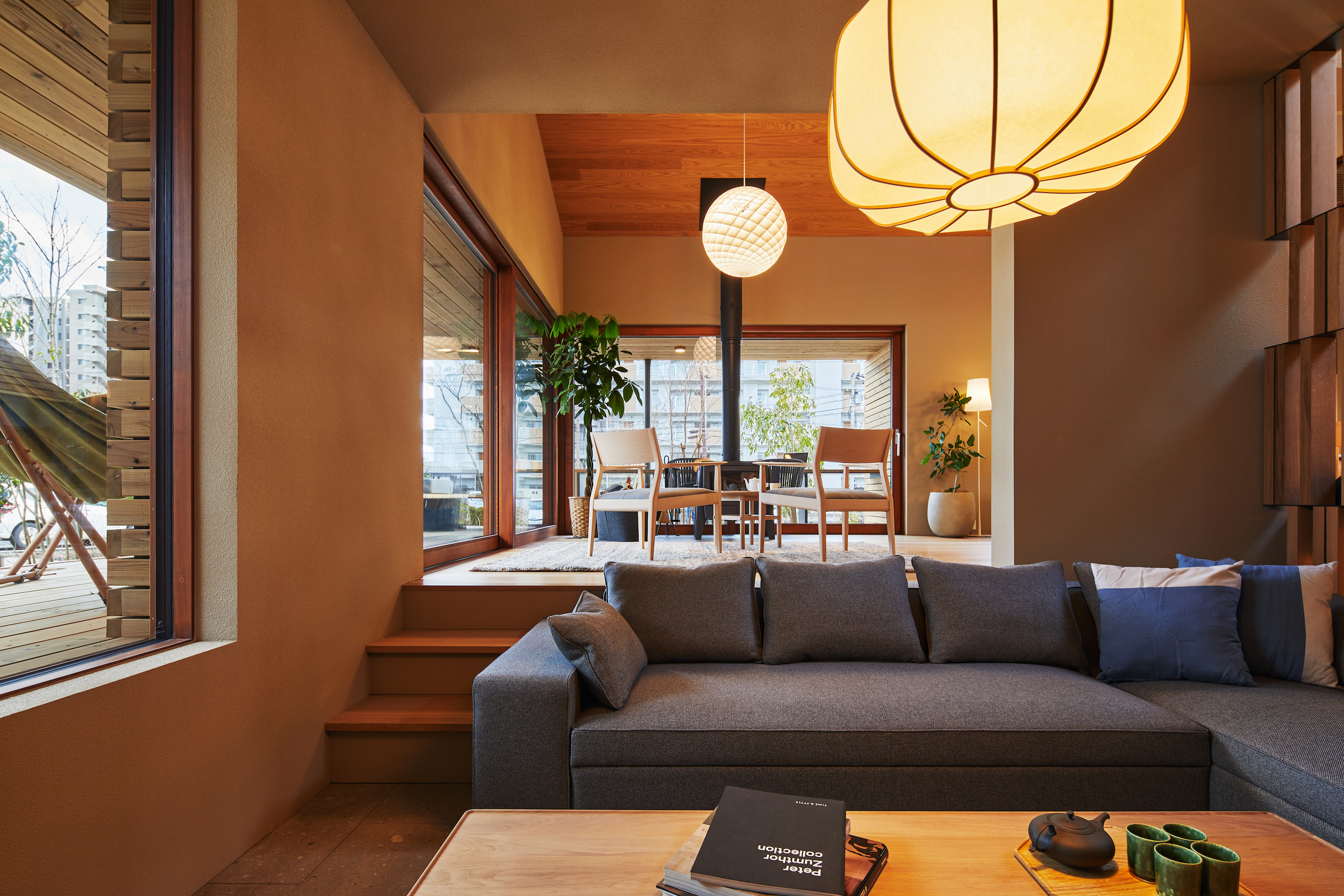
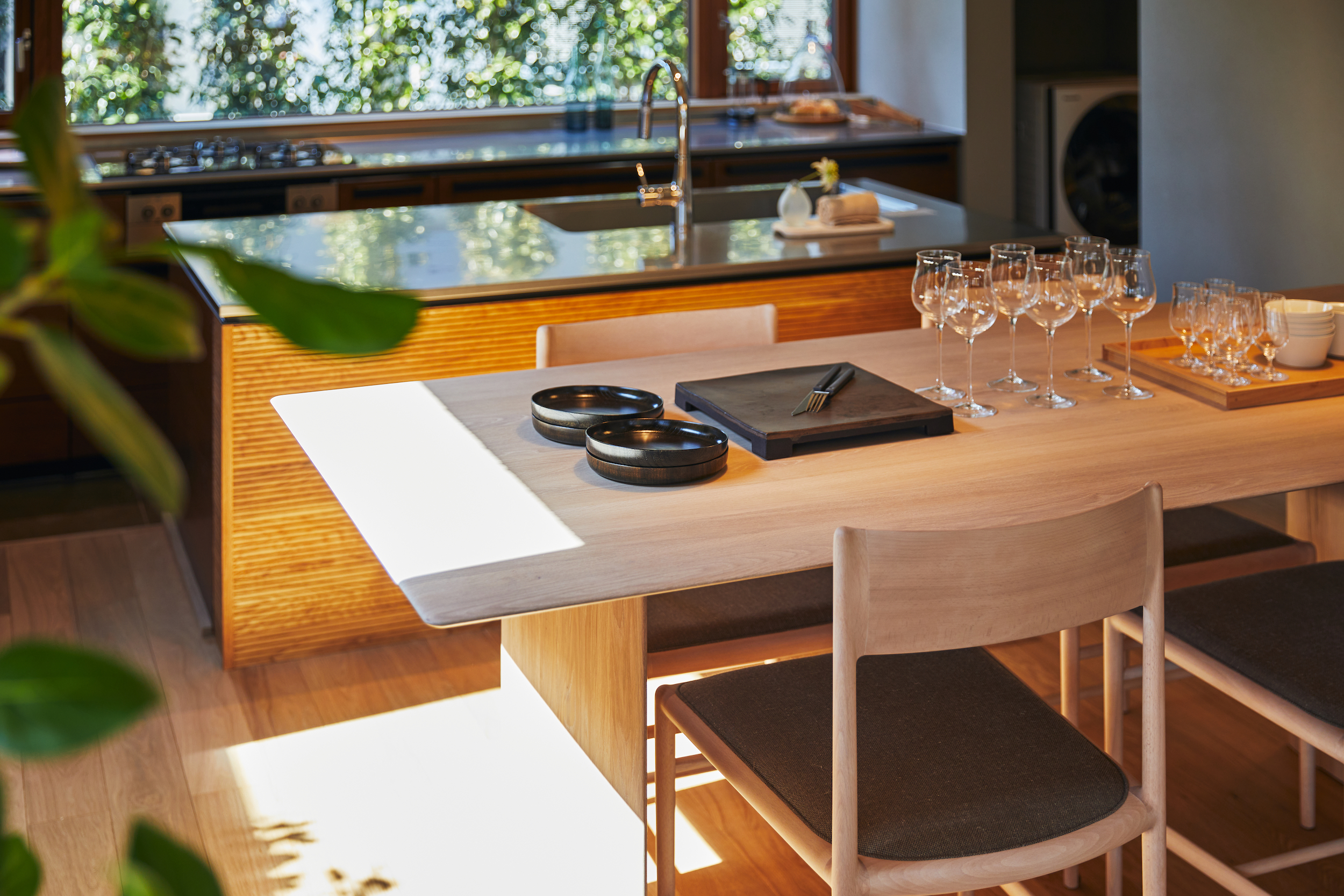
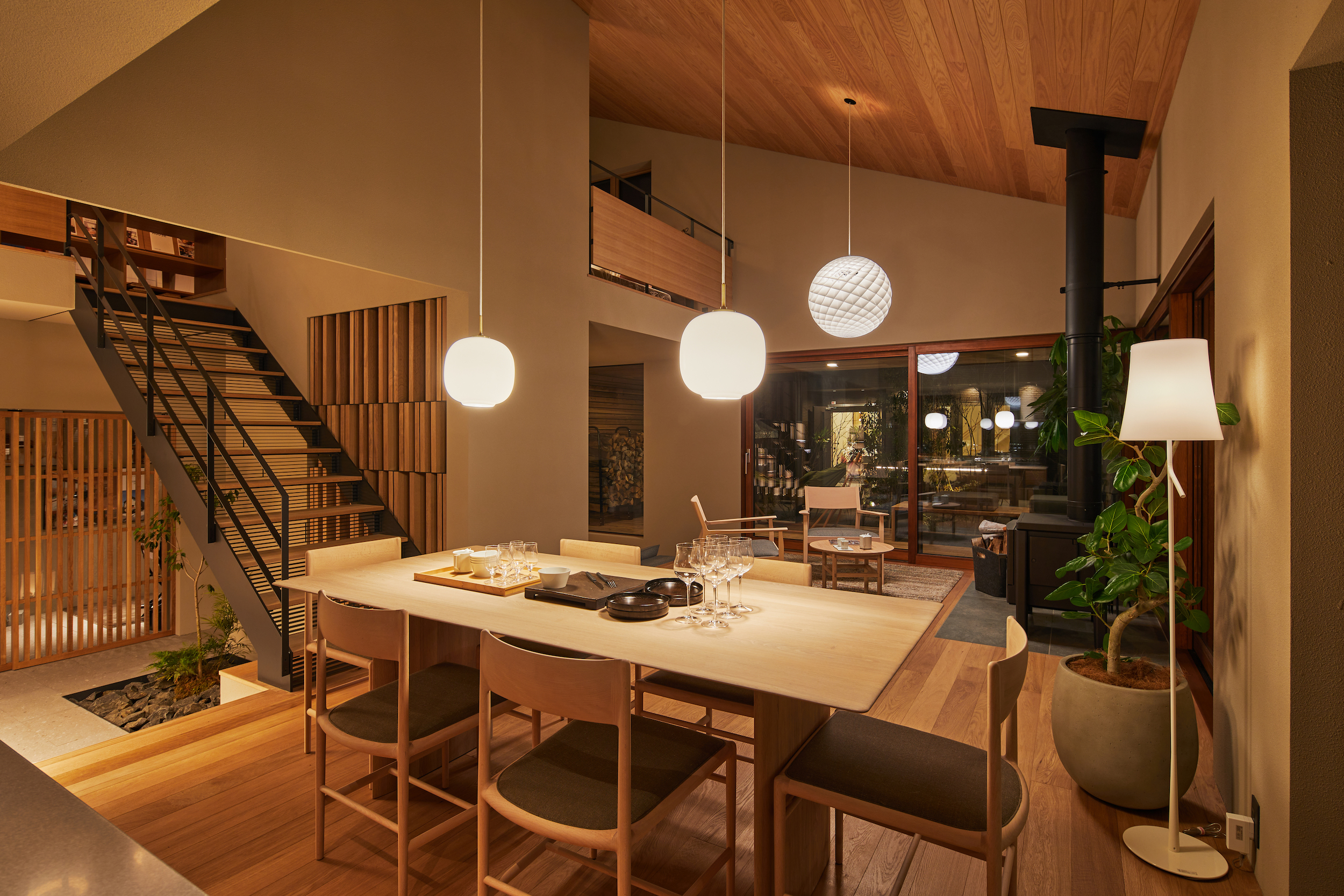
リビングは床を三段下げることで包まれるような居場所をつくり、ダイニングとは緩やかに分節。格子越しに隣室の気配が伝わる“チラ見せ”の関係性や、複数の回遊動線を設けることで、単調にならない体験の連続性を確保した。
吹き抜けに設けた薪ストーブは、ウンノハウスの高断熱・高気密性能によって空間全体の温熱環境を均質に保ち、視覚的な魅力と実用性を両立している。
日常の快適さと「リトリート」を両立する住まい
展示性を重視しつつも、日々の暮らしを具体的に想像できるリアリティを損なわないことも、本計画において大切にした点である。
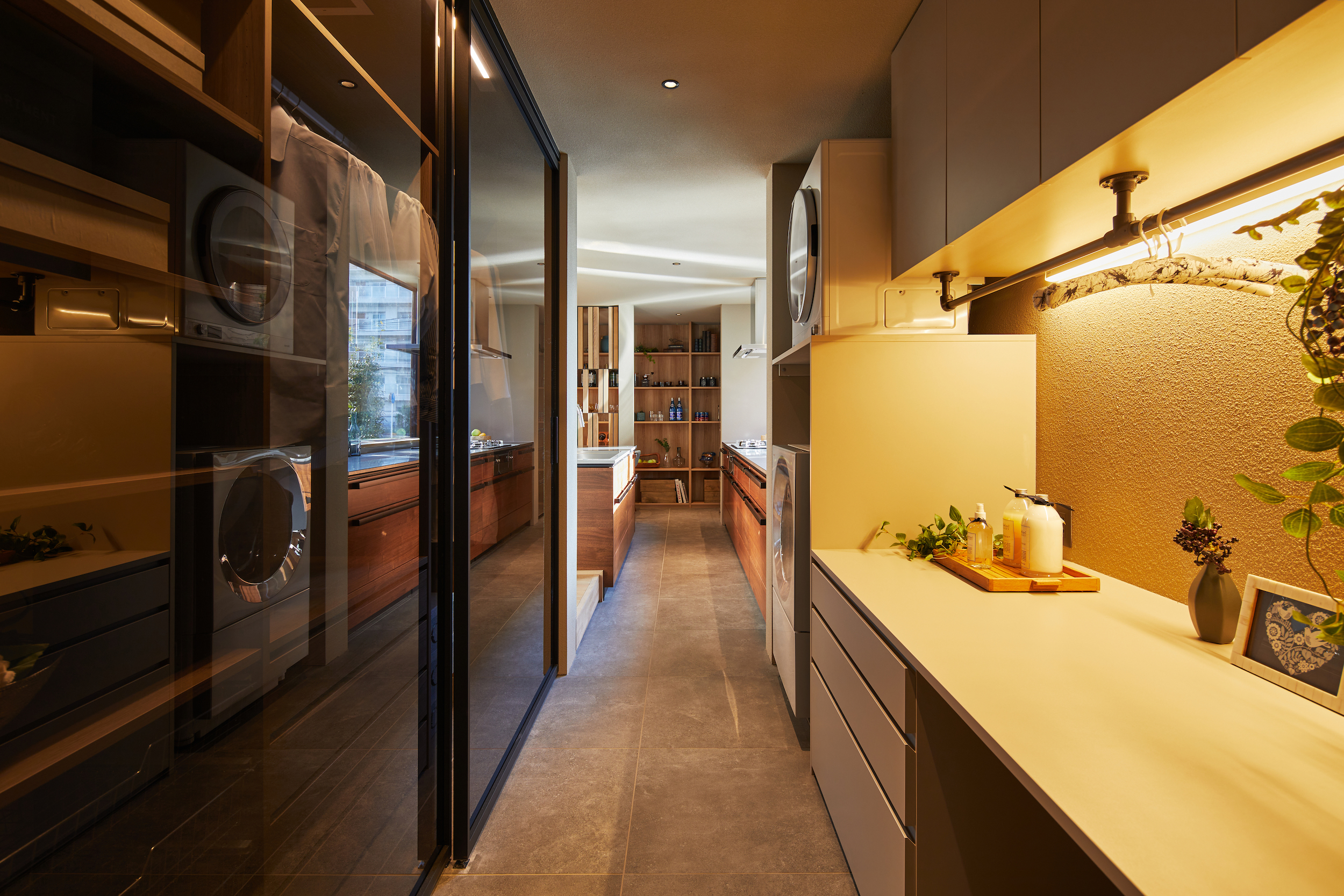
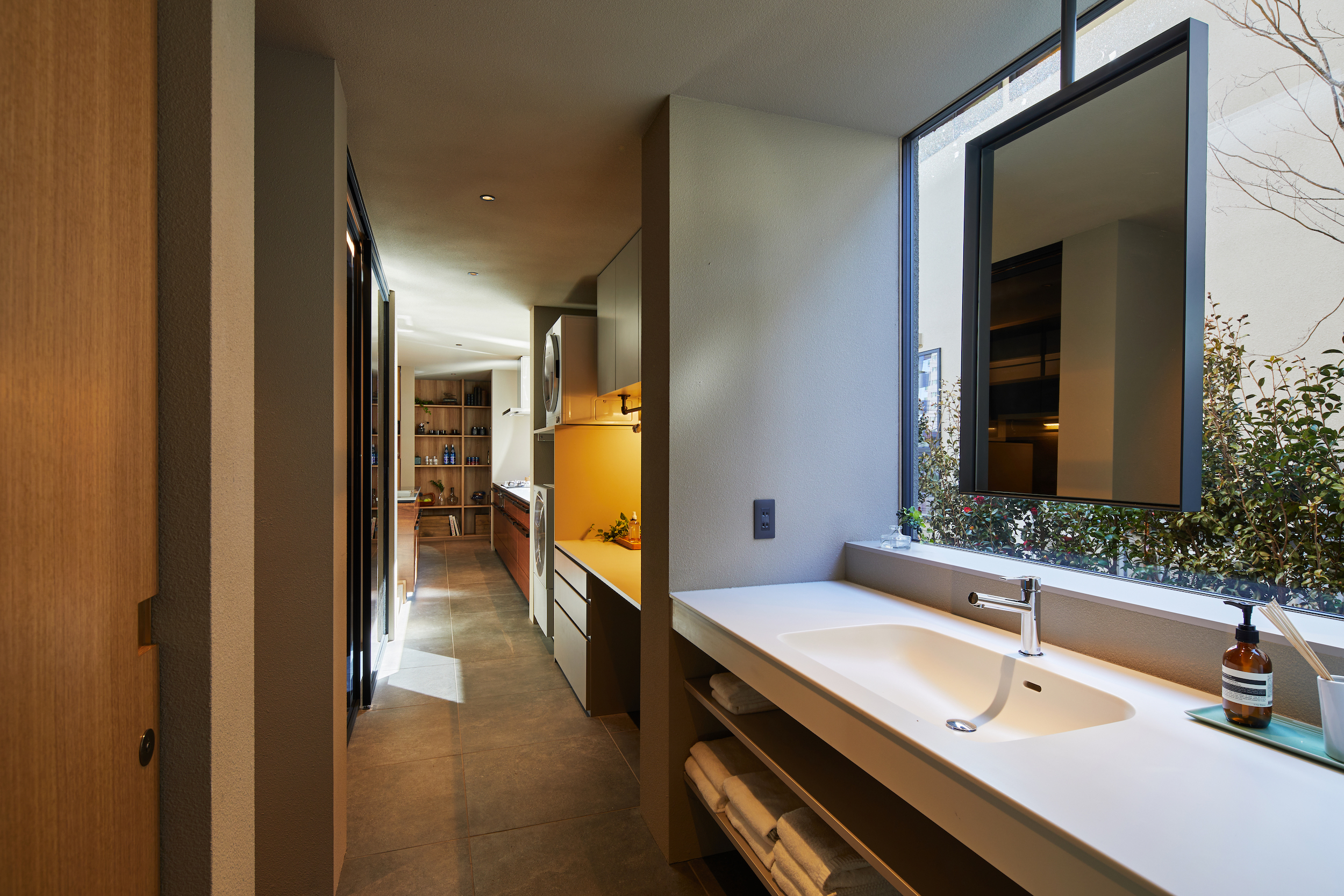
家事室からキッチン、ランドリー、ファミリークローク、洗面、浴室へと一直線につながる家事動線は、その象徴的な要素である。
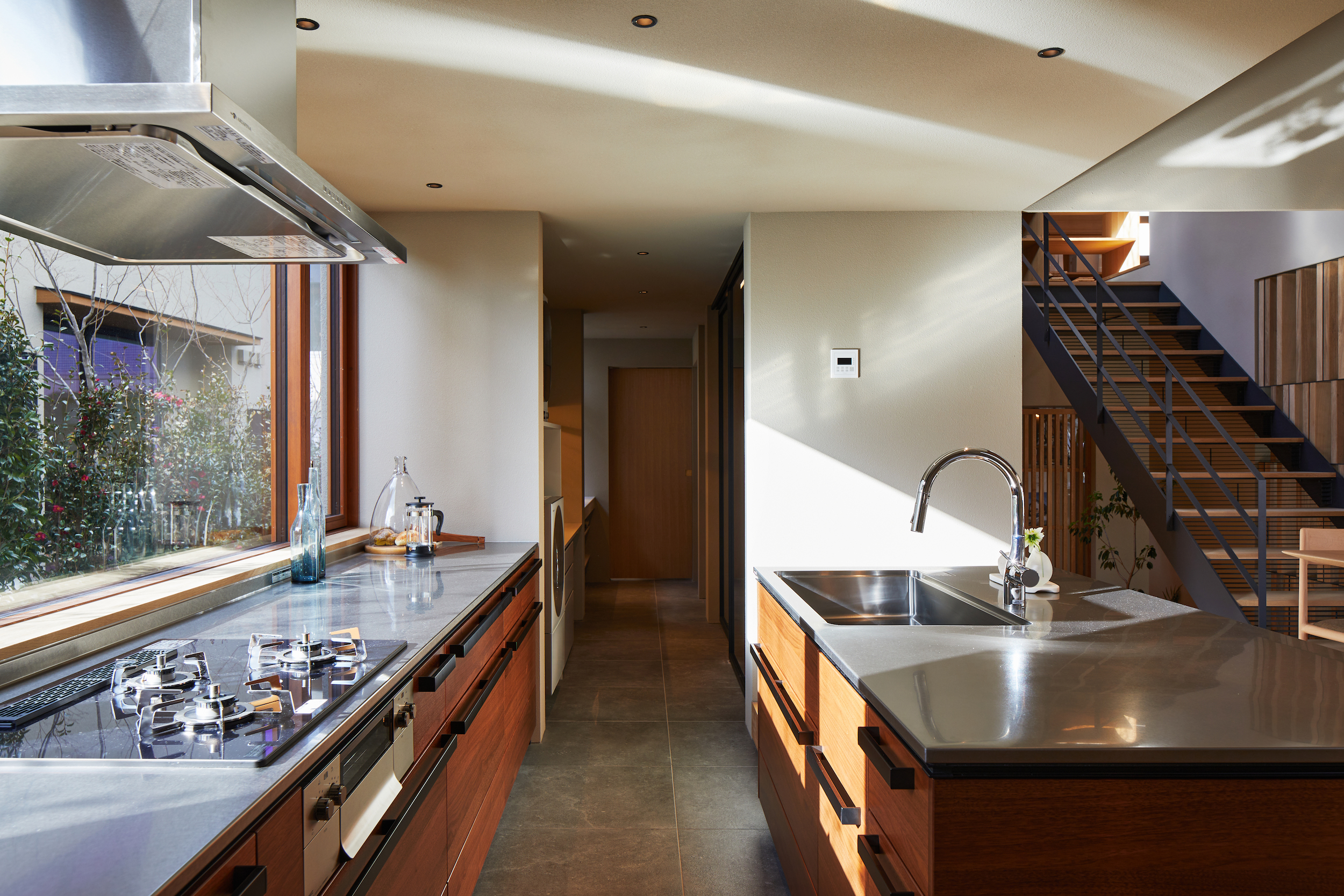
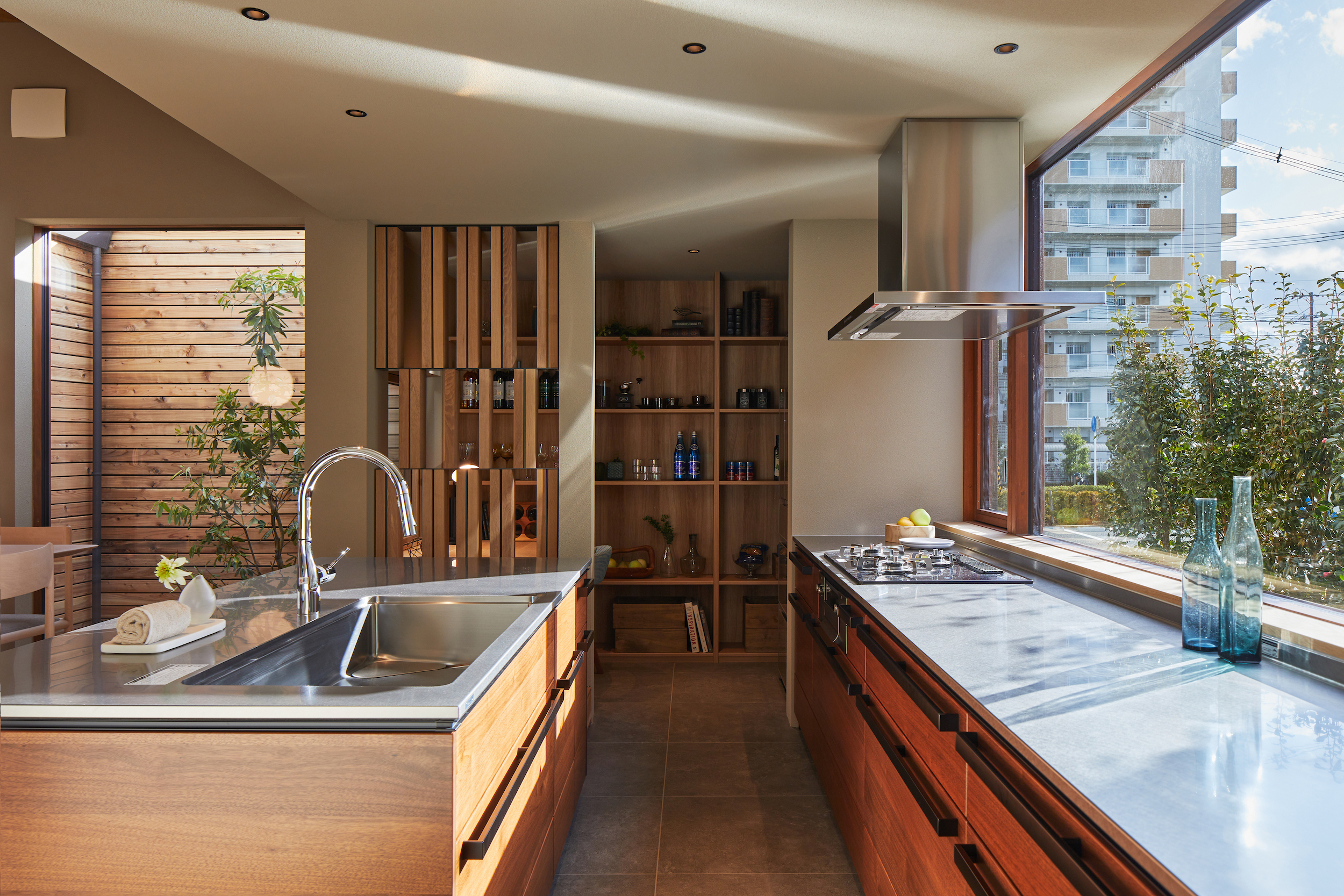
Ⅱ型キッチンや造作洗面など、日常の行為そのものが心地よい体験となるよう、生活の気配を丁寧に織り込んでいる。
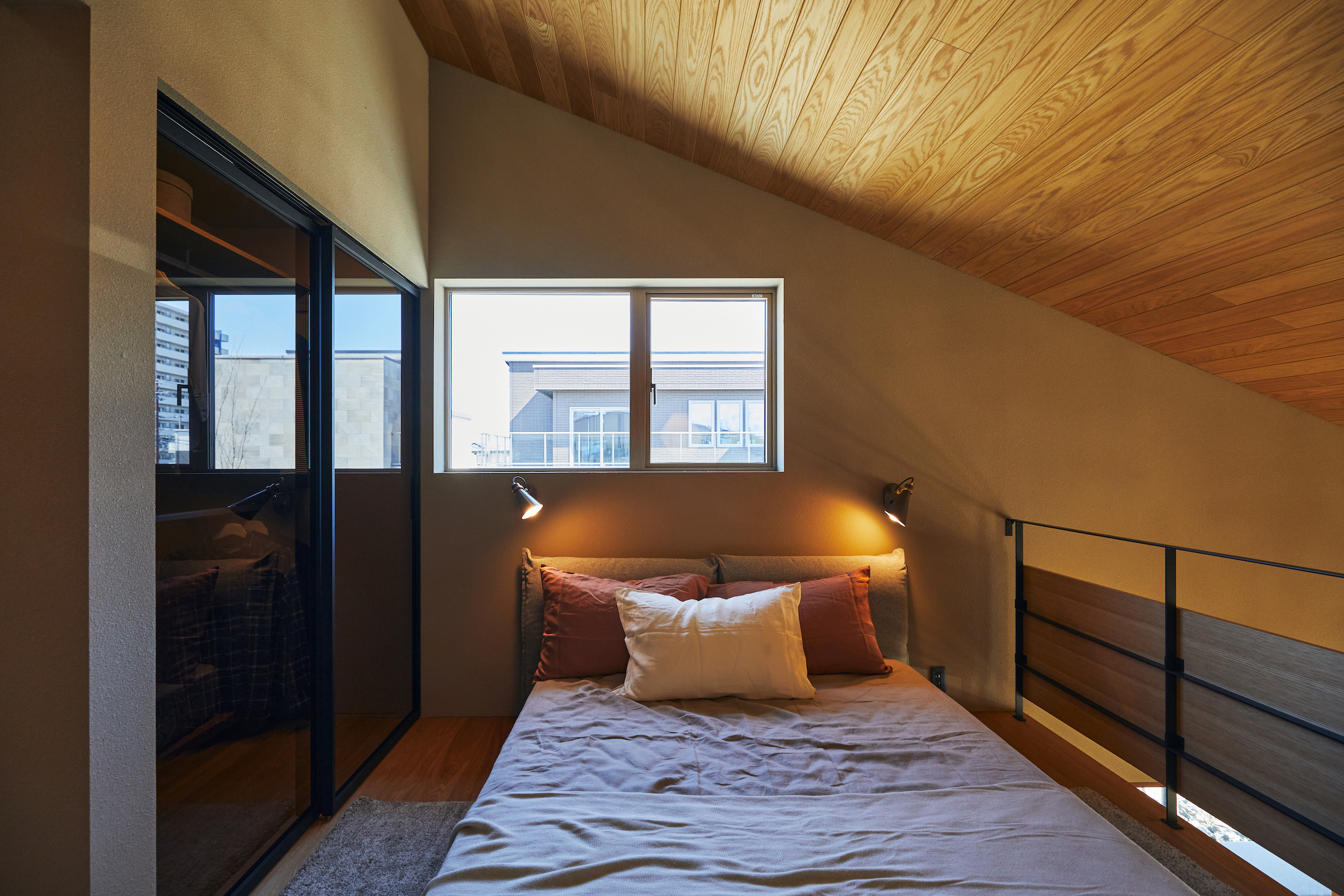
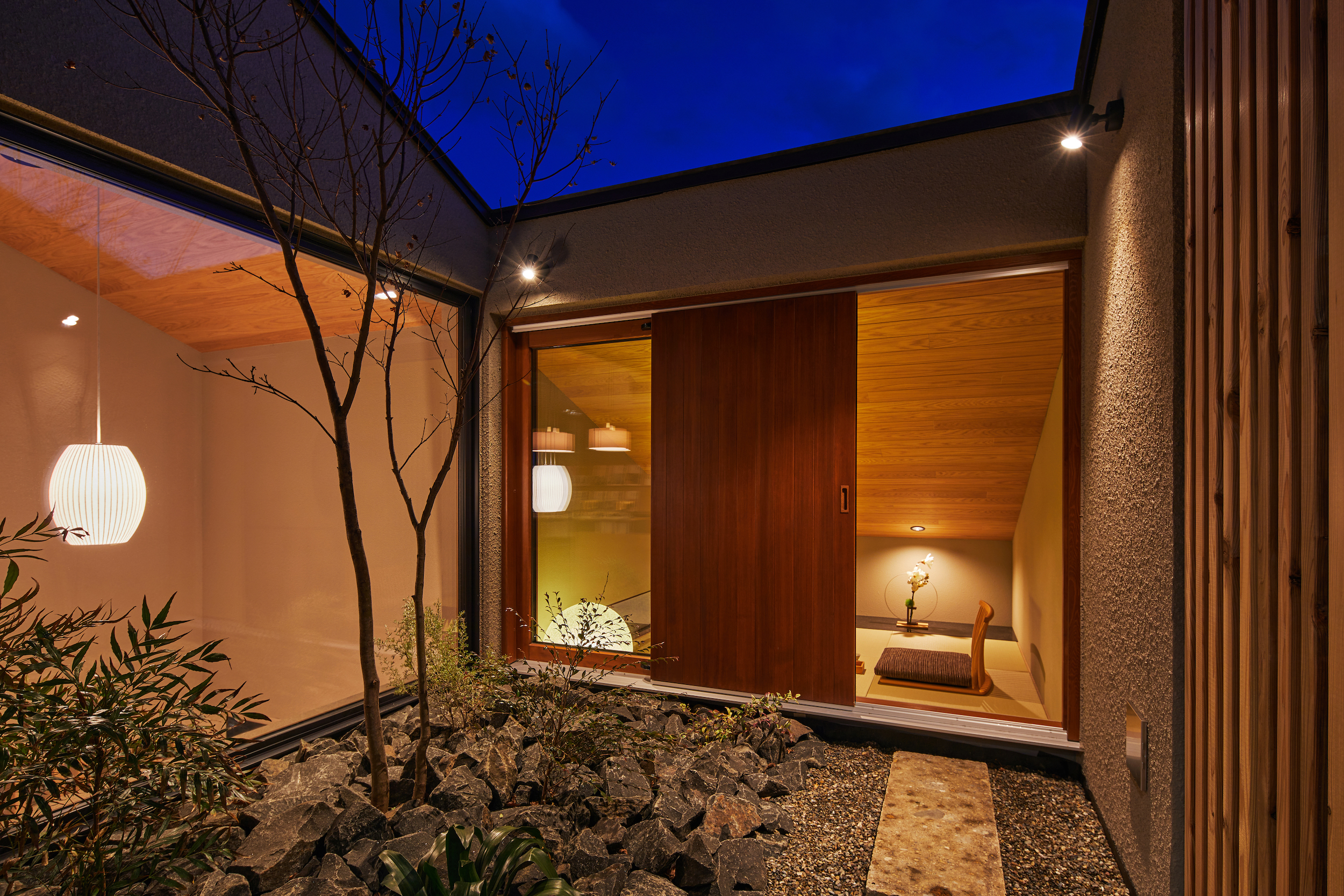
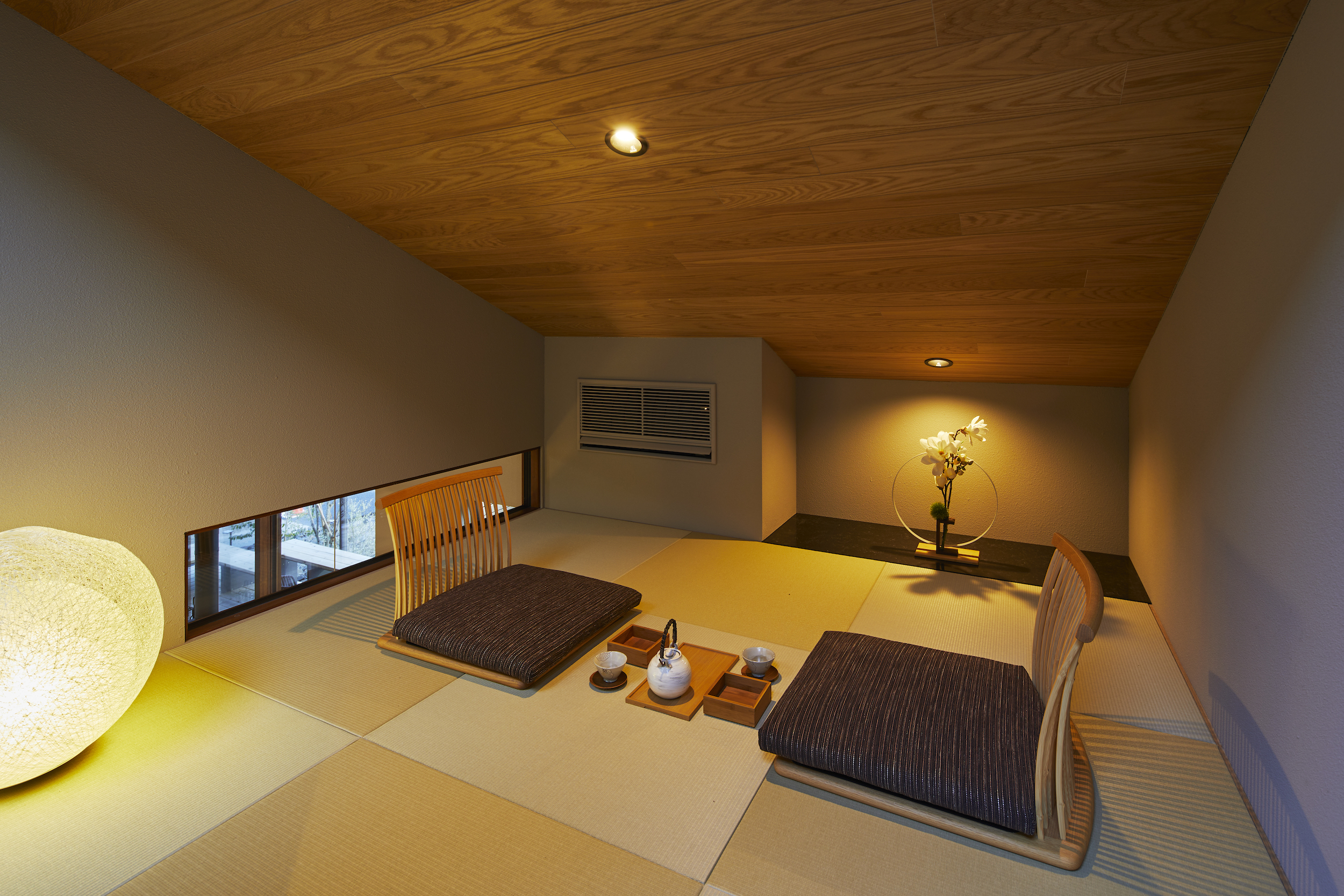
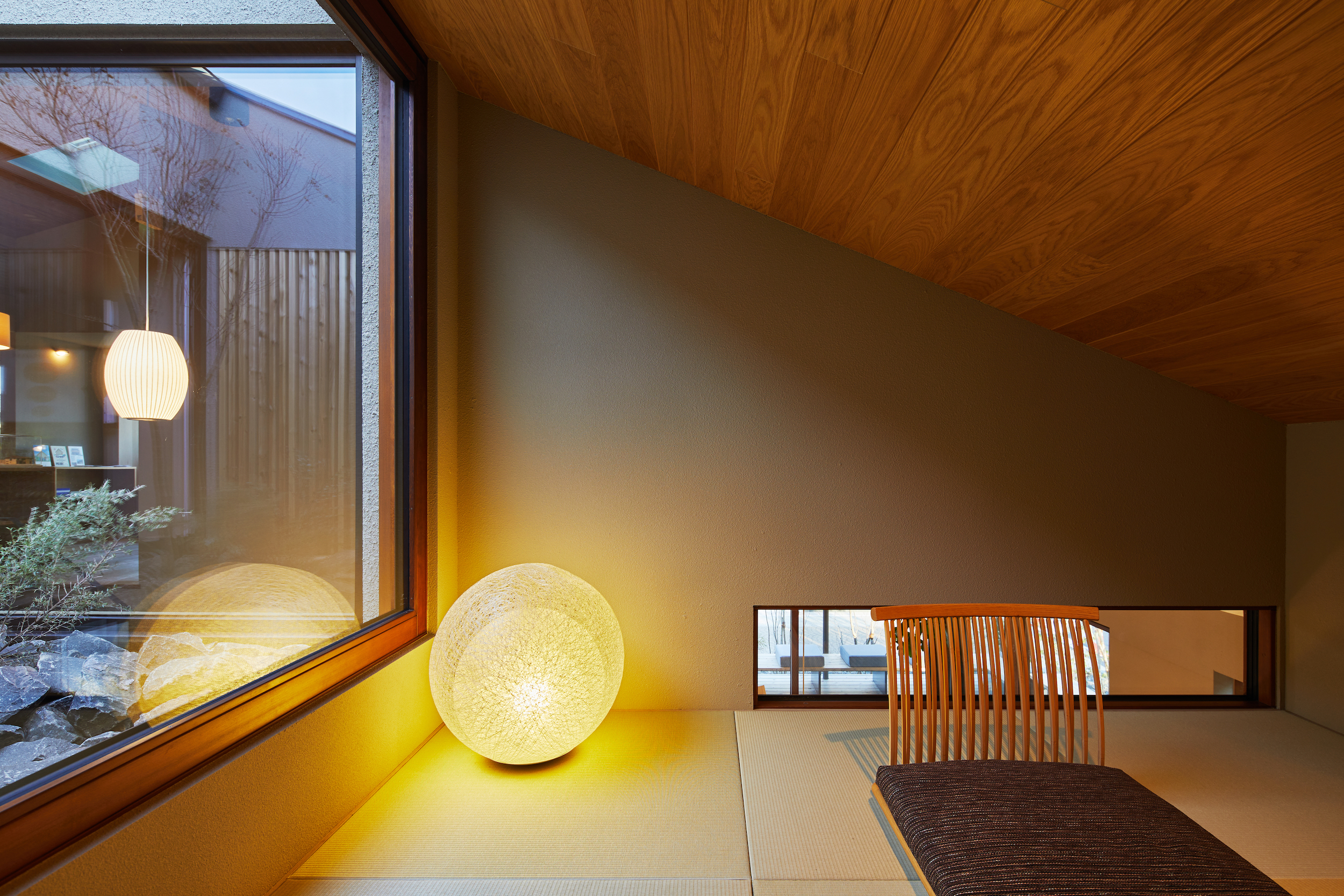
2階には主寝室や子ども部屋を配置する一方で、特に印象的なのが、外部空間を介してアクセスする「離れの和室」である。これは、ウンノハウスの1作目のモデルハウス『Komorebi』で高い評価を得た構成を発展させたものだ。
住空間の中にあえて距離と間合いをつくることで、「こもる」「切り替える」といったリトリート的体験を生み出し、モデルハウスならではの体験価値を象徴する空間となっている。
記憶に残るモデルハウスのかたち
展示場に求められる「見せる」建築と、住宅としての「使える」建築。その両立には、スケール調整、動線計画、視線のコントロール、素材選定といった細やかな設計判断の積み重ねが不可欠である。本モデルハウスでは、これまでの試行を通して培われた知見を、純度高く反映することができたと感じている。
それを可能にしたのは、南東北における木造住宅のリーディングカンパニーとして、特定の様式にとらわれることなく、多様な住まいづくりに挑戦し続けてきたウンノハウスの柔軟性と懐の深さであろう。
『Fore』が、来場者にとって「リトリートのある暮らし」を具体的に想起させる場として、これからも長く機能し続けることを期待している。
UNNO HOUSE CO., LTD.
MODEL HOUSE “FORE”
CREATING SPACES THAT LEAVE A LASTING IMPRESSION
“Fore” is a model house completed at a comprehensive housing exhibition site in Natori City, Miyagi Prefecture, designed for Unno House Co., Ltd.
The concept presented was “At-Home Retreat”—a home that offers a moment of non-everyday experience, like forest bathing, where residents can restore both body and mind before returning to daily life with renewed energy.
A model house is not designed for a single family. It must appeal to a wide range of visitors, inviting them to step inside and allowing them to imagine themselves living there. With this in mind, the primary goal of the design was to heighten spatial exploration and experiential value, creating a building that would remain deeply etched in visitors’ memories.
AN APPROACHABLE SCALE AND AN INVITING PRESENCE
With a total floor area of approximately 190 m², the house is not excessively large for a model home, yet generous enough to feel realistic as an actual residence.
Homes that appear too large can feel detached from reality and create psychological distance for visitors. To avoid this, the design carefully moderates the perceived scale of the building.
A large roof with low eaves suppresses the overall volume, giving the house the calm presence of a single-story structure. An L-shaped terrace extends outward, intentionally revealing the interior and creating an open, welcoming façade that lowers the threshold for entry.
The terrace is furnished with elements such as a hammock, desk, and firewood storage, subtly conveying a sense of daily life and enhancing its role as a space for display and imagination.
CIRCULATION AND VISUAL CUES THAT ENCOURAGE LONGER STAYS
The interior layout was conceived so that the entire space cannot be grasped at once.
In housing exhibitions, longer visitor stays often lead to deeper engagement. Here, layered shifts in sightlines create moments of discovery with each step, encouraging exploration.
The entrance hall is wide and barrier-free, functioning as a welcoming space that transcends conventional residential scale. The staircase is treated not merely as circulation but as an architectural feature, integrated with a double-height space, greenery, and indirect lighting.
The living room floor is lowered by three steps to create a sense of enclosure, gently differentiated from the dining area. Screens and latticework allow glimpses into adjacent rooms, while multiple circulation routes prevent the experience from becoming monotonous.
A wood-burning stove anchors the double-height space. Supported by Unno House’s high-performance insulation and airtight construction, the interior maintains a stable thermal environment, balancing visual appeal with everyday practicality.
BALANCING DAILY COMFORT WITH A SENSE OF RETREAT
While prioritizing exhibition value, the design also maintains a strong sense of realism from the perspective of daily life.
A linear household circulation—from the utility room through the kitchen, laundry, family closet, washroom, and bathroom—exemplifies this approach.
Features such as a double-sided kitchen and custom-designed washbasins enrich everyday routines, making the rhythms of daily life easy to imagine.
On the second floor, alongside the main bedroom and children’s rooms, the most distinctive space is a detached tatami room accessed via an exterior path. This configuration builds upon a well-received feature from Unno House’s first model home, “Komorebi.”
By intentionally introducing distance and transition within the home, this detached room embodies the idea of retreat, serving as a symbolic space that enhances the experiential value unique to a model house.
A MODEL HOUSE THAT LINGERS IN MEMORY
To reconcile the demands of “display” with the practicality of a livable home, careful attention was paid to scale, circulation, sightlines, and material selection—sensibilities refined through past projects and brought together here with clarity and focus.
This was made possible by Unno House’s openness as a leading wooden-home builder in southern Tohoku, embracing diverse architectural expressions rather than adhering to a single style.
“Fore” is envisioned as a place that continues to inspire visitors by evoking the idea of a life enriched by retreat—remaining relevant and engaging for years to come.
UNNO HOUSE (Natori Model House)
所在地/宮城県名取市杜せきのした1丁目1−1
ジアス総合住宅展示場 名取・仙台ハウジングモール内
主要用途/展示場
<設計>
意匠 菊池佳晴建築設計事務所 担当/菊池佳晴 古山紗帆
構造 図設計事務所 担当/高橋雷人
<施工>
建築 ウンノハウス仙台支店
植栽 カワムラガーデン 担当/川村博崇
<構造・構法>
主要構造・構法/木造金物構法
基礎/べた基礎
<規模>
階数/2階建
軒高/5537mm 最高高さ/7137mm
延床面積/建築物190.47m2(57.61坪)
<工程>
設計期間/2022年10月〜2023年5月
工事期間/2023年6月〜2024年1月
<敷地条件>
都市計画区域内 市街化区域
準工業地域
許容建蔽率60% 許容容積率200%
地域地区 22条地域
地区計画 杜せきのした地区計画(公共公益施設地区)
道路幅員 −
<外部仕上げ>
屋根/ガルバリウム鋼板t0.35横葺き
外壁/ベルアートスタッコ仕上げ
アートウォール仕上専用ベース板t14
開口部/木製トリプルサッシ(アルス)
樹脂トリプルサッシ(LIXIL EW)
日射遮蔽/庇
<内部仕上げ>
床/北海道なら節なしフローリングt15(チャネルオリジナル)
壁/ベルアート室内用 不燃NM-8572
天井/オークパネリングt6.0 不燃NM-5353(1)(チャネルオリジナル)
厨房機器/セントロ(クリナップ)
レンジフード/センターフェデリカ(アリアフィーナ)
<浴室>
ユニットバス/システムバスルームAX(LIXIL)
<設備システム>
暖房/薪ストーブ、床暖房(リンナイ)
冷房/高効率エアコン(ダイキン)
換気/Passiv Fan PFB150s(AIR LABO)
給排水 給水方式/−
排水方式/−
給湯 給湯方式/−
<断熱仕様>
基礎/スタイロフォームAT3種b 50mm
壁 /押出法ポリスチレンフォーム3種bC XPS3bA 75mm
天井/セルロースファイバー 240mm