
WORKS
最上の家
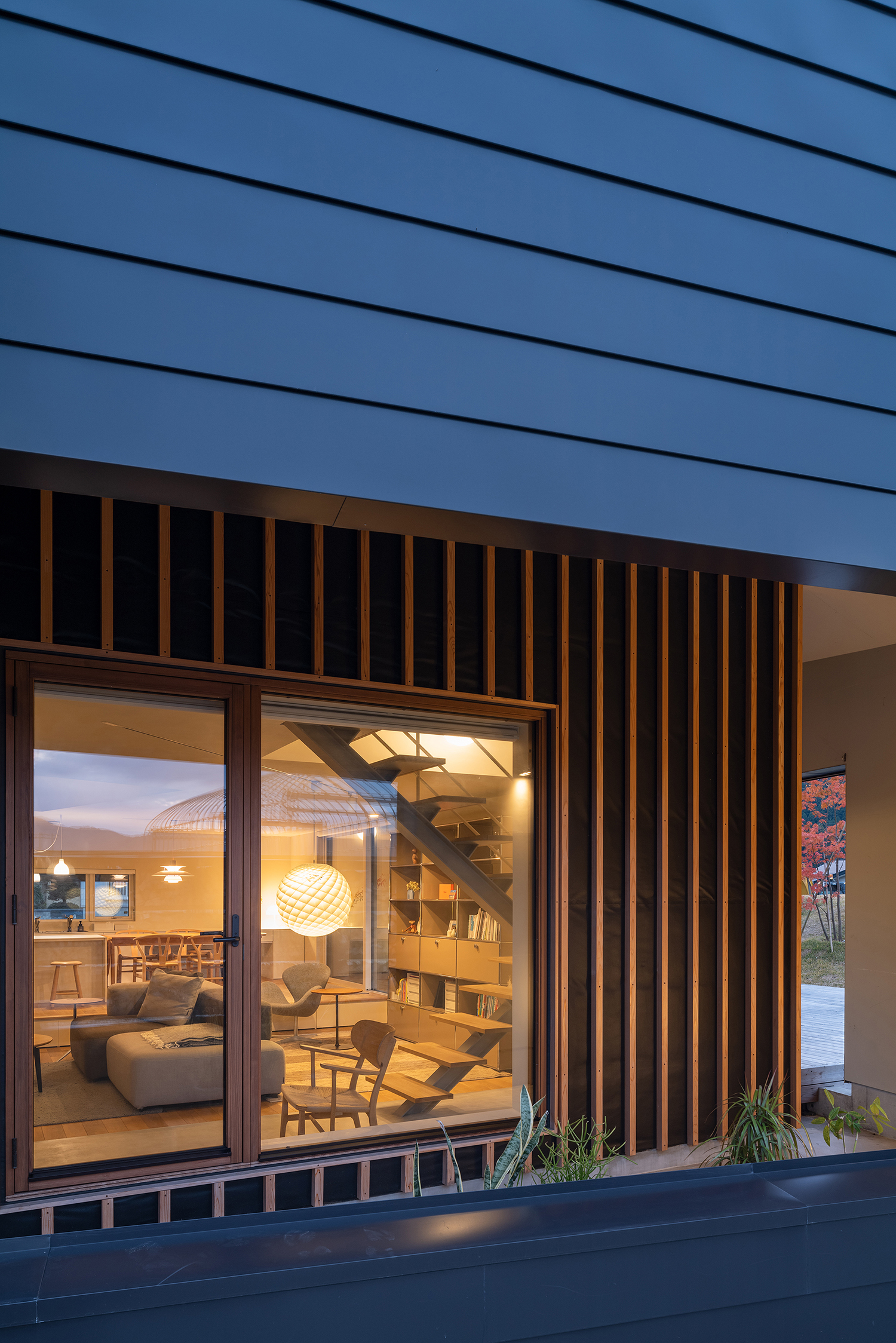
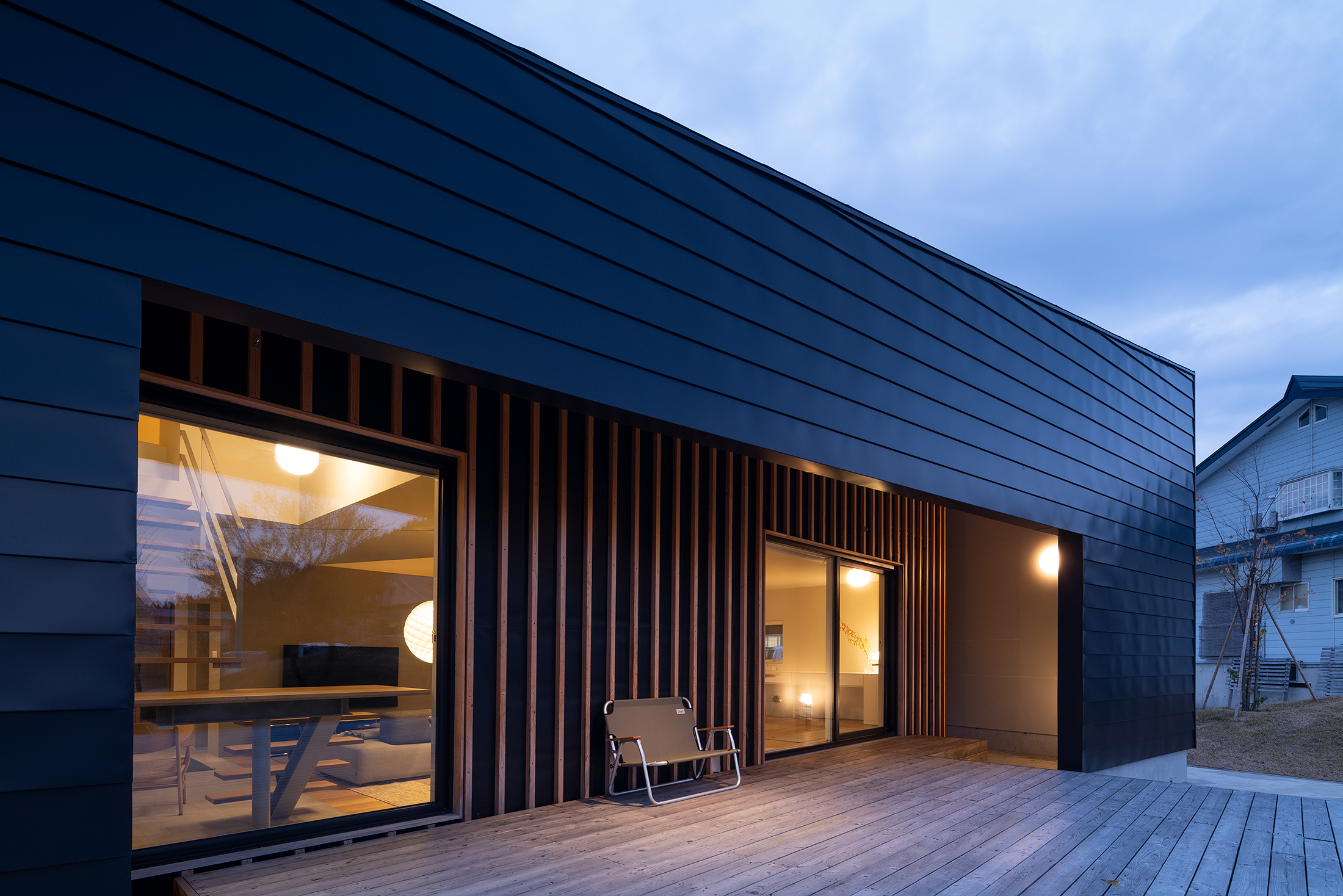
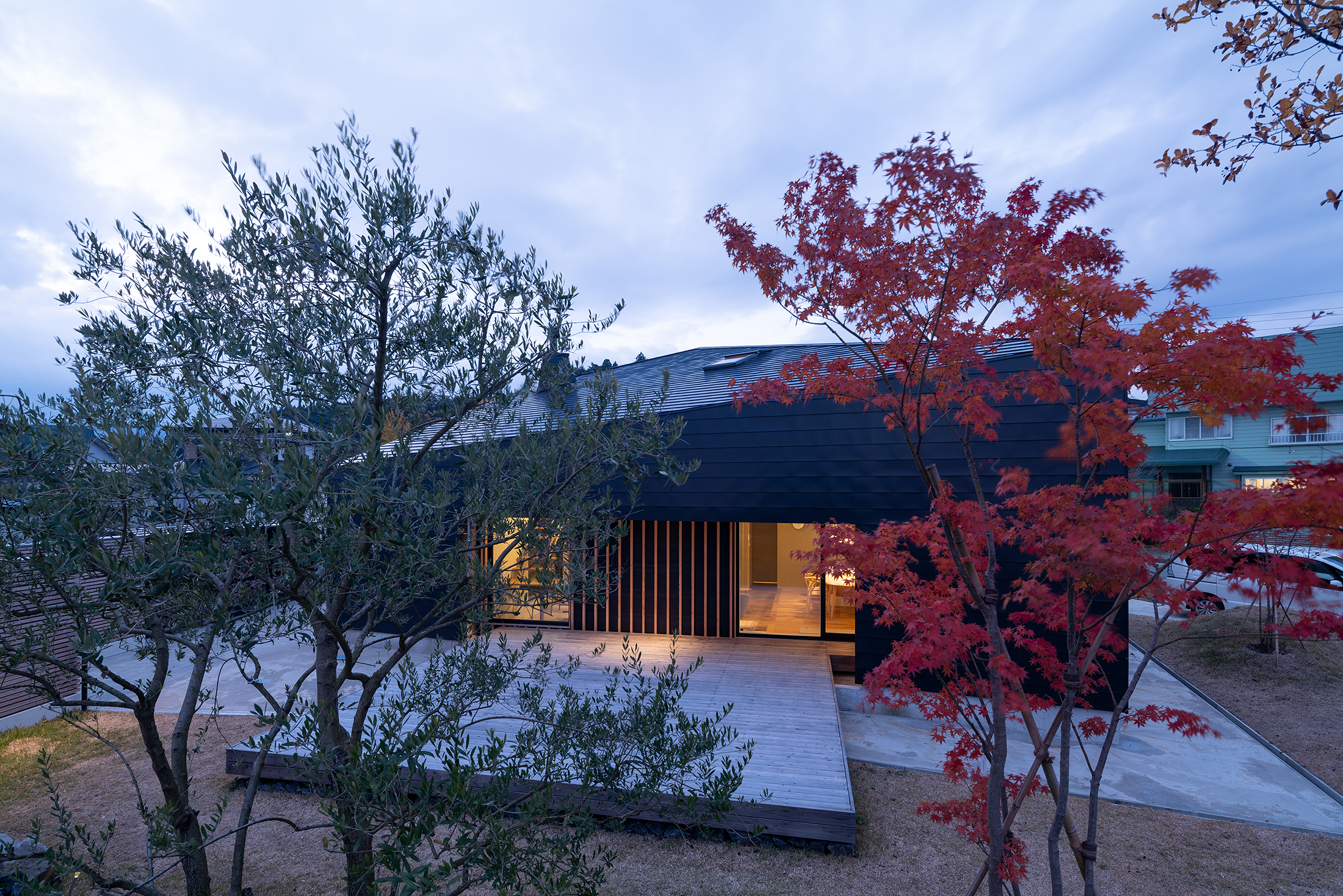
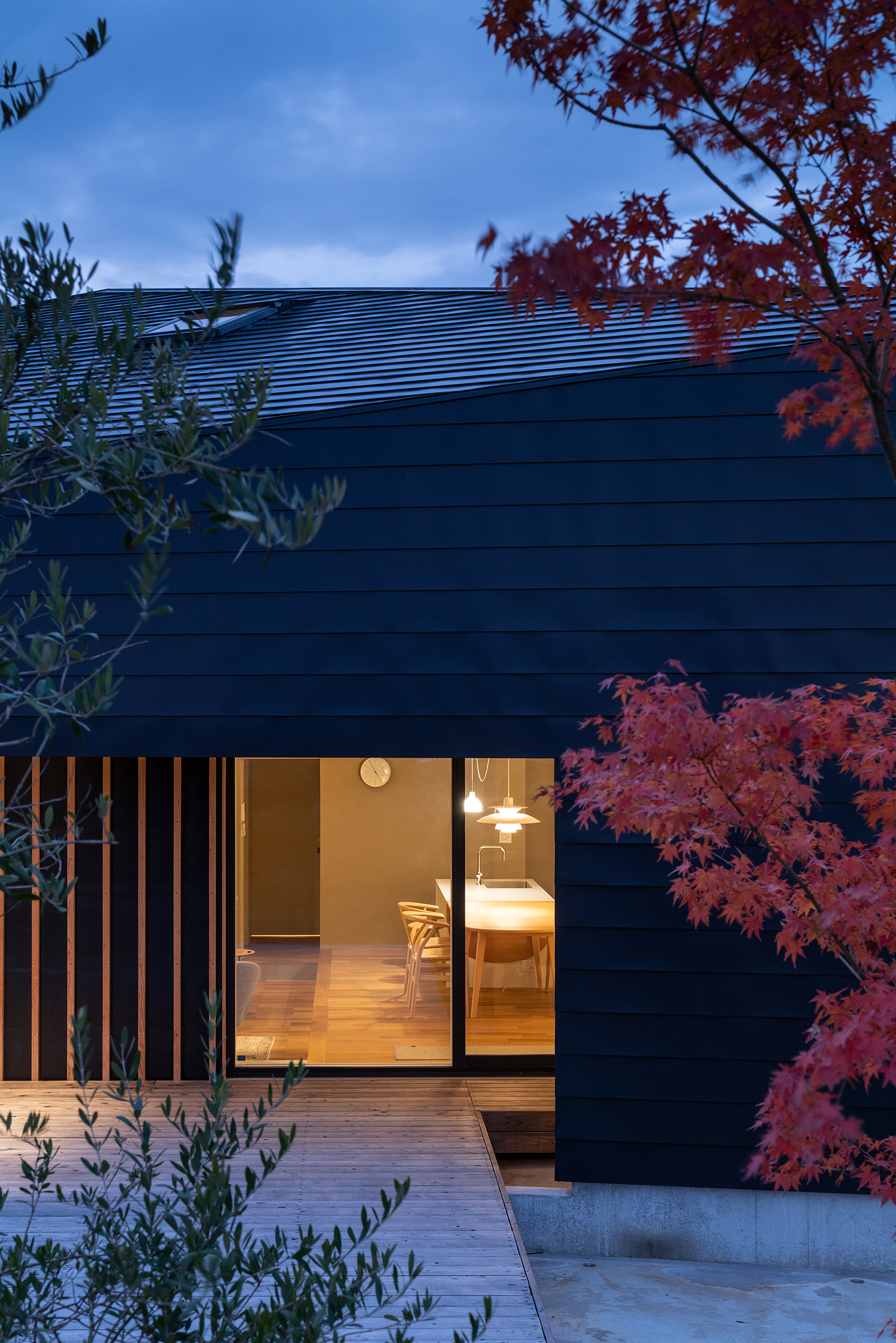
最上の家
厳しい自然環境下での住宅計画
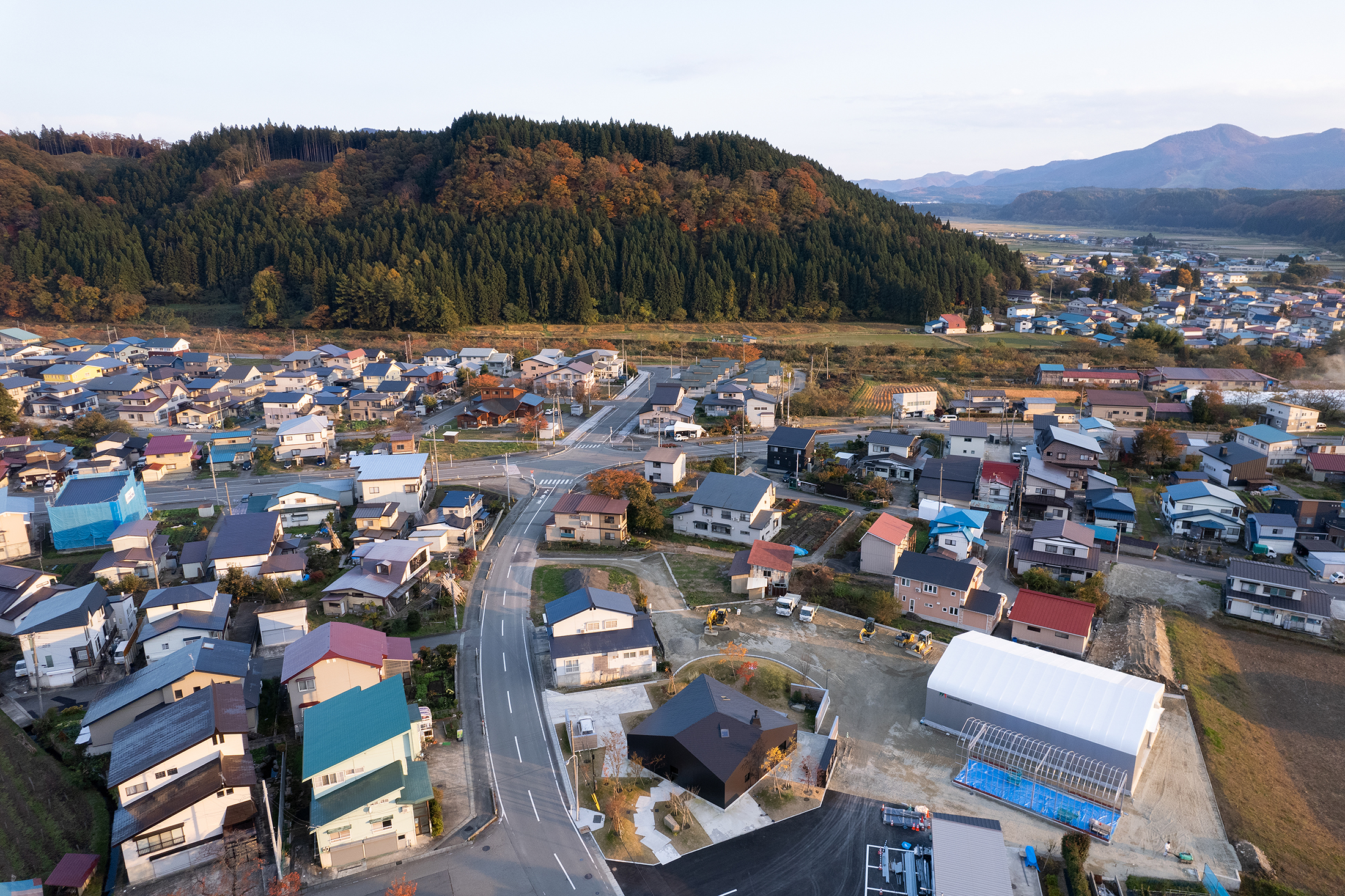
山形県北東部、宮城県と接する最上町は、人口8,000人ほどの小さな町である。赤倉温泉、大堀温泉、瀬見温泉などの温泉地を有する一方で、夏は高温多湿、冬は豪雪という厳しい気候にさらされる。奥羽山系に囲まれた盆地にコンパクトな街区が広がり、その一角、JR陸羽東線・最上駅から北東へ約300mの造成地に計画されたのが「最上の家」である。
入れ子構造で雪と寒さに備える
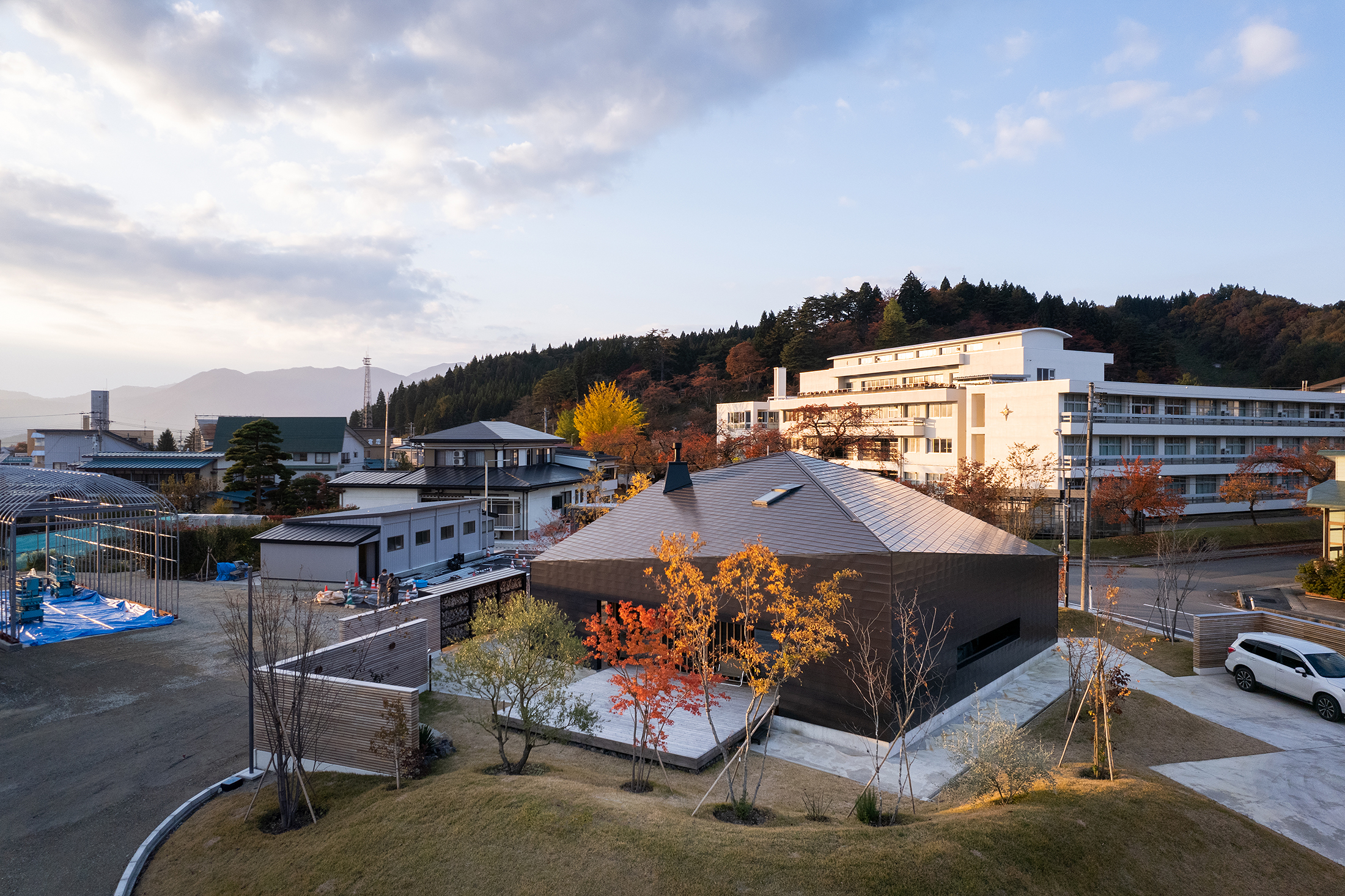
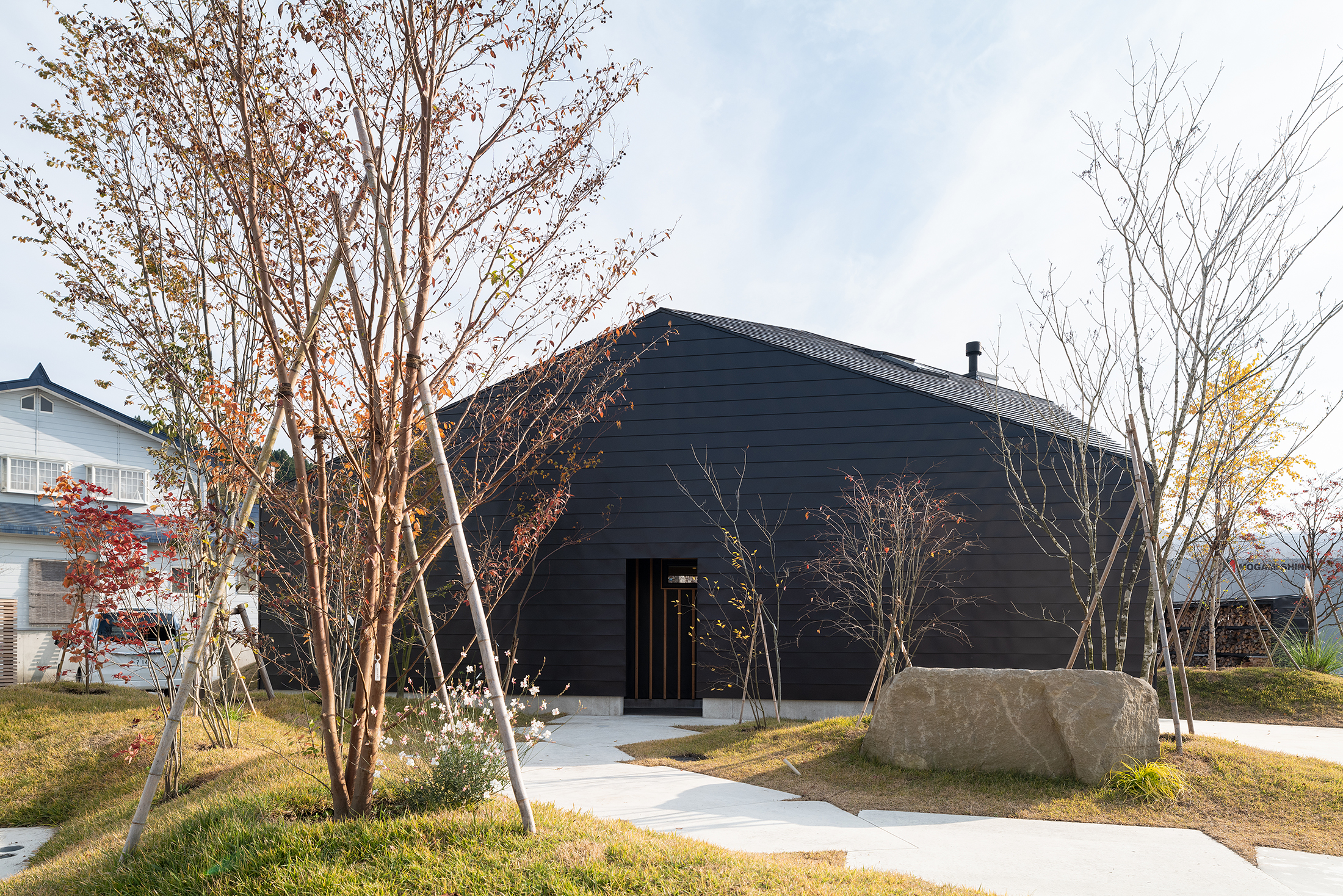
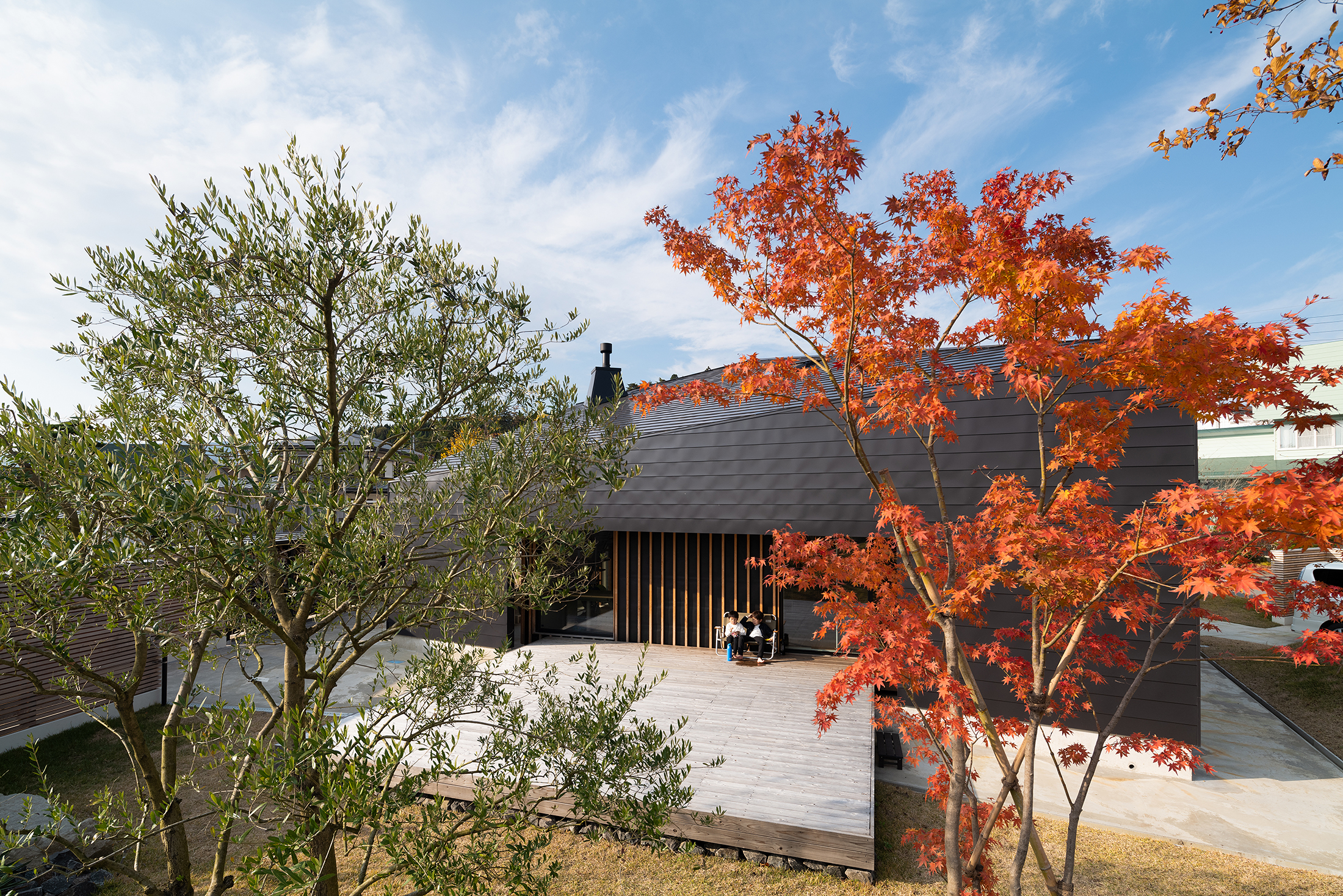
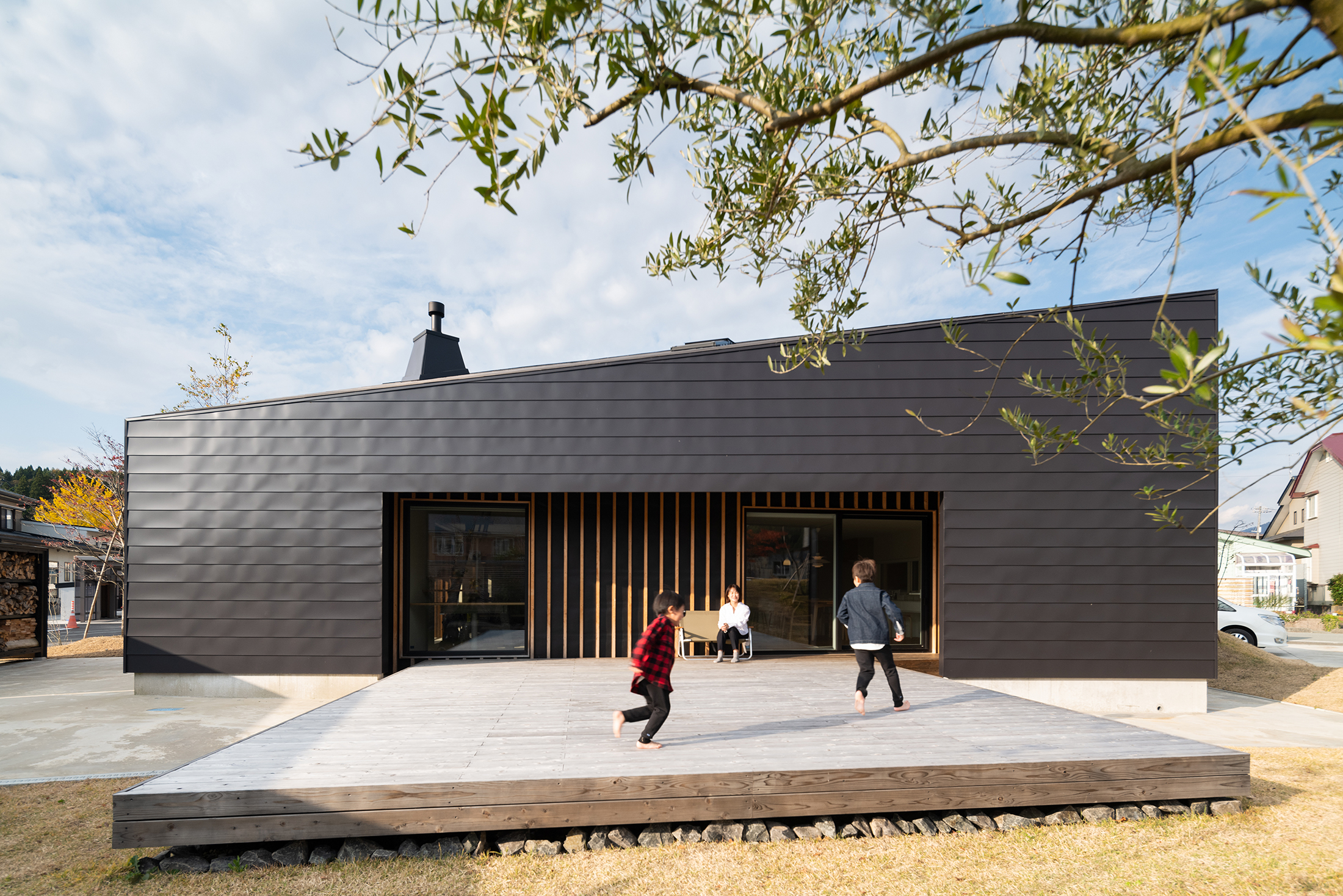
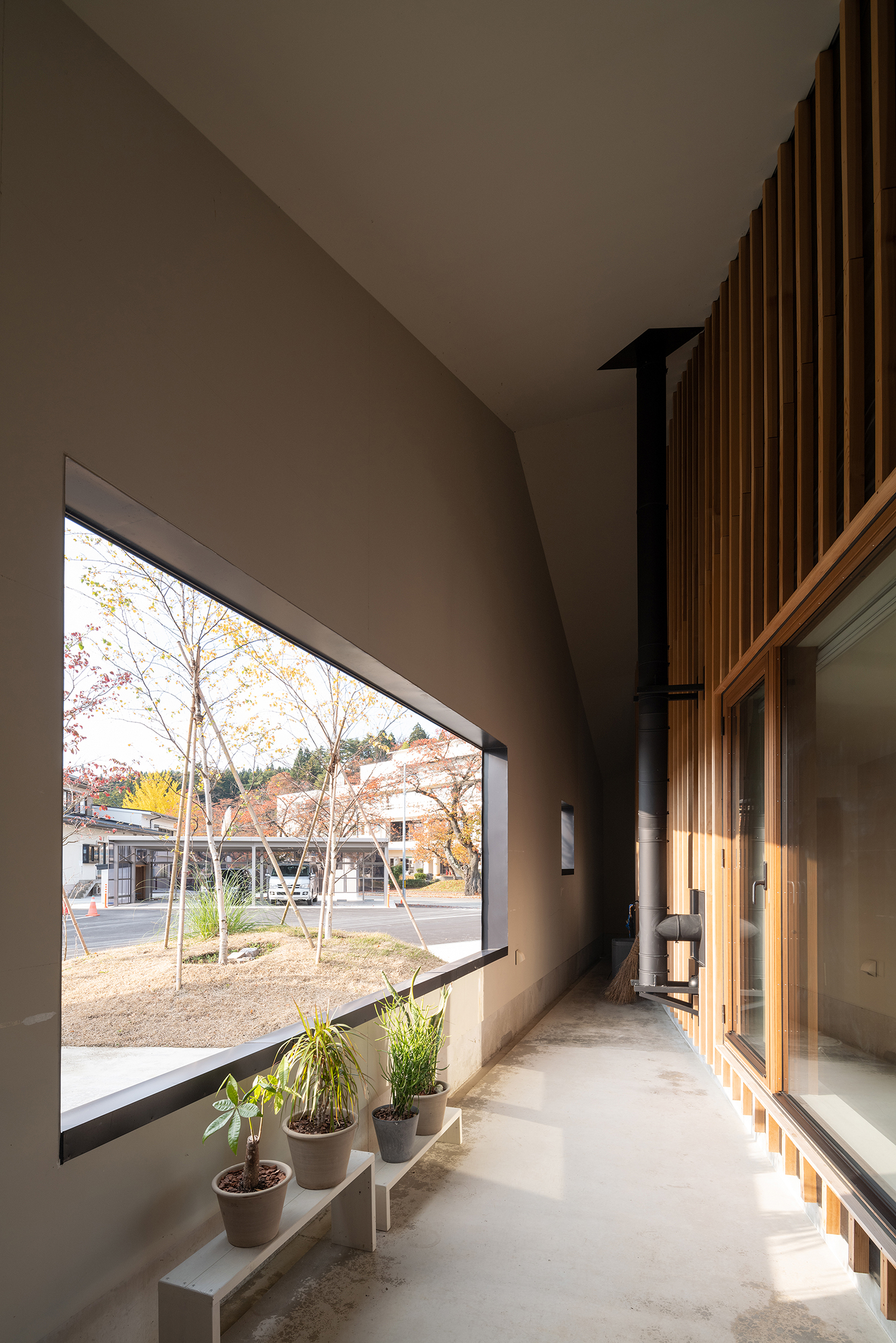
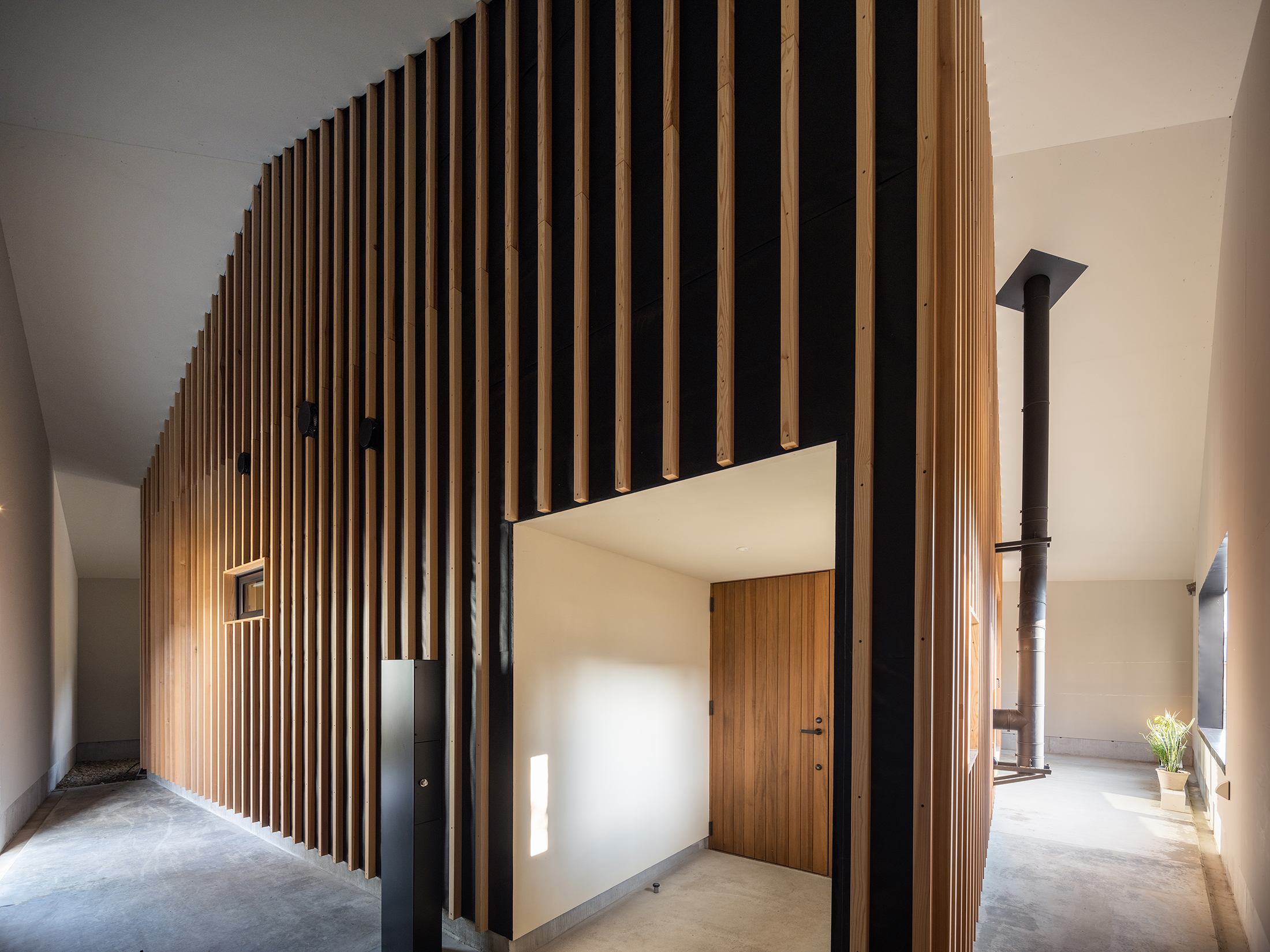
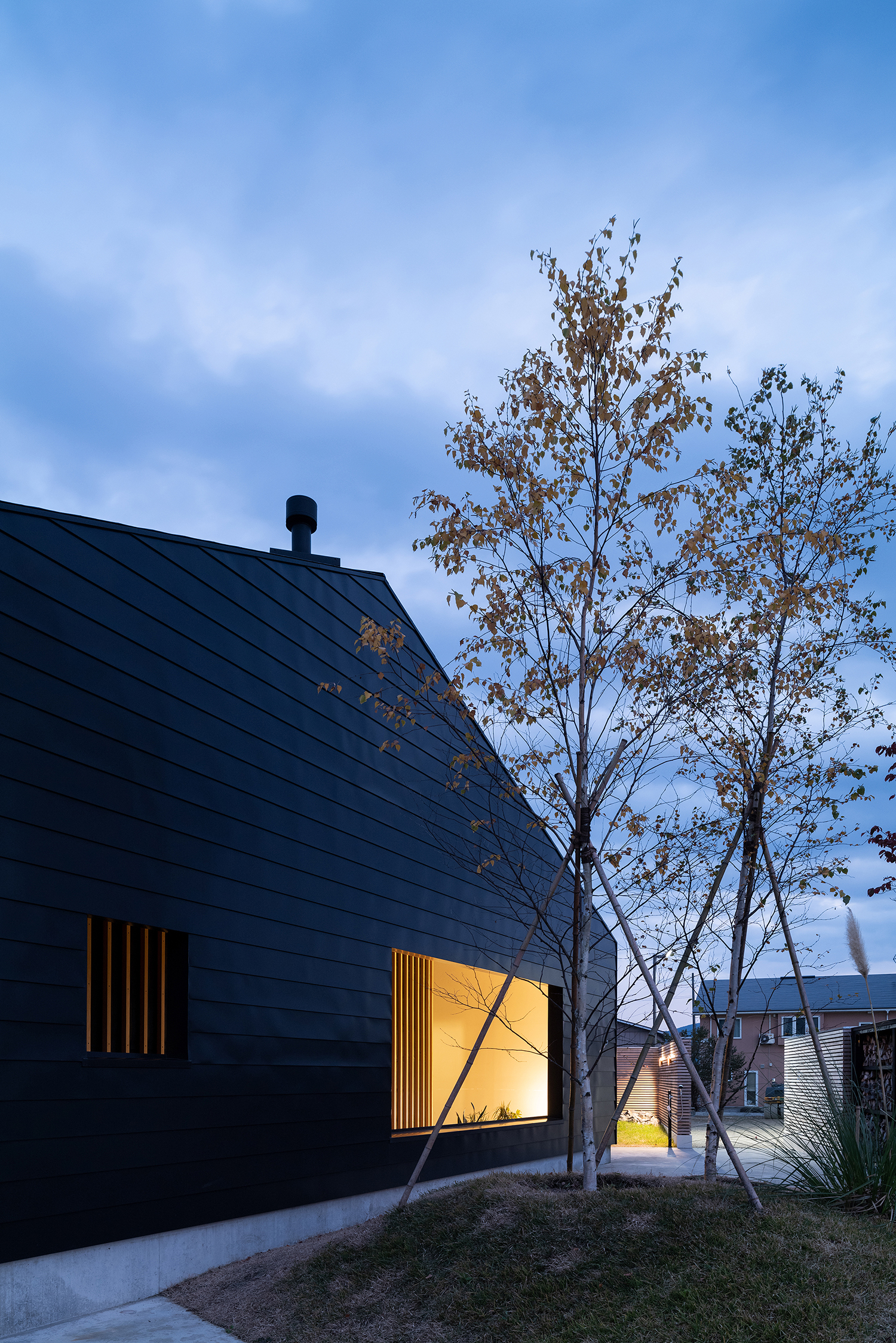
冬には積雪が2mを超え、平均気温も氷点下となる土地柄であるため、雪対策と温熱環境の確保が最大の課題となった。そこで、断熱した居住空間を「内皮」とし、その外側に半外部空間を設け、さらにガルバリウム鋼板を鎧張りした高耐久の「外皮」で覆う入れ子構造を採用。内皮は暑さと寒さを防ぎ、外皮は雪・風・視線から守る。二重壁による中間領域が厳しい自然環境をやわらげ、快適な住環境をつくり出している。
屋根形状と融雪装置による雪処理
屋根にも独自の工夫を施した。近年は温暖化の影響で降雪量が減少傾向にあるものの、2m近い積雪に見舞われる年もある。そこで無落雪屋根ではなく、勾配をつけた落雪屋根を採用。正方形平面の建物に三面を組み合わせた屋根をかけ、頂点を中心からずらすことで、開口部を避けて雪が落ちるように調整した。落雪した雪は井戸水を利用した融雪装置によって融かし、豪雪地帯における除雪負担を大幅に軽減している。
守りの外観、開放的な内部空間
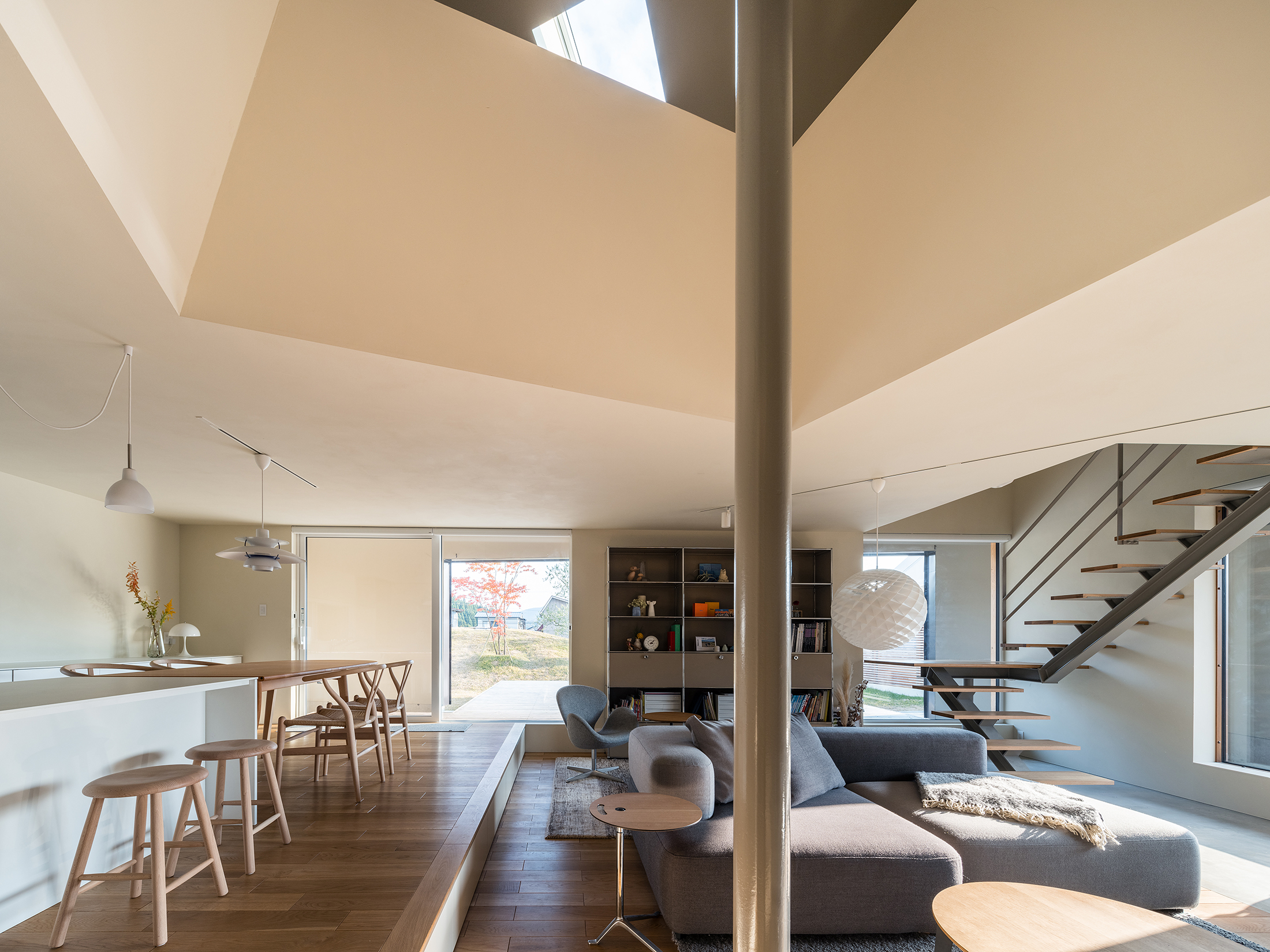
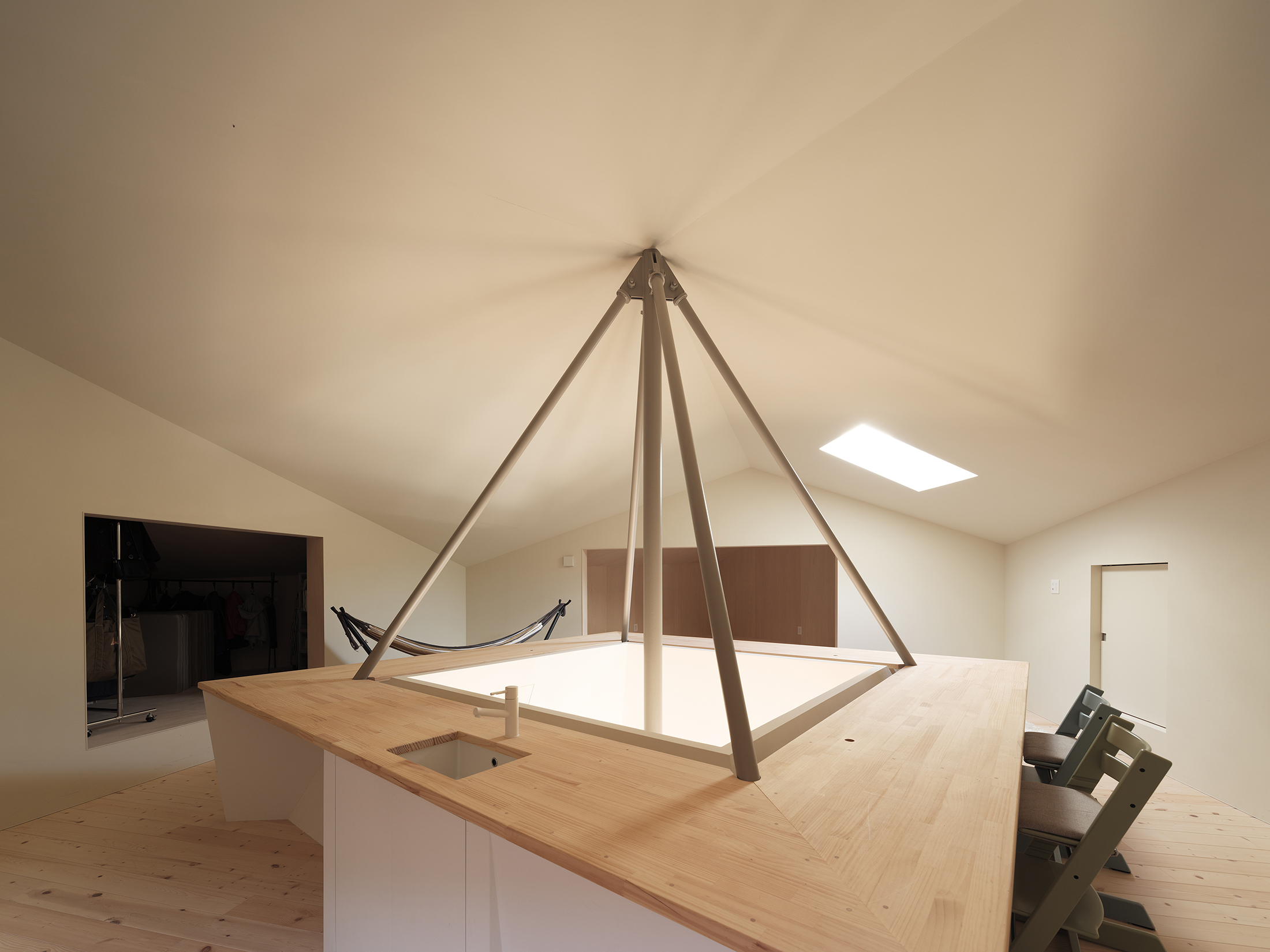
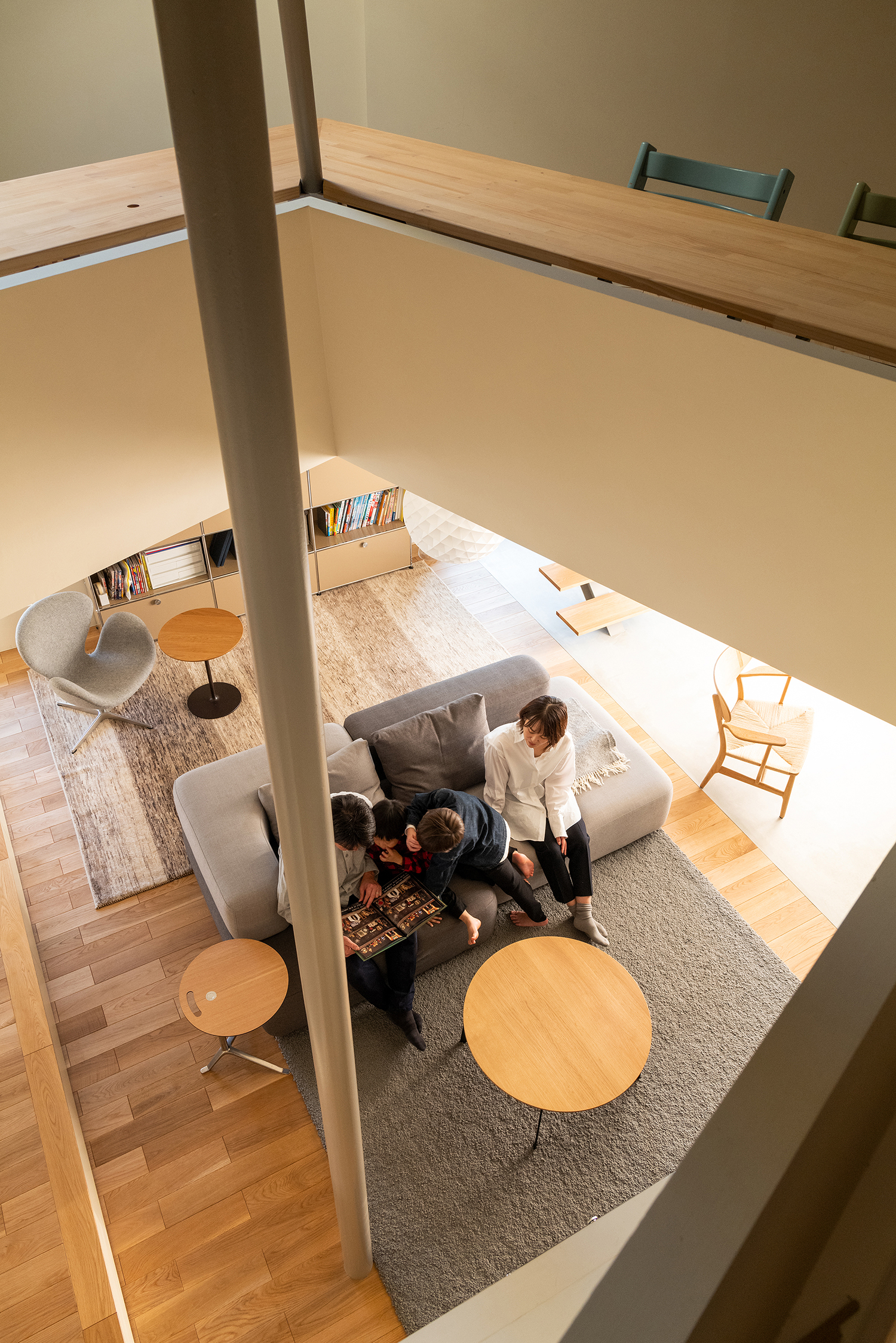
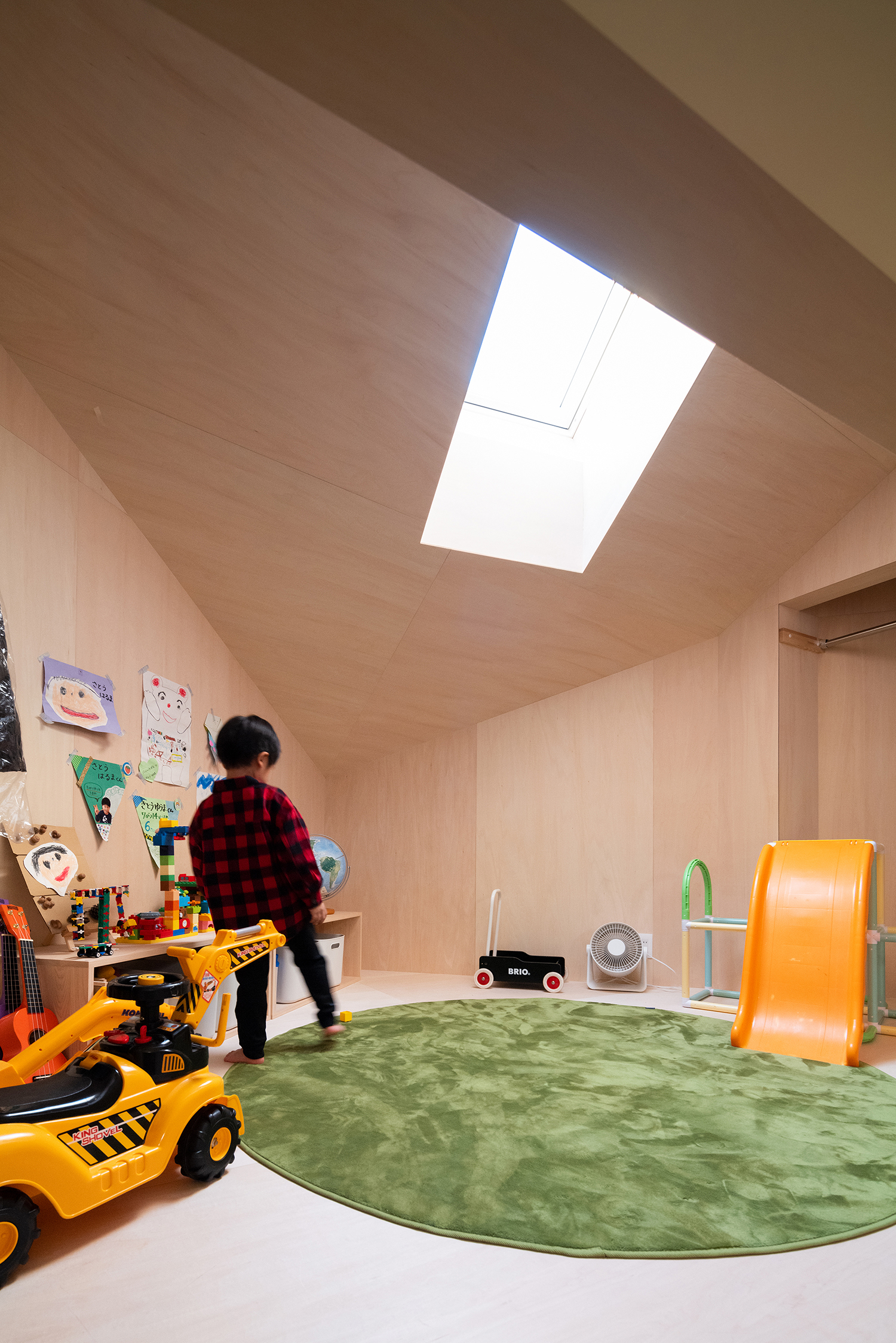
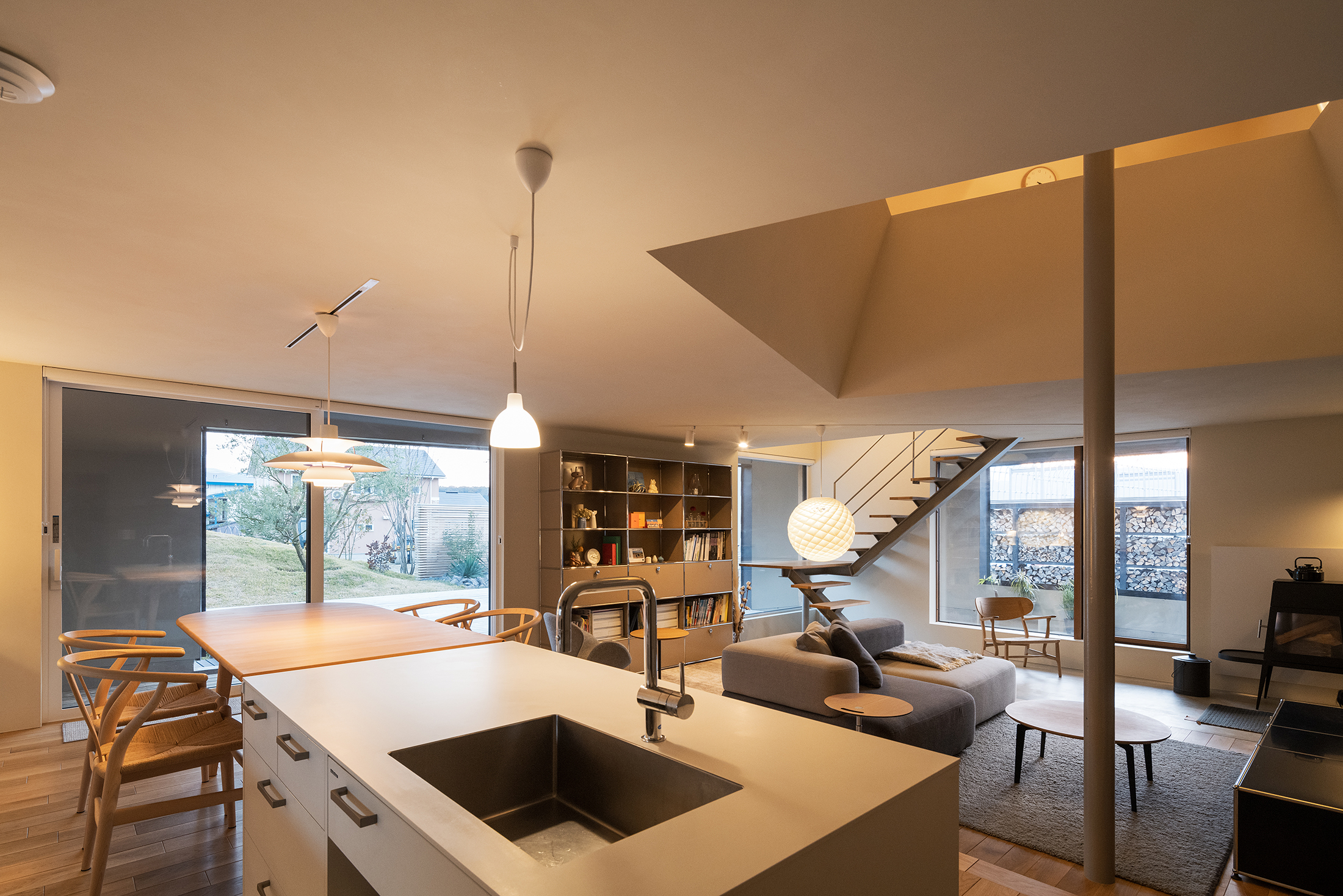
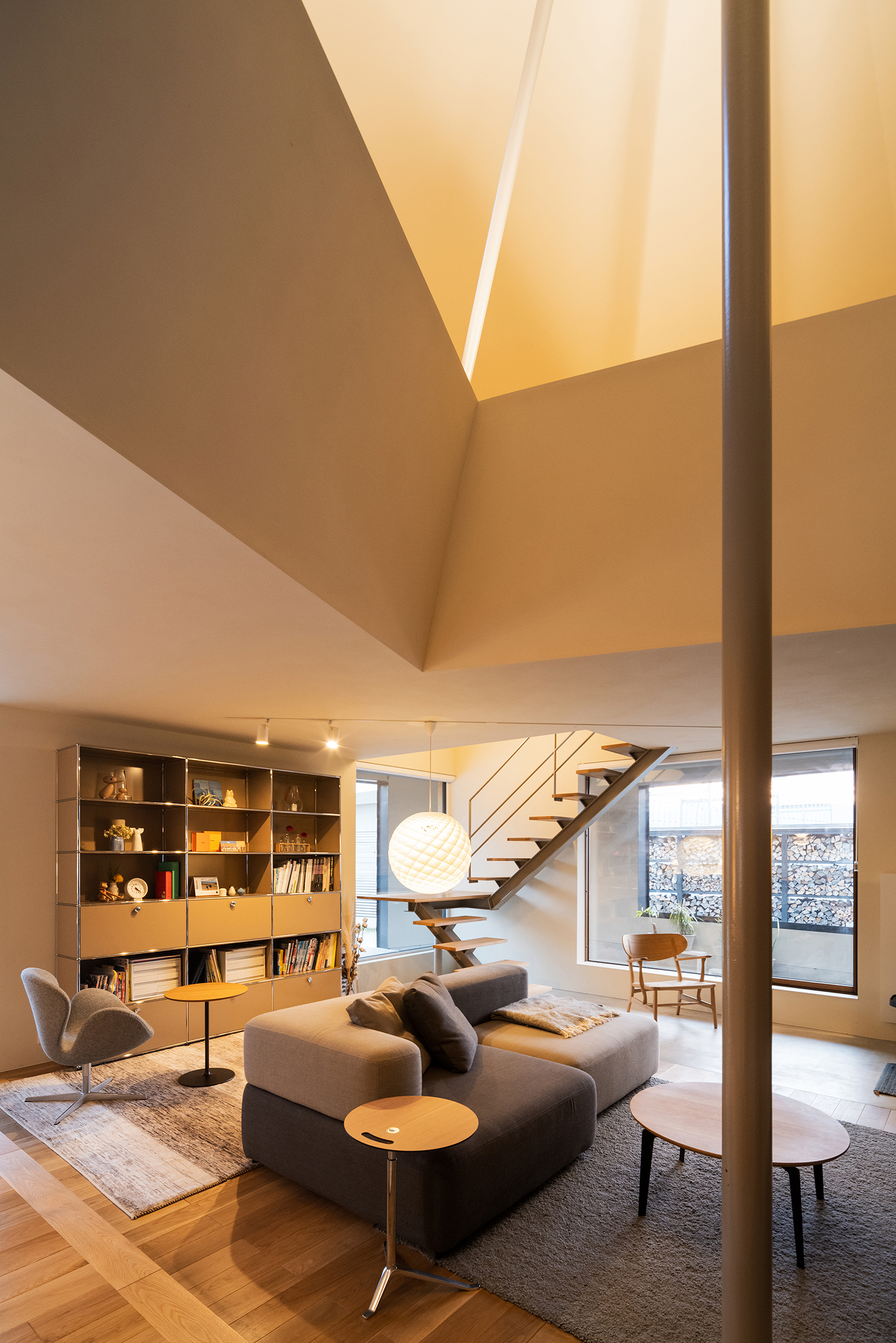
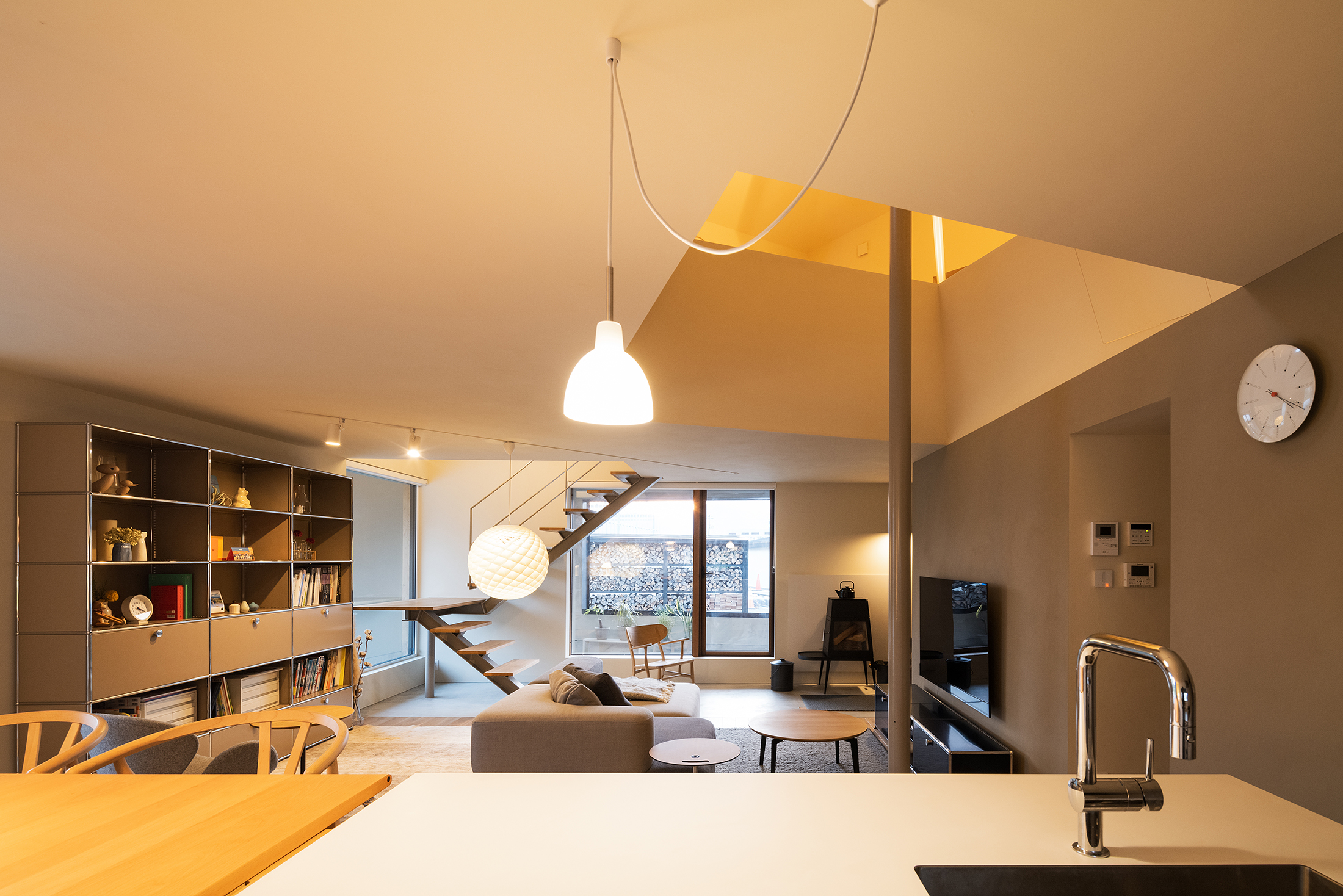
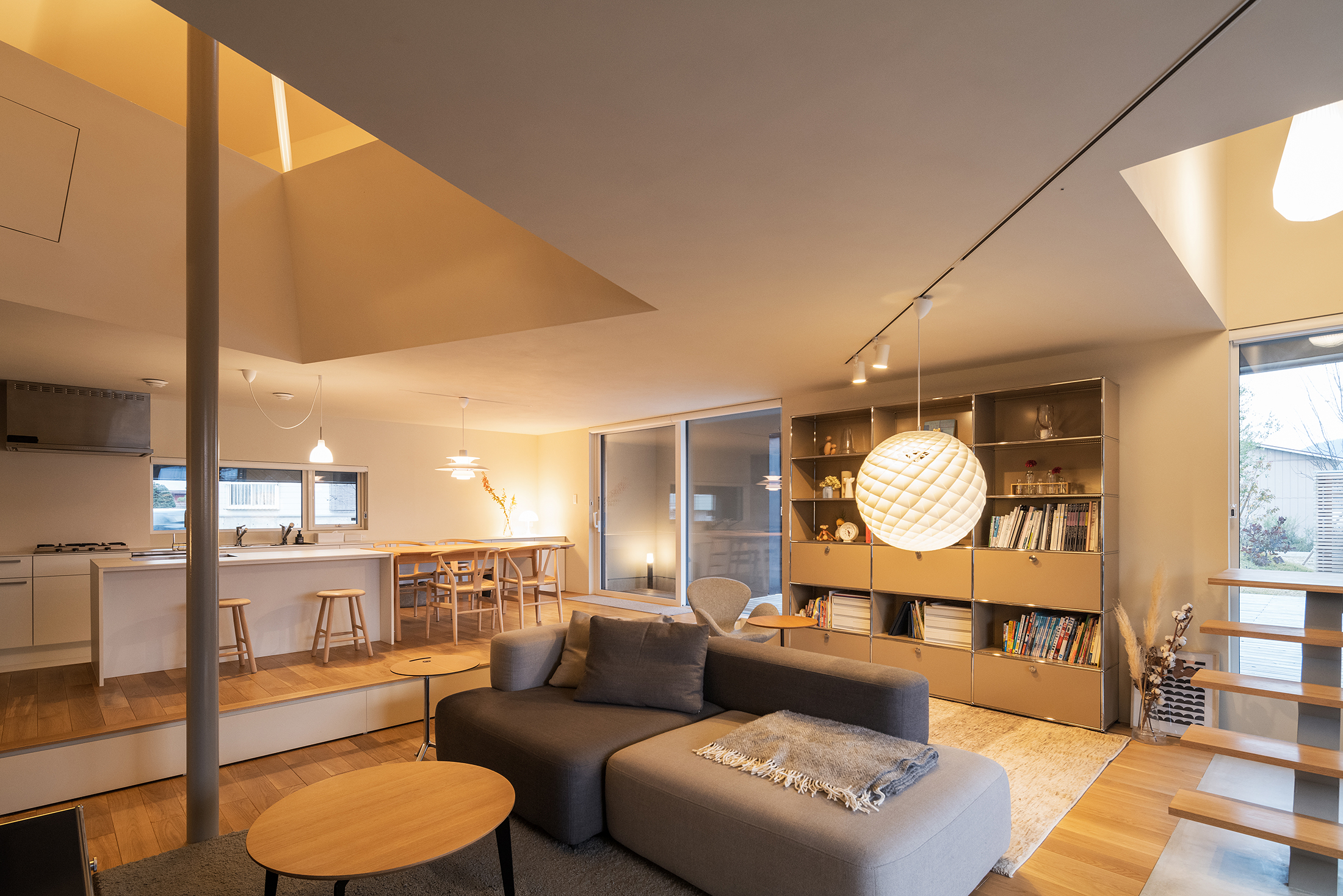
内部はシンプルな間取りでありながら、中央に角度を振った大きな吹き抜けを設けた特徴的な構造としている。構造設計は名和研二氏に依頼し、吹き抜け中央に鉄骨の大黒柱を設け、屋根から2階床を吊り下げることで大空間を成立させた。吹き抜けと二つのトップライトにより、採光・通風・視線の抜けを確保し、室内は驚くほど明るく開放感に満ちている。
二重壁がもたらす夏の快適性
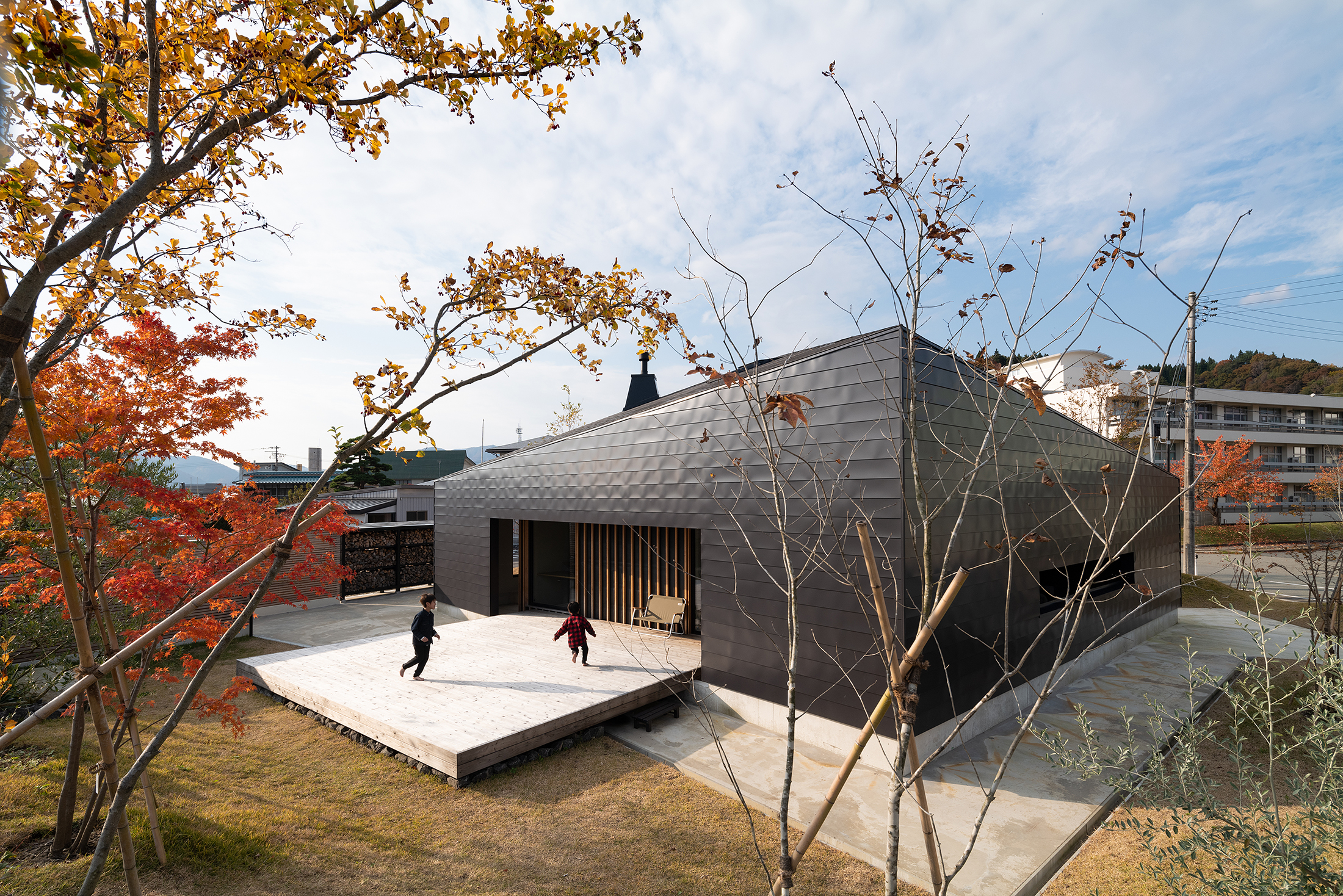
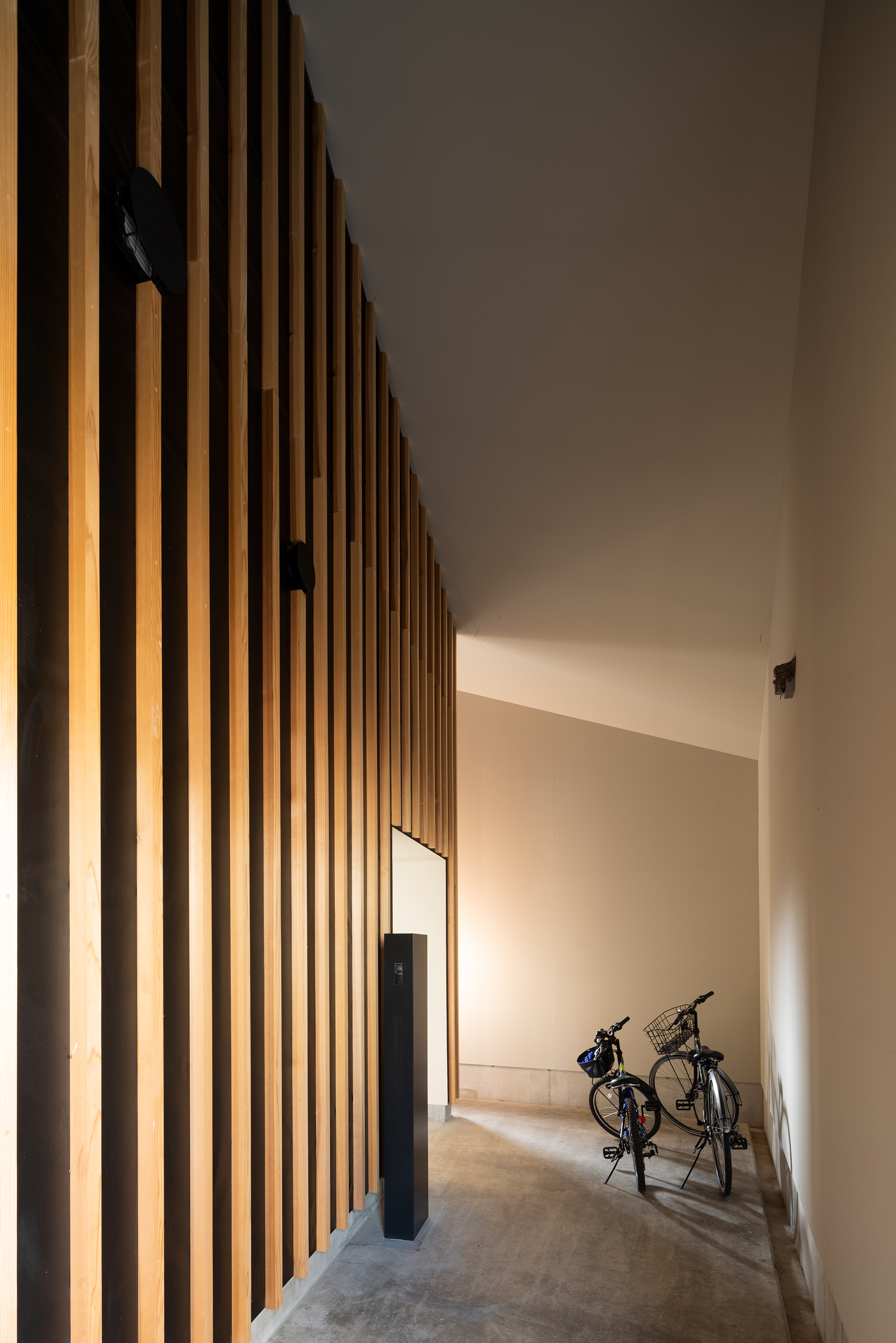
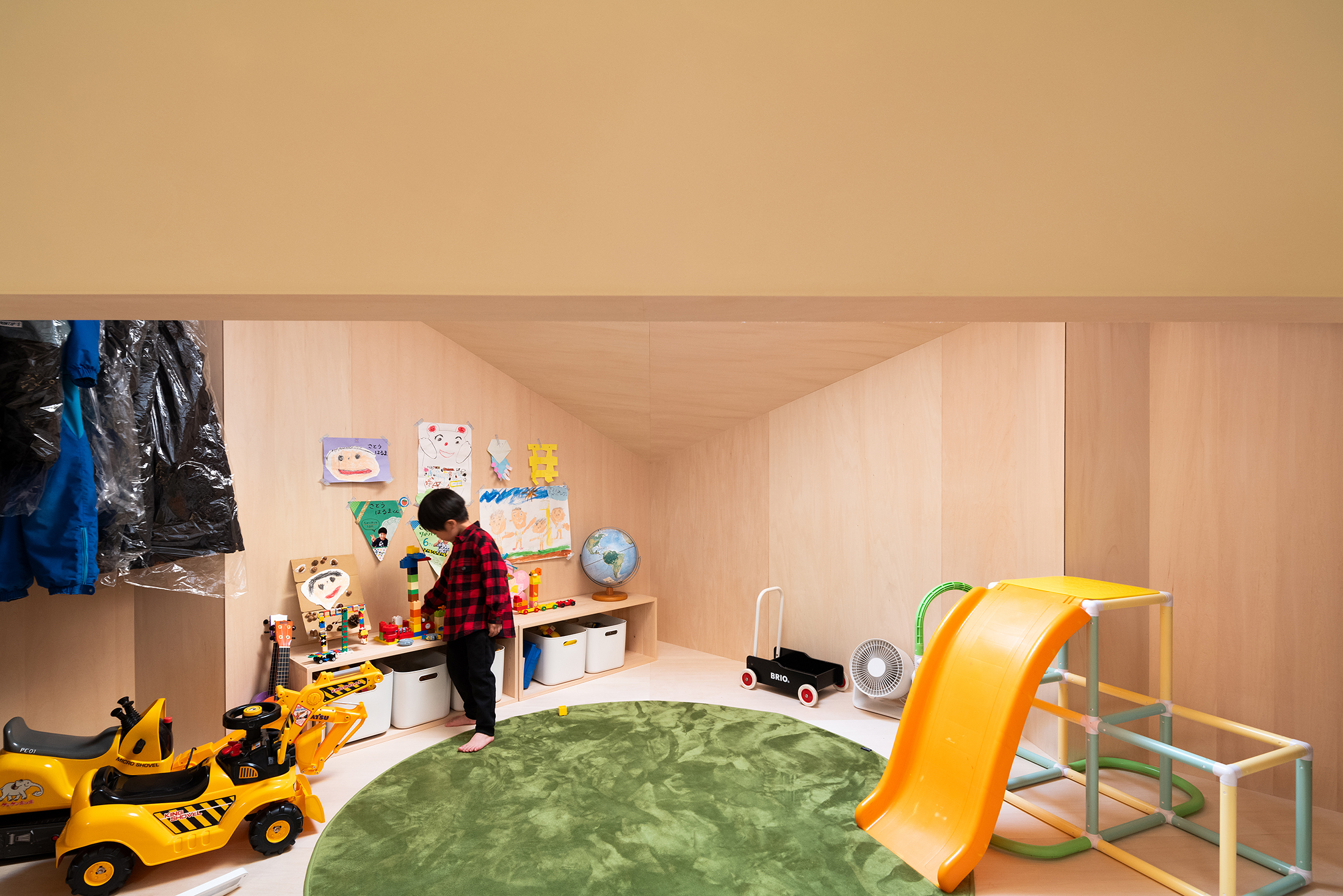
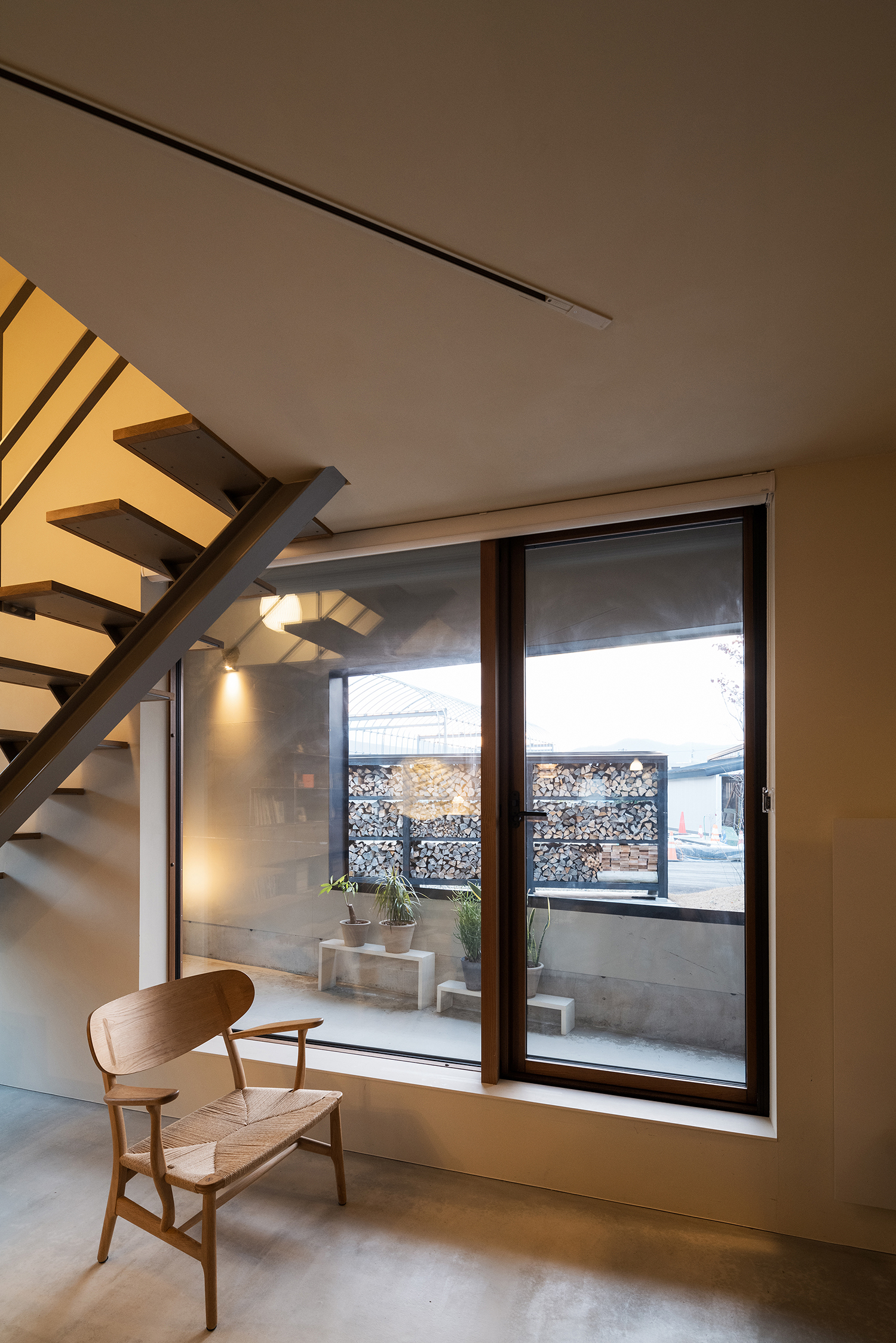
豪雪地帯での寒冷対策や雪処理は想定通り機能したが、二重壁構造の効果により夏場の快適性も想像以上であった。竣工後の猛暑日に訪れた際、室内や土間空間が驚くほど涼しく保たれていた。外皮と屋根が熱を遮り、放射冷却することで、特に土間は風通しと相まって木陰のような心地よさを生み出していた。この土間は中間層として設けられたが、通路や物置、園芸の場、さらには冬の子どもの遊び場など、多用途に活用されている。
過酷な自然環境でも心地よく暮らせる家
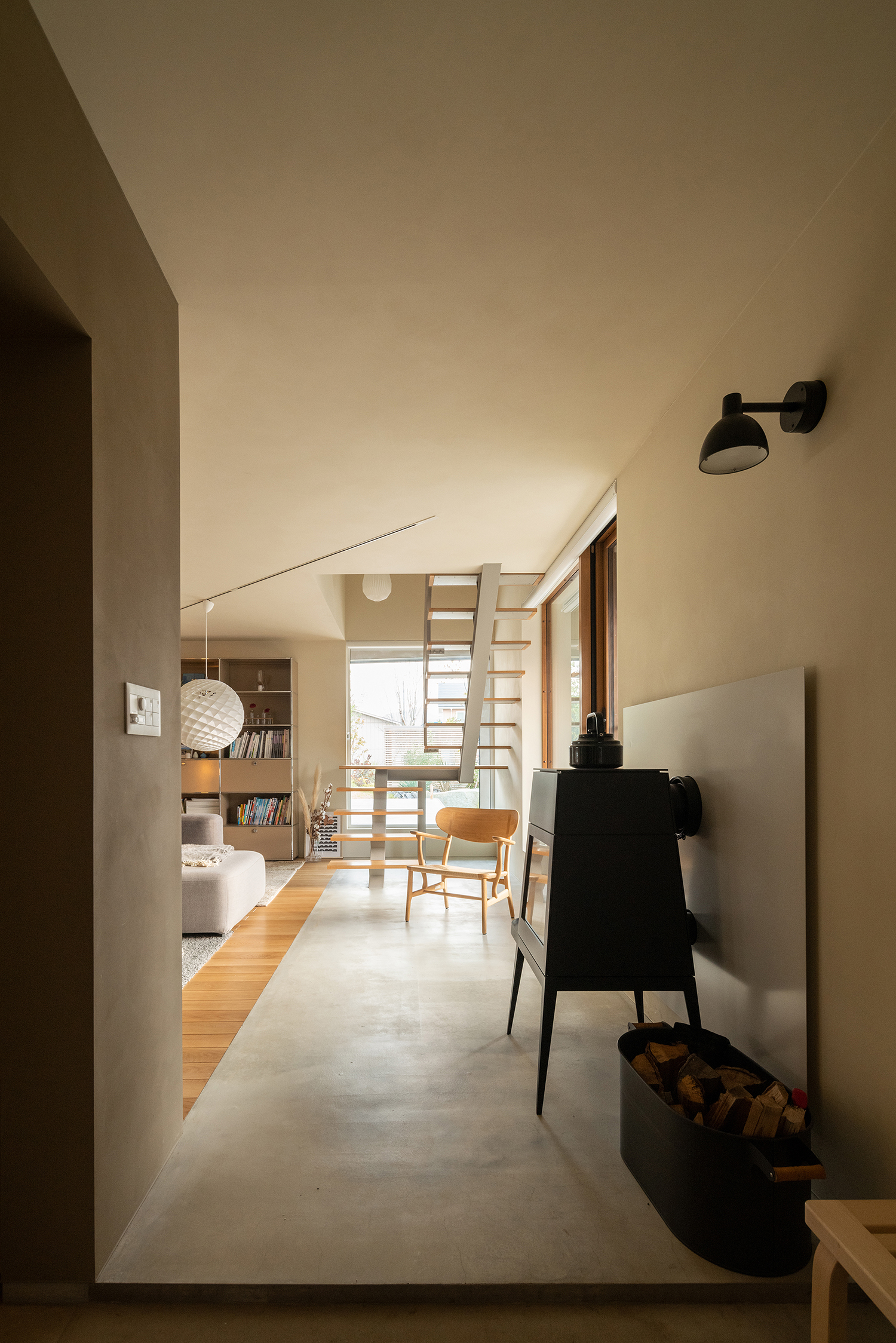
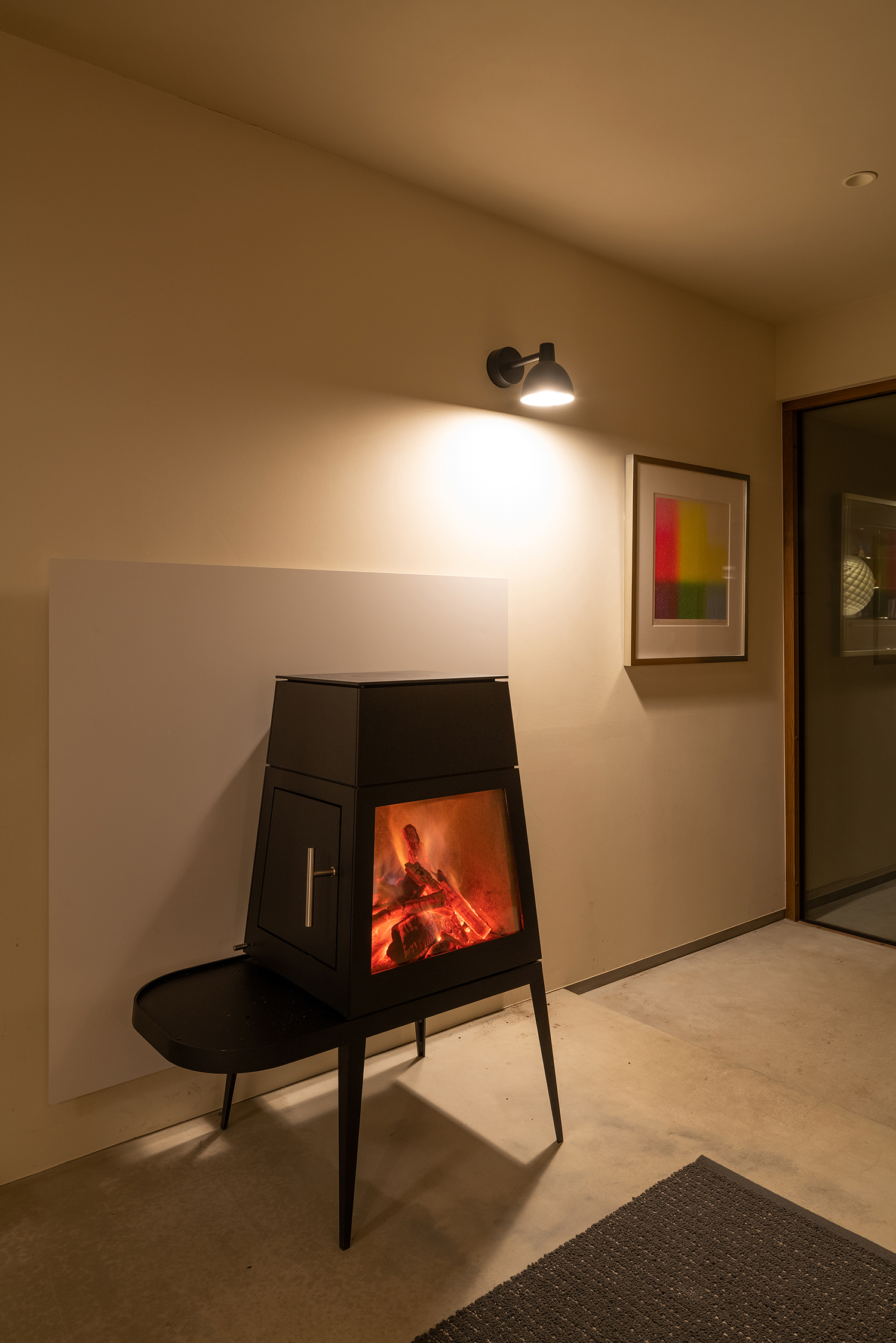
入れ子構造、中間層としての土間、独自の屋根形状、採光や通風を意識した空間設計。薪ストーブによる火が見える暖房。これらの建築的工夫により、厳しい自然環境と向き合いながらも、一年を通して心地よく暮らせる豊かな住まいが実現した。
Mogami House
A House Designed for Harsh Natural Conditions
Mogami Town, located in the northeast of Yamagata Prefecture and bordering Miyagi, is a small community of about 8,000 people. It is home to hot spring resorts such as Akakura, Ōhori, and Semi, yet the town is subject to a harsh climate—hot and humid summers and heavy snowfall in winter. Nestled in a basin surrounded by the Ōu mountain range, compact residential districts spread out across the landscape. Within one of these districts, about 300 meters northeast of JR Mogami Station on the Rikuu East Line, “Mogami Residence” was planned.
Nested Layers for Protection Against Snow and Cold
With average winter temperatures dropping below freezing and snowfall often exceeding two meters, the key challenge was ensuring thermal comfort while addressing snow management. The design adopts a nested structure: an insulated “inner skin” containing the living spaces, a semi-exterior buffer zone around it, and a durable “outer skin” clad in corrugated galvalume steel. The inner skin shields residents from heat and cold, while the outer skin protects against snow, wind, and views from outside. Between them, the intermediate layer softens the harsh environment, creating a comfortable and resilient living atmosphere.
Roof Design and Snow-Melting Systems
Another essential strategy lay in the roof design. Although recent years have seen declining snowfall due to climate change, some winters still bring nearly two meters of snow. To reduce structural load, the house employs a sloped roof that sheds snow, rather than a flat snow-retaining roof. The building is a square in plan, yet its three-plane roof is offset from the center so that snow falls away from openings. Fallen snow is then melted by a system that circulates well water beneath concrete surfaces around the house and along the approach, greatly reducing the burden of snow removal in this heavy-snow region.
A Protective Exterior, an Open Interior
While the plan is simple, the interior features a striking structural gesture: a large central atrium angled within the square plan. Structural engineer Kenji Nawa was consulted to realize this unique configuration. At the center of the atrium, a steel “great column” was suspended, supporting the second-floor slab from the roof above and allowing the creation of a spacious interior. The atrium, combined with two skylights, brings abundant daylight, natural ventilation, and visual openness, making the interior bright and remarkably airy.
Summer Comfort Through Double Walls
While the cold-weather and snow-control measures performed as intended, the double-wall system unexpectedly enhanced summer comfort as well. During a site visit on a sweltering day after completion, both the interior and surrounding earthen-floored buffer spaces remained surprisingly cool. The outer shell and roof absorbed and radiated heat away, while cross-ventilation in the buffer zone created a refreshing, shaded atmosphere akin to being under a tree canopy. This earthen-floored zone, conceived as an intermediate layer, has proven versatile—functioning as a passageway, storage, gardening area, and even a winter play space for children.
A Home for Comfortable Living Amid Harsh Conditions
With its nested structure, buffer-zone earthen floor, distinctive roof form, and careful consideration of daylight and ventilation, the “Mogami Residence” demonstrates how architecture can respond to a severe natural environment while ensuring year-round comfort. It aspires to set a new standard for residential design in heavy-snow regions.
最上の家
所在地/山形県最上町
主要用途/住宅
<設計>
意匠 菊池佳晴建築設計事務所 担当/菊池佳晴 遠藤和郎
構造 なわけんジム(すわ製作所)/名和研二
<施工>
建築 共栄ハウジング 担当/櫻井幸一
沼澤工務店 担当/古澤康広
植栽 カワムラガーデン 担当/川村博崇
<構造・構法>
主要構造・構法/木造在来構法
基礎/べた基礎
構造/耐震等級3(許容応力度計算)
<規模>
階数/2階建
軒高/5775mm 最高高さ/7000mm
延床面積/建築物237.22m2(71.75坪)
<工程>
設計期間/2017年11月〜2019年4月
工事期間/2019年5月〜2020年3月
<敷地条件>
都市計画区域内 市街化区域
第一種住居地域
許容建蔽率60% 許容容積率200%
地域地区 22条地域
地区計画 なし
道路幅員 北15.3m(公道)
<外部仕上げ>
屋根/ガルバリウム鋼板t0.4横葺き
外壁/ガルバリウム鋼板t0.4横葺き
開口部/木製トリプルサッシ(ノルド)
樹脂トリプルサッシ(YKKap 430)
トップライト(ベルックス)
日射遮蔽/庇
<内部仕上げ>
床/北海道なら節なしフローリングt15(チャネルオリジナル)
壁/ポーターズペイント(クラブエイトスタジオ盛岡)
天井/ポーターズペイント(クラブエイトスタジオ盛岡)
キッチン/ホルツ
レンジフード/フェデリカ(アリアフィーナ)
<浴室>
ユニットバス
<設備システム>
暖房/薪ストーブ シェーカー(スキャムサーム)
冷房/エアコン2台
換気/3種換気
給排水 給水方式/直結
排水方式/下水道直結
給湯 給湯方式/ガス給湯器24号(リンナイ)
<断熱仕様>
基礎下/防蟻ビーズ法ポリスチレンフォーム50mm全面敷き
基礎/防蟻ビーズ法ポリスチレンフォーム100mm
壁 /高性能グラスウール16kg225mm
屋根/高性能グラスウール32kg300mm+ネオマフォーム30mm
<温熱計算>
Ua値/0.35W/m2K
C値/0.2cm2/m2
<撮影>
西川公朗