
WORKS
松島の家
松島の家
観光地に計画した住まい
日本三景・松島の観光エリアに程近い敷地に計画した、若い4人家族のための住まいである。敷地は観光客向けの有料駐車場として利用されていたスペースであり、その奥にはご主人の両親が暮らす実家が建っている。こうした条件から、「観光客や実家との程よい距離感」が設計上のテーマとなった。また、建築費が上昇し始めた時期のプロジェクトだったこともあり、限られた予算の中で性能を担保しながら、「大きさ」ではなく「質」で応える住宅が求められた。
実家との適度な距離感への対応
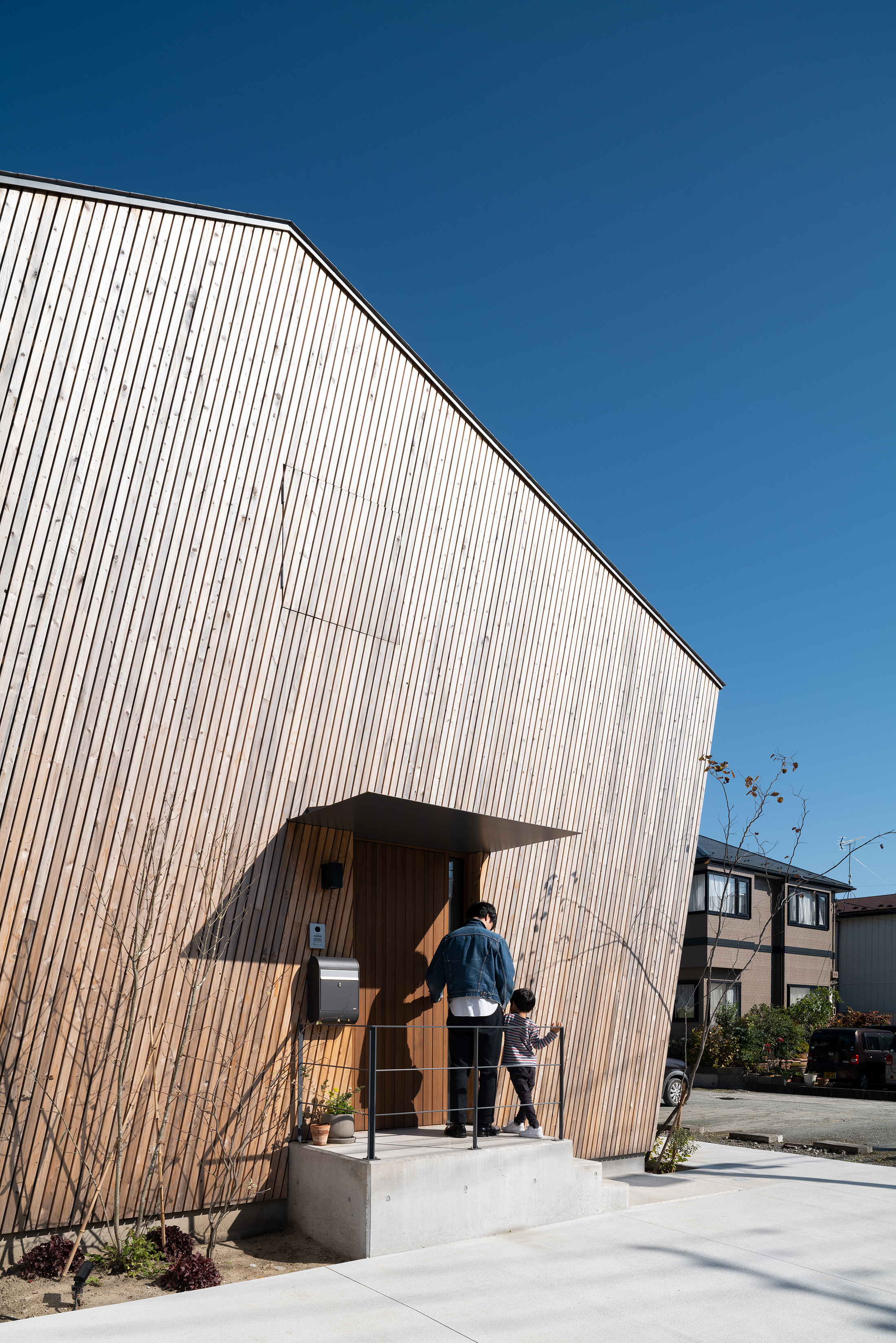
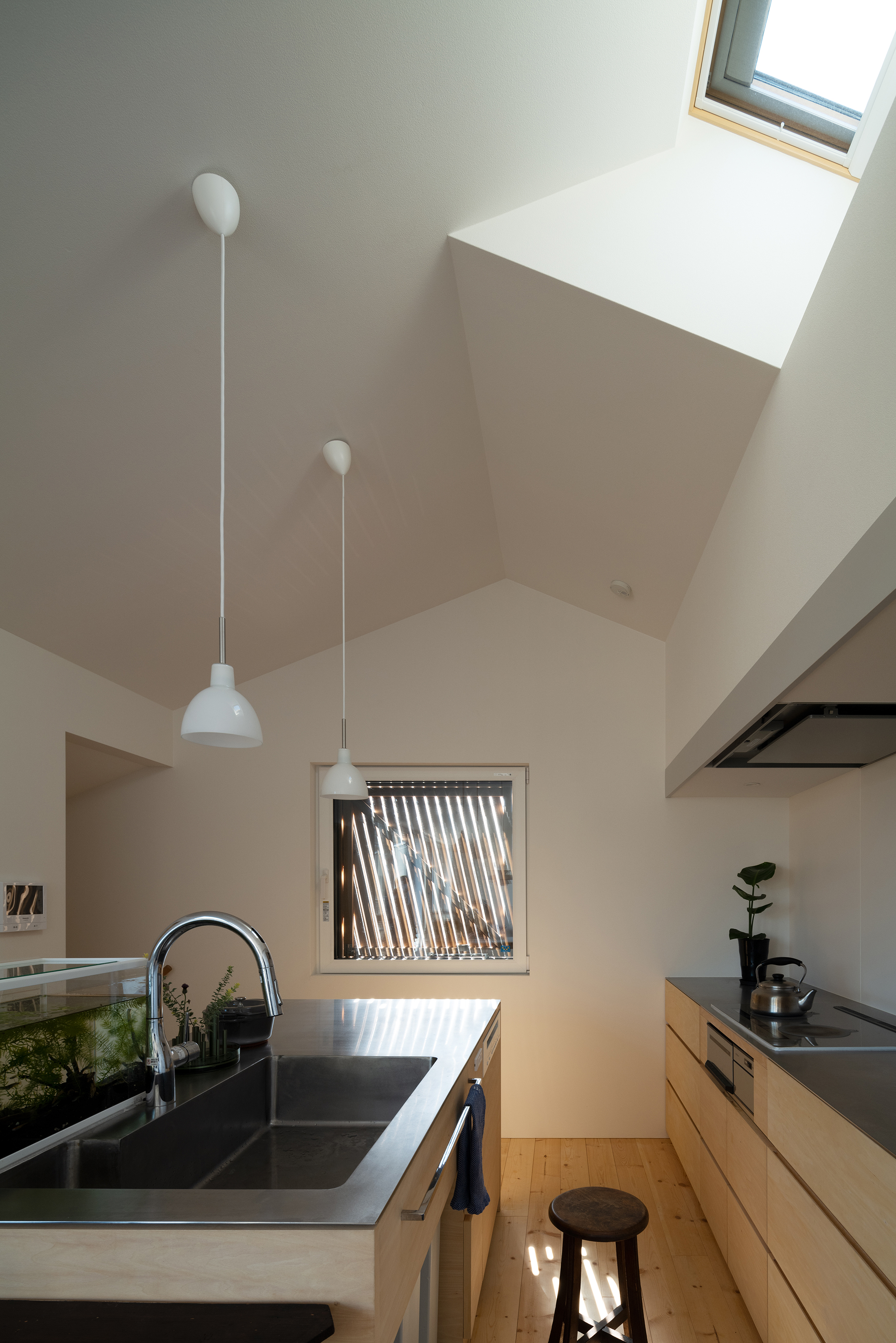
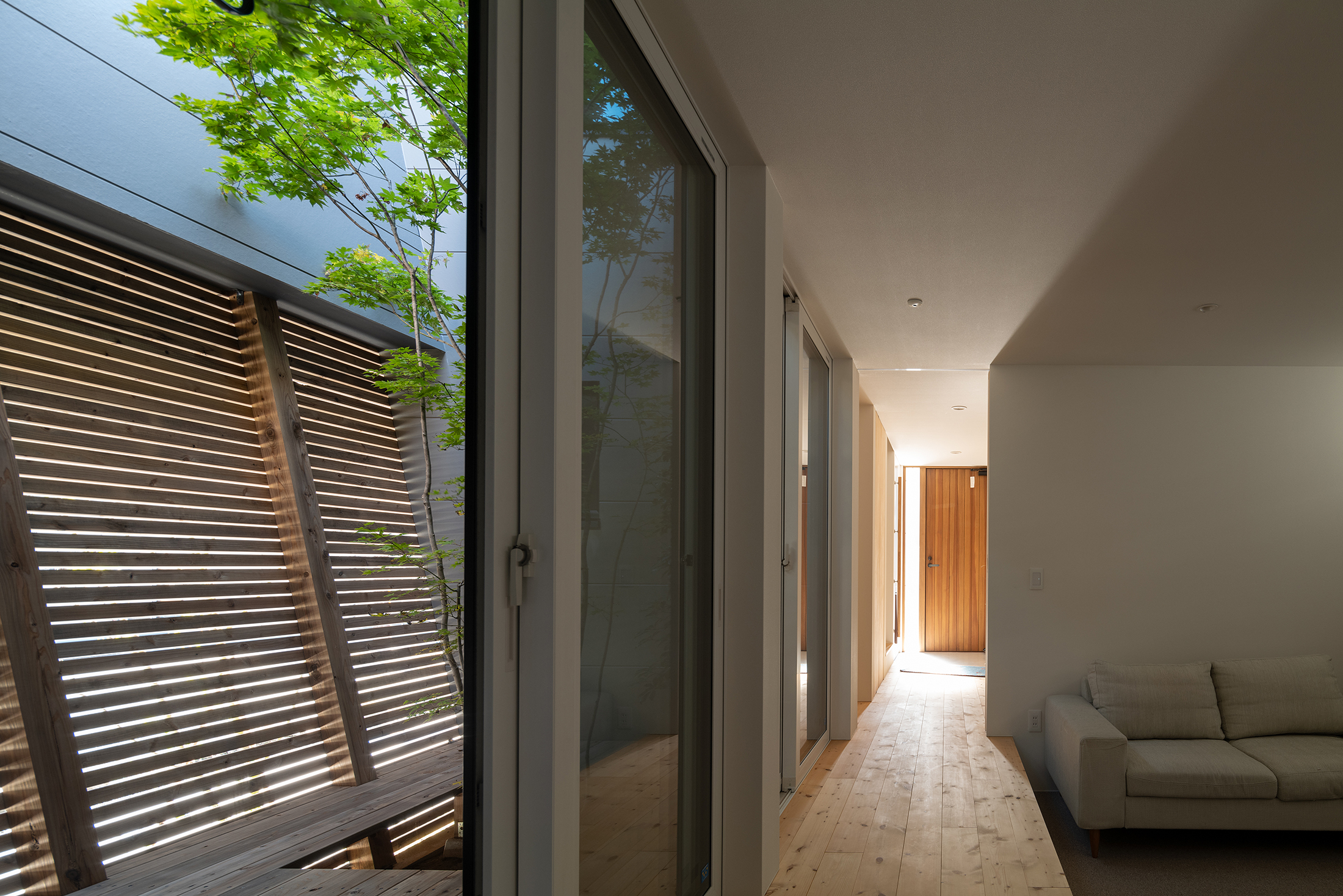
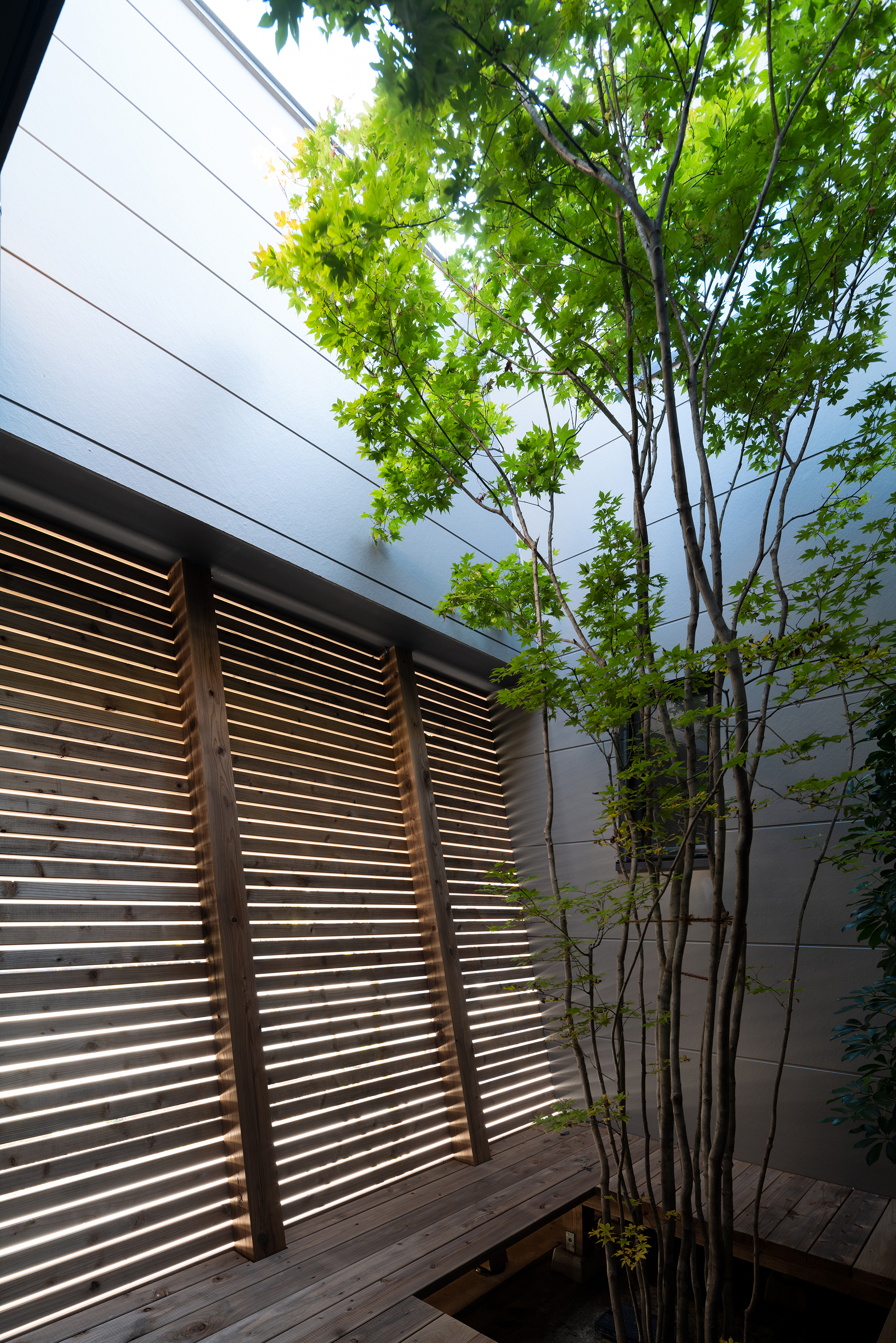
実家へは本計画建物の南側通路を介して行き来する配置である。このため、1階は外部に対して極力閉じ、通路を通る両親や訪問客の視線が直接内部に入り込まない構成とした。LDKを2階に配置したのも、距離感と開放感を同時に成立させるためである。1階には中央に吹き抜けの中庭テラスを設け、その部分の壁に木製ルーバーを用いることで、直接的な視線を遮りつつ、光や風、海辺特有の気配を内部に引き込んでいる。閉じてプライバシーを確保しつつも外と絶妙につながる、その繊細なバランスを意識した。
「コンパクト」の中に躍動する「開放感」
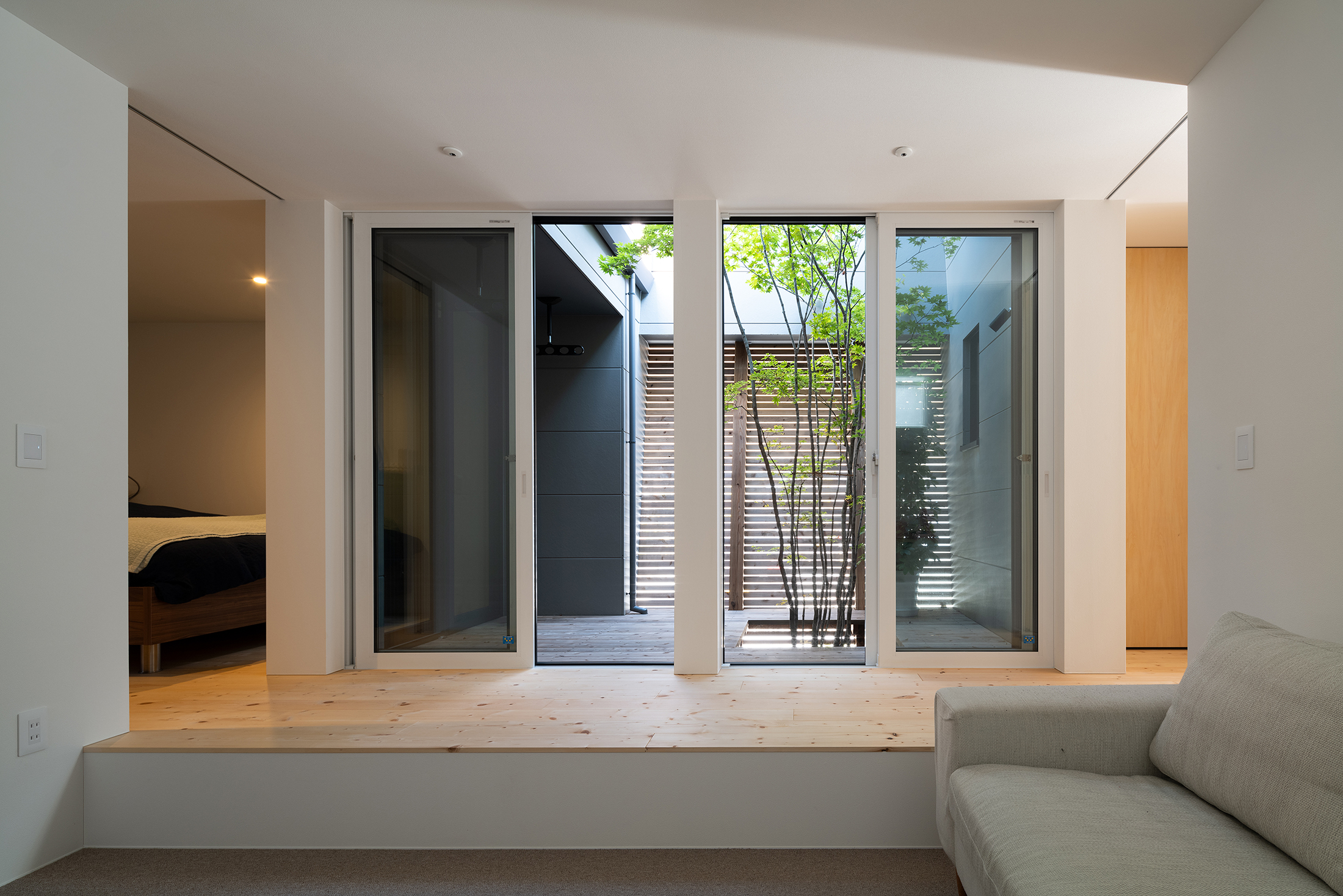
内部は必要最小限の動線でまとめ、約28坪という床面積の中に生活の余白を組み込んだ。全体的なボリュームを抑えるため、1階の天井はあえて低く設定しているが、この操作が寝室においては安心感のある居場所を生んでいる。隣接するフリースペースは、将来的な用途変更も見据えた空間として計画し、床レベルを一段下げ、中庭と繋げることで開放感を与えた。
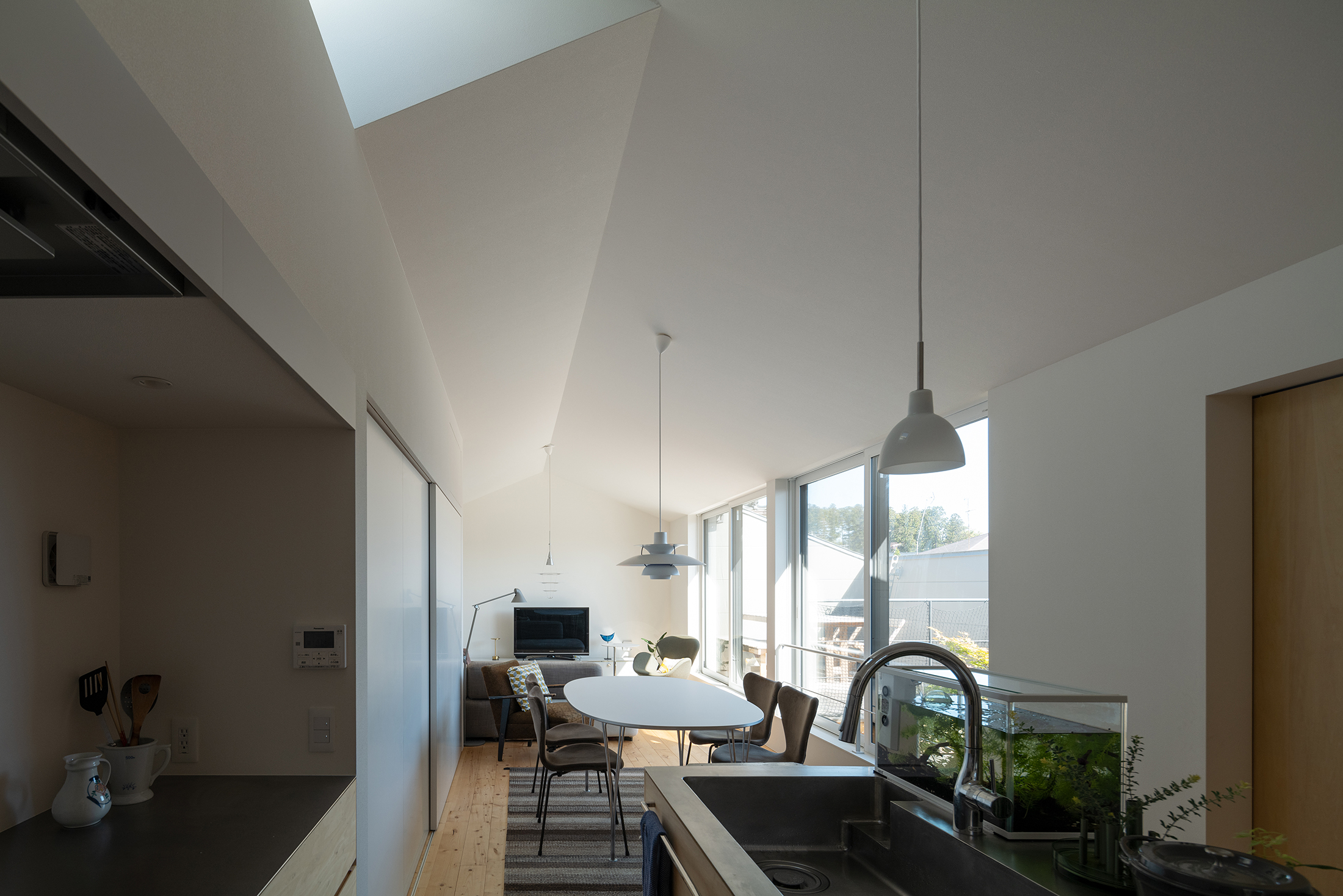
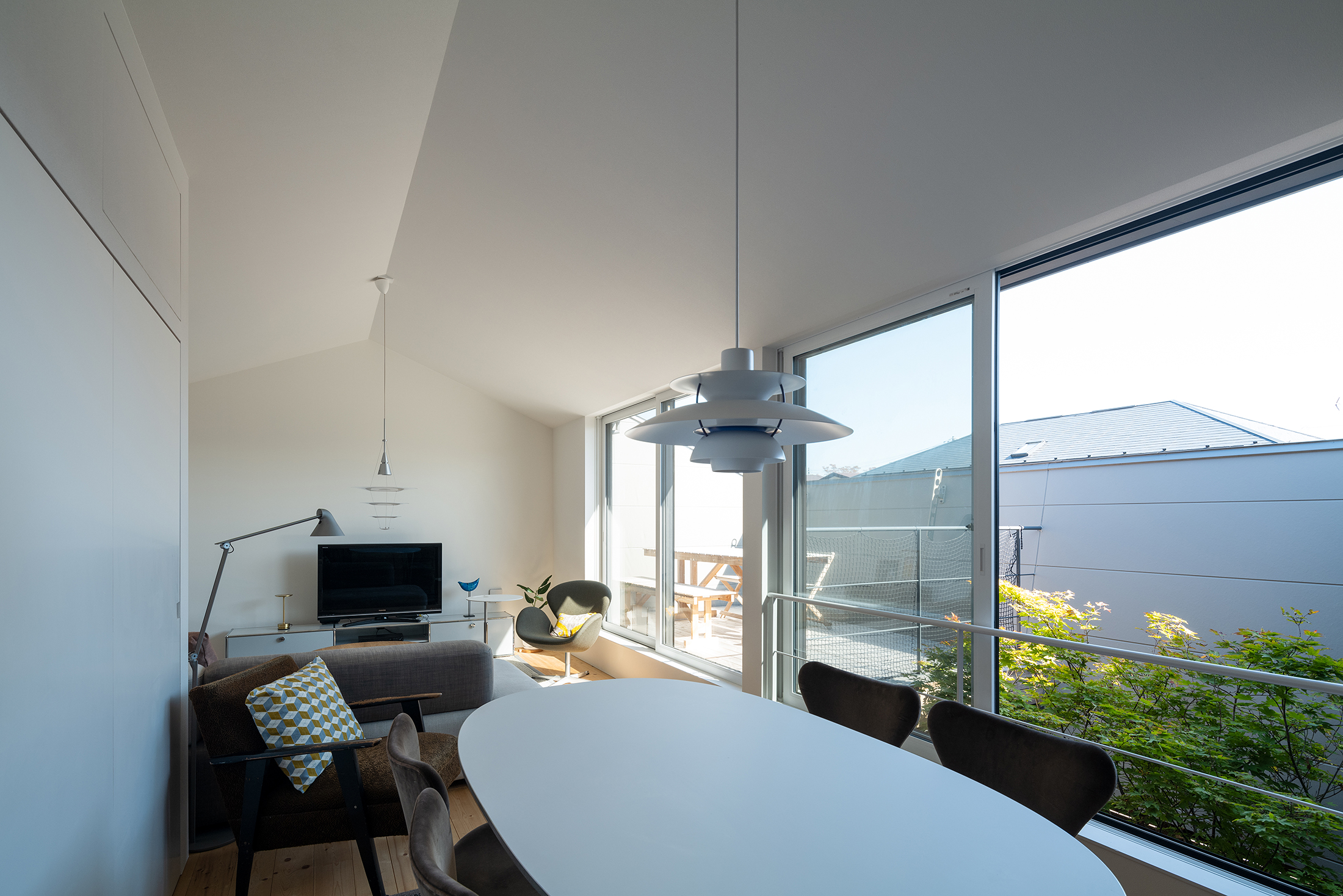
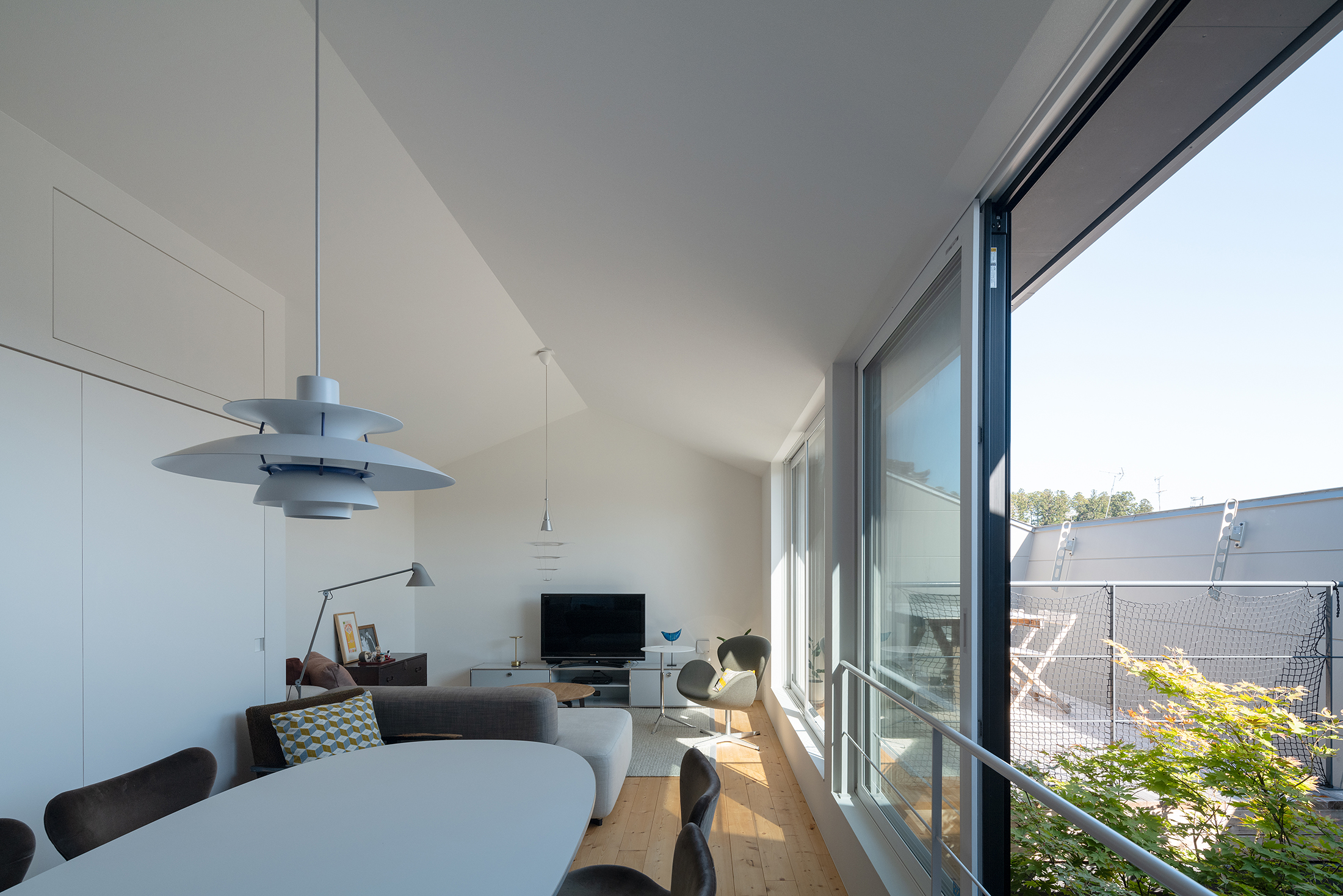
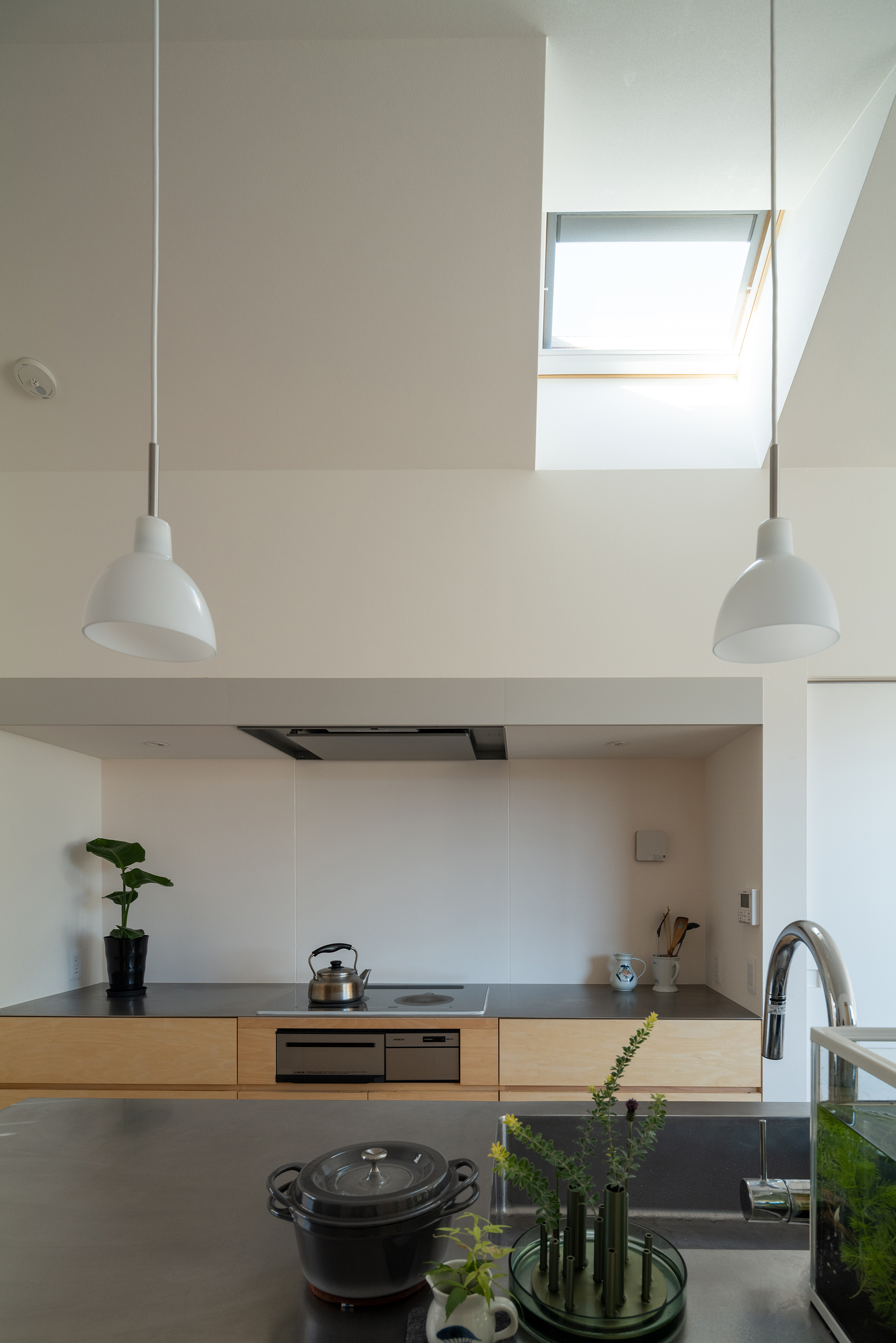
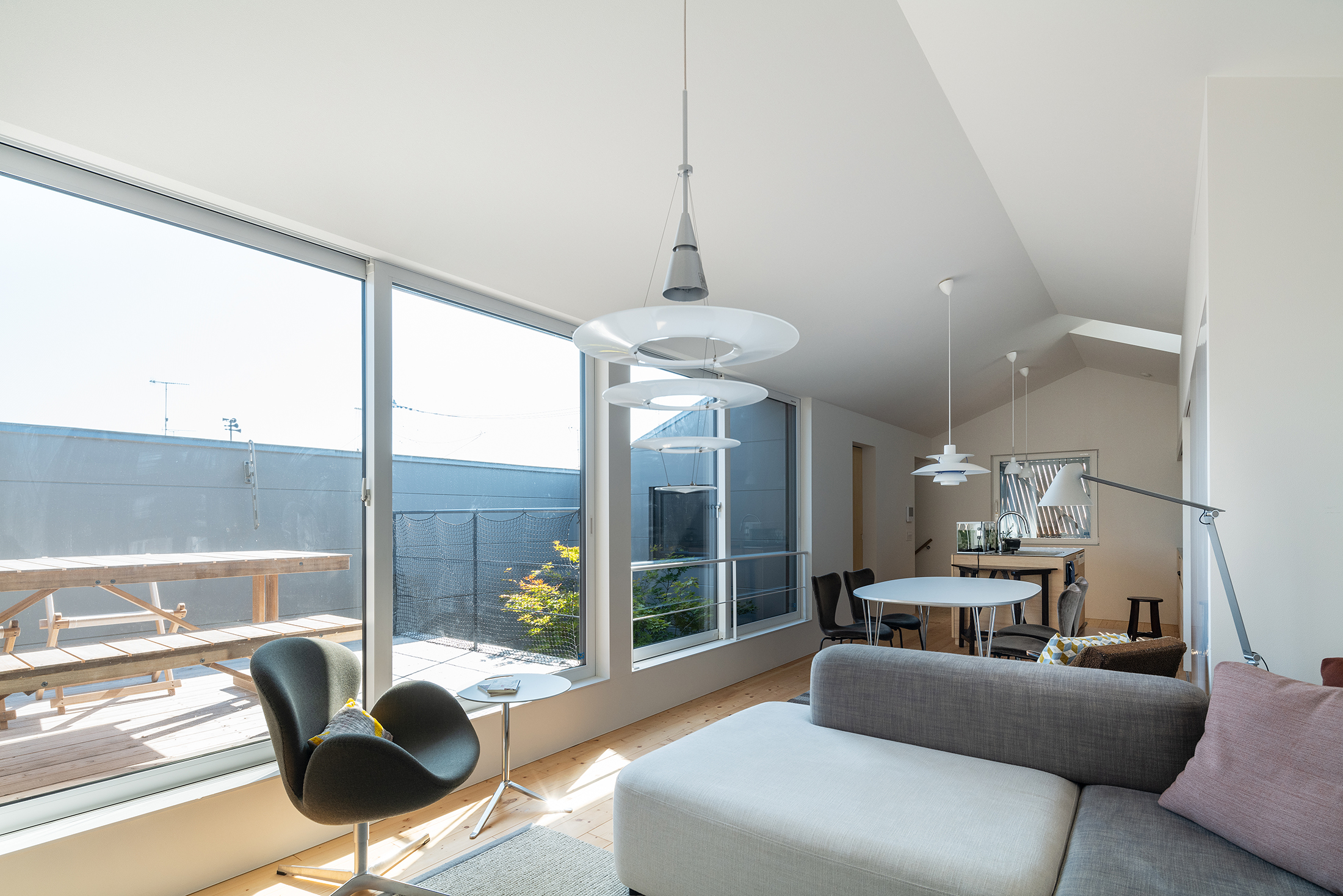
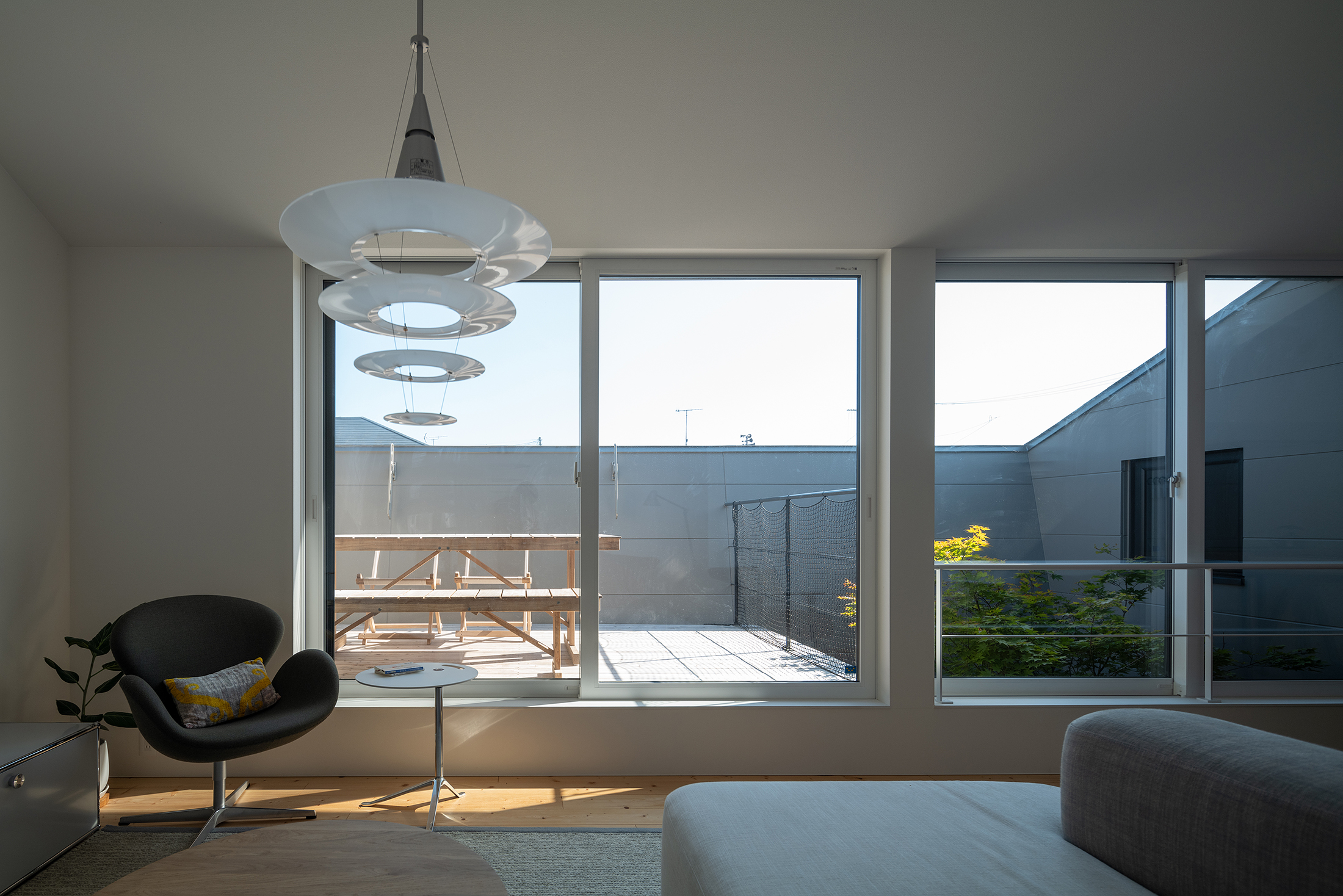
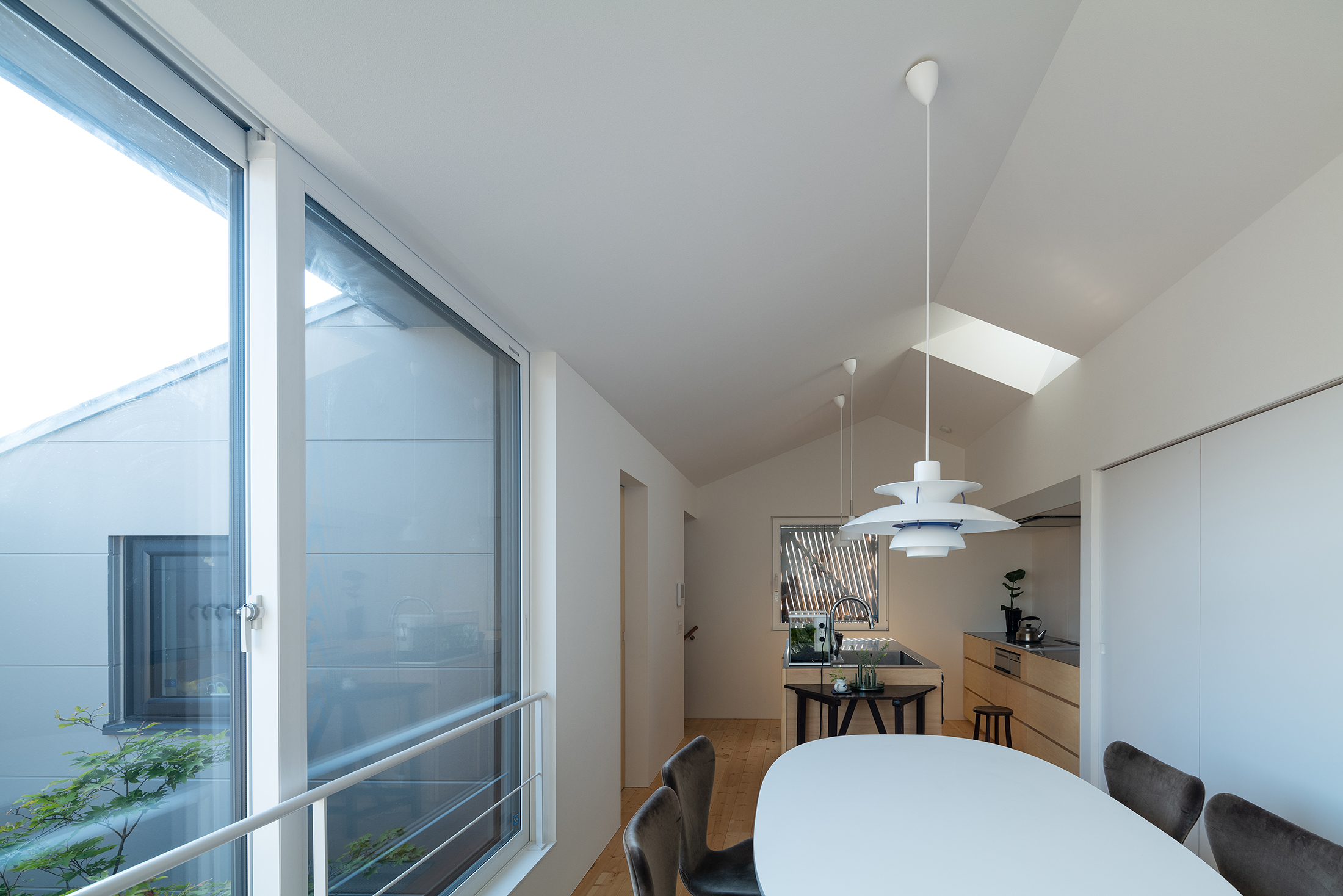
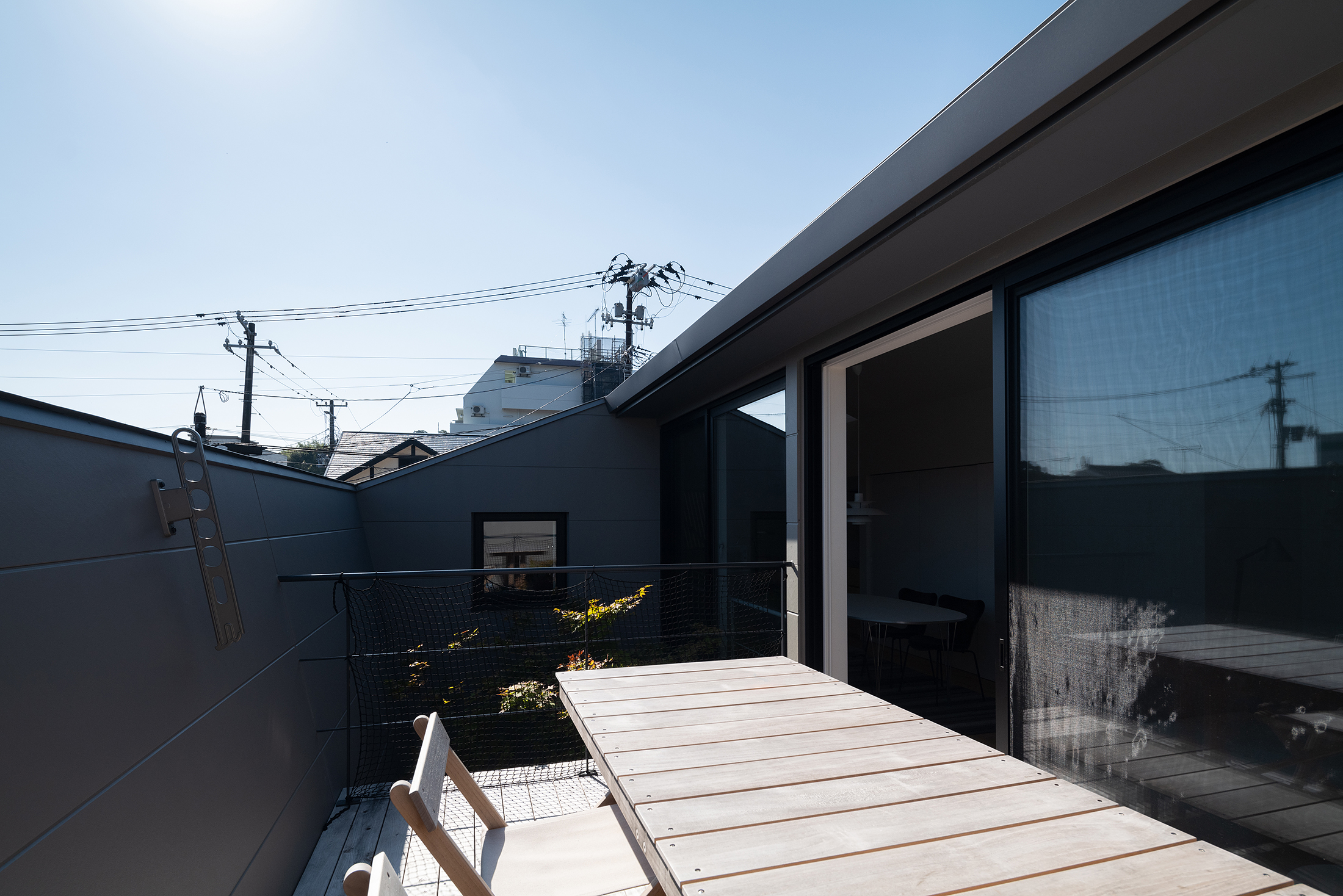
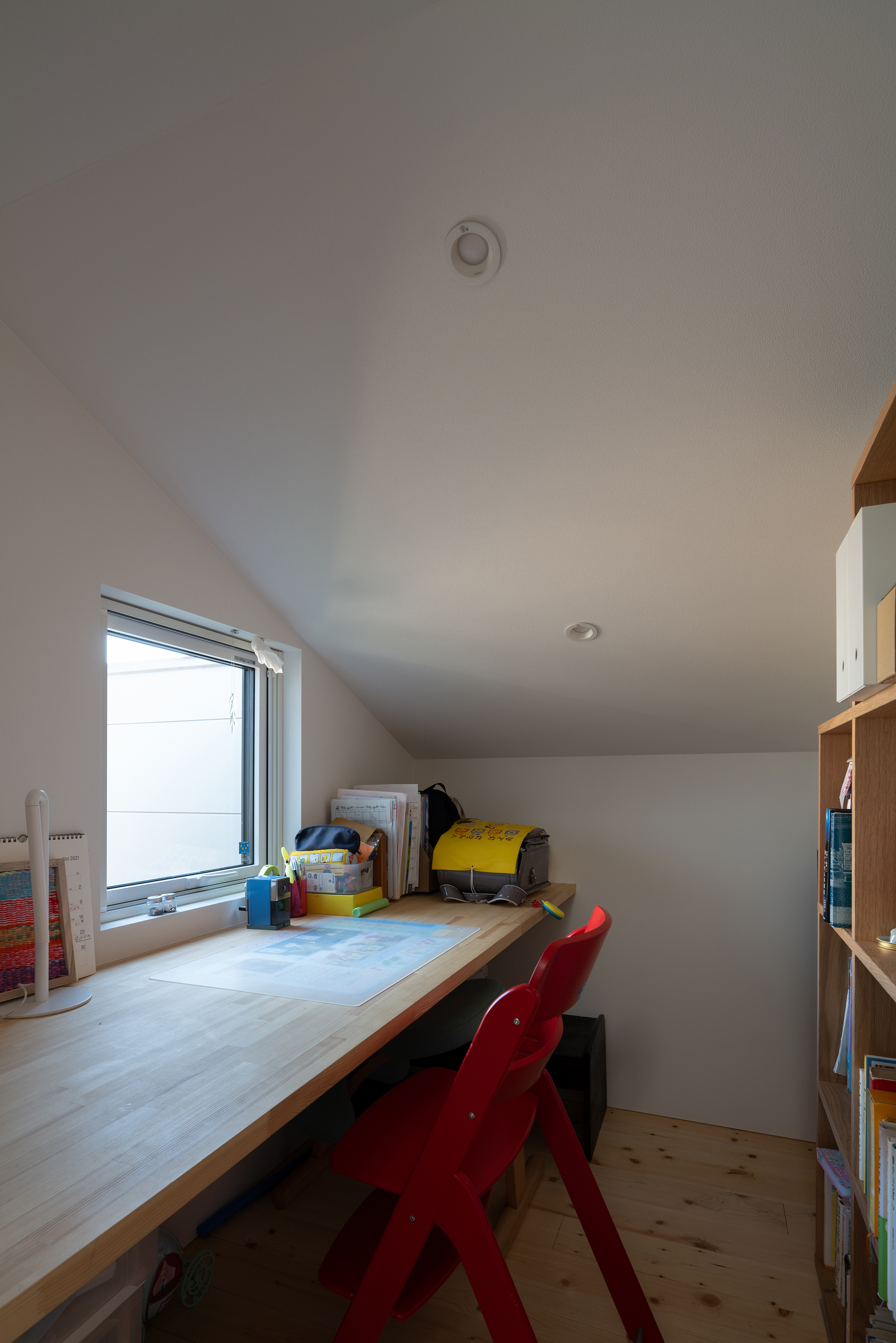
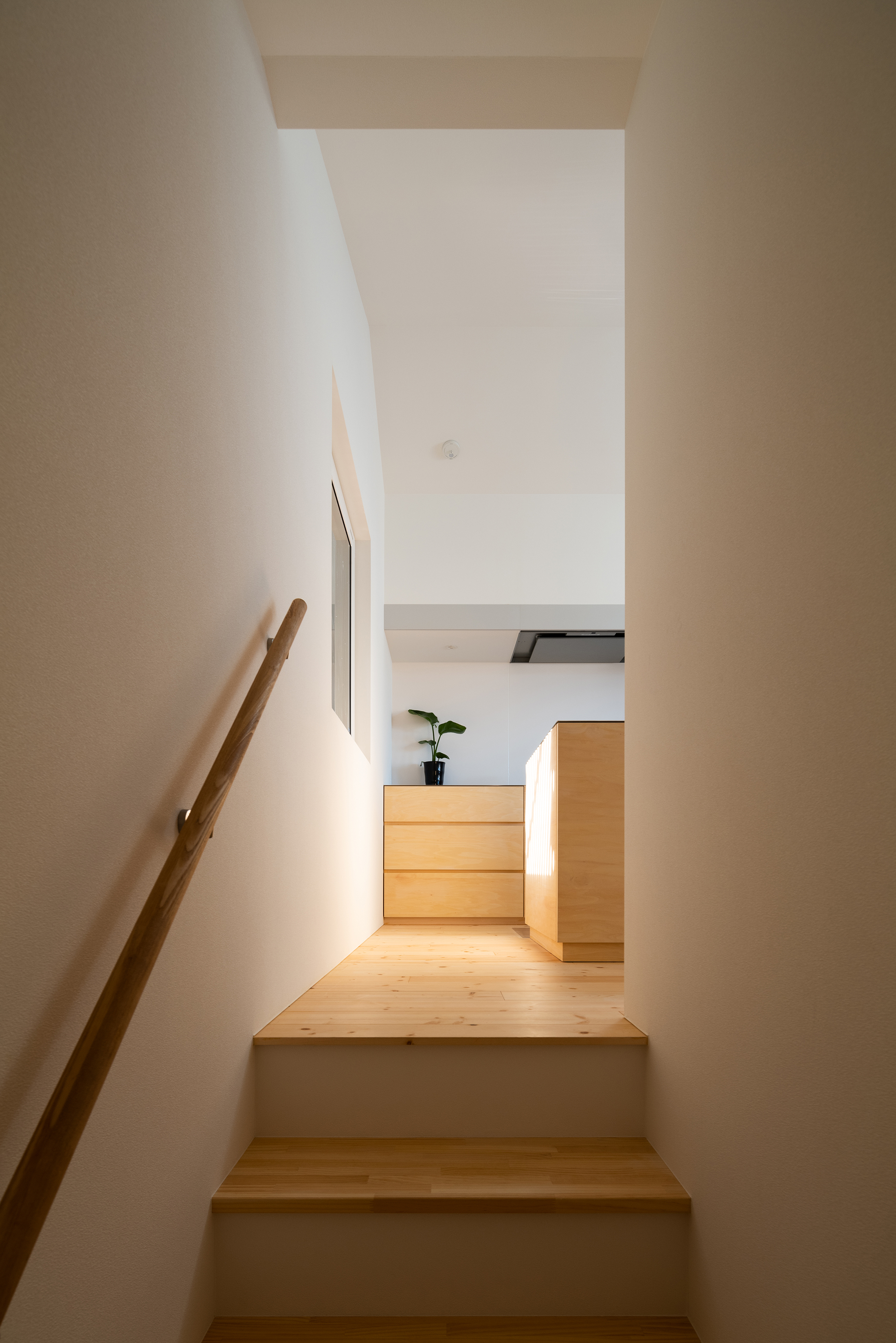
2階は、日常の中心となる仕切りのないワンルーム空間である。階段はあえてコンパクトに抑え、上り切った先にLDKが一気に広がる構成とした。下階で抑えられたスケール感から、視界が一気に開けることで、実面積以上の広がりを感じさせる。南面には天井までの大開口を設け、バルコニーの袖壁によって外部視線を制御しながら、空と光の変化を室内に取り込み、カーテンに頼らない暮らしを可能にしている。
特徴的なフォルムの設計意図
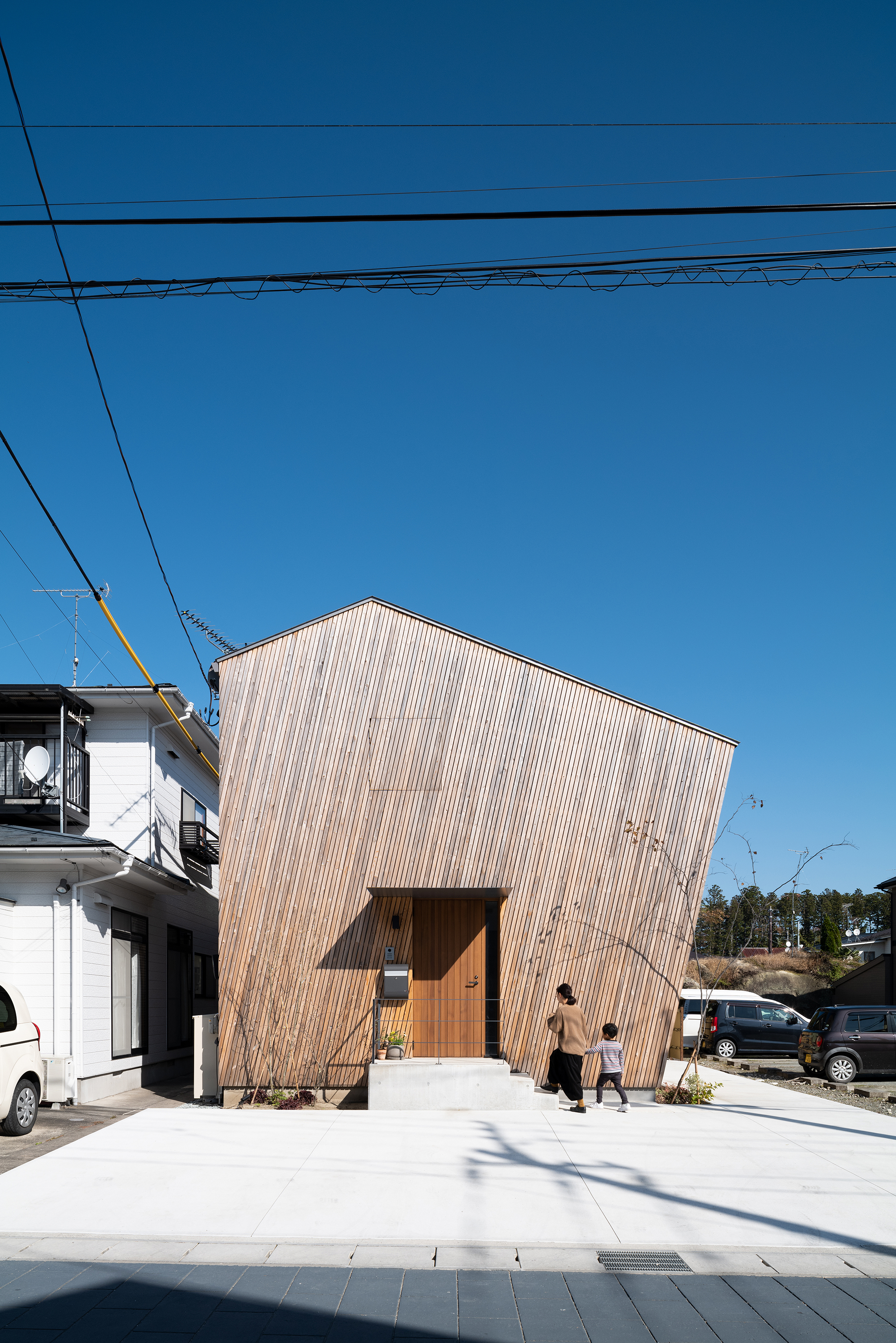
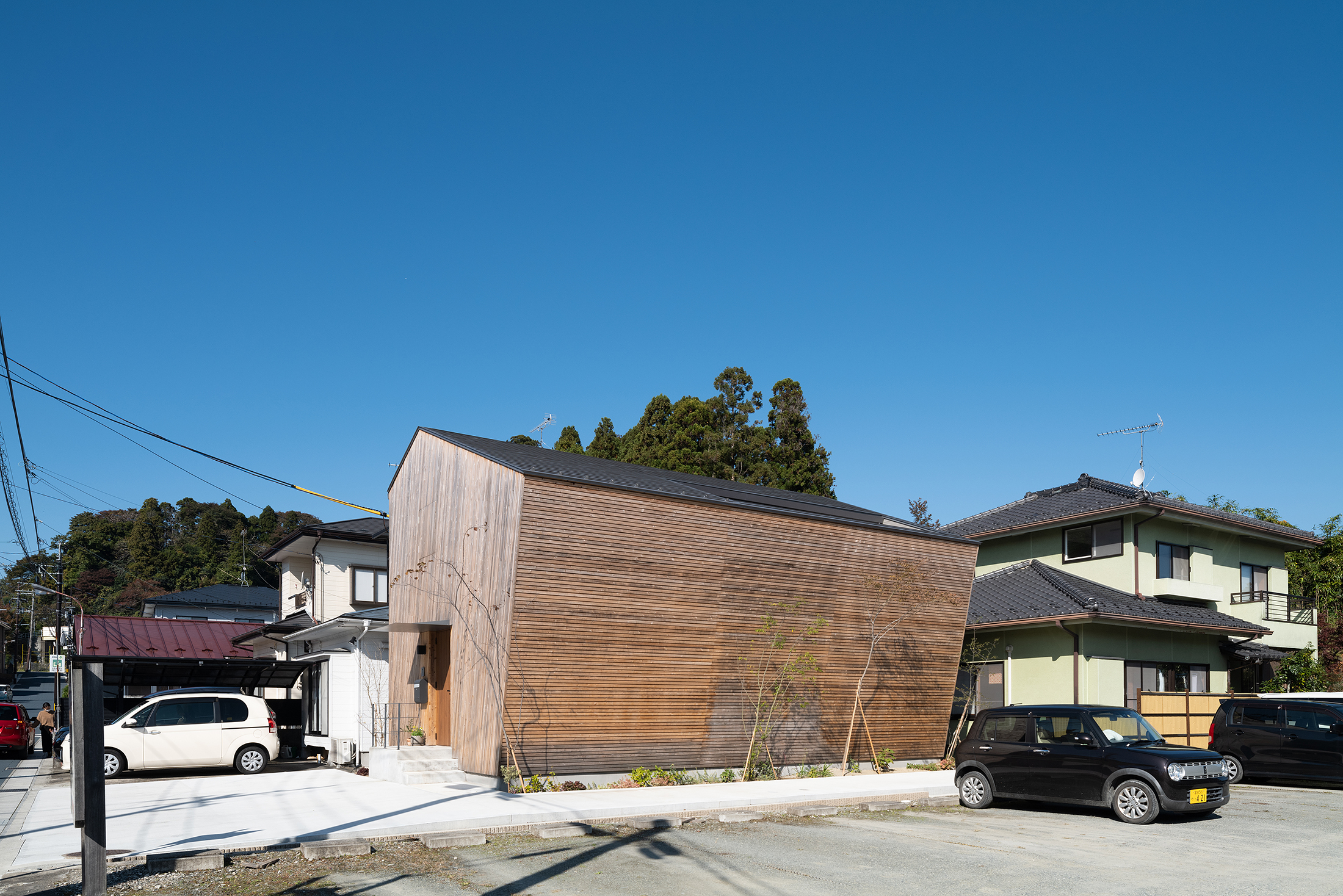
この住宅の外観を決定的に特徴づけているのは、通りに面する西側から見た五角形のフォルムである。南側外壁を斜めに振ることで生まれた形態だが、これは意匠先行ではなく、距離感・採光・プライバシーを同時に解決するための必然的な帰結である。下部では通路幅と中庭のプライバシーを確保し、外部からの視線を適切に遮る構成に。上部ではバルコニー寸法と外壁のプロポーションを調整することで、前面の建物の間からわずかに松島湾を望めるよう配慮している。屋根は切妻としつつ南側に大きく傾斜させ、建物全体のボリュームを抑えた。こうした外形操作の積み重ねが、平面・断面の両面において、過不足のない大きさと距離感を導き出している。
耐久性・コスト・意匠の均衡を探る外壁計画
外壁の木の貼り方も、外観を成立させる重要な要素である。西側ファサードでは木板を斜めに貼り、南側は横に貼っている。これもまた意匠先行ではなく、耐久性とコストを踏まえた判断である。木外壁を横貼りにする場合、雨水が滞留しにくいよう鎧貼りにするのがベターだが、材料加工が増えコストがかさむ。そのため正面は水切れの良いよう斜め貼りとした。一方、南側外壁は壁自体が斜めに立ち上がり、雨水が滞留しにくいことから、鎧貼りでなくとも十分に耐久性を担保できると考えた。ファサードの斜め貼りの意匠には、五角形の特徴的な形とともに、観光地にふさわしい印象的な表情を生み出す役割も持たせている。
壁パネルのシステム化への挑戦
本計画は、サッシ・断熱材・防水シートを組み込んだ大型壁パネルを導入した実験的な住宅でもある。地元工務店、サッシメーカー、断熱材メーカーと協働し、地元工務店レベルでのシステム化を試みた。工期短縮や性能の安定化といった利点がある一方、緻密な設計が必要であり、施工環境の制約も多い。結果として汎用性の高いプロトタイプにはなったが、昨今の物価高から来る新築減少という現実の中で、普及の難しさも感じている。それでも、住宅のつくり方を更新する一つの可能性を示せた点に、この家のもう一つの価値があると考えている。
Matsushima House
A Home Planned Within a Tourist Destination
This residence was planned for a young family of four on a site located near the tourist area of Matsushima, one of Japan’s Three Most Scenic Views. The site had previously been used as a paid parking lot for visitors, and beyond it stands the parents’ family home. Given these conditions, a central design theme was how to establish an appropriate sense of distance—both from tourists and from the neighboring family home.
The project was also undertaken at a time when construction costs were beginning to rise. Within a limited budget, the house was required to maintain a high level of performance while responding not with “size,” but with “quality.”
Responding to the Relationship with the Family Home
Access to the parents’ house is provided via a passage along the south side of the new residence. For this reason, the first floor is designed to be as closed as possible toward the outside, preventing direct views into the interior from parents or visitors passing through the corridor. Placing the LDK on the second floor was another strategy to achieve both distance and openness at once.
At the center of the first floor, a courtyard terrace with a double-height void was introduced. Wooden louvers were applied to the surrounding walls, blocking direct lines of sight while drawing light, wind, and the subtle atmosphere unique to a coastal town into the interior. The design carefully balances privacy with a nuanced connection to the outdoors.
A Sense of Openness Within a Compact Volume
The interior is organized with minimal circulation, incorporating spatial generosity within a total floor area of approximately 93 square meters (28 tsubo). To keep the overall building volume restrained, the ceiling height on the first floor was intentionally set low. This choice creates a sense of security and calm within the bedrooms.
An adjacent multipurpose space was designed with future changes in use in mind. By lowering the floor level slightly and connecting it to the courtyard, the space gains a feeling of openness despite its compact size.
The second floor is conceived as a single, uninterrupted one-room space that forms the heart of daily life. The staircase is deliberately compact, so that upon reaching the top, the LDK opens up all at once. The contrast between the compressed scale of the lower floor and the sudden expansion of views creates a sense of spaciousness beyond the actual floor area.
A full-height opening on the south side brings in sky and light, while side walls of the balcony control views from outside. This allows residents to live without relying on curtains, experiencing the changing light and atmosphere of Matsushima throughout the day.
Design Intent Behind the Distinctive Form
The defining feature of the exterior is its pentagonal form when viewed from the west, facing the street. This shape results from angling the southern exterior wall, not as a stylistic gesture, but as a necessary response to distance, daylight, and privacy.
At the lower level, the configuration secures sufficient passage width and courtyard privacy while appropriately shielding the interior from outside views. At the upper level, the dimensions of the balcony and the proportions of the exterior wall were carefully adjusted to allow a subtle view of Matsushima Bay between neighboring buildings.
The roof is a gabled form, steeply sloped toward the south, further reducing the perceived volume of the building. Through these layered manipulations of form, the house achieves a well-balanced scale and sense of distance in both plan and section.
Exterior Wall Strategy Balancing Durability, Cost, and Design
The method of applying wooden cladding plays a crucial role in shaping the exterior expression. On the west-facing façade, the boards are installed diagonally, while on the south façade they are laid horizontally. This decision, too, was driven not by design alone, but by considerations of durability and cost.
Horizontal wood cladding typically requires shiplap detailing to prevent water retention, which increases material processing and cost. Therefore, the main façade adopts diagonal cladding to improve water drainage. On the south façade, where the wall itself is inclined and rainwater is less likely to accumulate, sufficient durability could be ensured without shiplap detailing.
The diagonal cladding on the façade also reinforces the distinctive pentagonal form, creating a memorable and expressive appearance appropriate for a tourist destination.
An Experiment in Systemized Wall Panels
This project also serves as an experimental housing model through the introduction of large prefabricated wall panels integrating window frames, insulation, and waterproof membranes. In collaboration with a local builder, a window manufacturer, and an insulation manufacturer, we attempted to develop a system that could be implemented at the scale of regional construction firms.
While this approach offers advantages such as reduced construction time and stabilized performance, it requires highly precise design coordination and faces various constraints on site. The result is a versatile prototype, yet in the context of declining new housing starts driven by rising material costs, its widespread adoption remains challenging. Even so, this house represents one possible direction for updating the way homes are built today—an additional layer of value embedded within the project.
松島の家
所在地/宮城県松島町
主要用途/住宅
<設計>
意匠 菊池佳晴建築設計事務所 担当/菊池佳晴 遠藤和郎
構造 図設計 担当/髙橋雷人
<施工>
建築 今野建業 担当/今野真幸
植栽 カワムラガーデン 担当/川村博崇
<構造・構法>
主要構造・構法/木造在来構法(大型パネル工法)
基礎/べた基礎
構造/耐震等級3(許容応力度計算)
地盤改良/柱状改良
<規模>
階数/2階建
軒高/6023mm 最高高さ/6838mm
延床面積/建築物93.11m2(28.16坪)
<工程>
設計期間/2020年8月〜2020年11月
工事期間/2021年12月〜2021年6月
<敷地条件>
都市計画区域内 市街化区域
第一種住居専用地域
許容建蔽率60% 許容容積率200%
地域地区 22条地域
地区計画 景観重点地区 特別名勝松島
道路幅員 南西7.61m(公道)
<外部仕上げ>
屋根/ガルバリウム鋼板t0.35(塩害強化)
外壁/屋久島地杉 すのこ張りt35
透湿防水シート(ウートップ サーモファサード WURTH)
開口部/木製玄関ドア(ノルド)
樹脂トリプルサッシ(YKKap 430)
日射遮蔽/窓外遮蔽ロールスクリーン
<内部仕上げ>
床/ロッジポールパインt18+リボス塗装(チャネルオリジナル)
壁/クロス仕上げ
天井/クロス仕上げ
厨房機器/造作キッチン 天板SUSt3.0バイブレーション仕上げ
IHコンロ/HT-M200HTWF(H)(日立)
食洗機/ミーレG6620SCi
水栓/KM6071EC(KVK)
レンジフード/スマートスクエアフードFY-7HGC4-S(Panasonic)
<浴室>
ユニットバス/サザナHT Sタイプ(TOTO)
<設備システム>
暖房/高効率エアコン
冷房/高効率エアコン
換気/3種換気
給排水 給水方式/直結
排水方式/下水道直結
給湯 給湯方式/エコキュート460L(Panasonic)
<断熱仕様>
基礎下/防蟻EPS断熱材パフォームガード50mm
基礎立上り/防蟻EPS断熱材パフォームガード100mm
壁 /サーマックス(イノアック)充填t50+付加t70mm
屋根/高性能グラスウール32kg300mm
<温熱計算>
Ua値/0.26W/m2K
C値/0.20cm2/m2
<撮影>
西川公朗