
WORKS
国見ヶ丘の家
国見ヶ丘の家
終の棲家における絶妙な距離感の追求
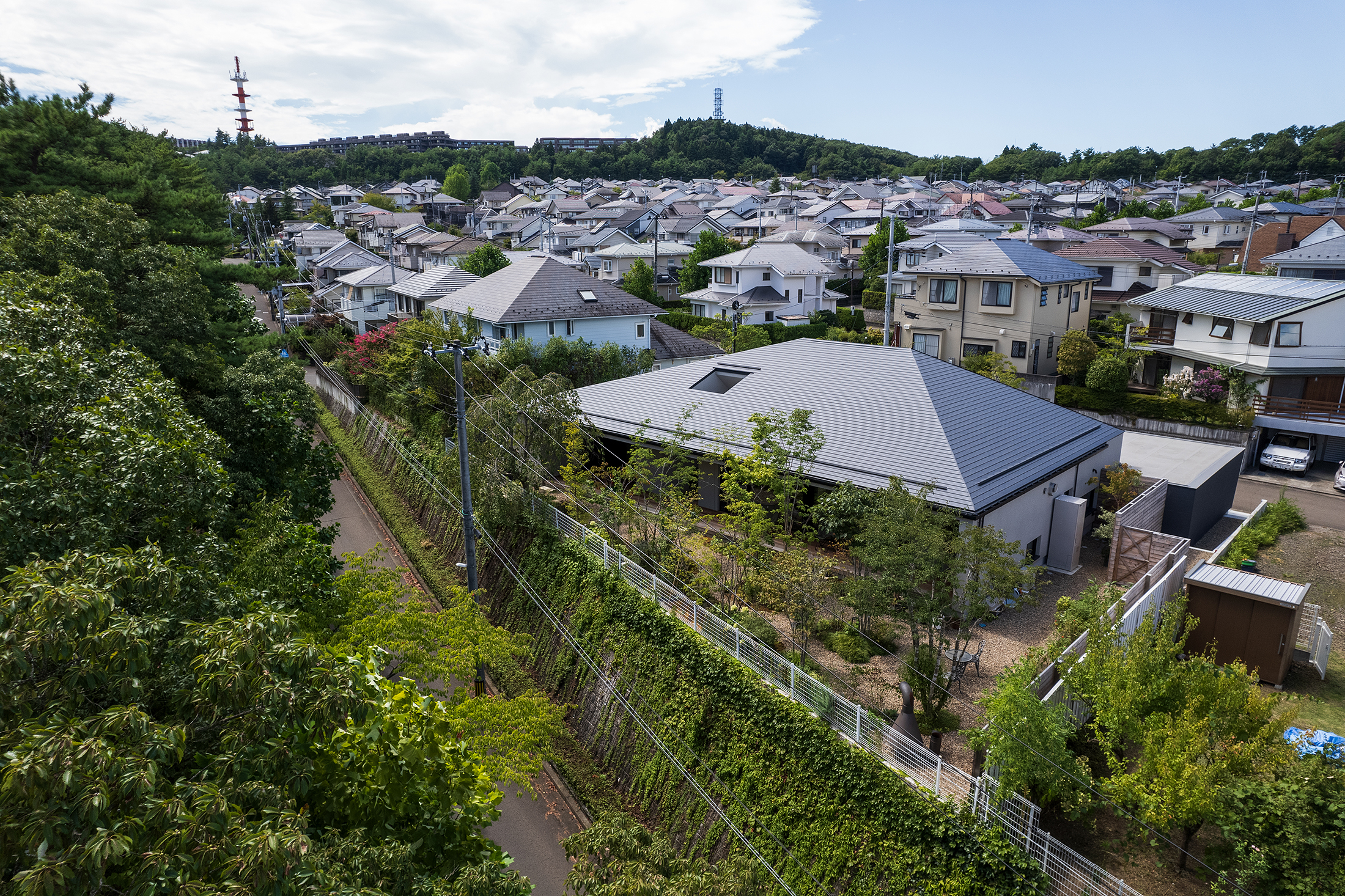
200坪を超える広い敷地に計画した、リタイア後の夫婦のための住まい。ここにはもともと2軒の家が建っており、両親はすでに他界、夫婦も還暦を迎えたことから、老後の生活に備え、2軒分の敷地に平屋の家を建てることにした。
敷地は、仙台市街地の北西部、小高い北山丘陵の一角に位置する住宅地にある。南東側と北西側の2面が道路に面し、南東側の道路は敷地より4~5mほど低く、その先には緑豊かな公園が広がっている。
計画にあたっては、周辺環境との距離感、内と外の距離感、そして夫婦間の距離感に特に配慮した。ヒアリングからは、いずれの関係においても「程よい距離感」への強いこだわりが感じられた。そのため、夫婦の求める物理的・心理的な距離感を実現するべく、幾度となく図面に手を加えながら、最適なかたちを探っていった。
周辺環境や住民との距離感
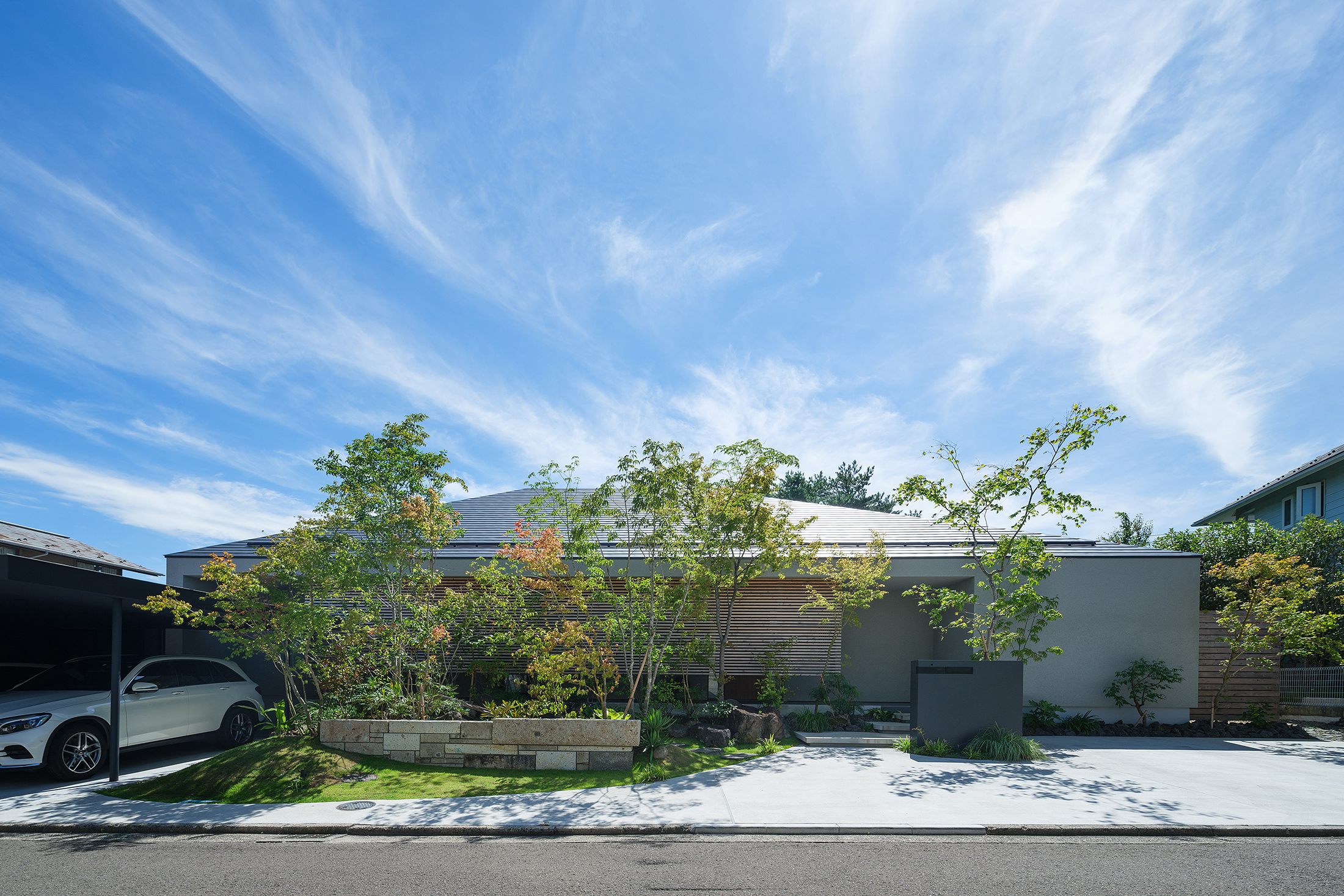
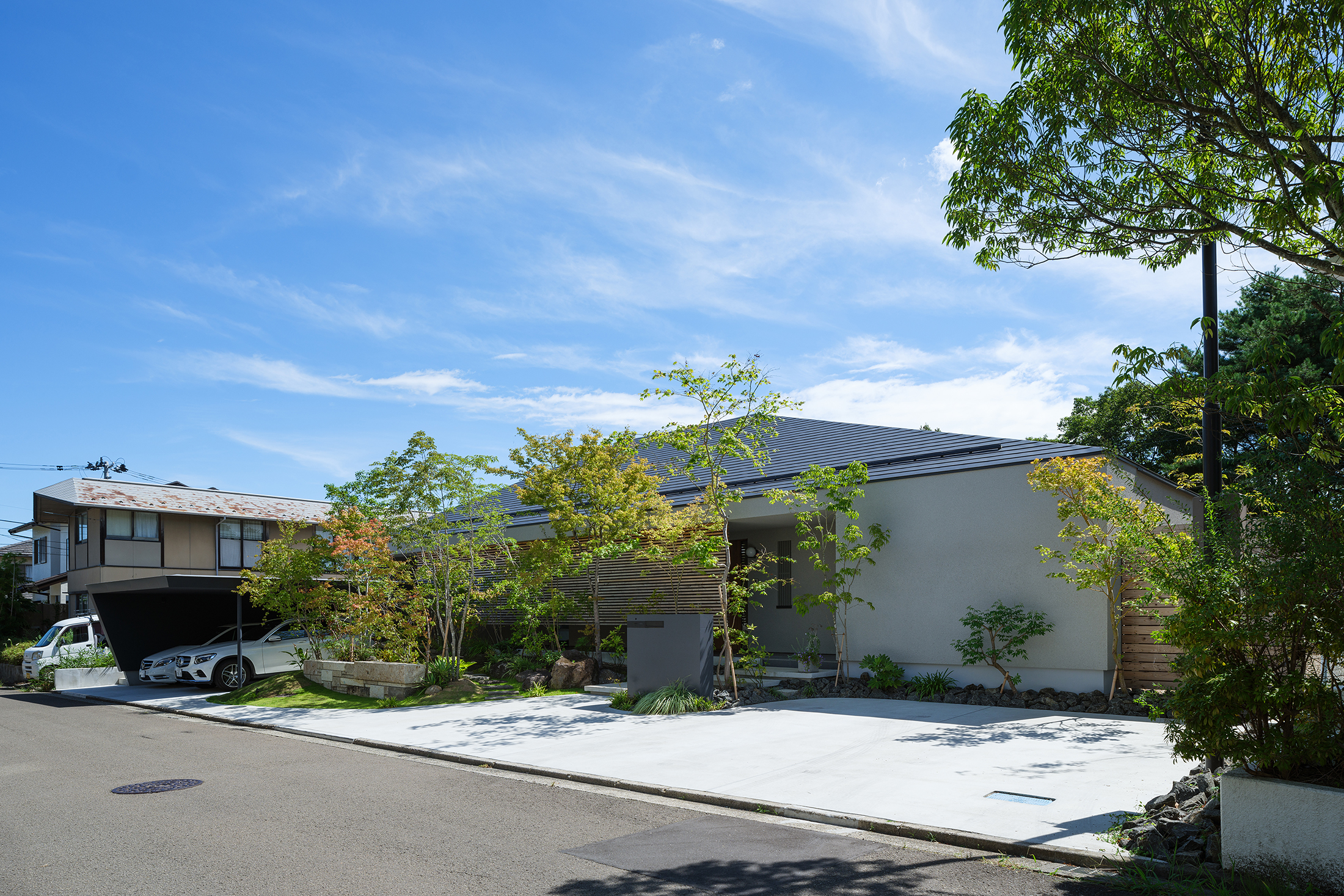
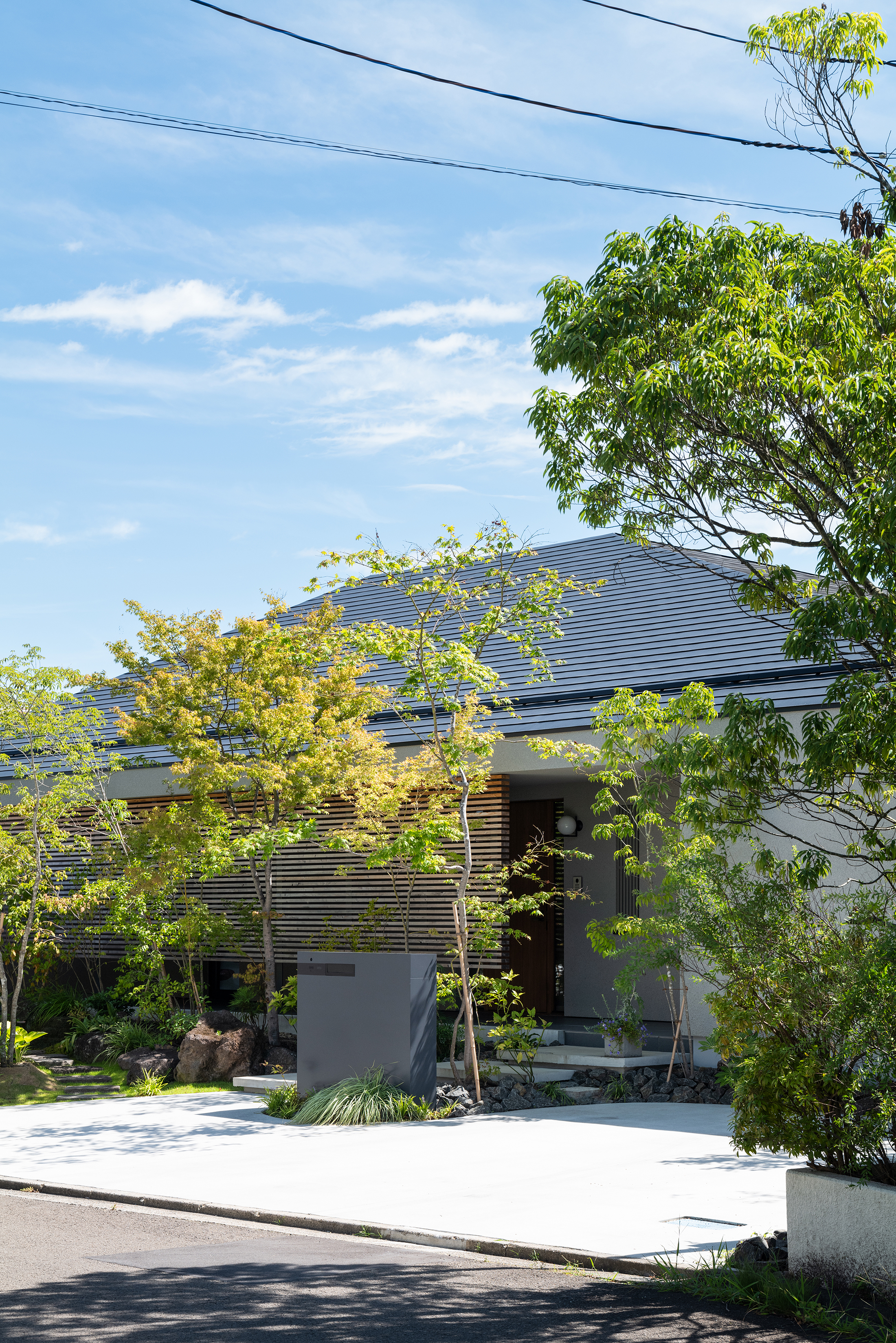
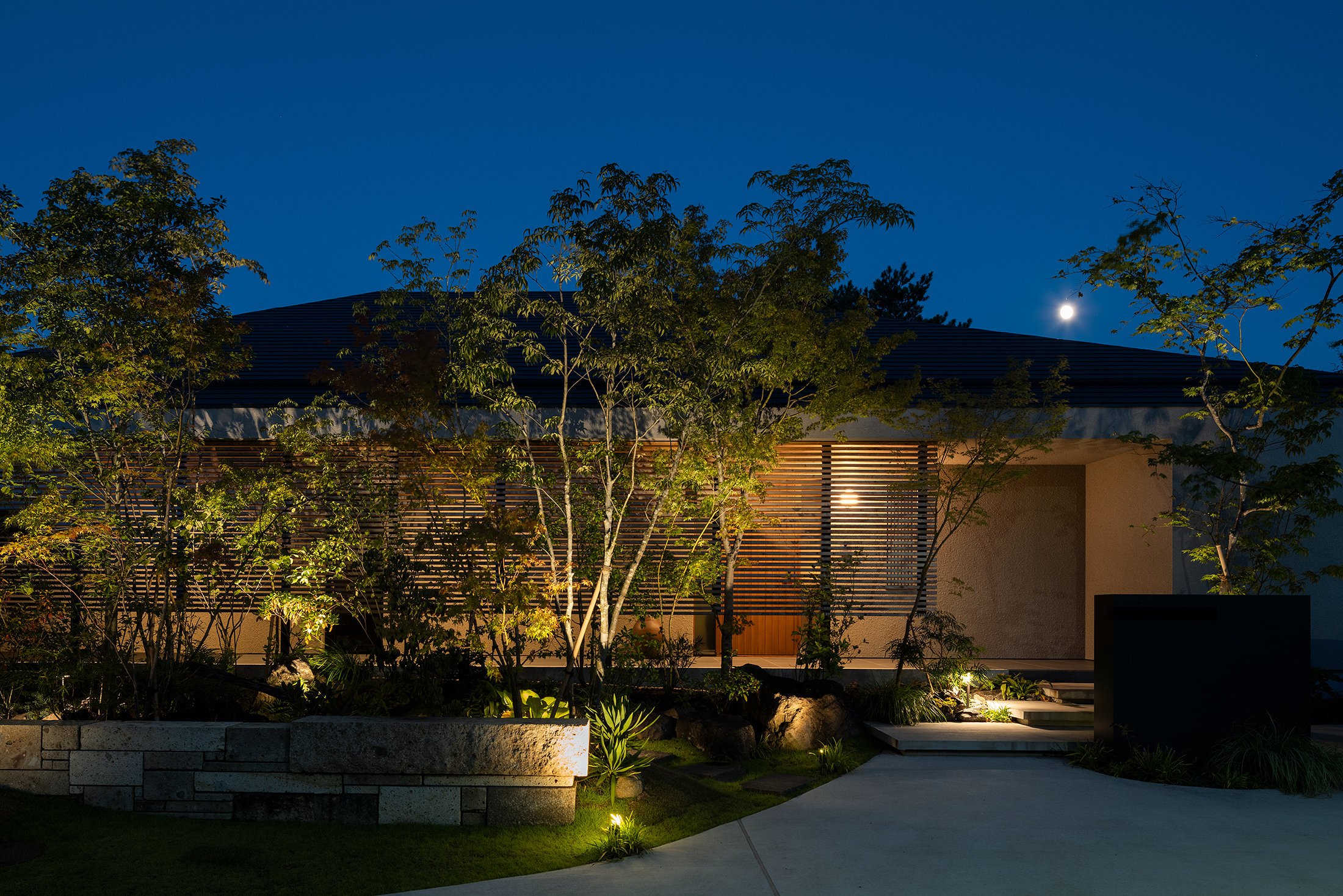
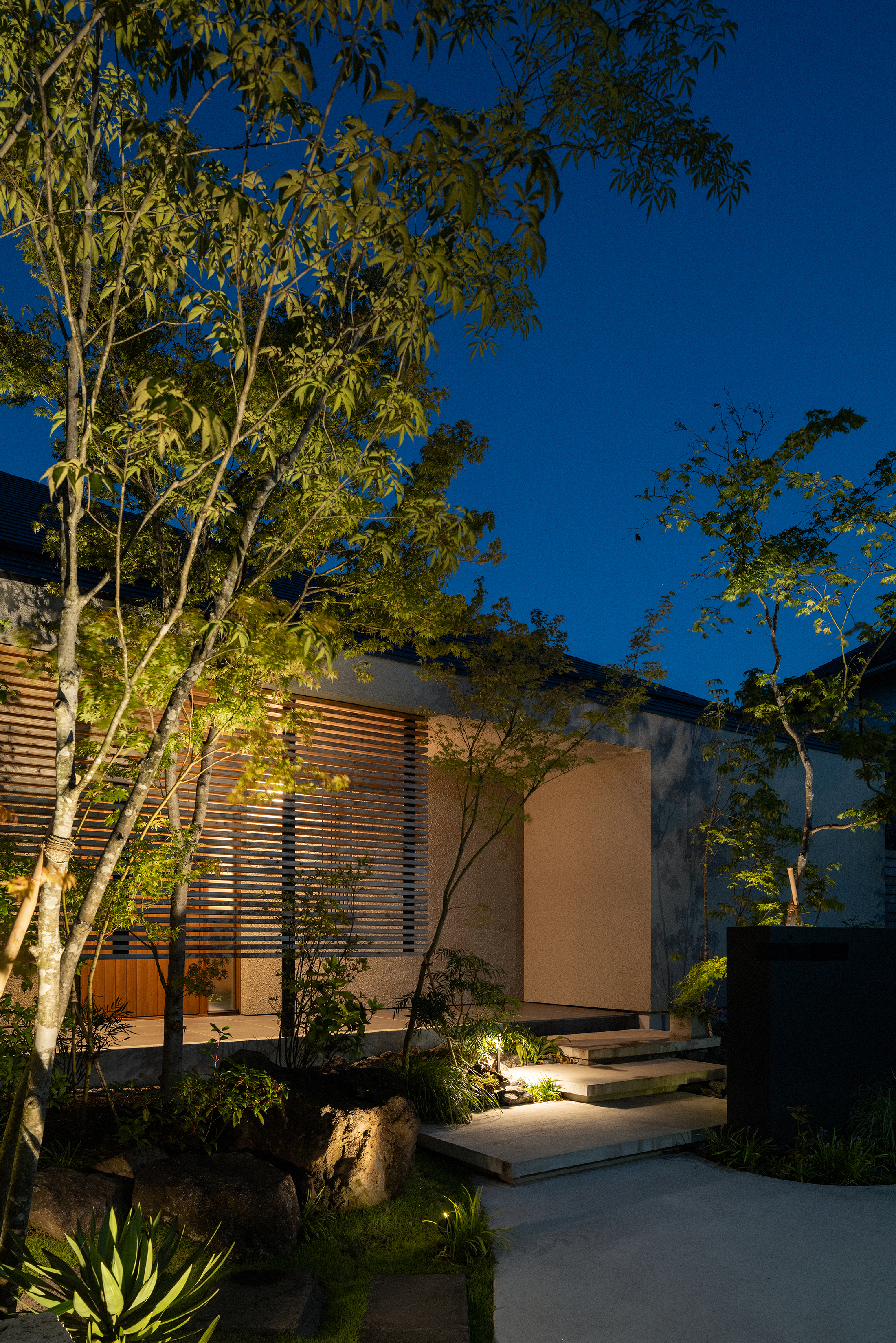
外観において特に重視したのは、生活道路に面した北西側からの見え方である。夫婦は長年この地に暮らし、近隣との関係も深いため、威圧感のある建物にはしたくなかった。そこで、屋根は寄棟とし、建物の縦方向のボリュームを抑えた控えめな外観とした。
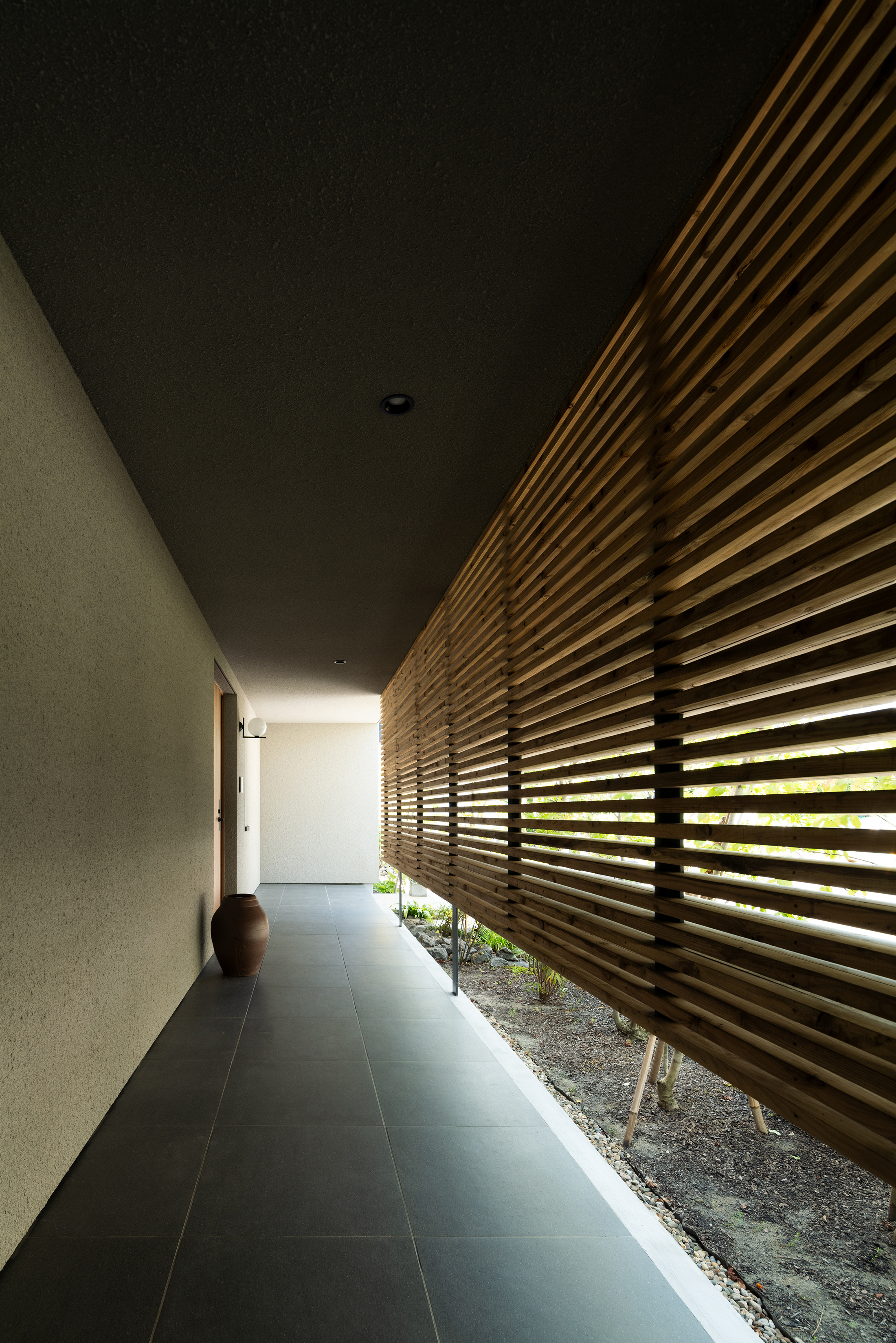
また、建物を塀で完全に囲うのではなく、植栽や木製ルーバーでやわらかく仕切ることで、街に溶け込むような景観を意識。曖昧な内と外の境界の中に、地域との適度な距離感をさりげなく取り込んだ。
内と外、家と庭の距離感
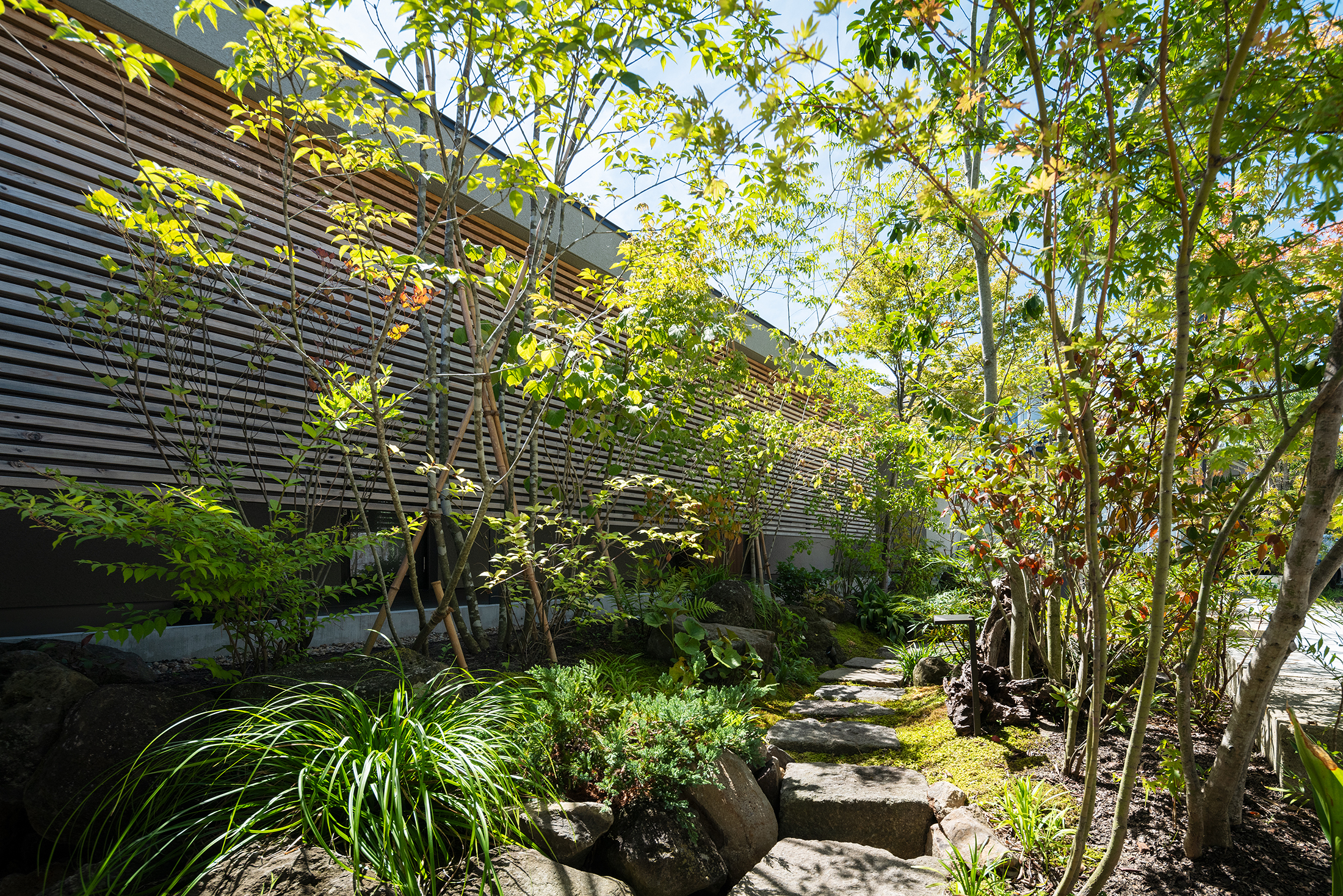
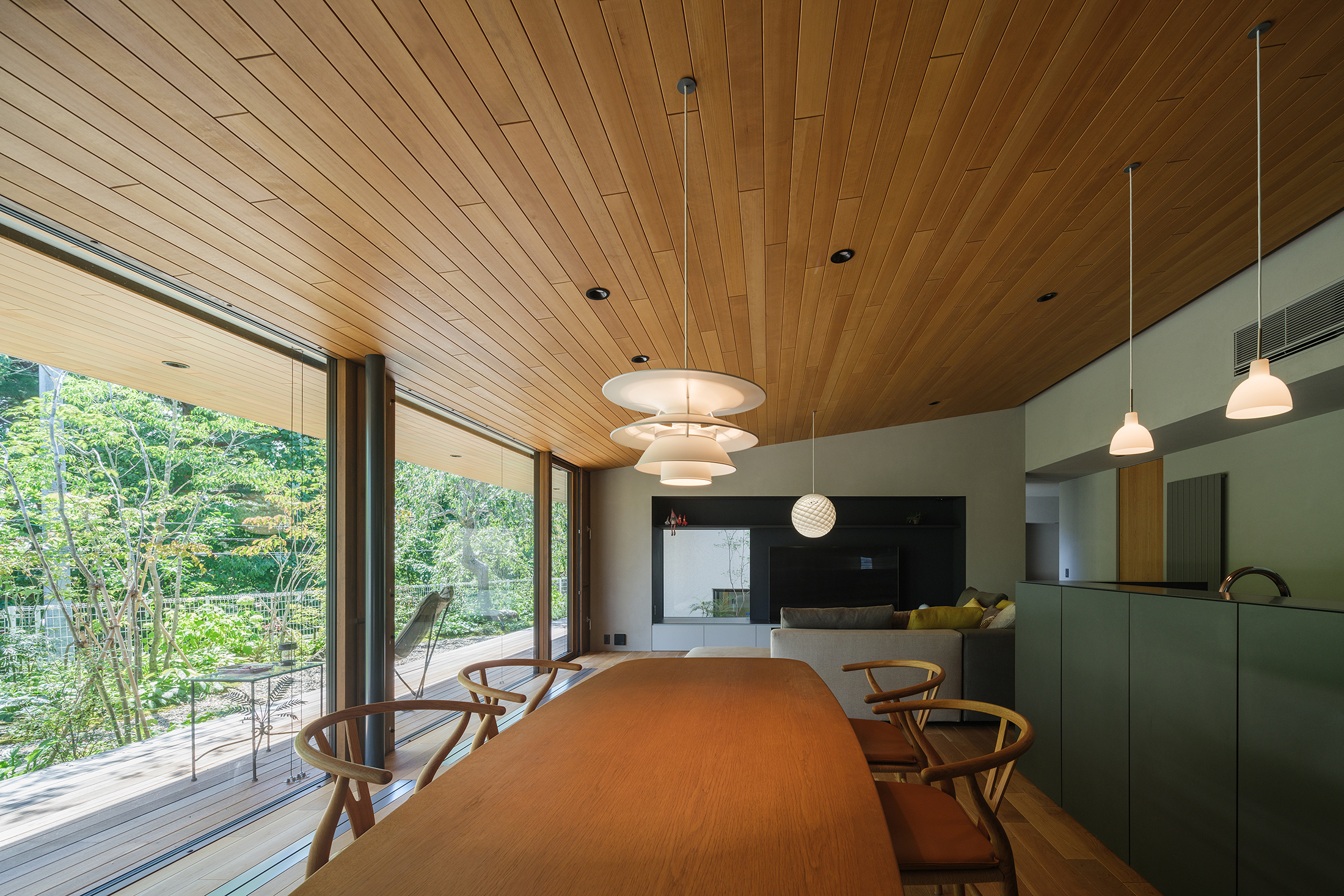
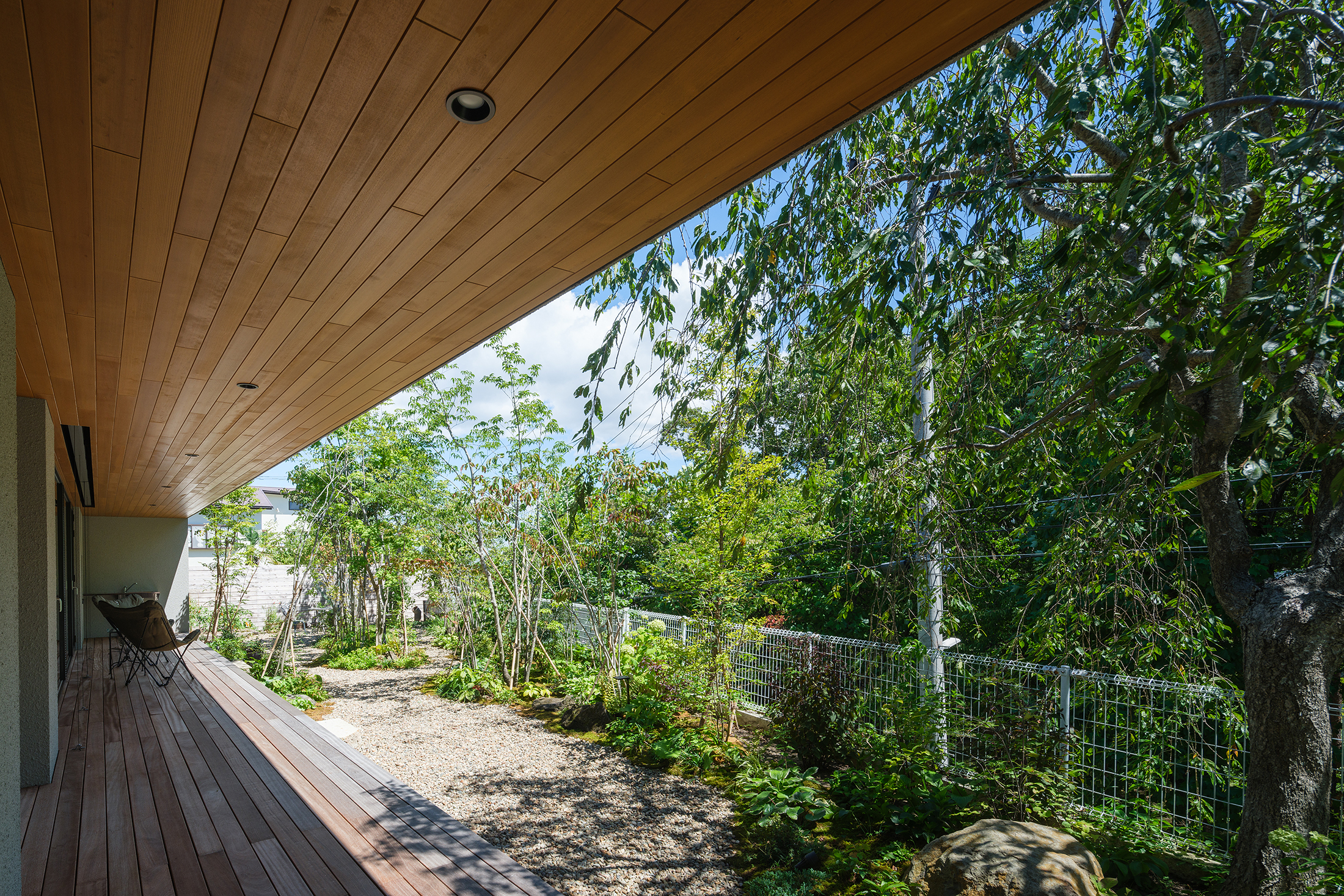
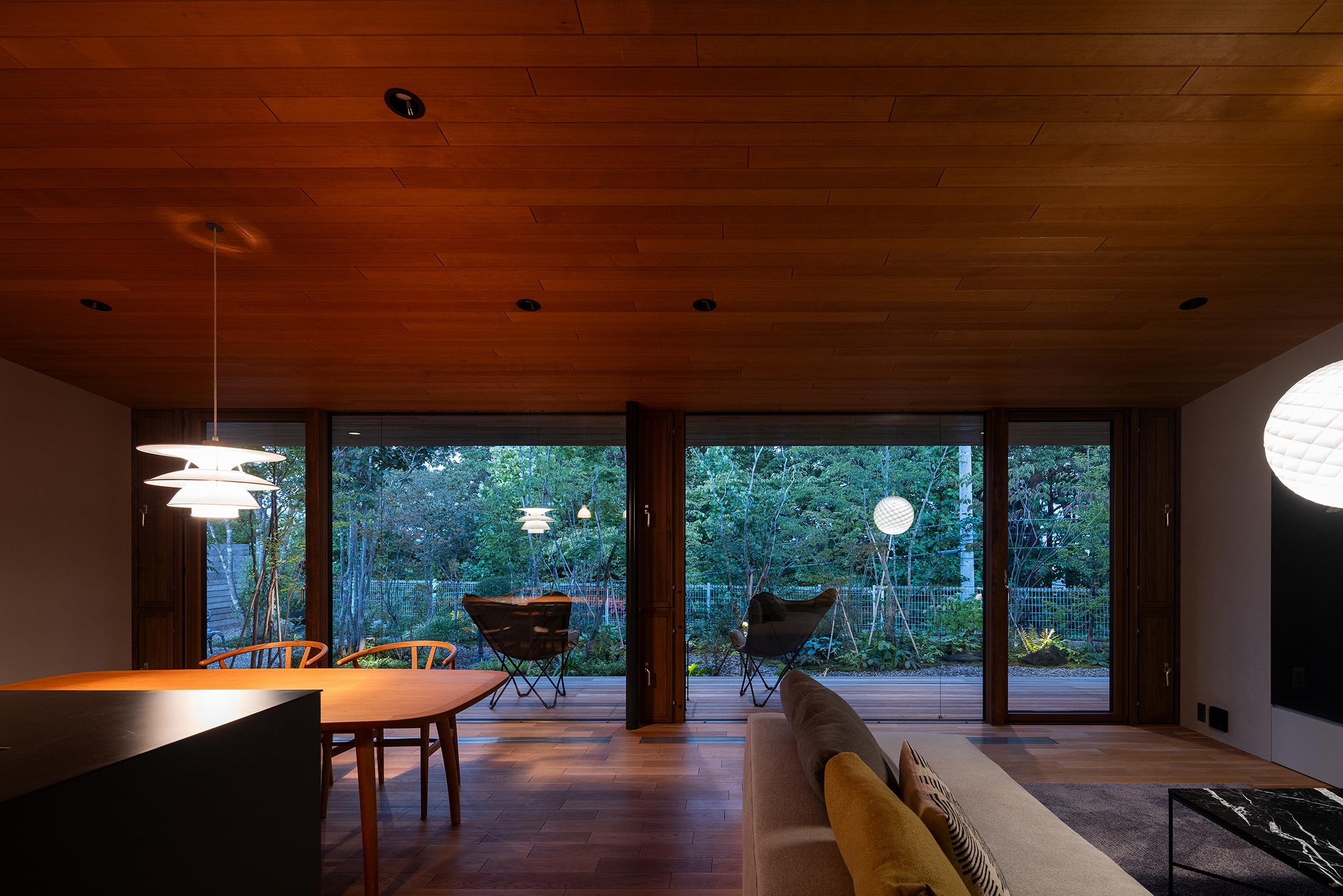
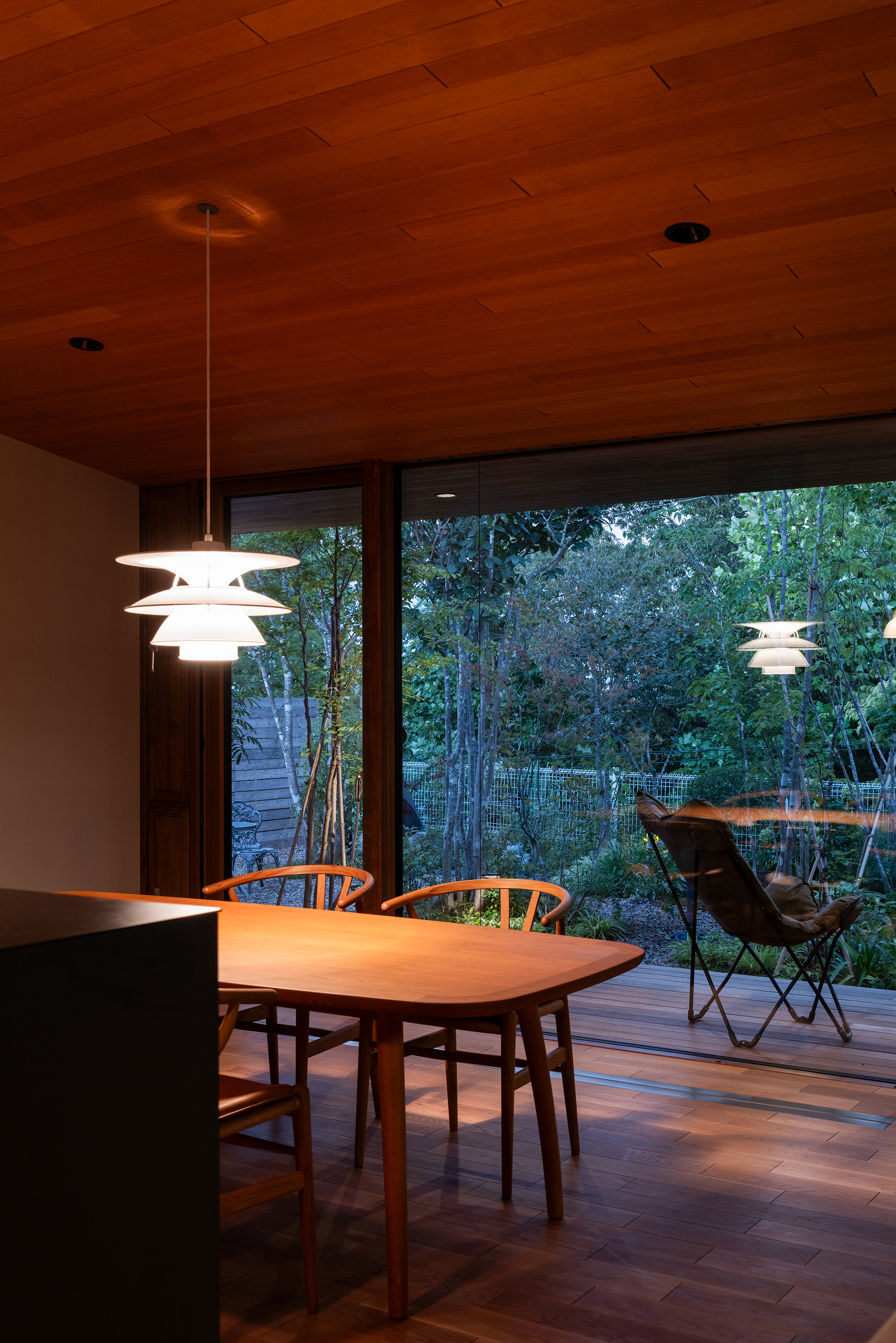
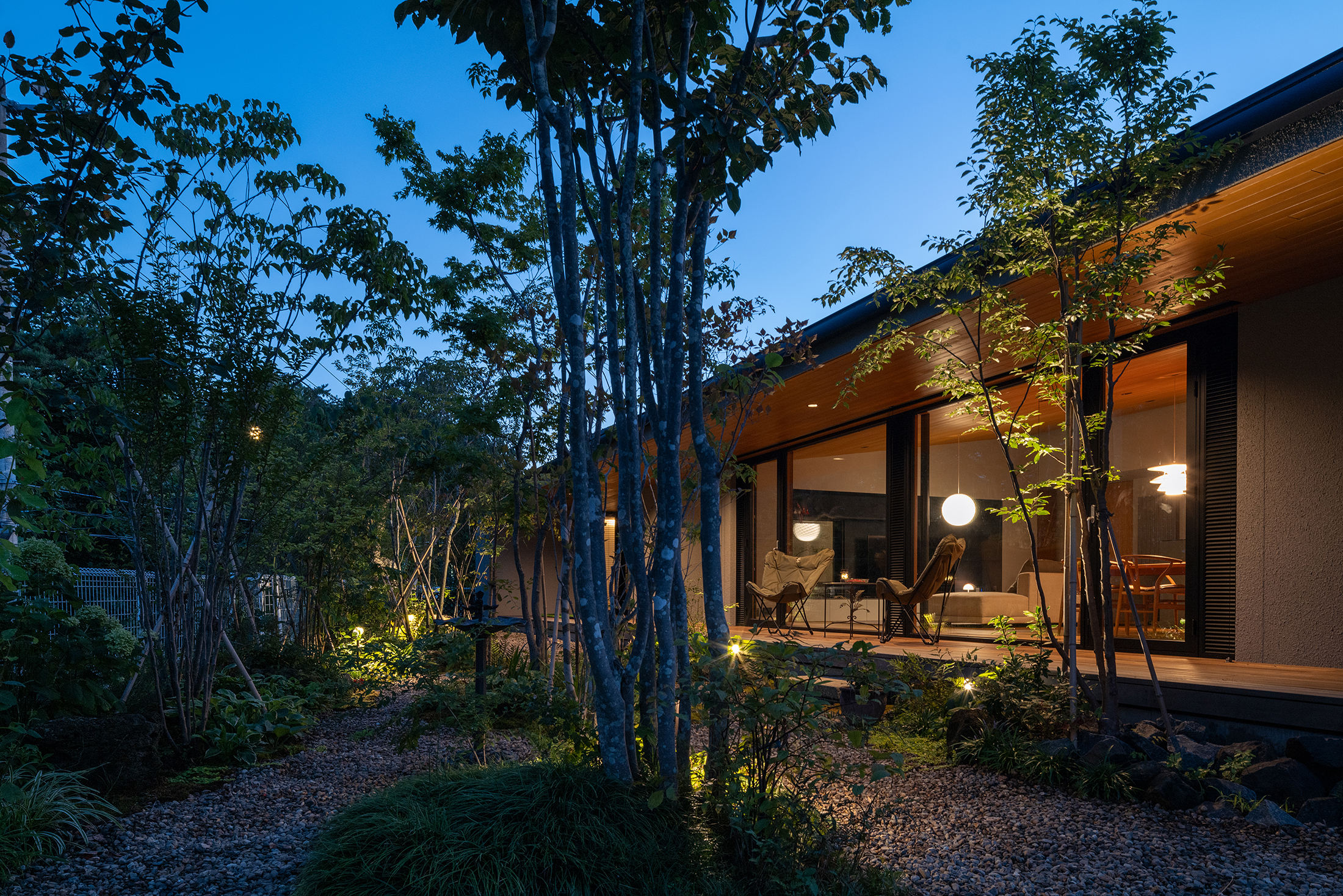
庭で過ごすのが好きな夫婦の要望に応え、南東側には自然の野山のような雰囲気の庭を設けた。建物に沿って設置したテラスは、室内から自由に出入りでき、庭の緑と公園の緑が重なる風景を、屋内外の両方から楽しめる構成としている。
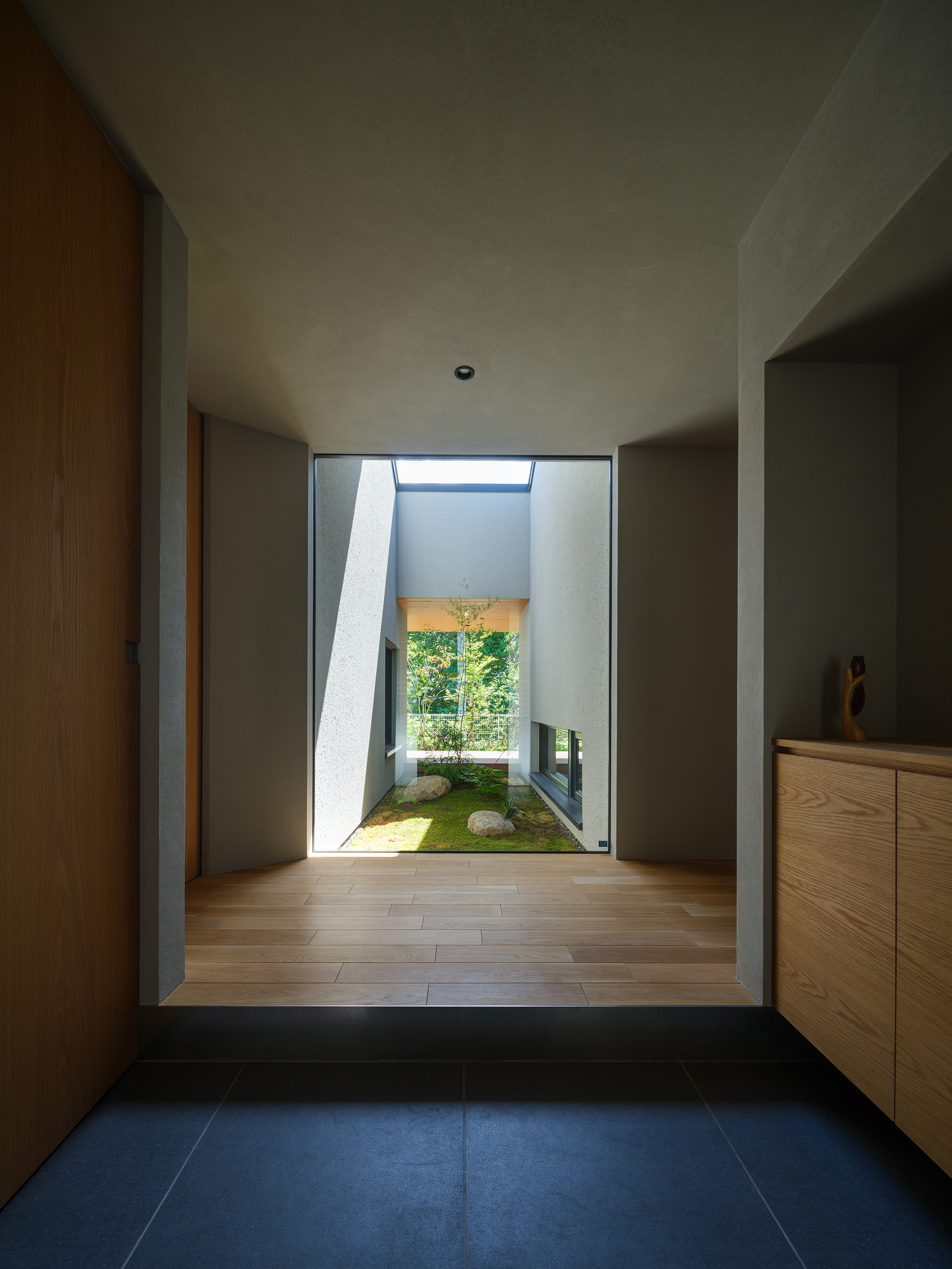
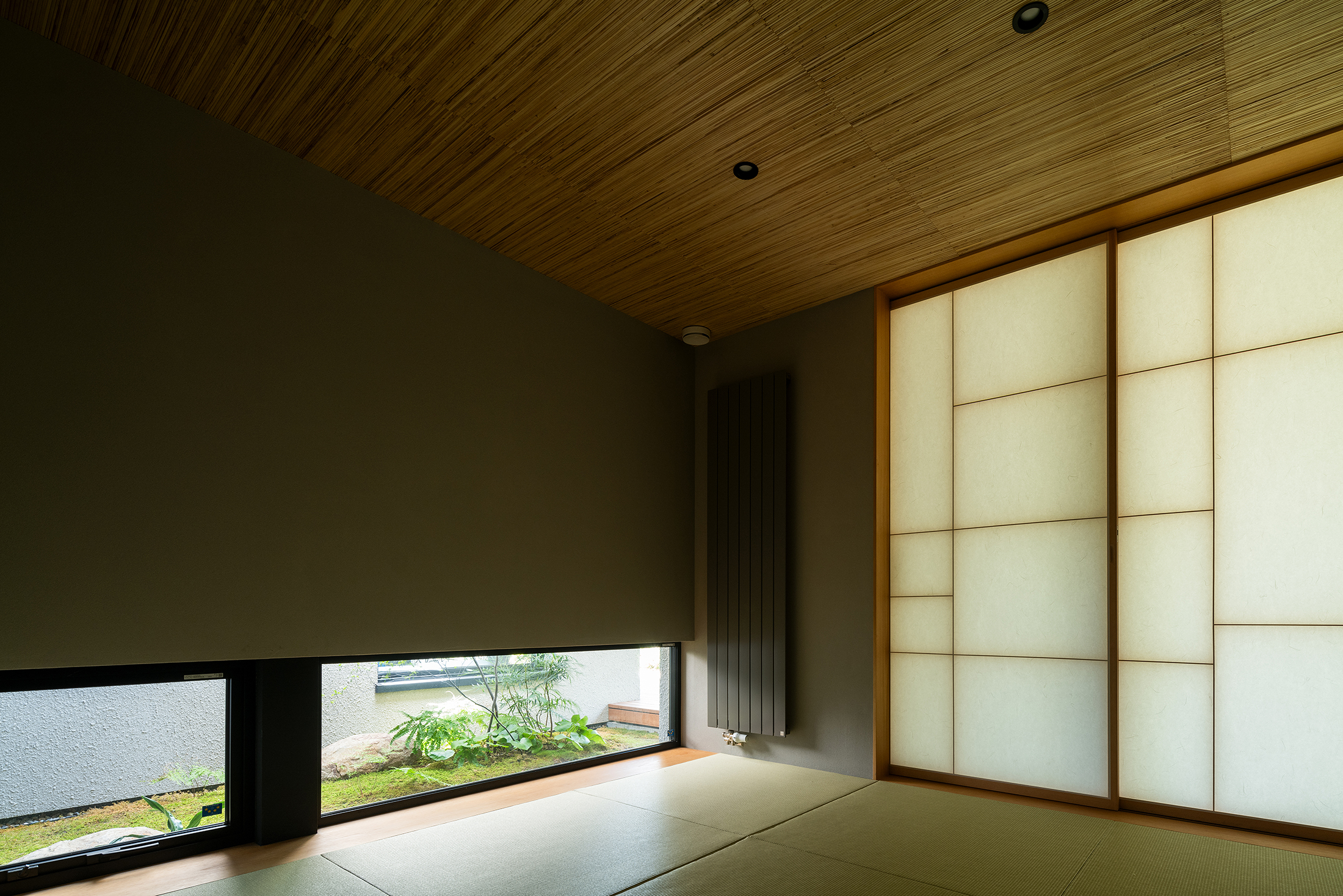
さらに、室内の各所から眺めを楽しめるように中庭や坪庭も設け、光と風を取り込みながら、空間に広がりと心地よさをもたらしている。
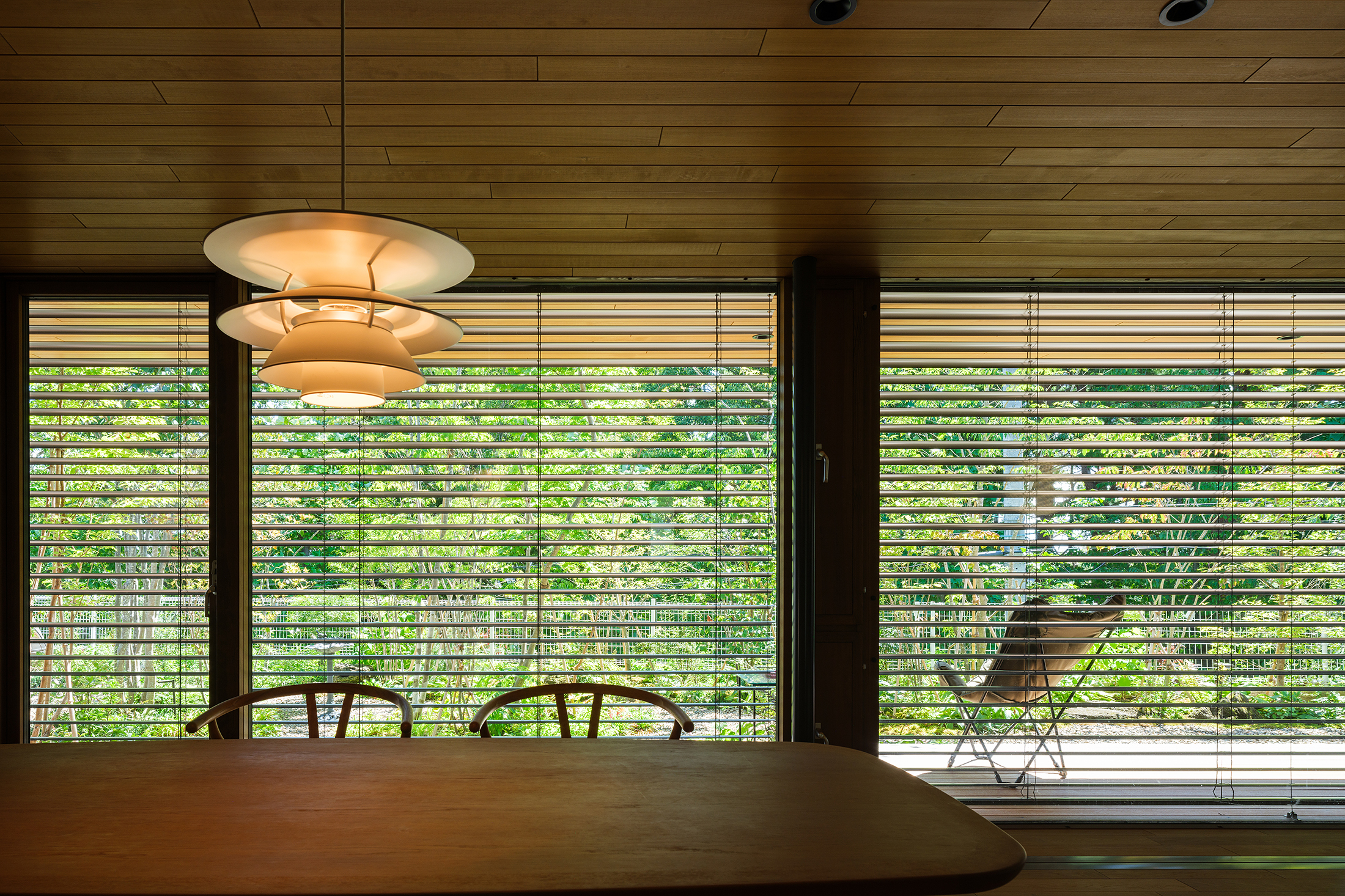
加えて、深い庇や外付けブラインド、高性能トリプルサッシ、窓際の床に設置したパネルヒーターなどにより、日射や外気の調整も万全とした。
夫と妻の距離感
夫婦それぞれの生活スタイルを尊重しつつ、必要なときにはすぐに気配を感じられるよう、適度な距離感を意識した空間構成とした。
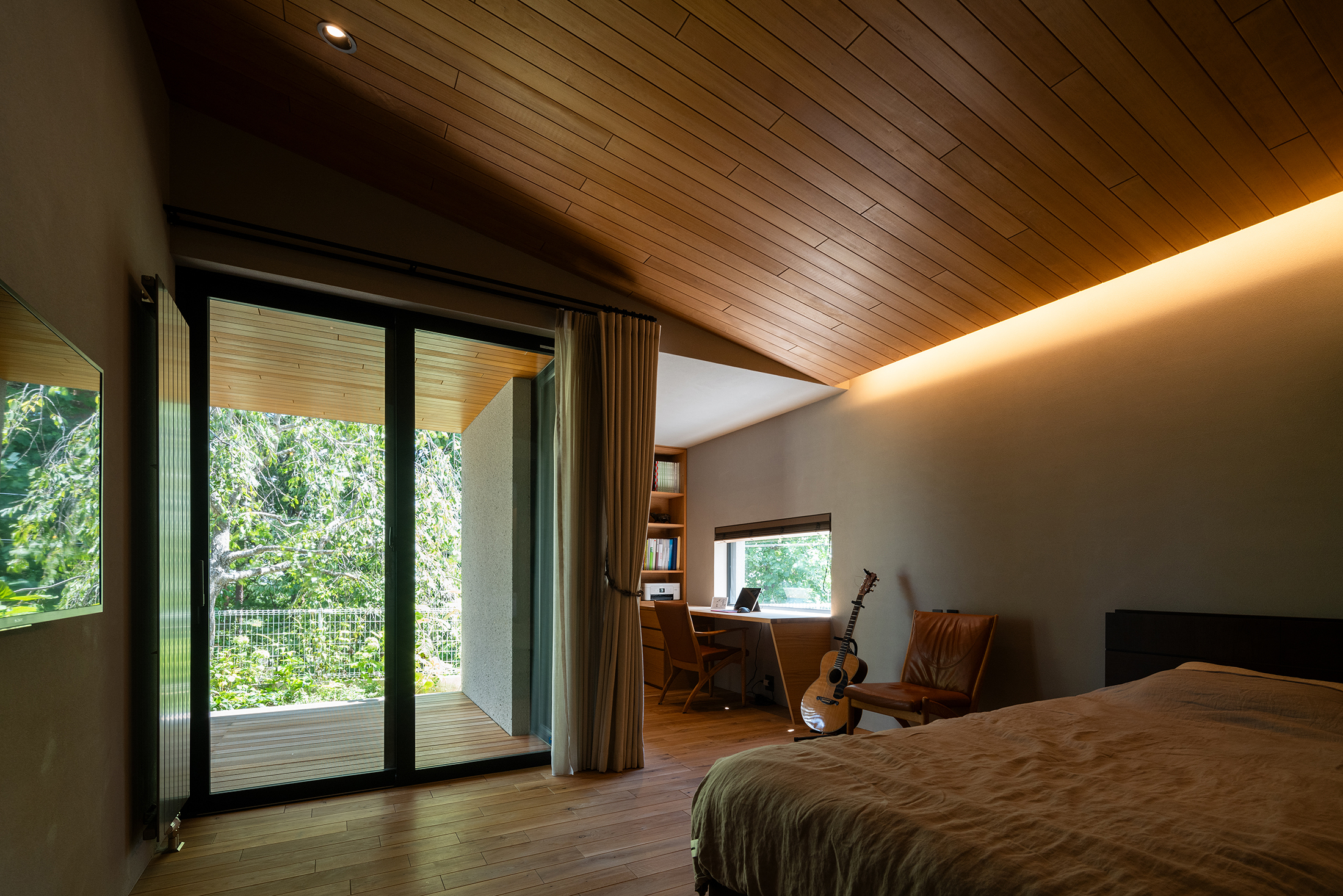
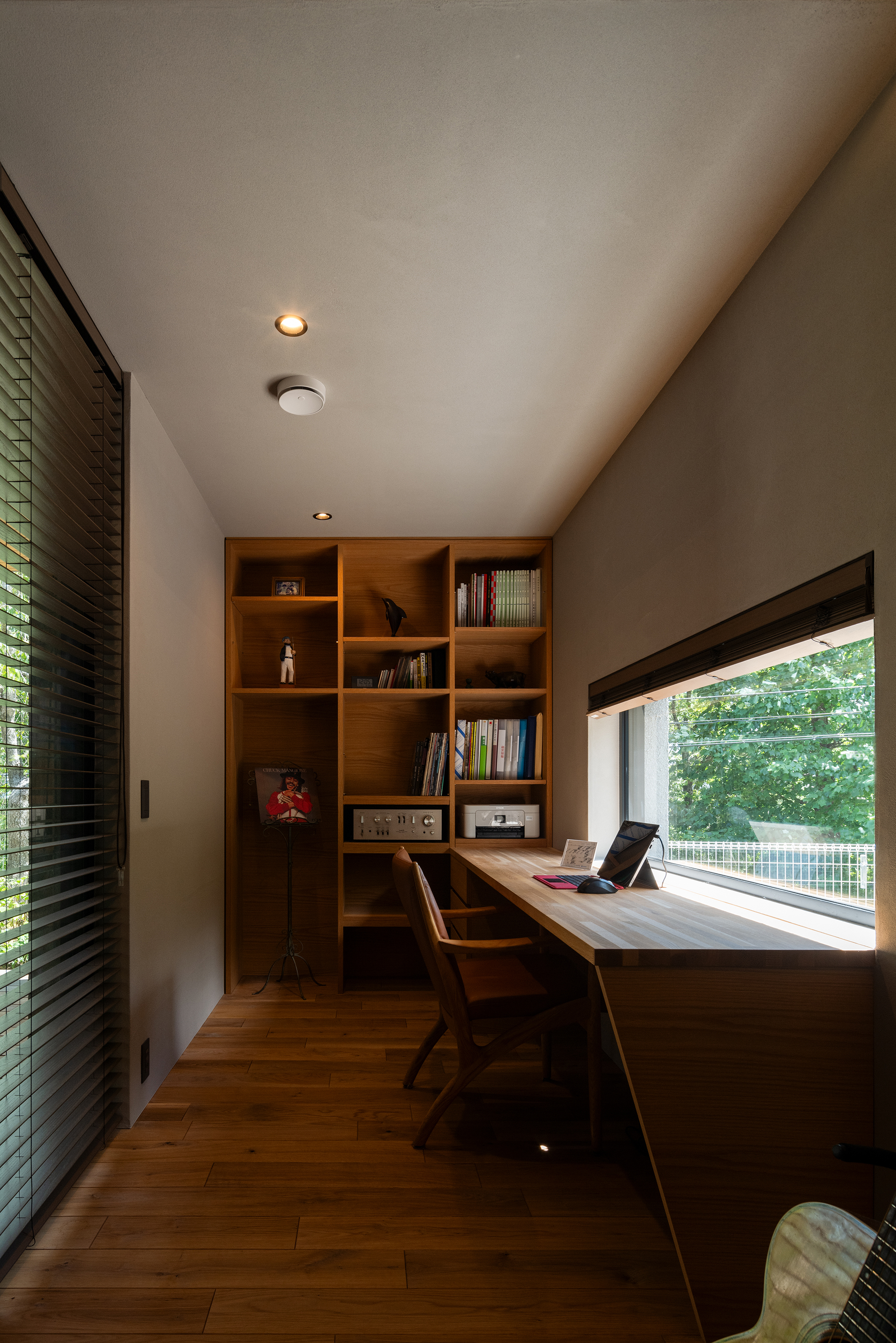
趣味を楽しむ時間が多い夫の寝室は、日当たりの良い南側に配置し、書斎を併設。LDKで過ごす時間が多く、自室は就寝の場という妻の寝室は、装飾を控えた落ち着きある空間とした。
二つの寝室の間には、両側から出入り可能なクローゼットを設け、扉を閉めればプライバシーを確保し、開ければ気配が伝わる“緩衝スペース”として機能するよう工夫した。
老後の生活を楽にする距離感
物理的な距離、すなわち生活動線の最適化は、夫婦が最も重視した点である。老後の暮らしを見据え、可能な限り無駄な動きのない、効率的な空間構成が求められた。
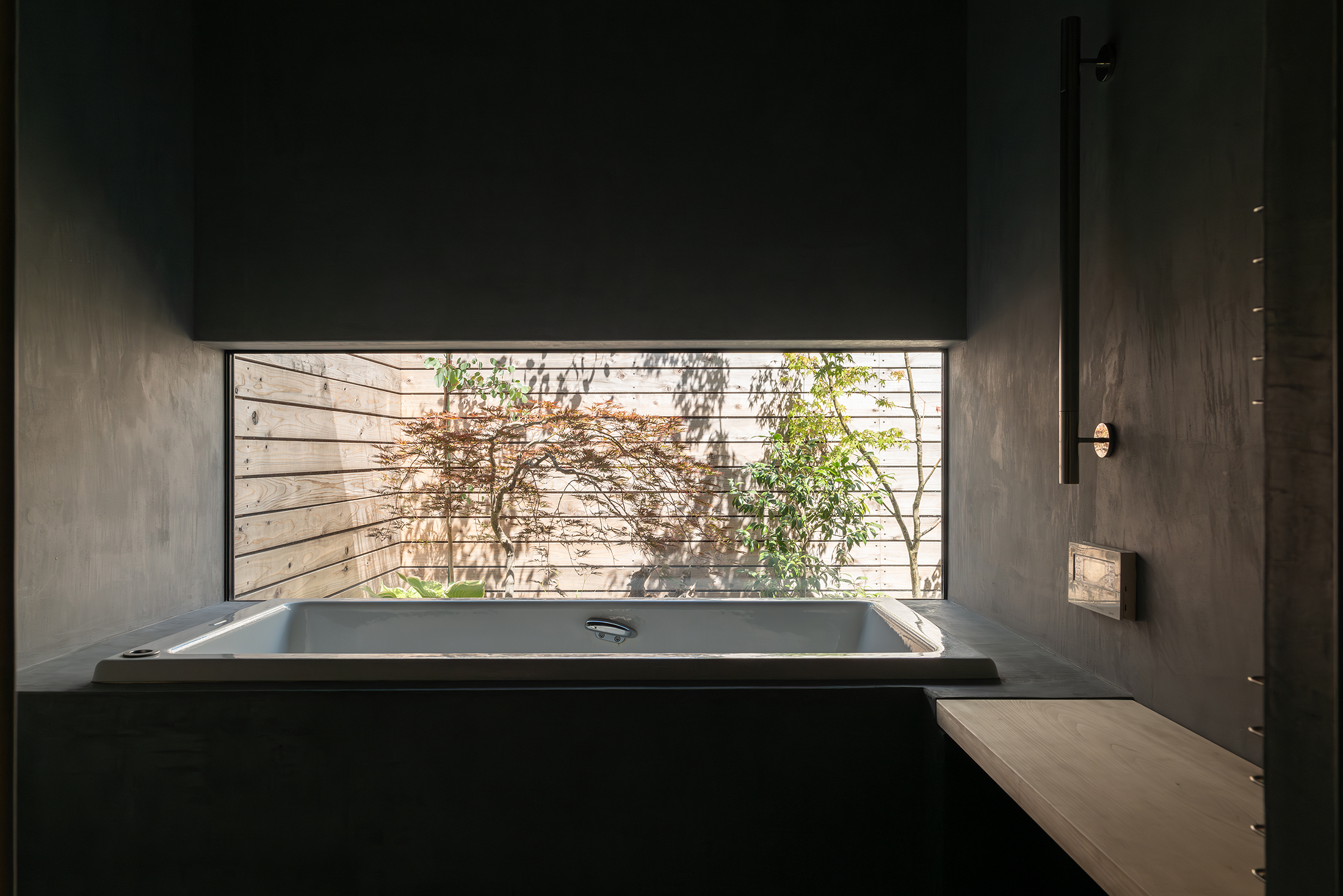
玄関脇のシューズクロークから浴室へと直線でつながる水まわり動線、さらに洗濯室・洗面脱衣室・キッチンを回遊する動線は、幾度も打ち合わせを重ねた末に生まれた、納得のレイアウトである。
距離感の先にある“心地よい暮らし”へ
適度な距離感といっても、それは一人ひとりの肌感覚により異なるものである。なおかつこの家は、50坪近い平屋であるため、大きな平面の中に夫婦が思い描くバランスを盛り込むのが難しく、かなり試行錯誤を繰り返した。完成した家の間取りを見るといかにもシンプルだが、結果的にこれこそが夫婦にとっての最適解だったのだと感じる。思うに建築における距離感とは、人の暮らしを豊かにするための必要不可欠な手段である。この「国見ヶ丘の家」は、その絶妙な距離感をつくることこそが、建築家に課せられた使命であることを改めて思い起こさせてくれた一軒となった。
Kunimigaoka House
Pursuing Subtle Distances in a Final Residence
This home was designed for a retired couple on a large site of over 660 square meters. Originally, two houses stood here, but as the couple reached their 60s and both of their parents had passed away, they decided to build a single-story home suited to their later years on the combined site.
The property is located in a residential area on the northwestern edge of Sendai, on a gentle hill called Kitayama. It faces two streets, with the southeast side being 4–5 meters lower than the site, beyond which lies a lush green park.
The planning process carefully considered the sense of distance from the surrounding environment, the balance between indoor and outdoor spaces, and the relationship between husband and wife. The initial interviews revealed the couple’s strong desire for a "comfortable distance" in all aspects. To achieve both physical and emotional distance that suited their lifestyle, the design was revised numerous times.
Distance from the Surroundings and Community
Special attention was paid to how the house would appear from the northwest side, which faces a residential street. Having lived in the neighborhood for decades, the couple had strong ties with the community and wished for the house to feel modest rather than imposing. A hipped roof was selected to reduce the vertical volume and create a subdued presence.
Instead of enclosing the house with a solid wall, soft boundaries were established using greenery and wooden louvers. This allowed the house to blend harmoniously into the townscape, gently incorporating a sense of appropriate distance from the community within the ambiguous boundaries between public and private spaces.
The Distance Between Indoors and Outdoors, Home and Garden
The couple, who enjoy spending time in the garden, requested an outdoor space reminiscent of natural hills. A garden with this atmosphere was created on the southeast side. A terrace was installed along the building, with easy access from the interior, allowing the couple to enjoy overlapping views of their garden and the park beyond.
Courtyards and tsuboniwa (small inner gardens) were also included to offer scenic views from multiple rooms. These garden connections allow light and breeze to filter into the home, adding comfort and a sense of spaciousness.
Furthermore, deep eaves, external blinds, high-performance triple-glazed windows, and panel heaters beneath the floor near windows were installed to manage sunlight and airflow as needed.
The Distance Between Husband and Wife
Recognizing their differing daily rhythms, the couple sought a layout that would allow them to enjoy their individual time while remaining close enough to sense each other’s presence.
The husband’s bedroom, where he enjoys his hobbies, is located on the sunny south side and includes an adjoining study. The wife, who spends more time in the LDK (Living-Dining-Kitchen) area and only uses her bedroom for sleeping, was given a calm, minimally decorated space.
A shared walk-in closet was placed between their bedrooms. Accessible from both sides, it functions as a buffer zone—closed doors provide privacy, while open doors allow them to feel each other’s presence.
Physical Distance for Ease in Later Life
Above all, the couple emphasized the importance of physical distance in daily movement. As this was to be their final home, the layout had to be as efficient as possible to avoid unnecessary steps.
Particularly important were two pathways: one connecting the shoe closet by the entrance directly to the bathroom, and another forming a circular route linking the laundry room, washroom, and kitchen. After many design meetings, the current plan was finalized.
Toward a Comfortable Life through Thoughtful Distance
What constitutes a "comfortable distance" differs from person to person, shaped by individual sensitivities. Moreover, given that this house is a nearly 165 square meter single-story structure, achieving the right balance within such a large layout required numerous adjustments.
Although the final floor plan appears simple, it represents the optimal solution discovered through much trial and error.
Ultimately, "distance" in architecture is not just a spatial concept but a vital design tool for enriching people’s lives. Kunimigaoka House reaffirms that creating subtle and thoughtful distance is one of the architect’s most essential responsibilities.
国見ヶ丘の家
所在地/宮城県仙台市国見ヶ丘
主要用途/住宅
<設計>
意匠 菊池佳晴建築設計事務所 担当/菊池佳晴 遠藤和郎
構造 図設計事務所 担当/高橋雷人
<施工>
建築 ねぐら設計室 担当/菅藤純
植栽 カワムラガーデン 担当/川村博崇
<構造・構法>
主要構造・構法/木造在来構法
基礎/べた基礎
構造/耐震等級3(許容応力度計算)
<規模>
階数/平屋
軒高/3304mm 最高高さ/6121mm
延床面積/建築物158.67m2(47.9坪)
車庫42.31m2(12.7坪)
<工程>
設計期間/2020年10月〜2021年10月
工事期間/2021年12月〜2022年10月
<敷地条件>
都市計画区域内 市街化区域
第一種低層専用地域
許容建蔽率40% 許容容積率60%
地域地区 22条地域
地区計画 国見ヶ丘地区 低層専用住宅A地区
道路幅員 西8.01m(公道)
<外部仕上げ>
屋根/ガルバリウム鋼板t0.35横葺き
外壁/ベルアートスタッコ仕上げ
モエンパネルt14下地
開口部/木製トリプルサッシ(ノルド)
樹脂トリプルサッシ(YKKap 430)
日射遮蔽/外付けブラインド ヴァレーマ(オスモ)
<内部仕上げ>
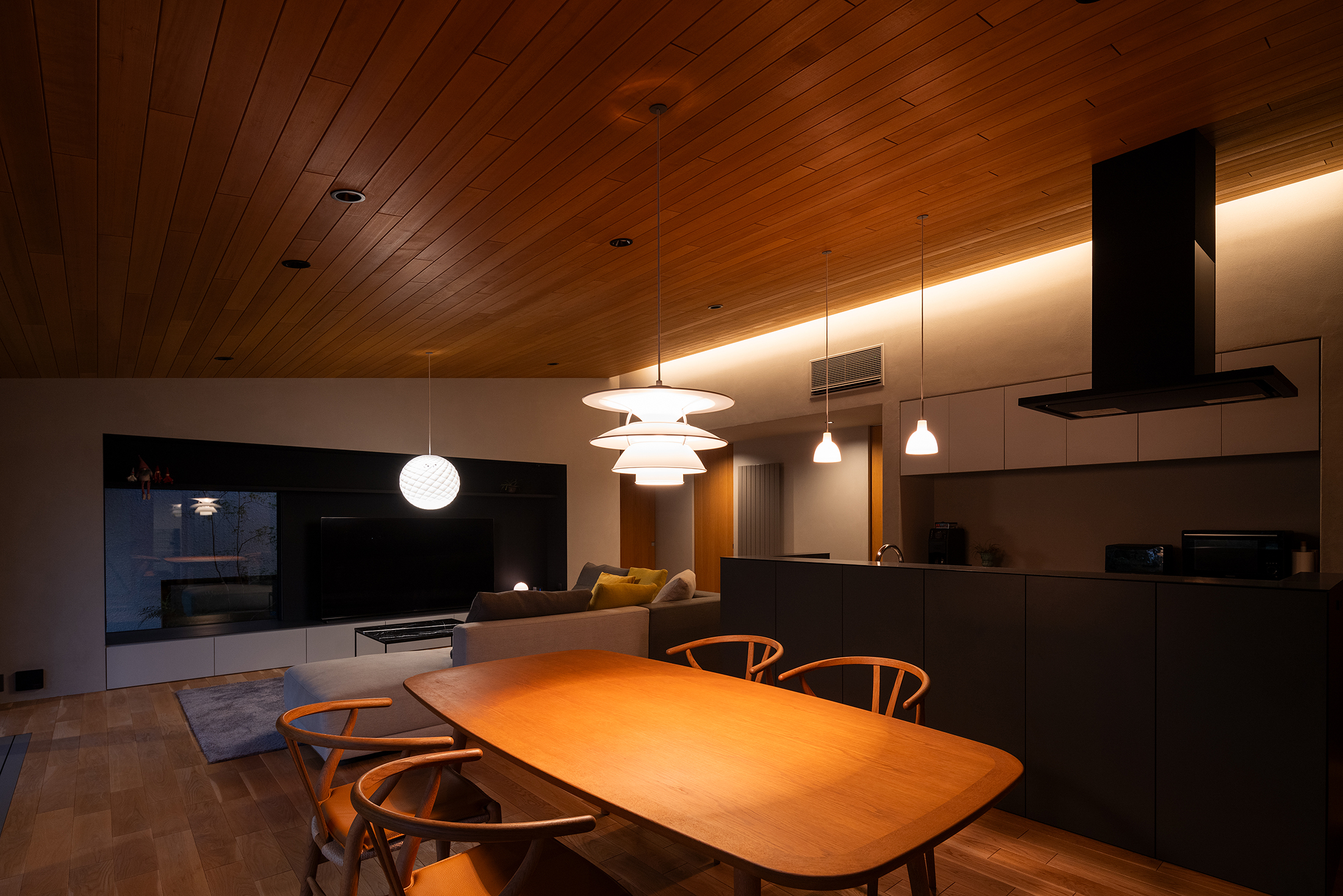
床/北海道なら節なしフローリングt15(チャネルオリジナル)
壁/左官仕上げ
天井/木板張り
厨房機器/セントロ(クリナップ)
レンジフード/センターフェデリカ(アリアフィーナ)
<浴室>
床/タイル
壁/モールテックス
天井/モールテックス
<設備システム>
暖房/パネルヒーター(ピーエス)
冷房/高効率エアコン(ダイキン)
換気/LWZ-280JE全熱式(日本スティーベル)
給排水 給水方式/直結
排水方式/下水道直結
給湯 給湯方式/エコキュート460L(三菱)
<断熱仕様>
基礎/防蟻ビーズ法ポリスチレンフォーム100mm
壁 /高性能グラスウール16kg225mm
屋根/高性能グラスウール32kg300mm
<温熱計算>
Ua値/0.26W/m2K
C値/0.20cm2/m2
<撮影>
西川公朗