
WORKS
上杉の家

上杉の家
「閉じつつ開く」自邸の形
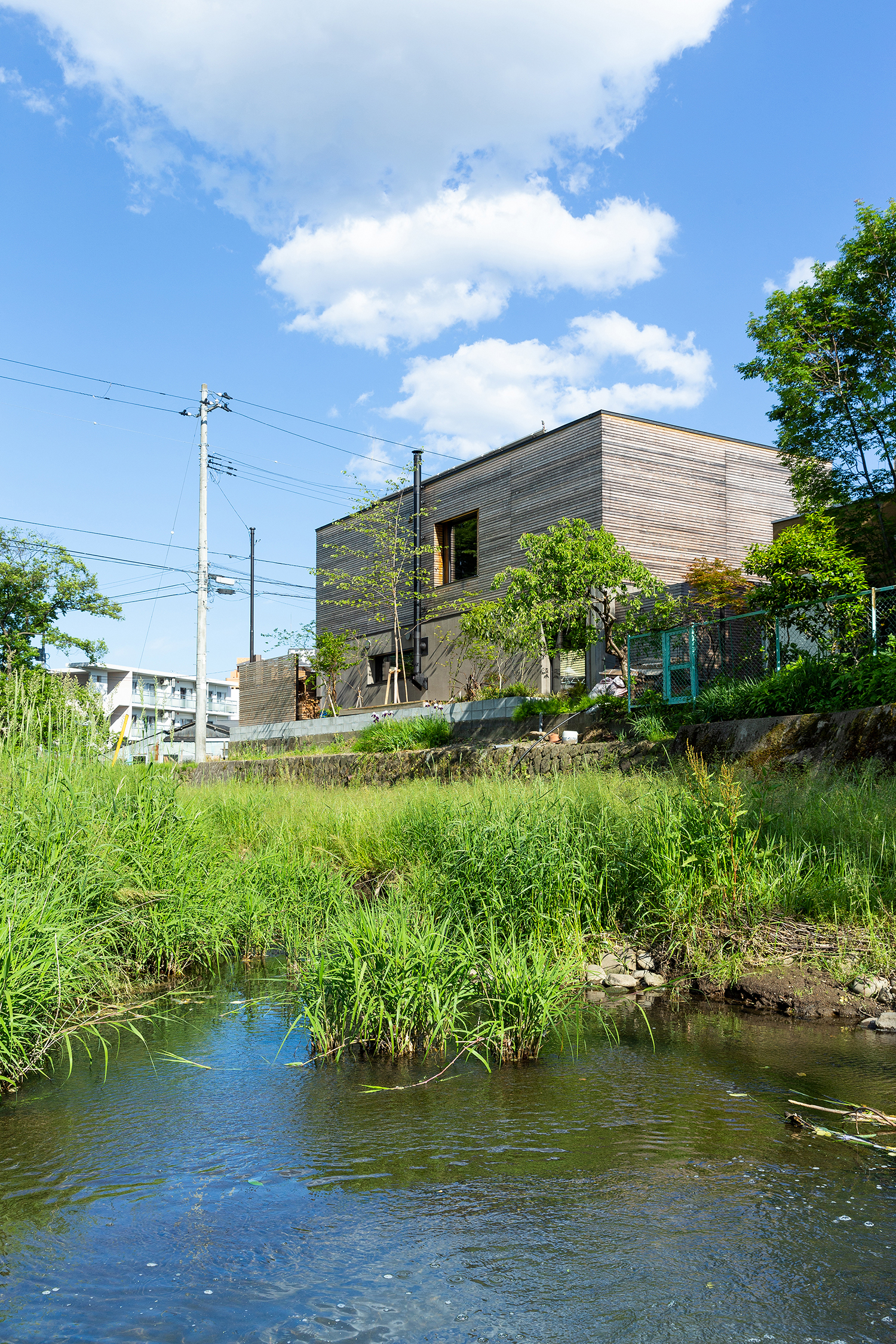
仙台中心部にほど近い敷地の一画に、2019年に完成した自邸である。裏手には小川が流れ、穏やかな自然が残る環境だ。敷地のもつ文脈や自然をいかに取り込み、どのように居心地へと転換するかが、一つのテーマとなった。
また、住宅設計を続けていく中で、「閉じつつ開く」というバランスをどのようにとるのかを常に考えてきた。この家を建てる4~5年前に行ったヨーロッパ視察で高性能住宅に触れ、断熱・気密に加え、自然エネルギーを積極的に活かす思想に強く影響を受けた。これもまた、閉じこもるのではなく、外部環境を感じ取りながら快適に暮らす建築。その理念を、自邸という「実験の場」で具現化したいと思った。
施主の要望を最優先する通常の住宅設計とは異なり、本計画では、間取りやデザインを極力フラットかつ普遍的なものとすることを目指した。50年、100年と受け継がれていく「息の長い建物」を意識し、誰が住んでも心地よい空間構成を志向している。特徴を過度に主張しないベーシックさこそが、長寿命建築の条件であるという考えに基づいている。
ドイツ・パッシブハウスの性能
構造と温熱環境は、本計画の核心である。壁420mm、屋根500mmのウッドファイバー断熱材を採用し、ドイツ・パッシブハウスの断熱性能を確保した。冬場は南面開口から得られる太陽熱のみで、室温20℃前後を維持する。窓は木製サッシ+トリプルガラス。LDKには基礎蓄熱コンクリートを設け、熱容量を高めることで室内環境を安定させている。
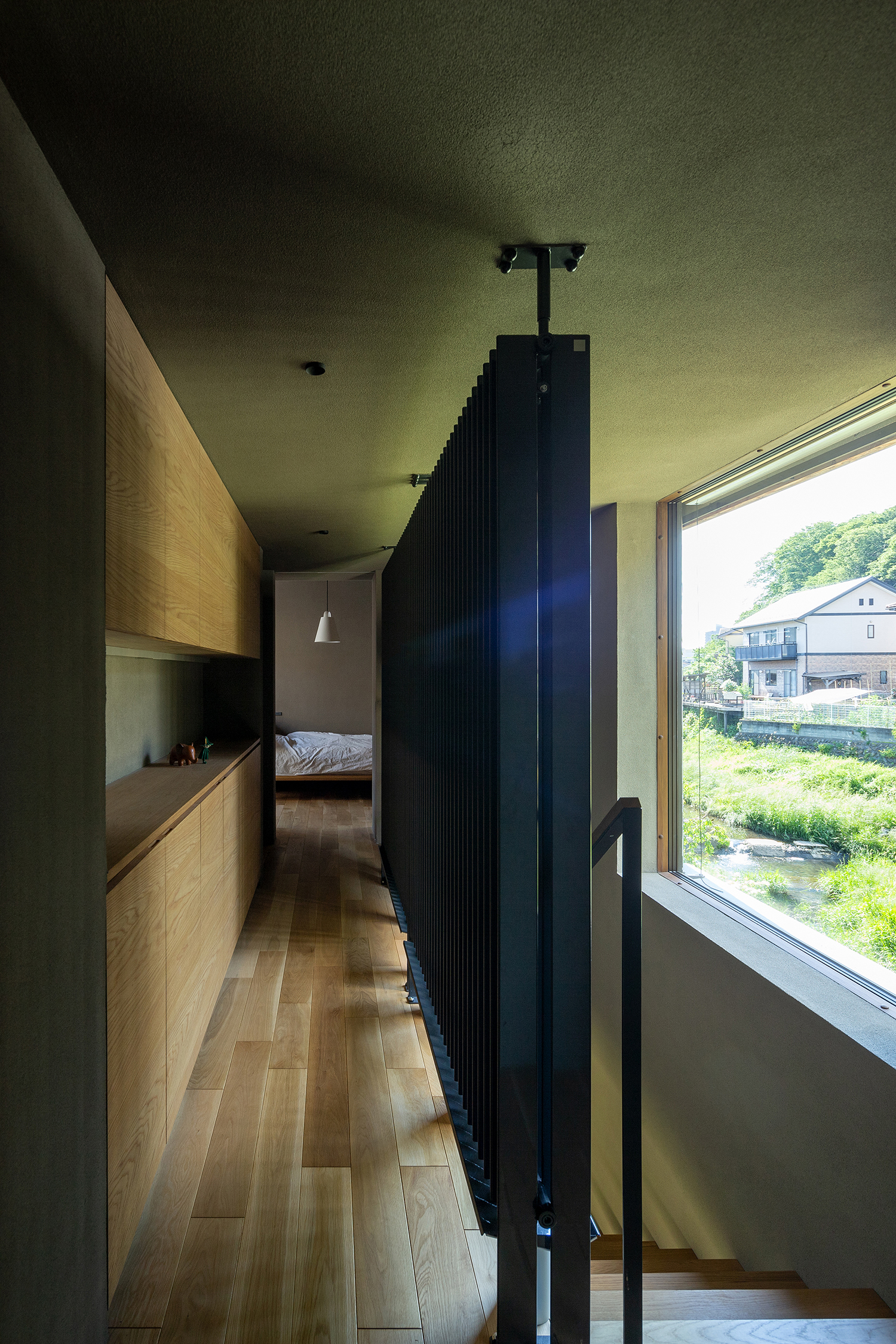
冷房は井戸水を利用した放射冷房を採用。2階ホールに設けた1台のパネルヒーターで、家全体の冷房をまかなう。換気は熱交換型第一種換気とし、風による不快感のない、清浄な空気環境を実現した。
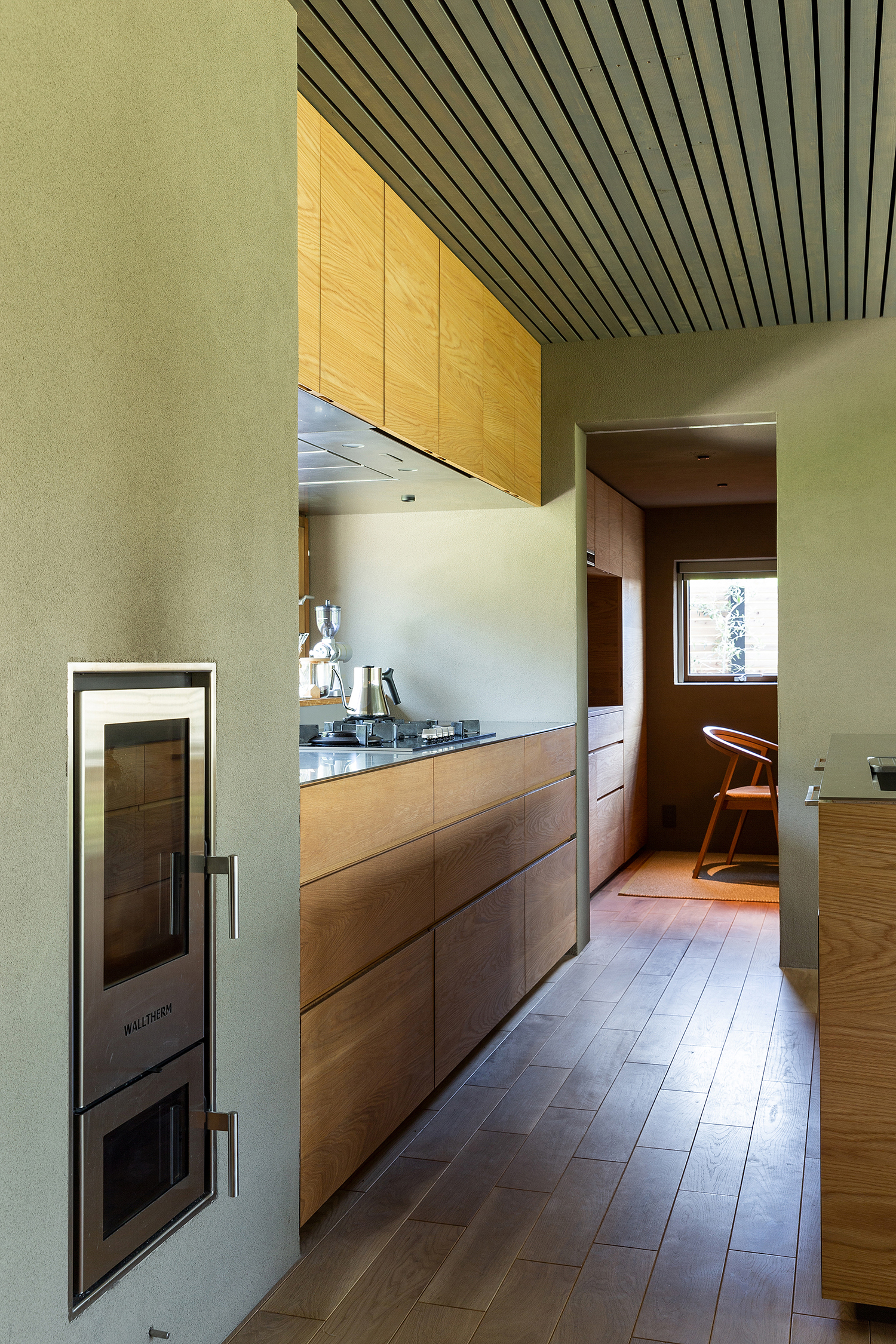
給湯は太陽熱温水パネルを主とし、曇天時には薪ボイラーを併用する。天候に合わせて自ら調整しながら暮らすことで、自然との距離が近づき、天気や気温をことさら意識するようになった。単に「便利さ」を追求するのではなく、ひと手間かける豊かさを受容できるのは、住宅の基本性能が高いからこそである。
空間構成と窓の機能、スケール感
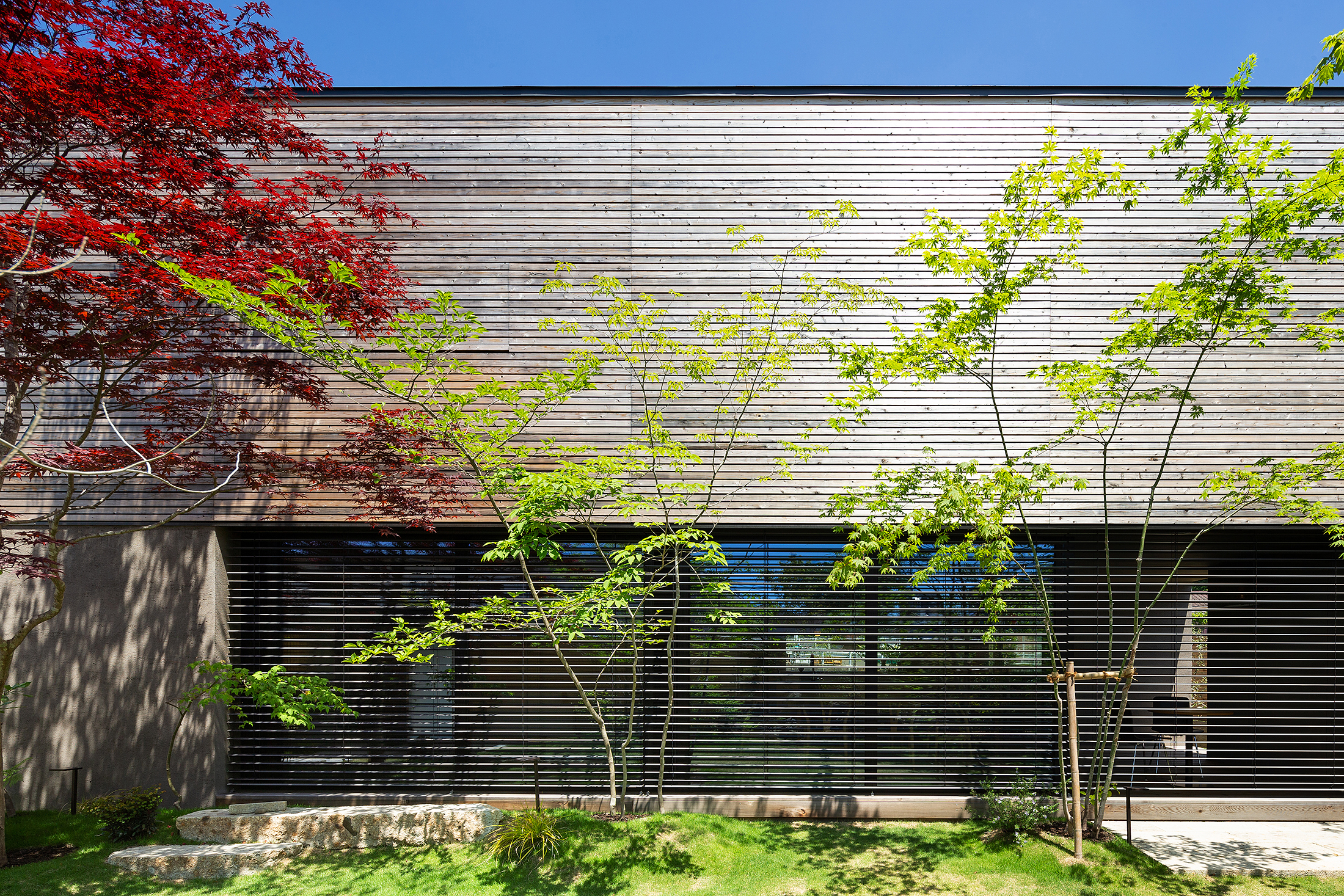
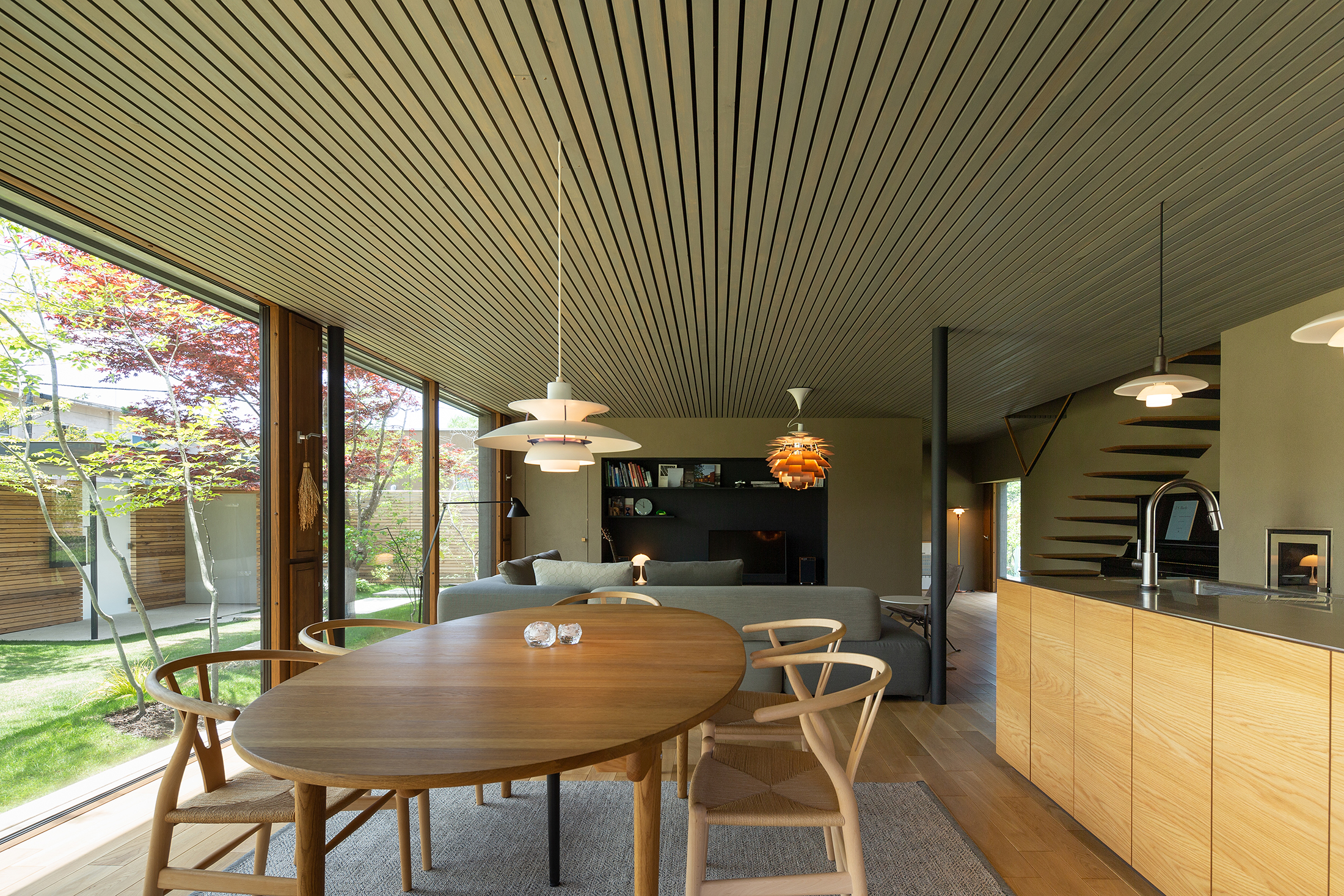
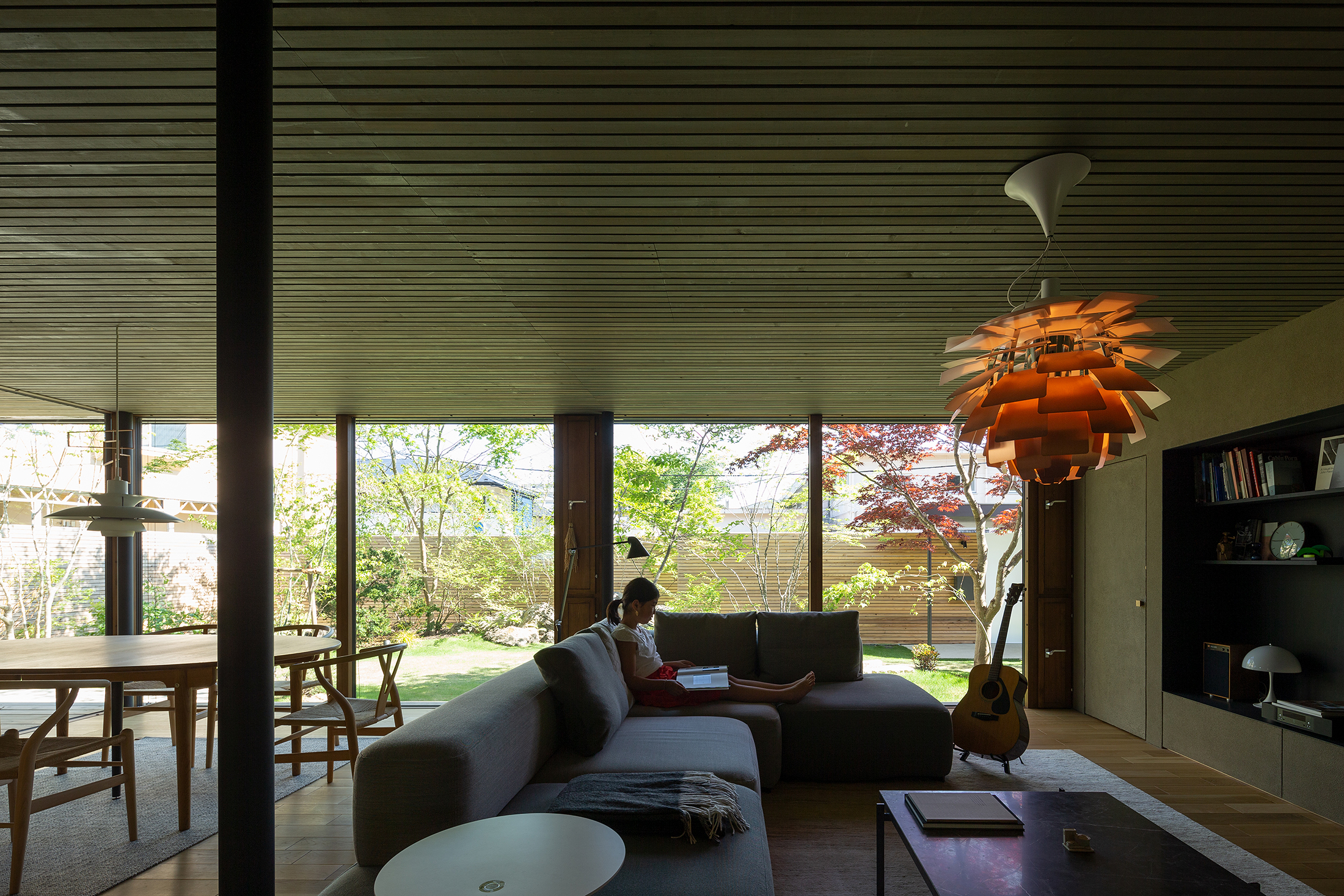
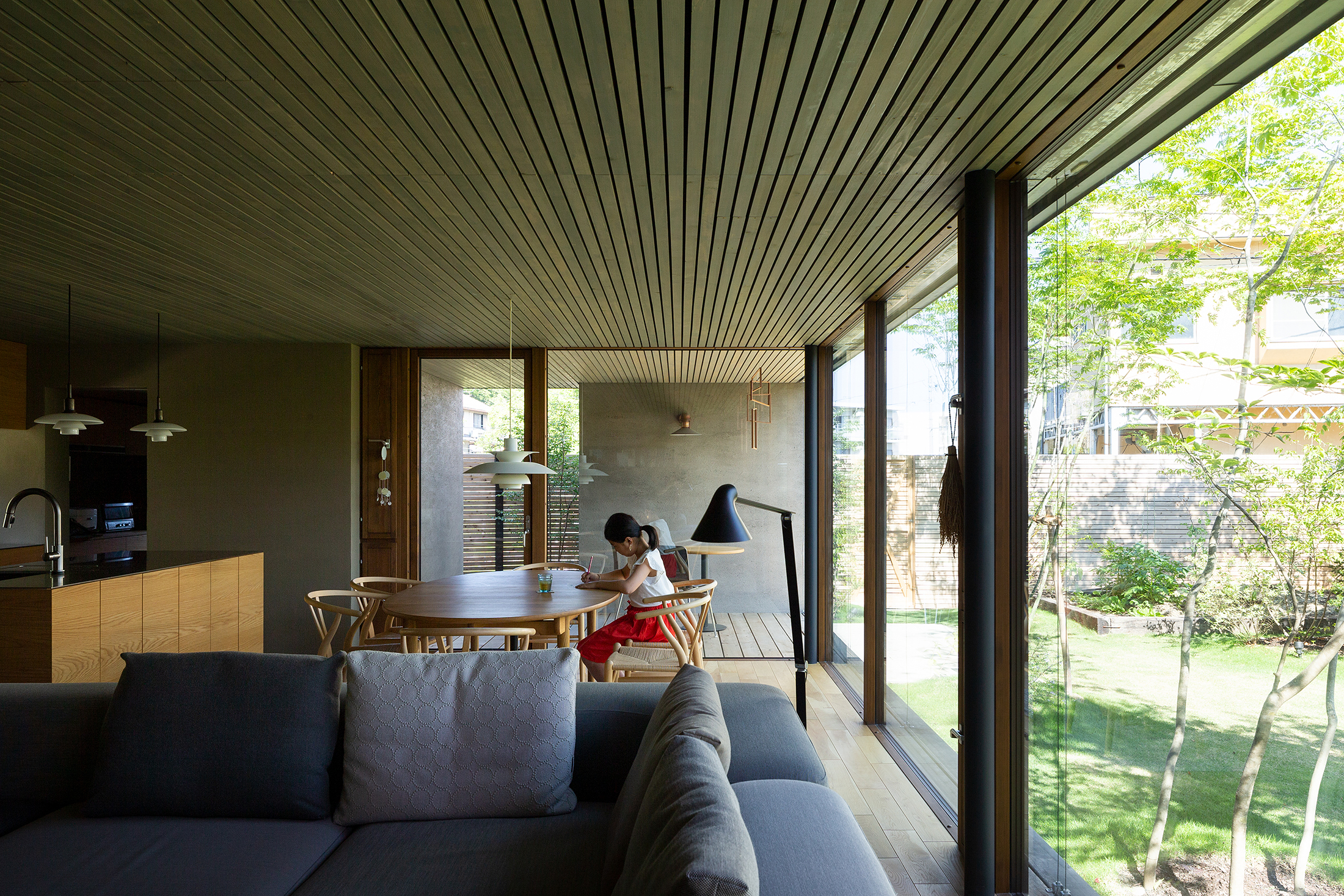
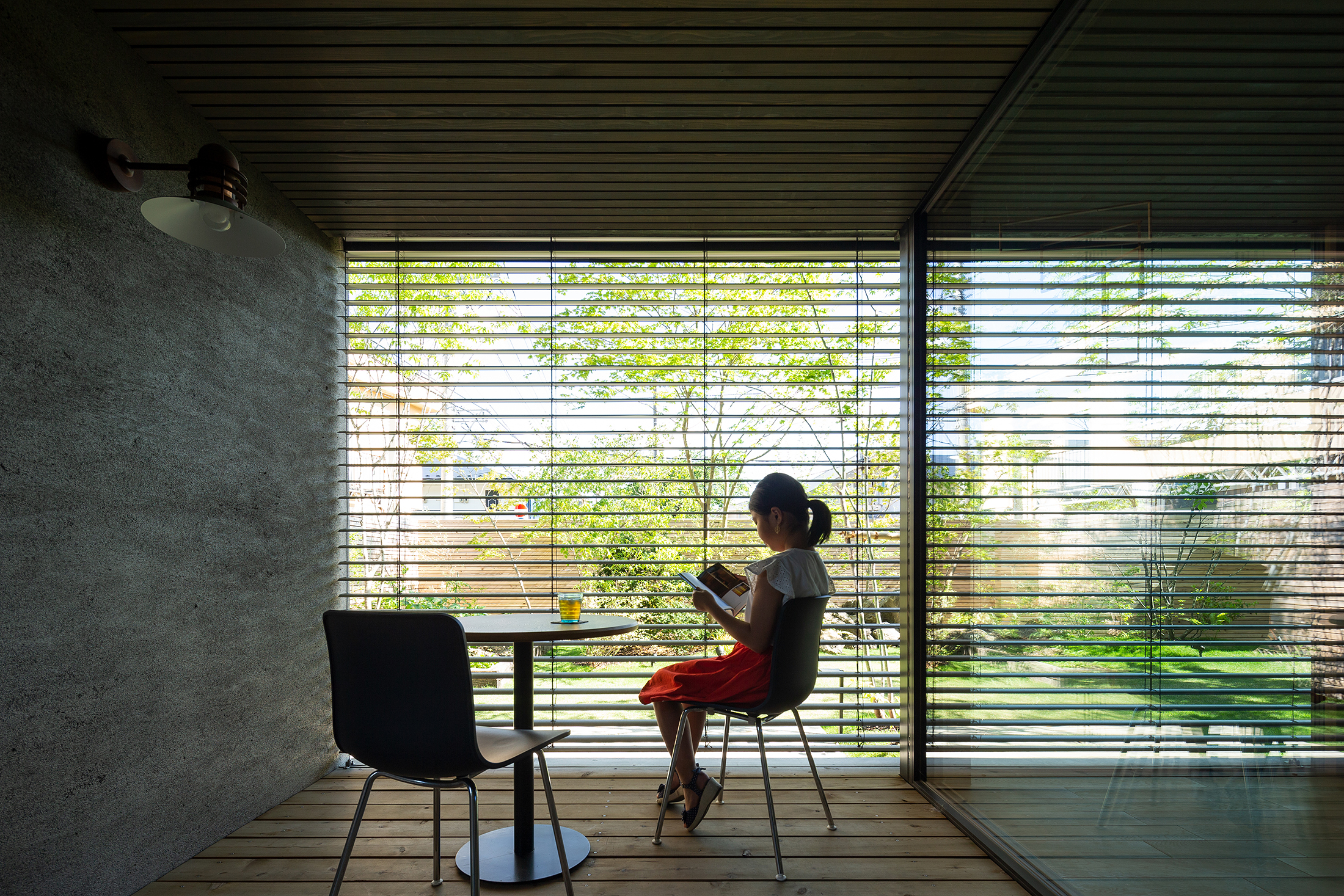
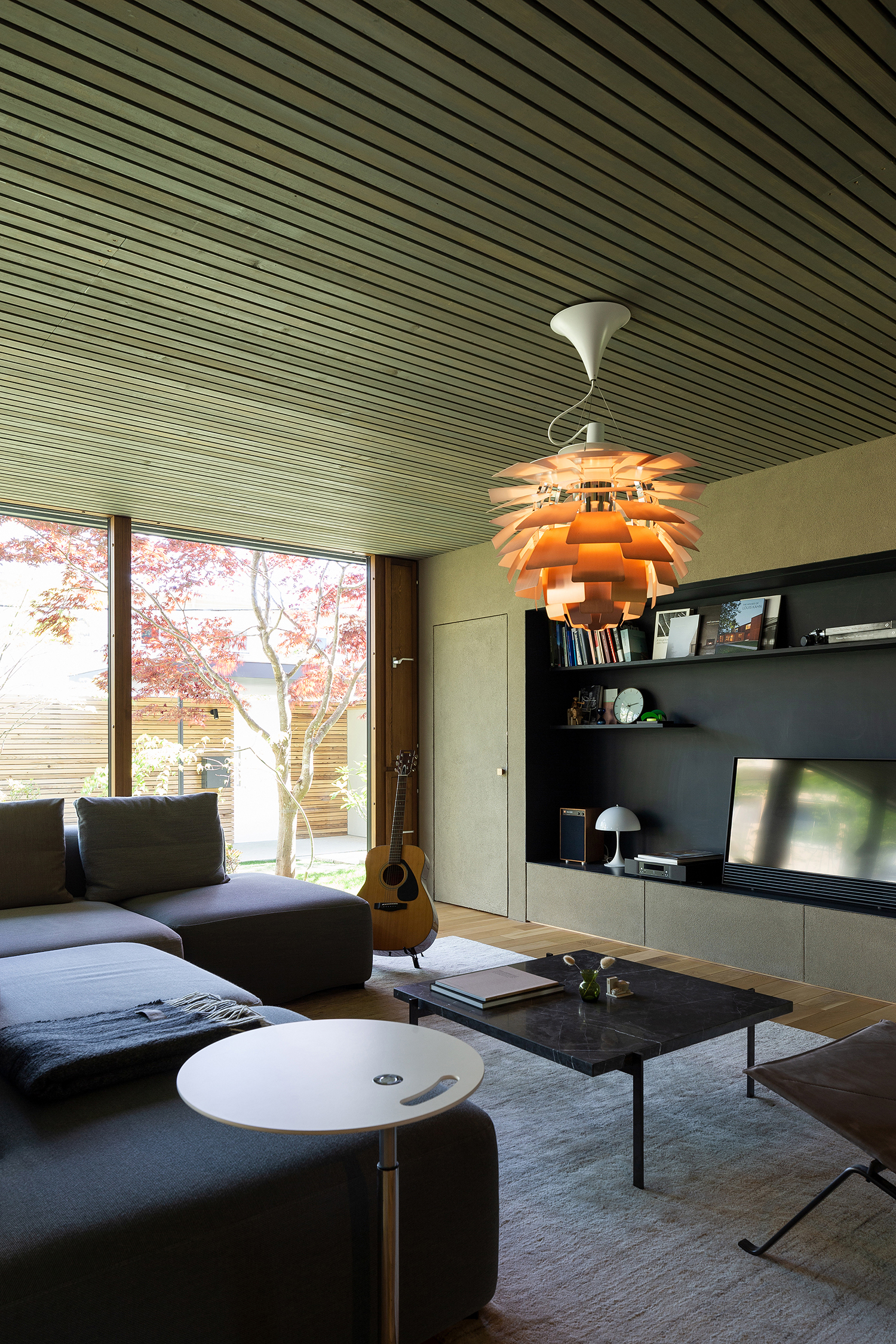
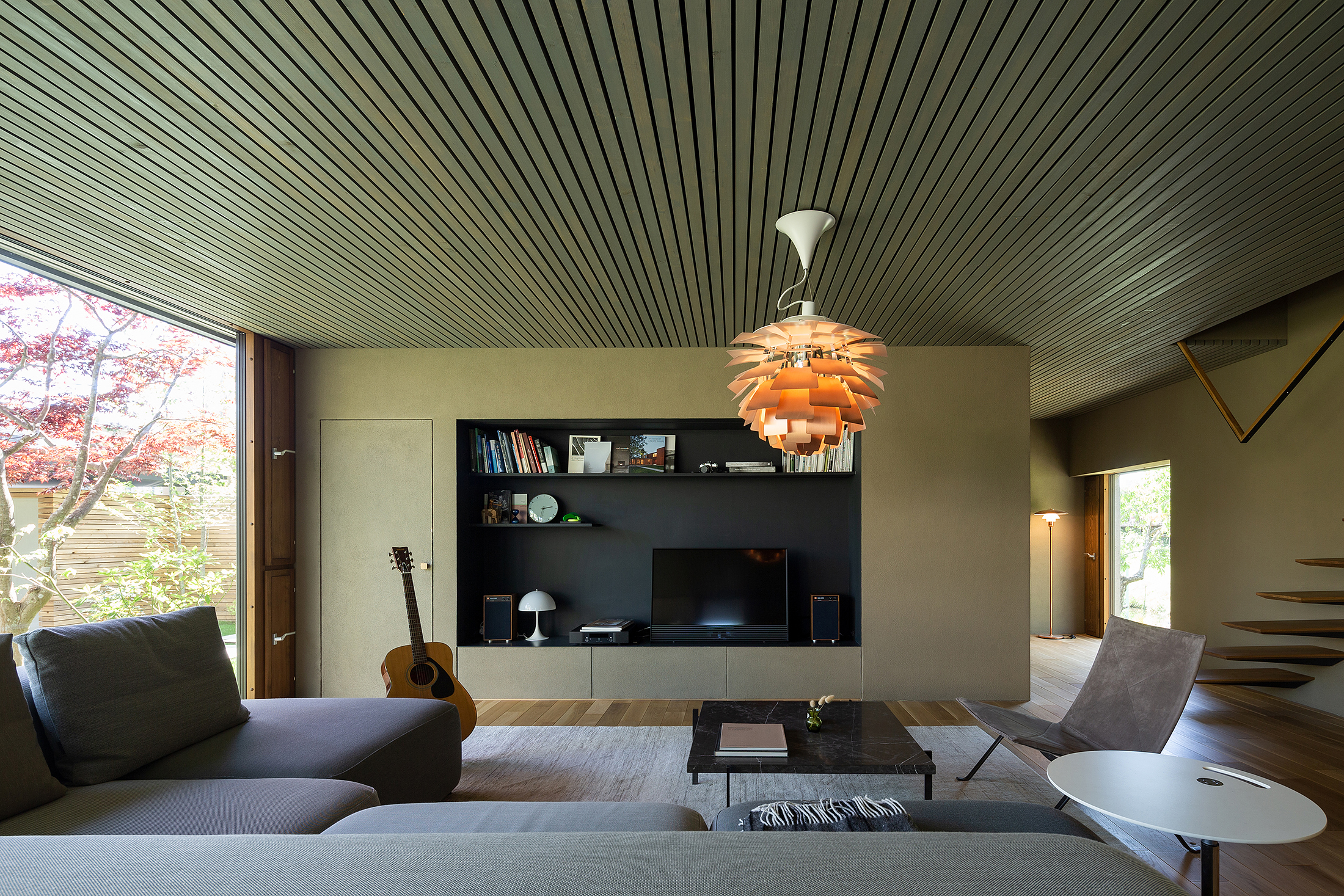
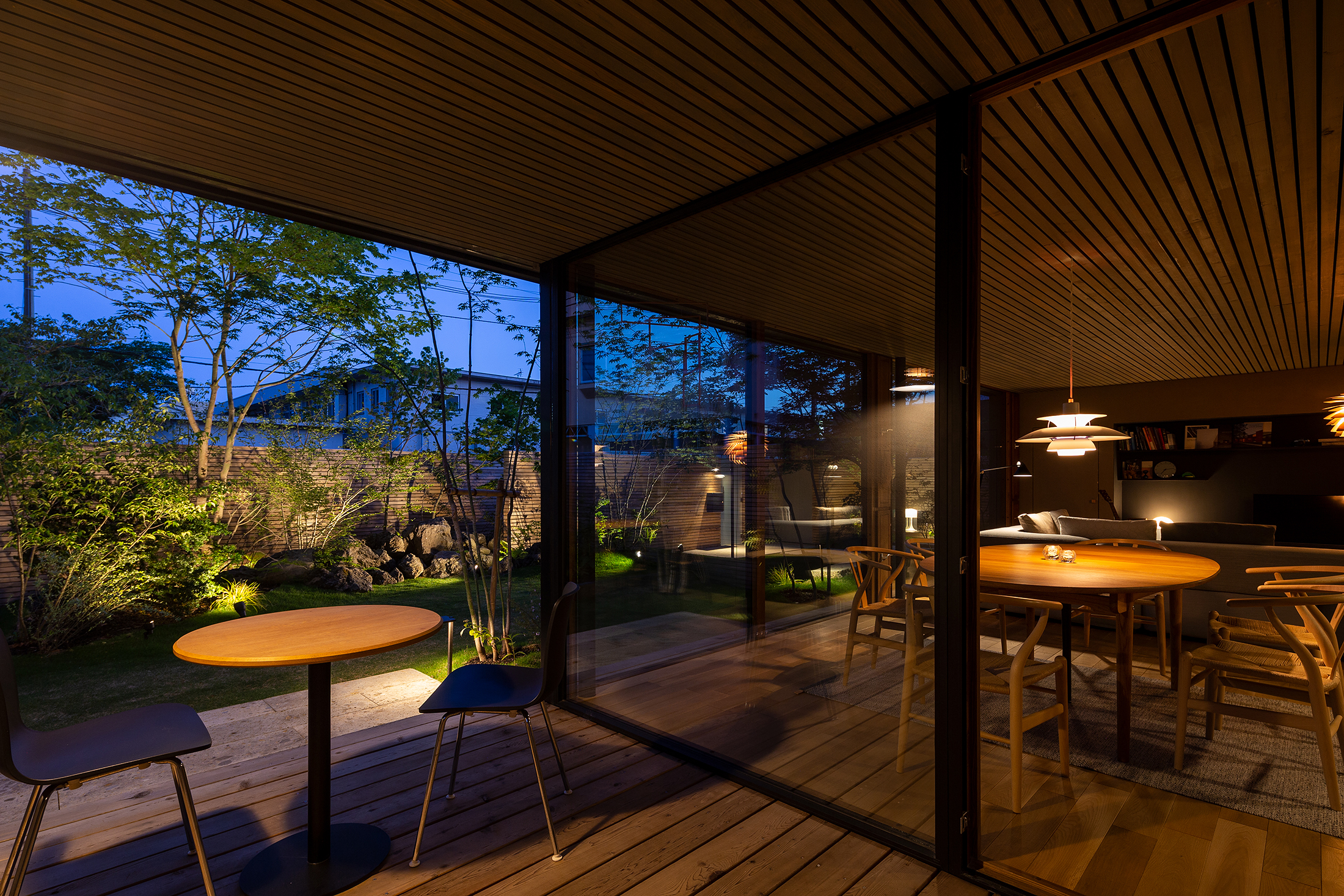
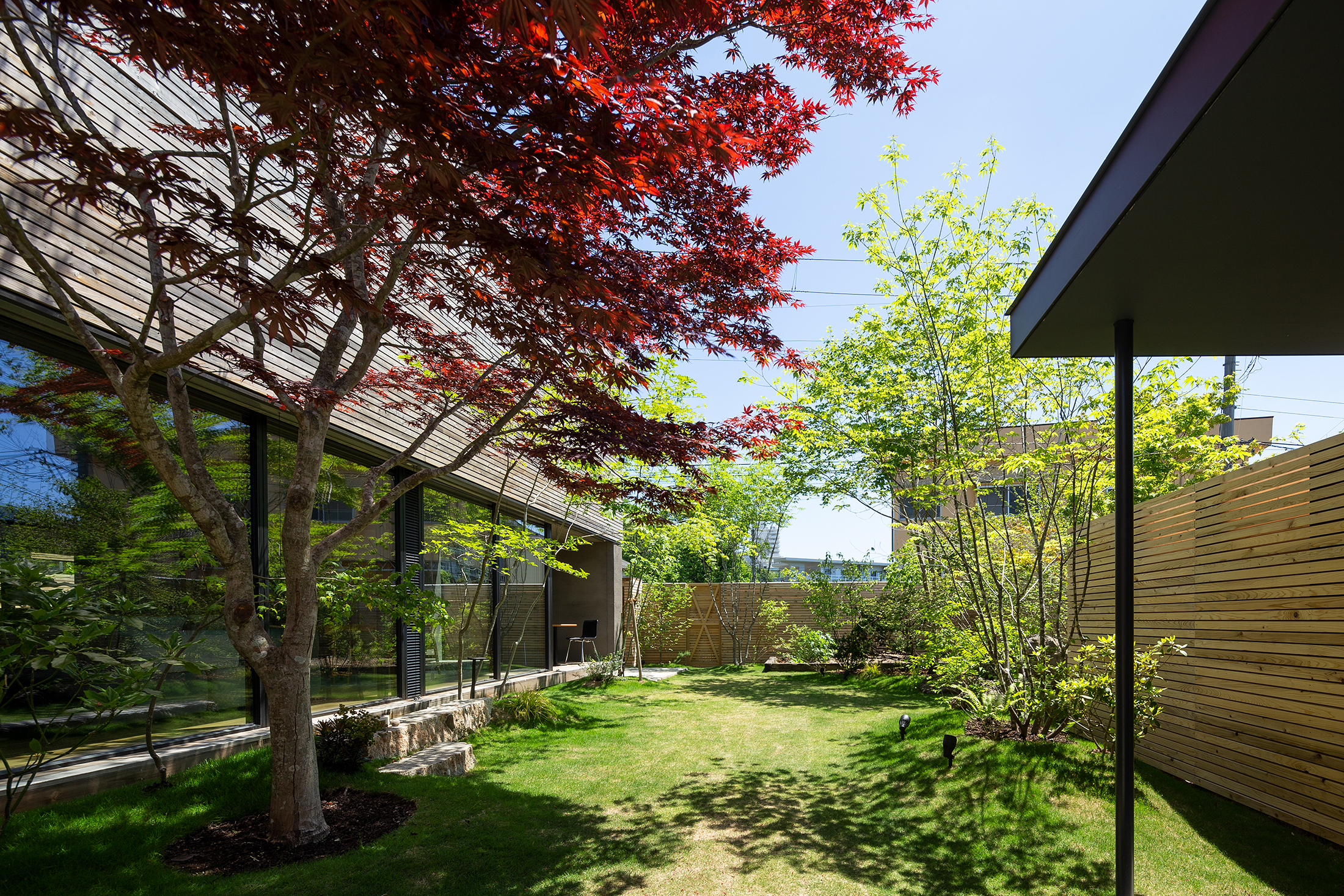
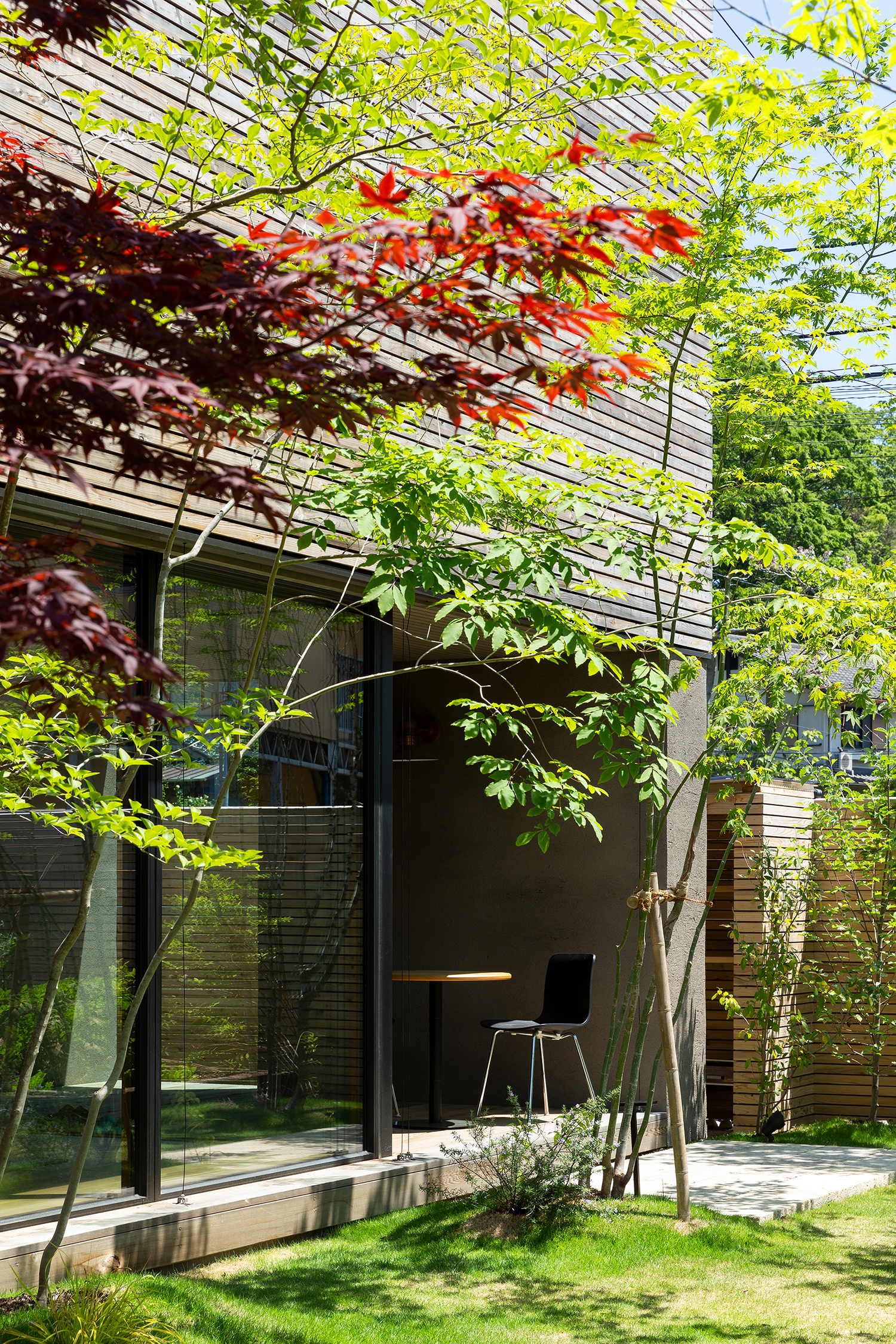
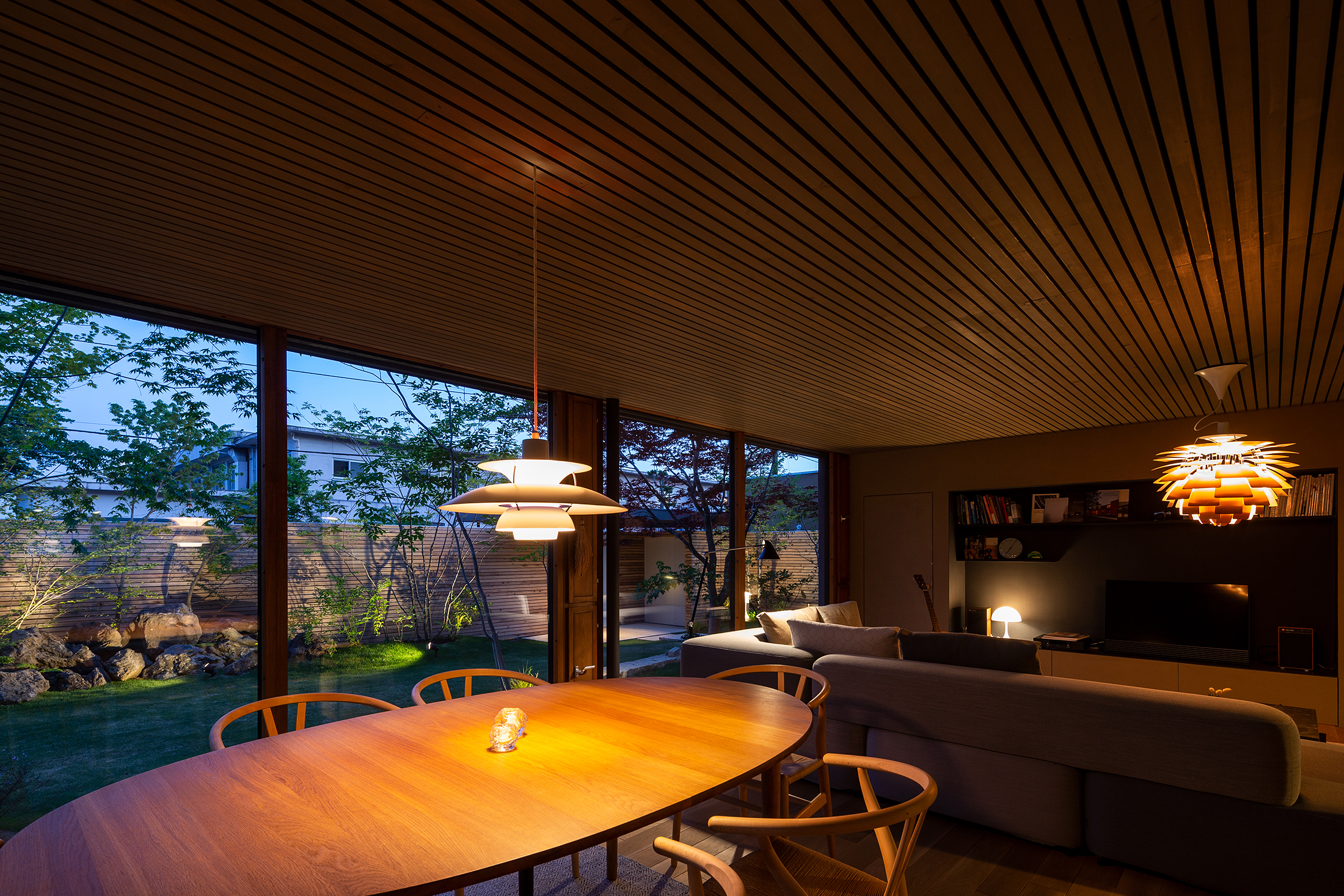
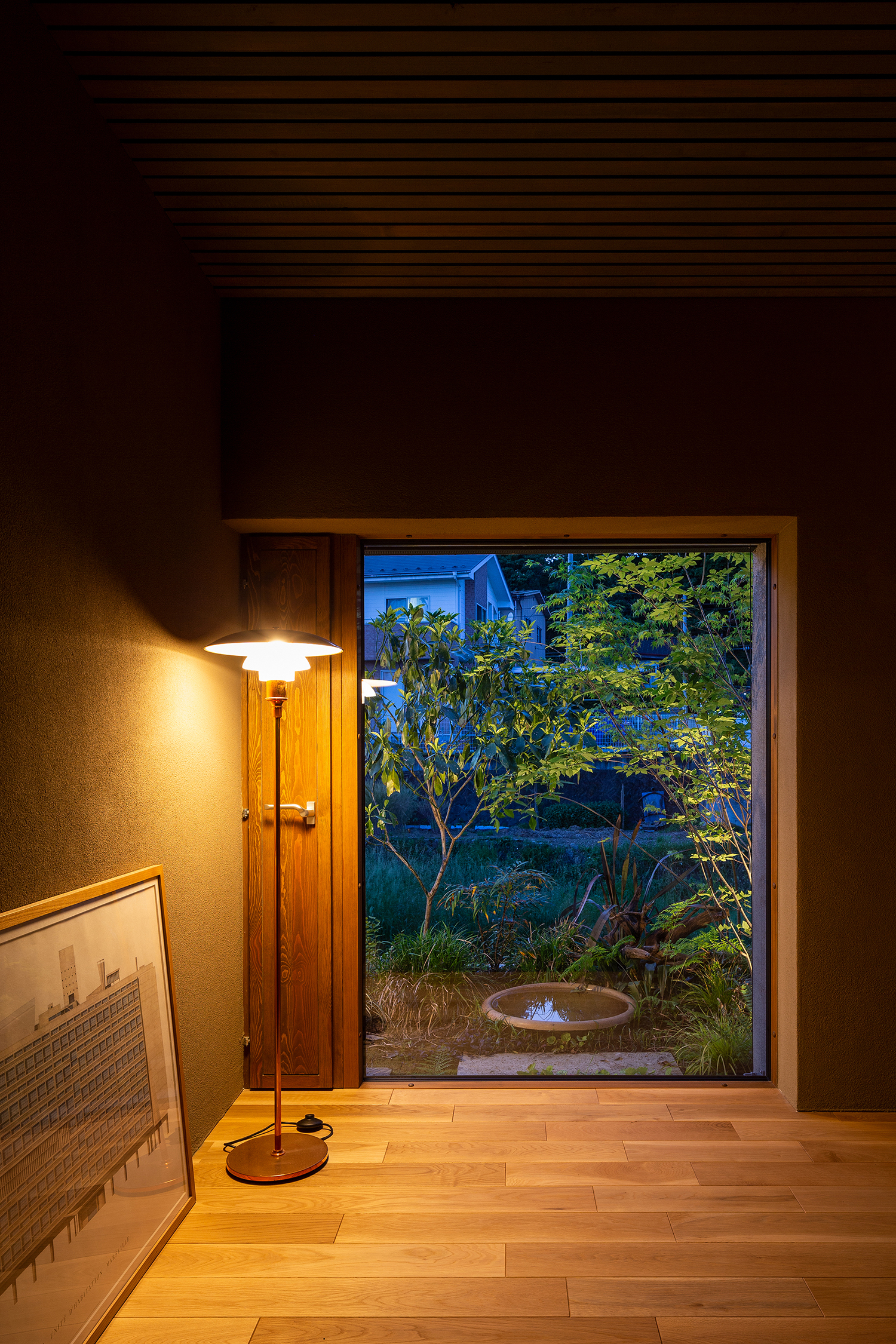
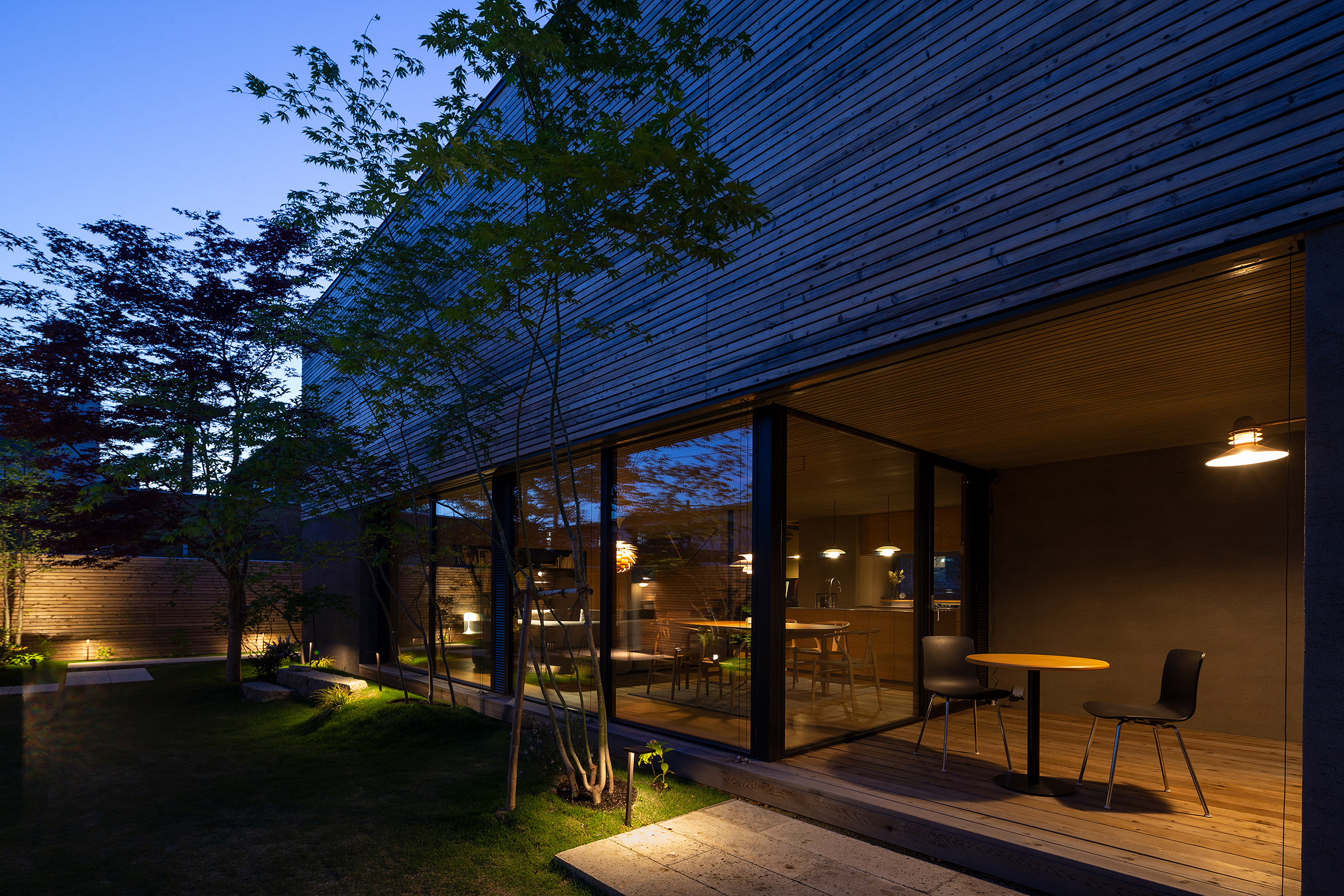
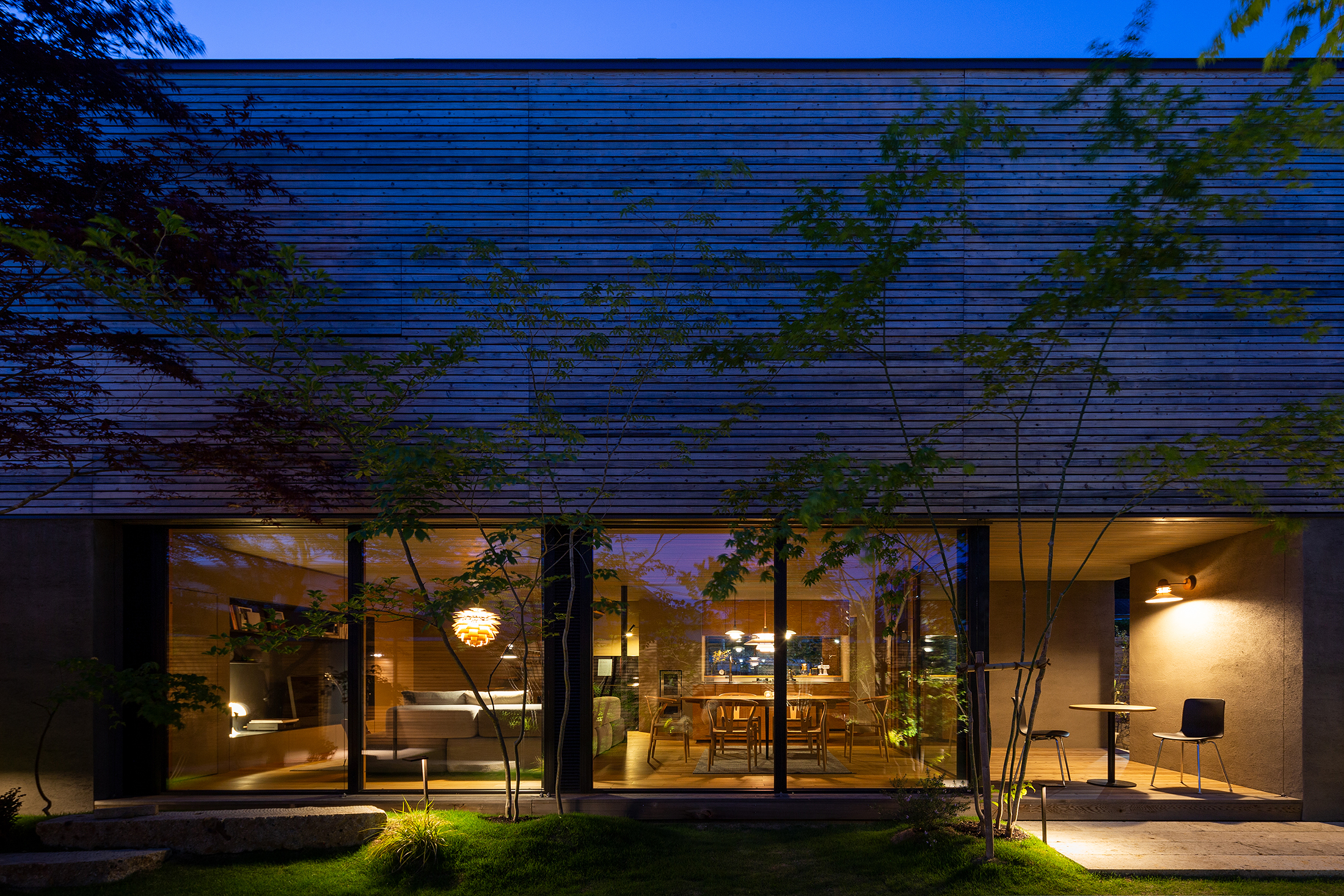
間取りは、1階をLDKのワンルーム、2階を寝室・水まわりとした総2階構成。将来的なスケルトン・インフィル化を想定し、構造は強固に、内部には自由度をもたせた。LDK南面には大開口を設け、庭と室内を連続させている。景色を見る窓、外へ出る窓、風を通す換気窓を機能的に組み合わせ、外付けブラインドによって日射を繊細にコントロールする。北側の窓からは裏手の小川の風景が広がり、季節の移ろいと水音が暮らしに寄り添う。
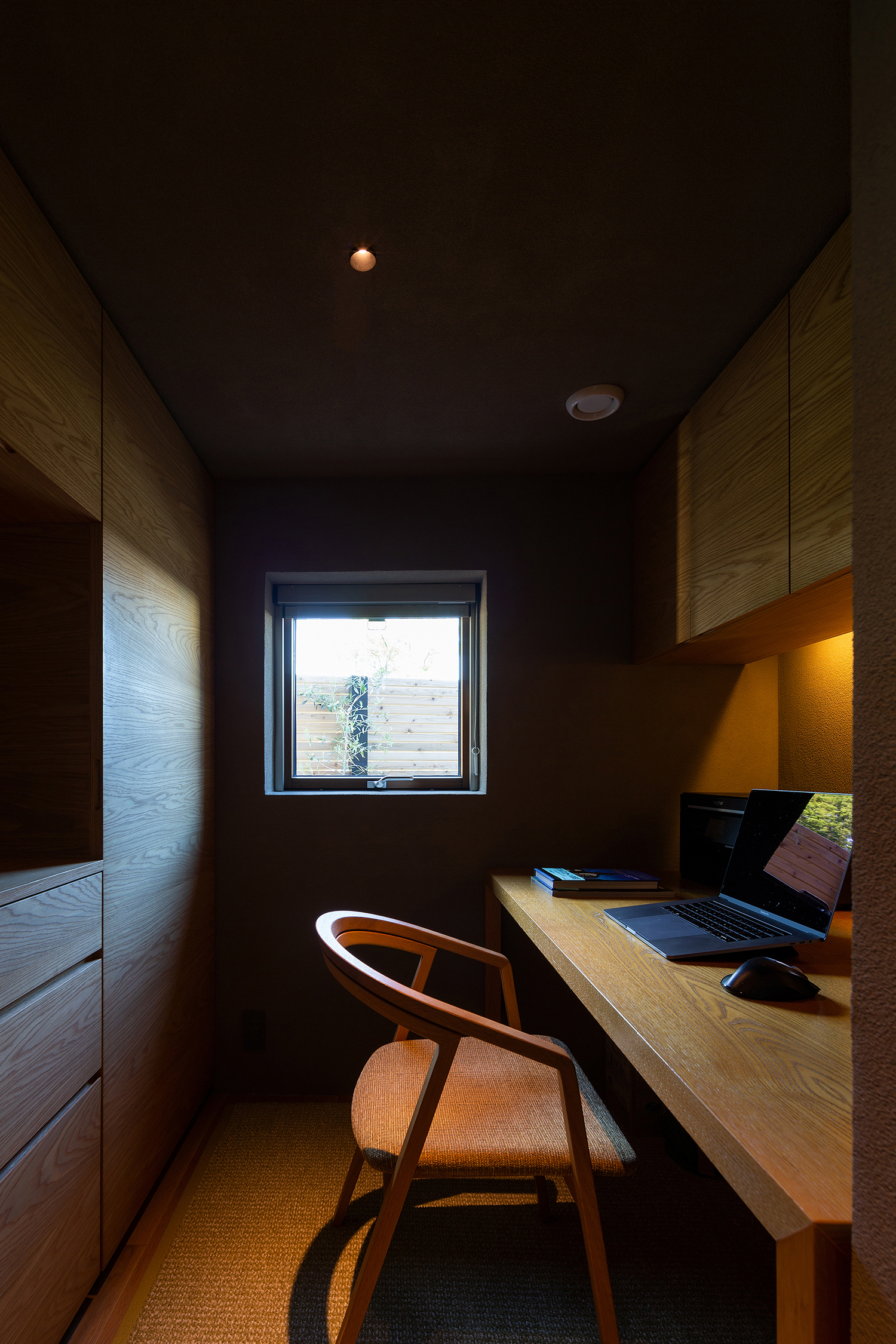
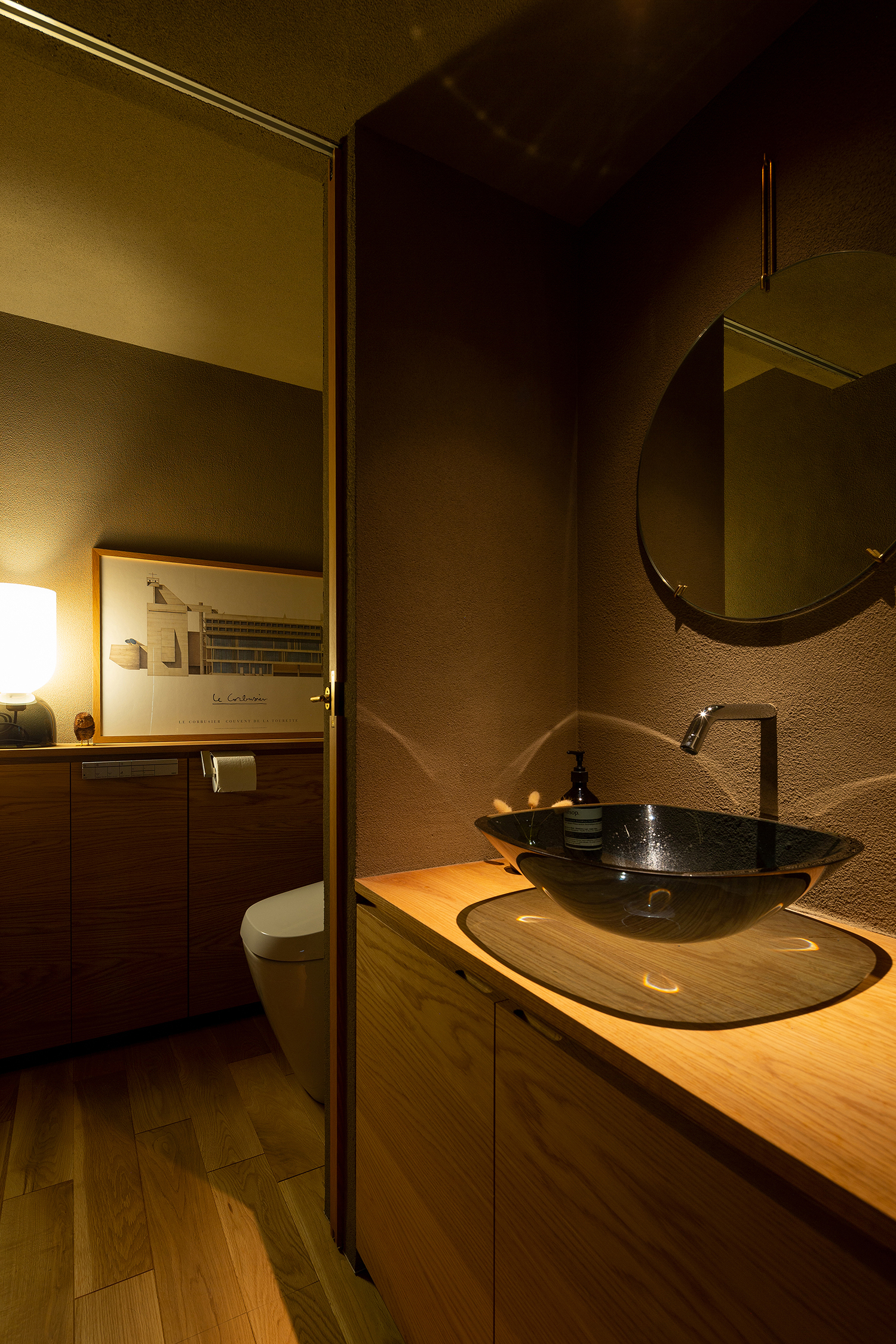
低い重心の空間構成も特徴の一つだ。天井高は2.25m。ヒューマンスケールを意識し、落ち着きのある内部環境を形成している。天井面が低いため、ノイズとなりやすい天井照明は極力排除し、ペンダントライトや置き型照明によって陰影をつくり出している。
自然素材と環境負荷への配慮
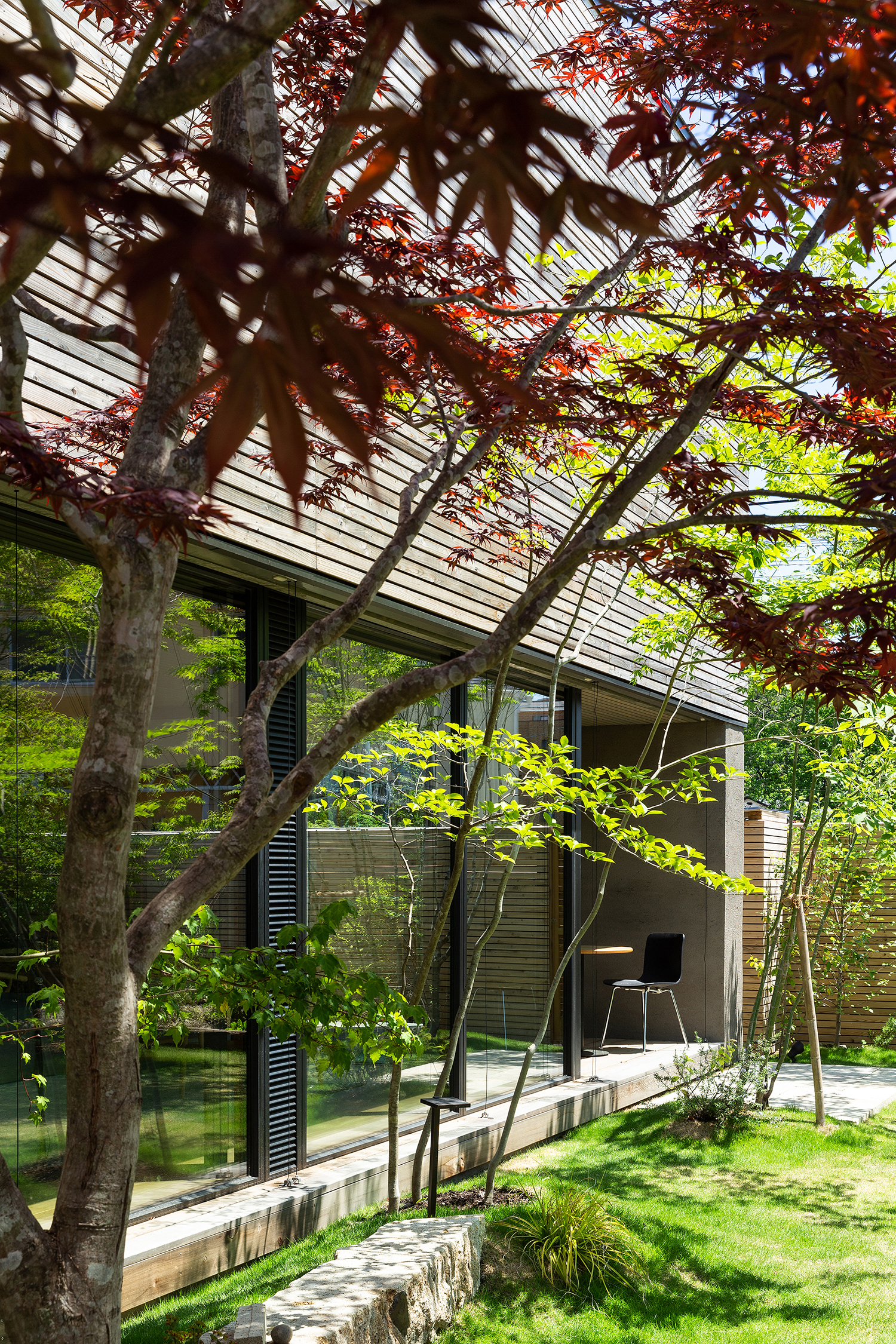
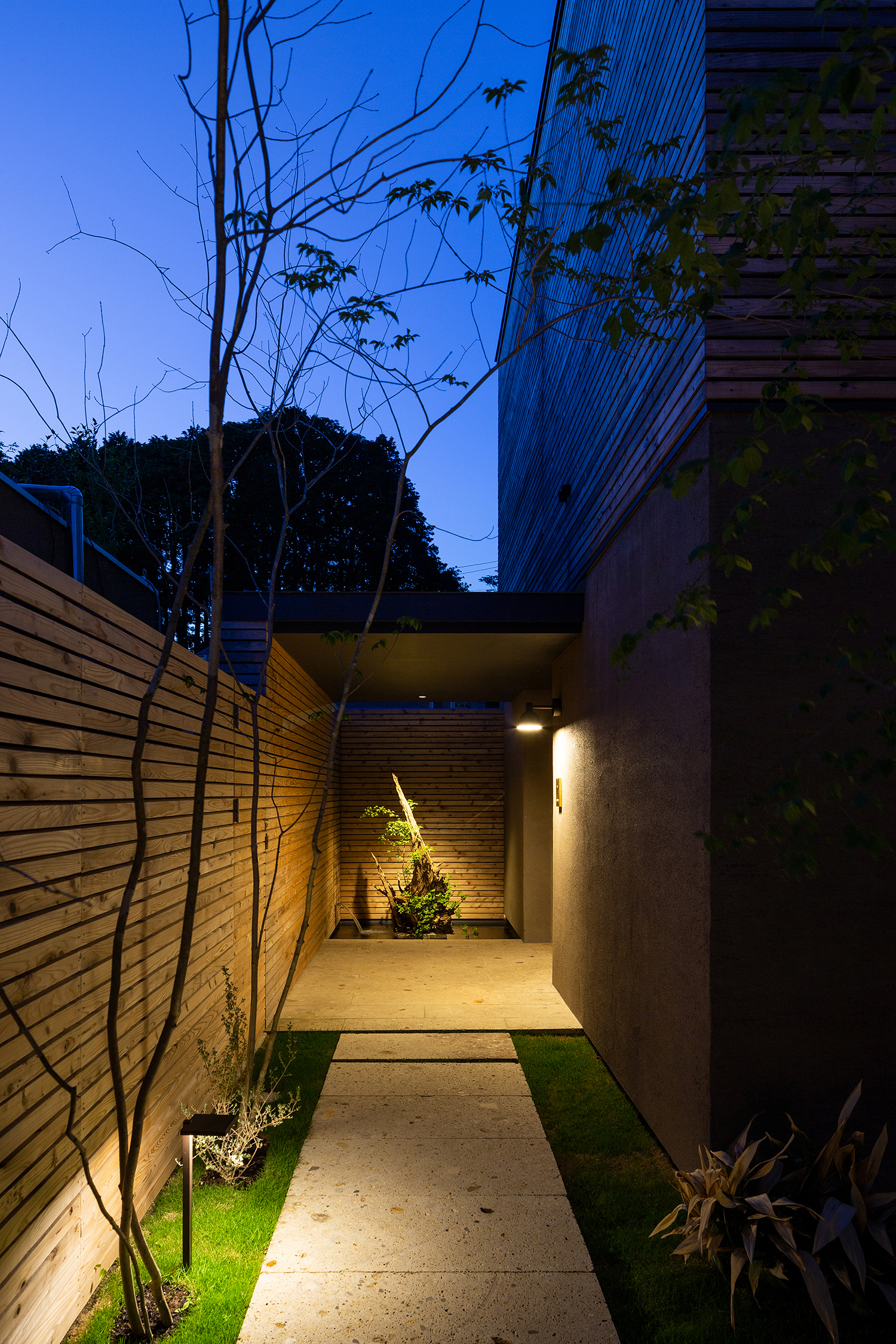
外壁および外塀は、屋久島地杉のすのこ貼りとした。厚み3.5cmの材を、大工が一本一本斜めに加工することで、雨水が滞留せず、耐久性が高まる。経年変化を前提とした素材選択であり、住まい始めて5年が経った現在では、シルバーグレーに風化し、表情に深みを増している。
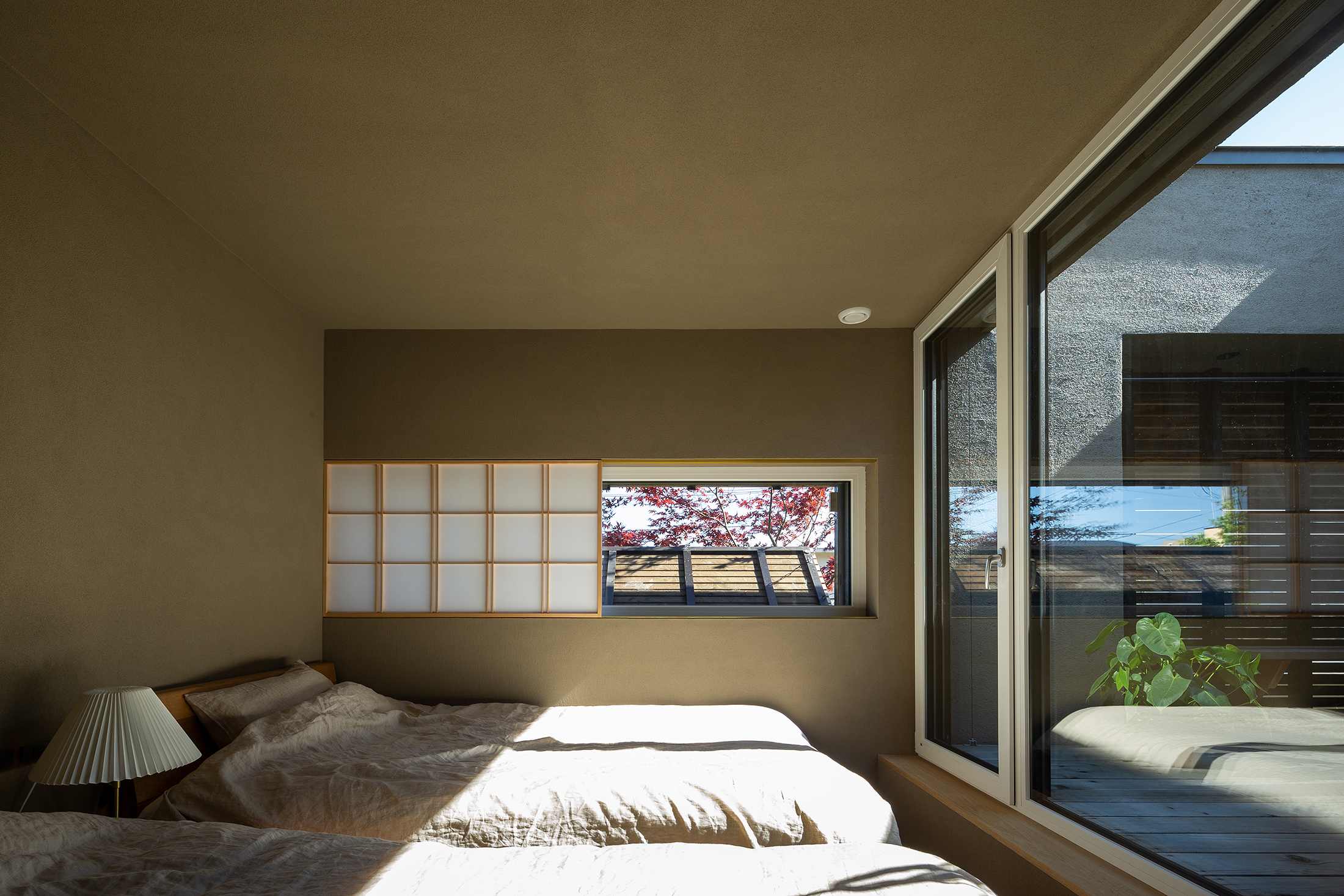
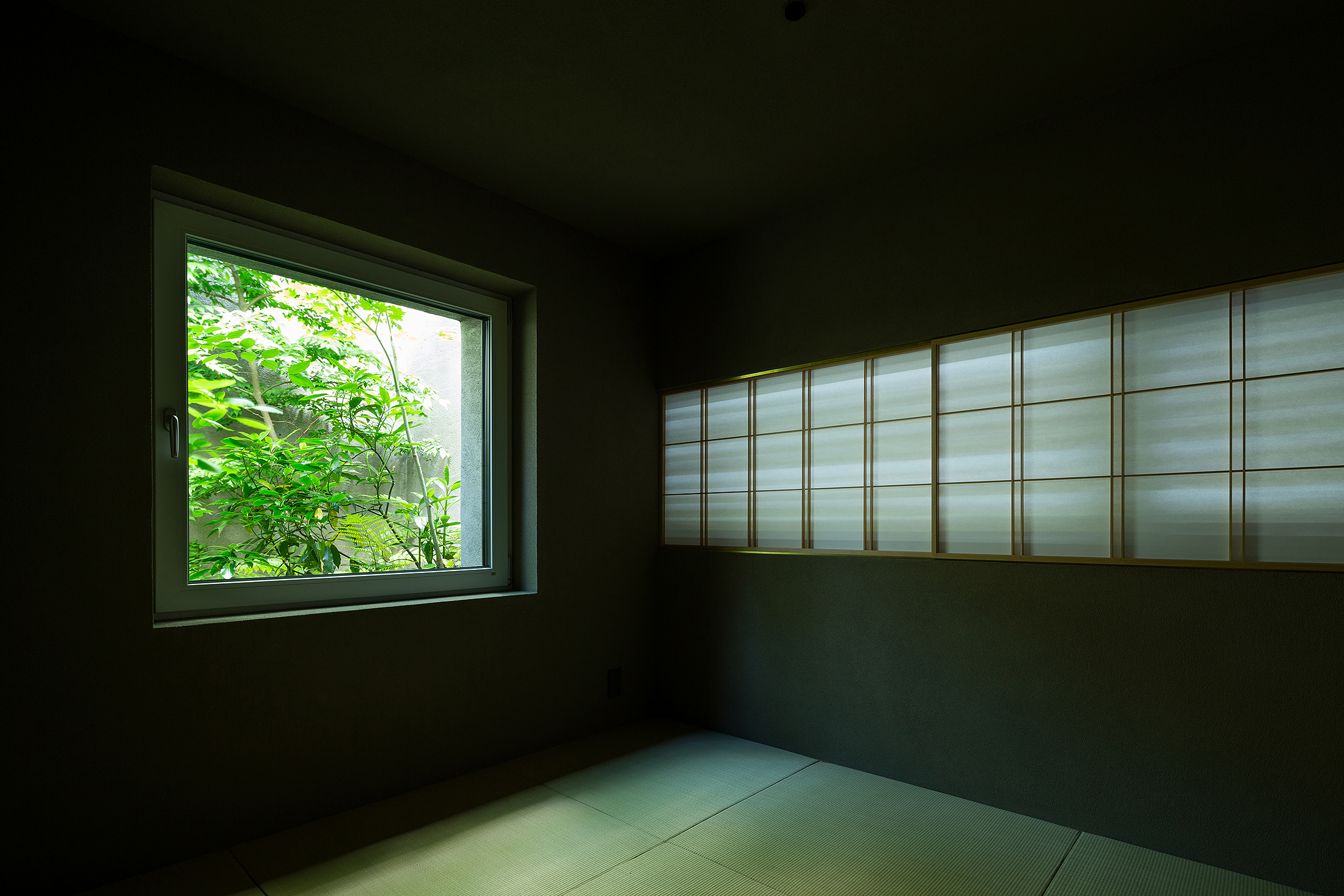
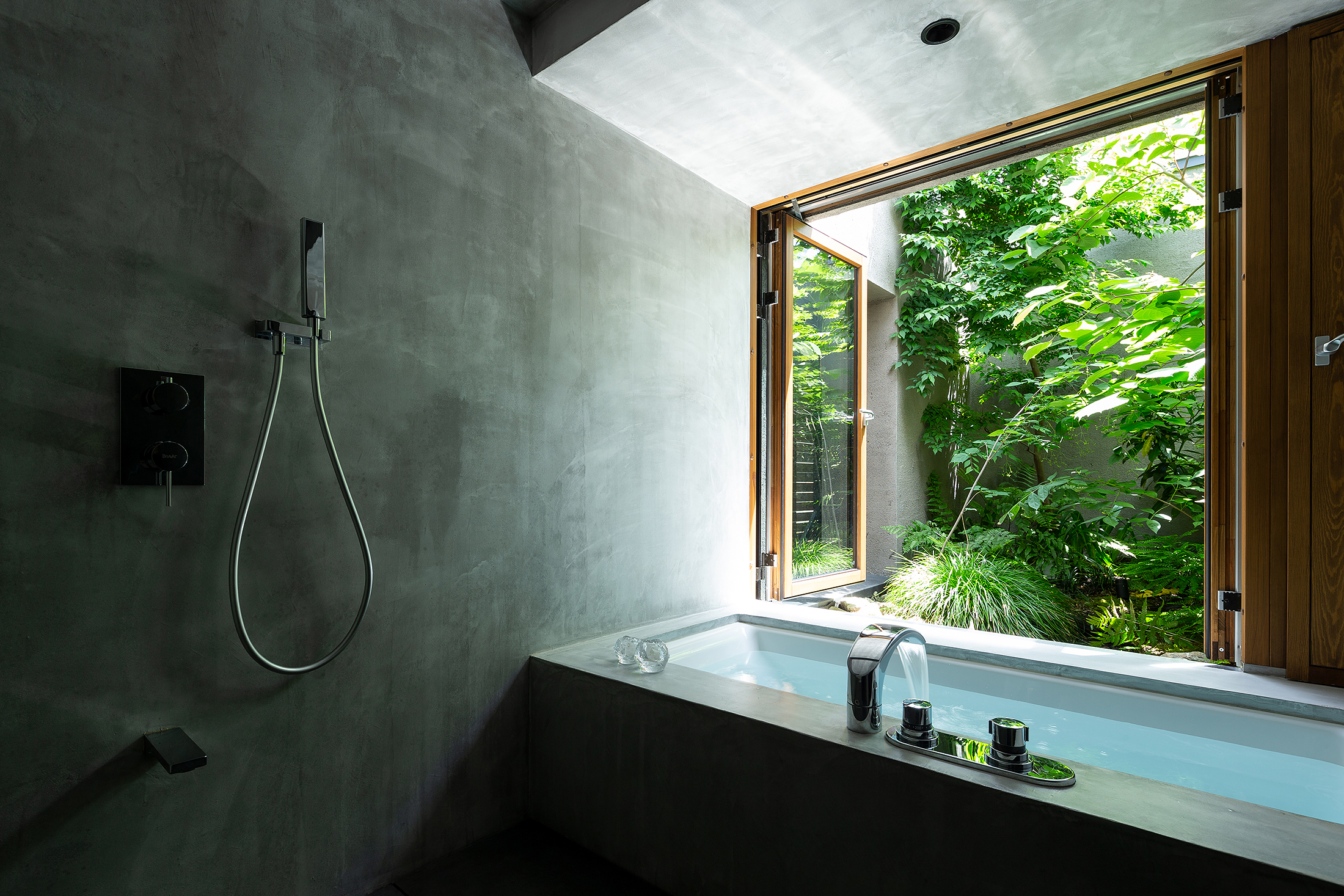
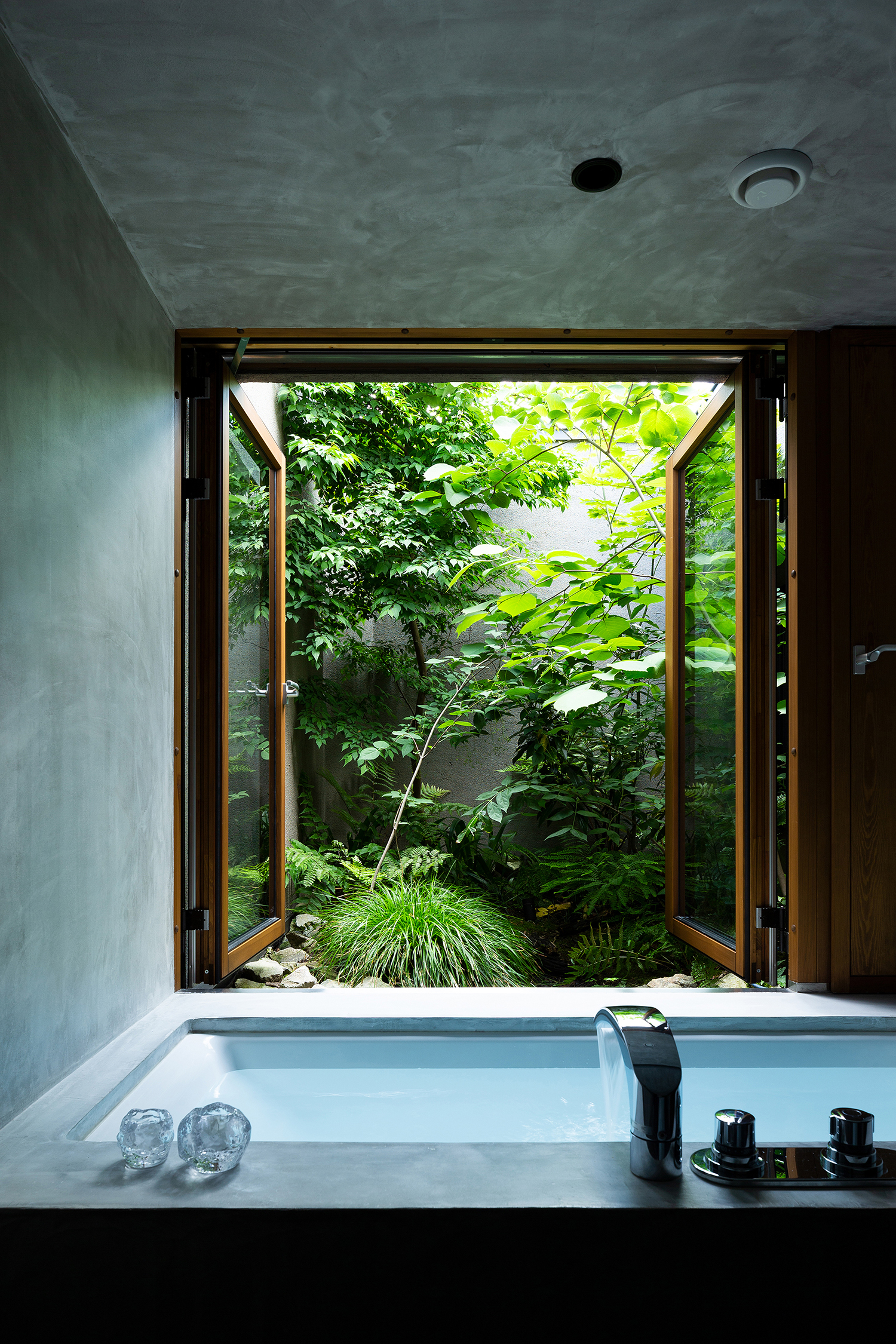
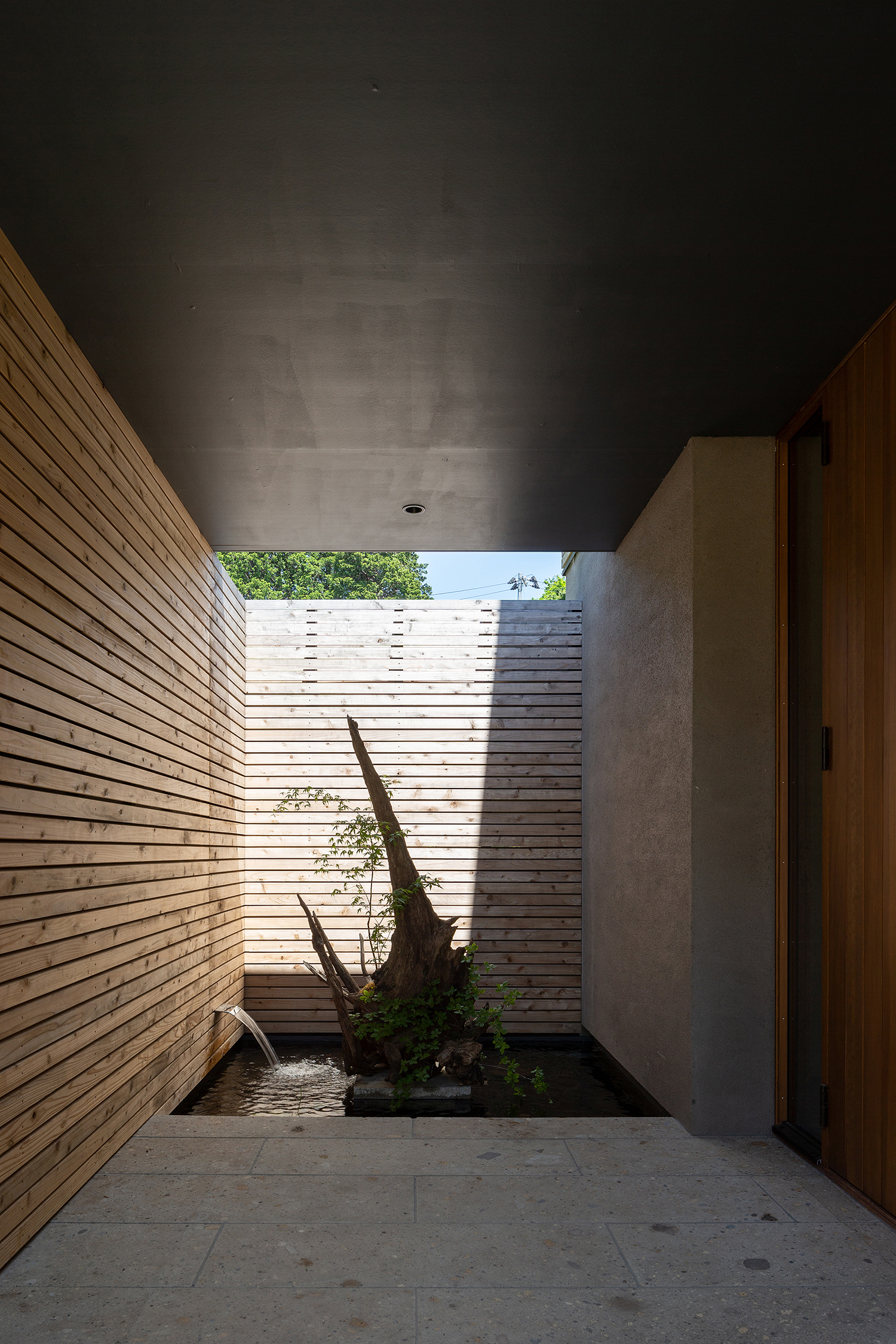
内部は、北海道産ナラの床、3種の土をブレンドした土壁、スギ板張りの天井など、自然素材を軸に構成した。2階の和室には造作の障子を設け、光と風を柔らかく受け止めている。断熱材をはじめ、見えない部分に至るまで「土に還る素材」を徹底した。
暮らしと体感──自然を人の手で調整する豊かさ
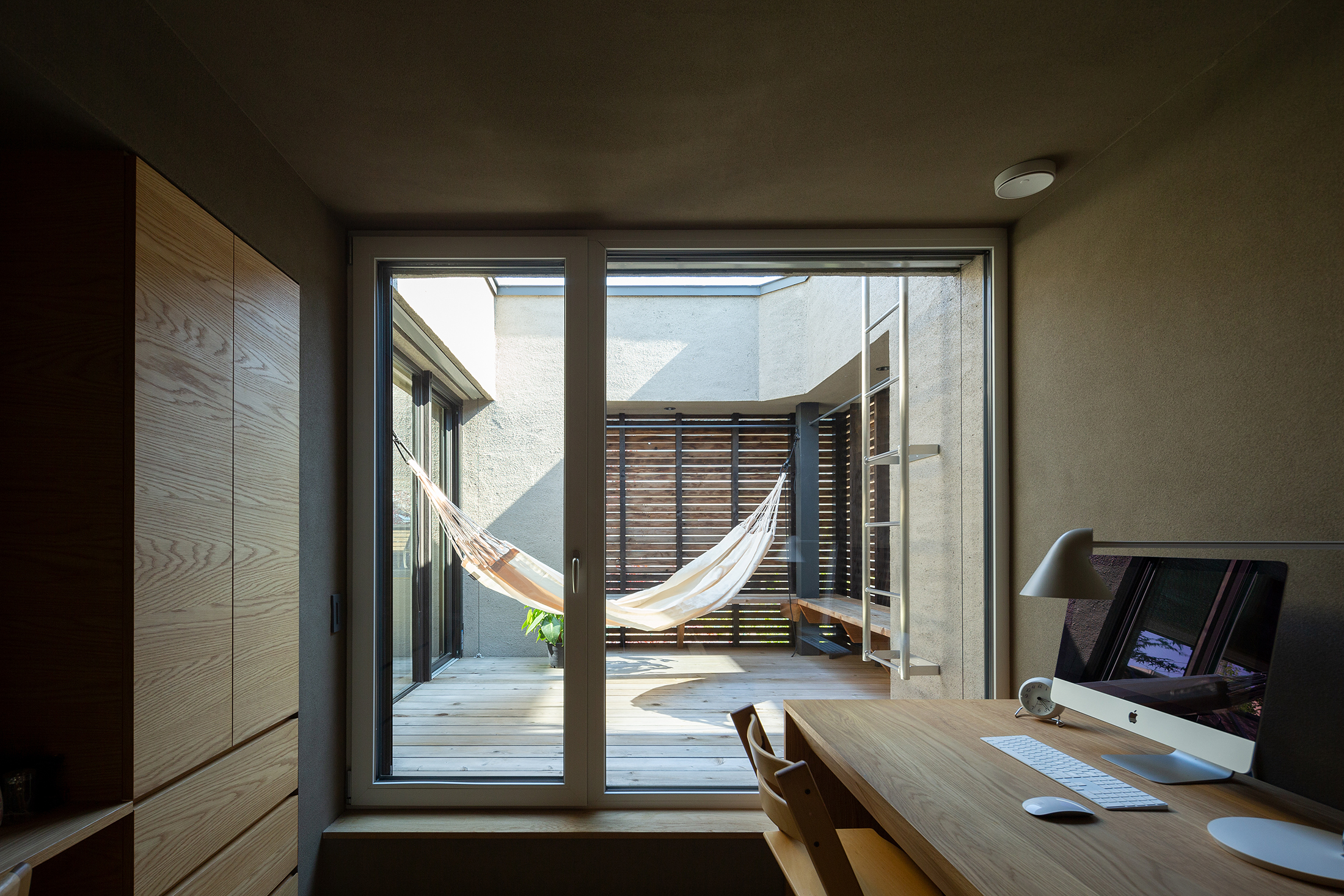
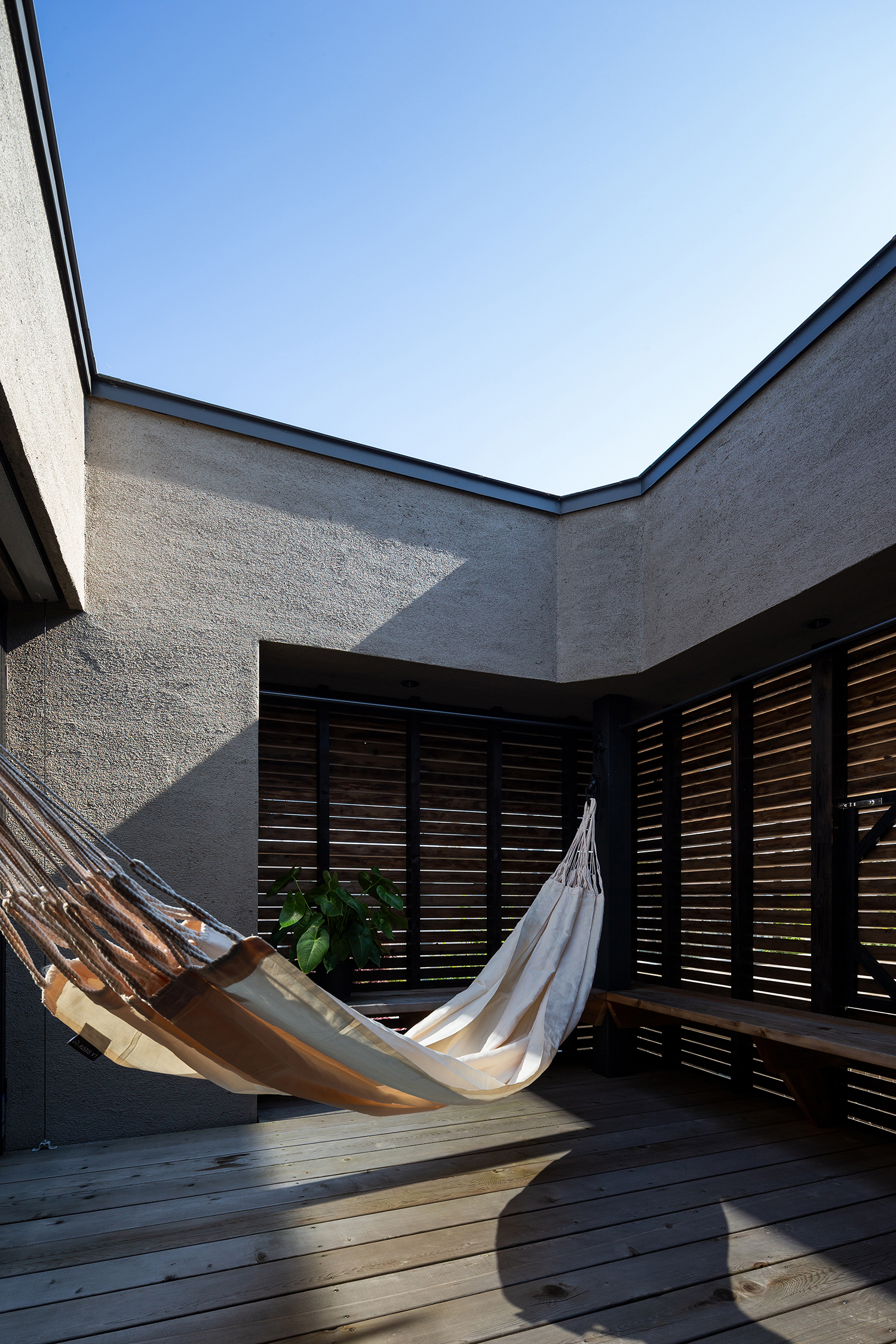
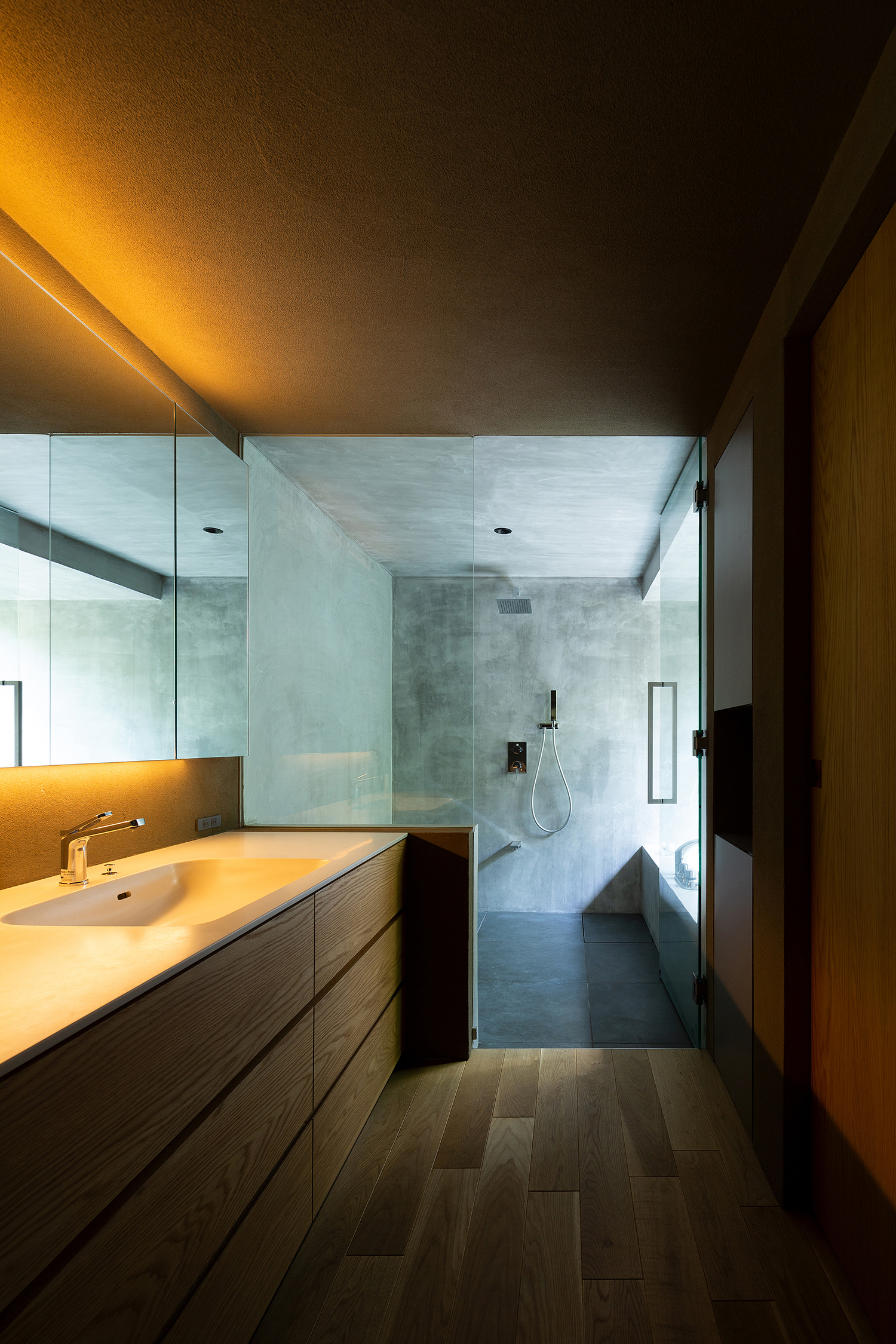
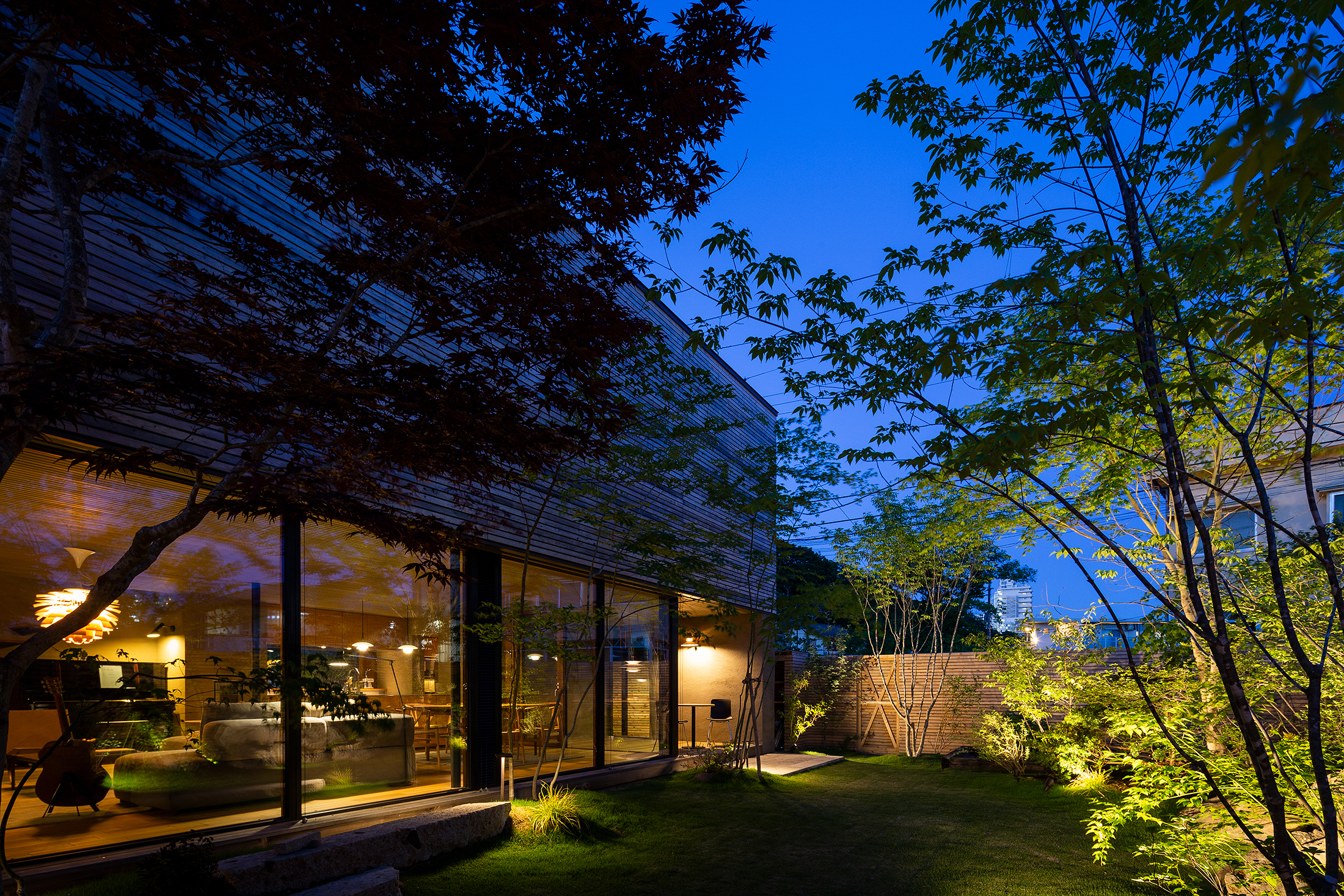
庭には芝生を張り、木々を植え、家庭菜園も設けた。野菜を育て、芝を刈り、落ち葉を拾うといった行為も生活の一部であり、外出自粛の時期には庭でキャンプも楽しんだ。2階には、浴室や和室から眺められる坪庭、子ども室と主寝室から出入りできるテラスなど、「半外部」の居場所もふんだんに設けている。外部からは塀に囲われ窺い知ることはできないが、内部には「外」を取り込んだ、豊かな暮らしが広がっている。
こうした体験の積み重ねによって、「体感の解像度が上がった」と感じている。光、風、温度のわずかな変化を感じ取り、自ら調整することで得られる心地よさ。機械制御ではなく、身体で味わう快適性こそが、この家が伝えたい価値である。設計者としてかかわる多くの人に、その心地よさを享受できればと思う。
Kamisugi House
A Private Residence That Is “Closed Yet Open”
Completed in 2019, this private residence stands on a site close to the center of Sendai. A small stream runs behind the property, and the surrounding environment retains a sense of calm and natural richness. One of the central themes of the project was how to engage with the site’s context and surrounding nature, and how to transform these qualities into a sense of comfort within the home.
Through years of residential design practice, I have continually explored how to strike a balance between being “closed” and “open.” Four to five years before designing this house, I visited Europe and encountered high-performance housing, which left a strong impression on me—not only in terms of insulation and airtightness, but also in the philosophy of actively harnessing natural energy.
This approach does not shut out the external environment, but rather achieves comfort while remaining sensitive to it. I wanted to embody this philosophy in my own home, using it as an “experimental ground” for architectural ideas.
Unlike conventional residential projects that prioritize the client’s requests above all else, this project aimed to create a plan and design that are as flat, basic, and universal as possible. With a vision of a building that could be passed down over 50 or even 100 years, the spatial composition was conceived to feel comfortable regardless of who inhabits it. The belief underlying this approach is that true longevity in architecture lies in a basic quality that does not overemphasize distinctive features.
Performance Based on the German Passive House Standard
The structure and thermal environment form the core of this project. Wood-fiber insulation was installed at a thickness of 420 mm in the walls and 500 mm in the roof, achieving thermal performance equivalent to that of a German Passive House. In winter, indoor temperatures are maintained at around 20°C using only solar heat gained through the south-facing openings. The windows are wooden frames with triple glazing. In the LDK, a concrete slab with thermal mass was incorporated at the foundation level to stabilize the indoor environment.
For cooling, a radiant cooling system using well water was adopted. A single panel unit installed in the second-floor hall provides cooling for the entire house. Ventilation is handled by a heat-exchange, first-class ventilation system, ensuring clean air without discomfort from drafts.
Hot water is supplied primarily by solar thermal panels, with a wood-fired boiler used as a supplement on cloudy days. Living while adjusting systems in response to the weather has brought daily life closer to nature, heightening awareness of temperature and climate. Rather than pursuing convenience alone, the ability to embrace the richness of small, deliberate efforts is made possible by the home’s high
baseline performance.
Spatial Composition, Windows, and Sense of Scale
The layout consists of a two-story structure, with a one-room LDK on the first floor and bedrooms and wet areas on the second. Anticipating future skeleton-and-infill adaptability, the structure was designed to be robust while allowing flexibility in the interior. A large opening on the south side of the LDK connects the interior seamlessly with the garden. Windows are composed according to function—those for viewing the landscape, stepping outside, and ventilating—while exterior blinds finely control solar gain. From the north-facing windows, views of the stream unfold, allowing seasonal changes and the sound of water to gently accompany daily life.
Another defining feature is the low center of gravity in the spatial composition. The ceiling height is set at 2.25 meters, creating a calm interior environment grounded in human scale. Because lower ceilings tend to amplify visual noise from ceiling lights, such fixtures were minimized. Instead, pendant and freestanding lights were used to create nuanced shadows and depth.
Natural Materials and Environmental Responsibility
The exterior walls and boundary fence are clad in slatted Yakushima cedar. Each 35-mm-thick board was individually beveled by carpenters, allowing rainwater to shed easily and enhancing durability. The material selection anticipated aging; five years after completion, the surface has weathered into a silver-gray tone, adding depth and character over time.
Inside, the house is composed primarily of natural materials: oak flooring from Hokkaido, earthen walls blended from three types of soil, and cedar board ceilings. Custom shoji screens were installed in the second-floor tatami room, gently filtering light and air. From the insulation to other unseen components, materials that can ultimately return to the earth were used consistently throughout the project.
Living Experience — The Richness of Adjusting Nature by Hand
The garden includes a lawn, planted trees, and a small vegetable plot. Growing vegetables, mowing the grass, and collecting fallen leaves are all part of daily life, and during periods of staying at home, the garden even became a place for camping. On the second floor, several semi-outdoor spaces were created, including a small courtyard visible from the bathroom and tatami room, and a terrace accessible from both the children’s room and the master bedroom. While the exterior is enclosed by walls and reveals little to the outside, the interior embraces nature, offering a richly layered living environment.
Through these accumulated experiences, I feel that my “sensory resolution” has increased. By perceiving subtle changes in light, wind, and temperature, and adjusting them by hand, a deep sense of comfort
emerges. Rather than comfort controlled solely by machines, this house seeks to convey the value of comfort experienced through the body. As an architect, I hope that many people involved with my work will be able to share and enjoy this sense of well-being.
上杉の家
所在地/宮城県仙台市
主要用途/住宅
<設計>
意匠 菊池佳晴建築設計事務所 担当/菊池佳晴
構造 シェルター 担当/山科淳史
<施工>
建築 今野建業 担当/今野真幸
植栽 カワムラガーデン 担当/川村博崇
<構造・構法>
主要構造・構法/木造在来構法
基礎/べた基礎
構造/耐震等級2(許容応力度計算)
地盤改良/なし
<規模>
階数/2階建
軒高/6482mm 最高高さ/6429mm
延床面積/建築物144.91m2(43.83坪)
<工程>
設計期間/2015年1月〜2017年12月
工事期間/2018年3月〜2019年3月
<敷地条件>
都市計画区域内 市街化区域
第二種住居地域
許容建蔽率60% 許容容積率200%
防火区域 準防火地域
地区計画 なし
道路幅員 南6.1m(公道)
<外部仕上げ>
屋根/シート防水0勾配工法(イーアステック)
外壁/屋久島地杉板張りt35 すのこ張り仕上げ
透湿防水シート(ウートップ サーモファサード WURTH)
開口部/木製サッシ(ノルド)
ドイツ製樹脂トリプルサッシ(ユニルクス)
日射遮蔽/外付けブラインド ヴァレーマ(オスモ)
<内部仕上げ>
床/北海道なら節なしフローリングt15(チャネルオリジナル)
壁/土塗り壁(原田左官工業 原田正志)
天井/土塗り壁(原田左官工業 原田正志)
厨房機器/造作キッチン 天板SUSt3.0バイブレーション仕上げ
ガスコンロ/HG8843(ASKO)
食洗機/G6762SCVi(ミーレ)
水栓/トリンシック(DELTA)
レンジフード/WVS-90YEFMVIB(L2)-Ⅳ下面スイッチ(渡辺製作所)
<浴室>
床/600角タイル59-59-G200ダークグレー(フォンテ・トレーディング)
壁/モールテックス
天井/モールテックス
<設備システム>
暖房/太陽 ダイレクトゲイン
冷房/井戸水orヒートポンプ 冷房用HRCパネルヒーター (ピーエス)
換気/一種換気 フォーカス200(ジェイベック)
給排水 給水方式/直結
排水方式/下水道直結
給湯 給湯方式/太陽熱温水器(STIEBEL ELTRON)
薪ボイラーVAJOLET BASIC(WALLTHERM)
<照明器具>
ペンダント/ルイスポールセン
ダウンライト/Smart Kup 48 Gold(Modular Japan)
<家具>
家具/フリッツハンセン、カールハンセン
ラグ/カスタール
<断熱仕様>
基礎/防蟻EPSパフォームガードタイプ9280mm
基礎下/EPSパフォームガードタイプ9100mm
壁(充填)/ウッドファイバー120mm
壁(付加)/ウッドファイバー300mm
屋根/ウッドファイバー500mm
<温熱計算>
Ua値/0.20W/m2K
C値/0.3cm2/m2
<撮影>
西川公朗