
WORKS
海見の家

海見の家
海への眺望と室内の快適性を目指して
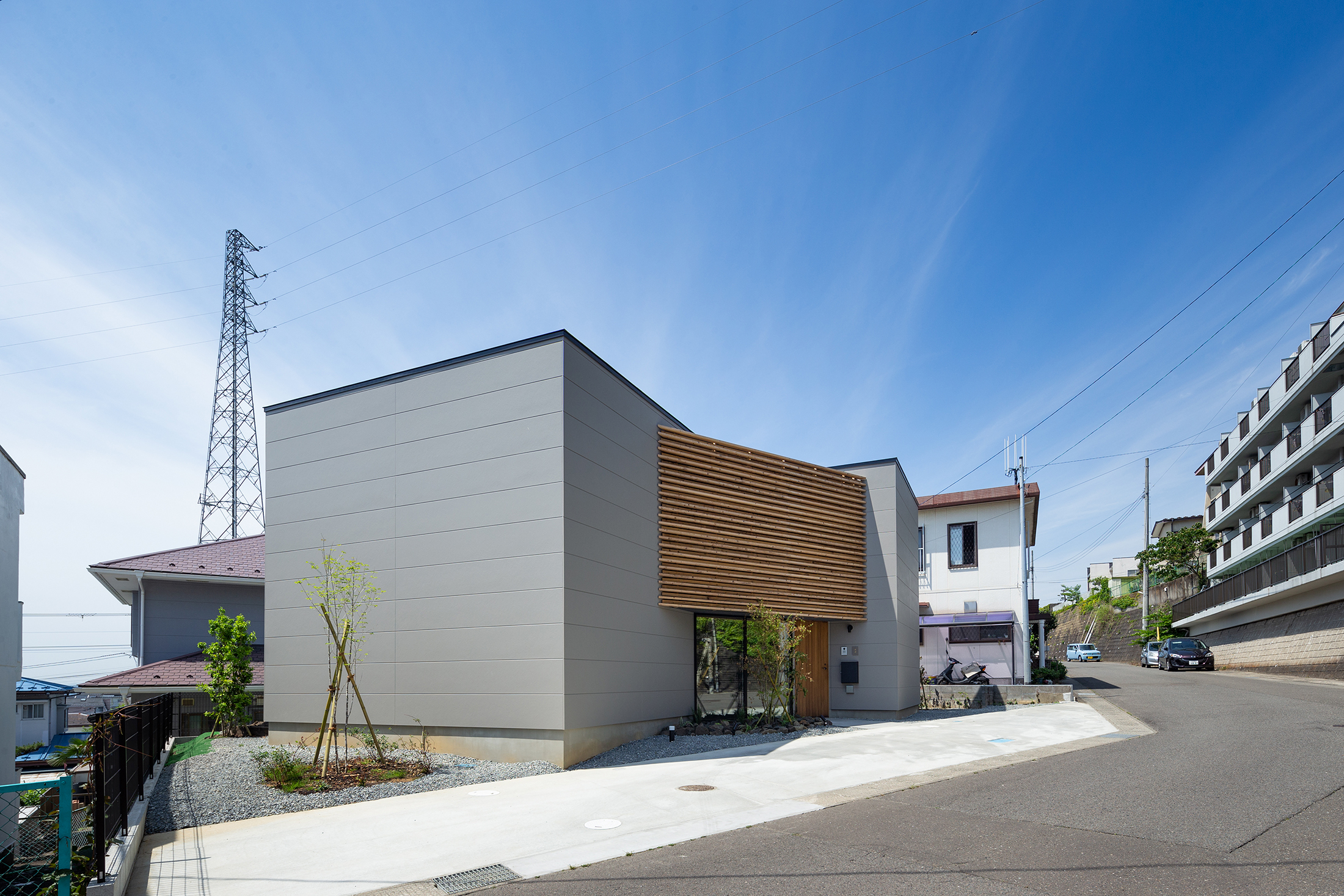
仙台市内の高台に計画した住宅である。高低差が大きく、敷地ごとに条件が大きく異なるエリアに位置し、本敷地は北側が道路に接し、東・西・南の三方を隣家に囲まれている。南側は約2m、東側に向かっても緩やかに地盤が下がっており、視線を南東方向へ導くことで、街並みの先に海を望める可能性を秘めた敷地であった。
一方で、建築予算には制約があり、限られたコストの中で「性能」「眺望」「空間の質」をいかに成立させるかが、本計画における最重要テーマとなった。
敷地形状から導き出された建物のかたち
延床面積は約37坪と、これまで手がけてきた住宅の中では比較的コンパクトな規模である。
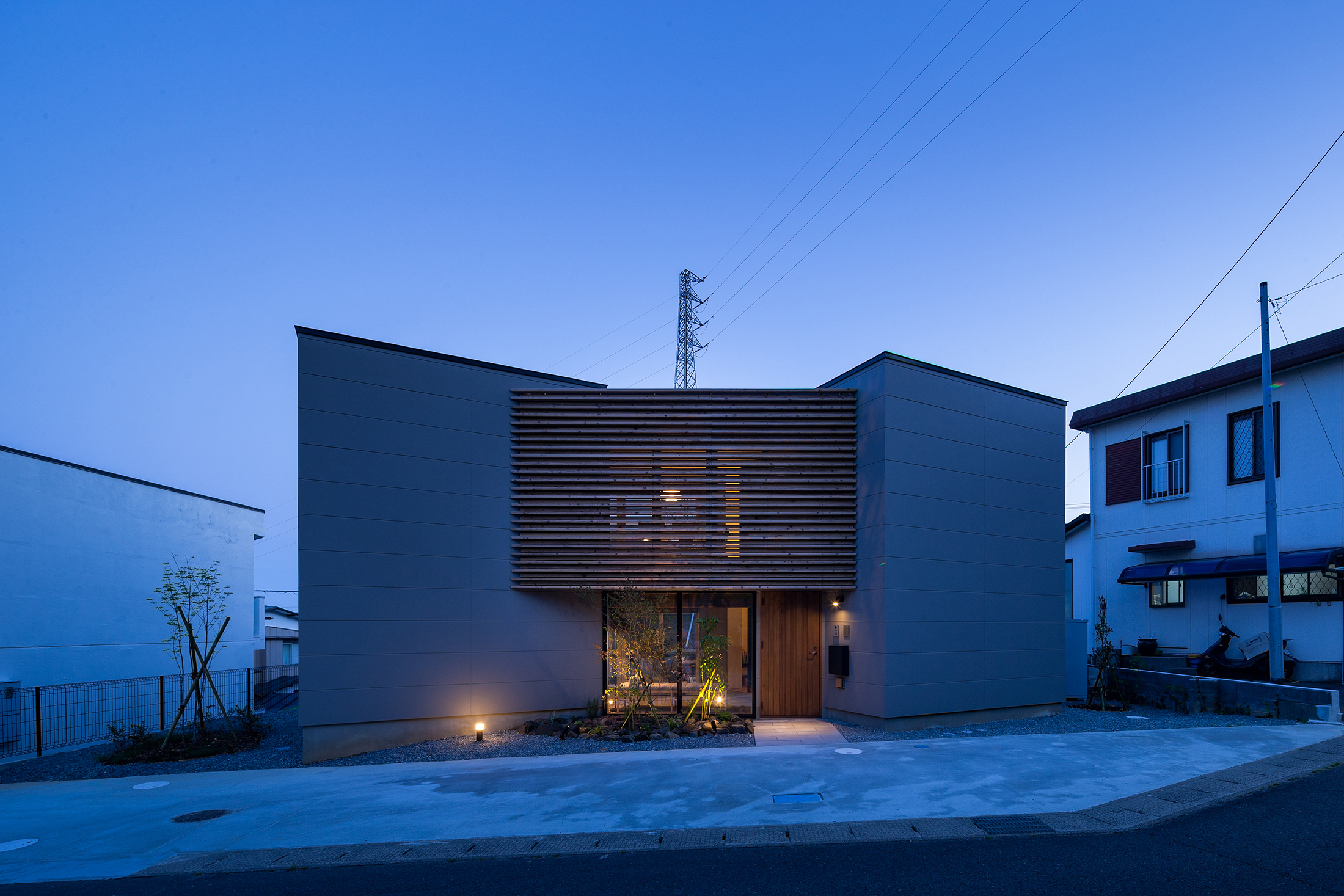
敷地は緩やかなカーブに面しており、その形状に呼応するよう建物を斜めに配置することで、隣家との距離感を確保しつつ、視線を南東方向へと誘導する構成とした。
建物は総2階建てとし、階ごとに役割を持たせた二つの矩形ボリュームを斜めに並べ、それらを平行四辺形のホールでつなぐ構成としている。小さな箱の集合体としてまとめることで、全体のボリュームを抑えながら、内部には多様な居場所と視線の抜けを生み出した。
また、縦方向のボリュームも意図的に抑えることで、視線は自然と開口の先へと導かれ、外部景色によって室内に広がりを感じさせる空間構成となっている。
視線・光・風が貫く中間領域を核とした1階
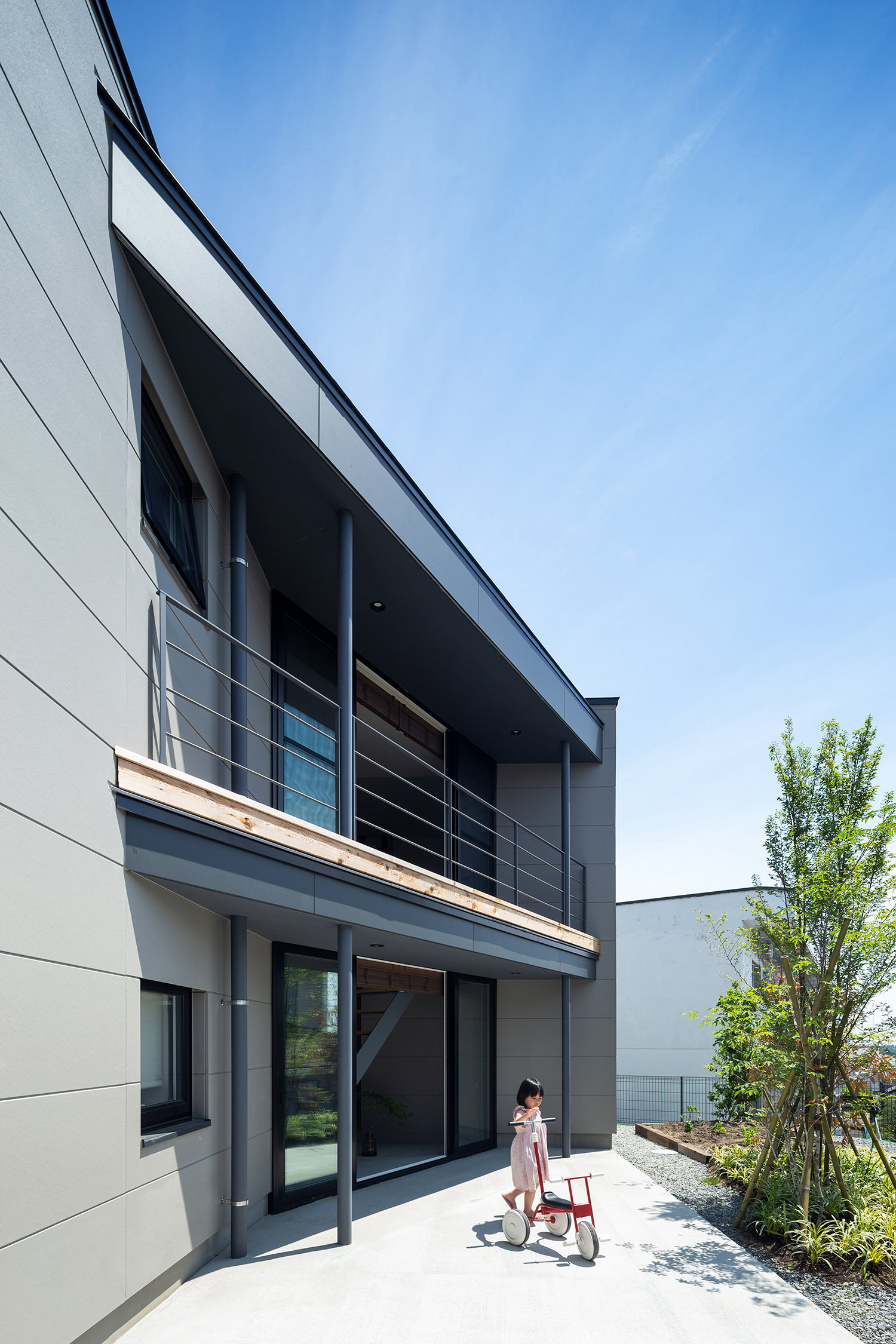
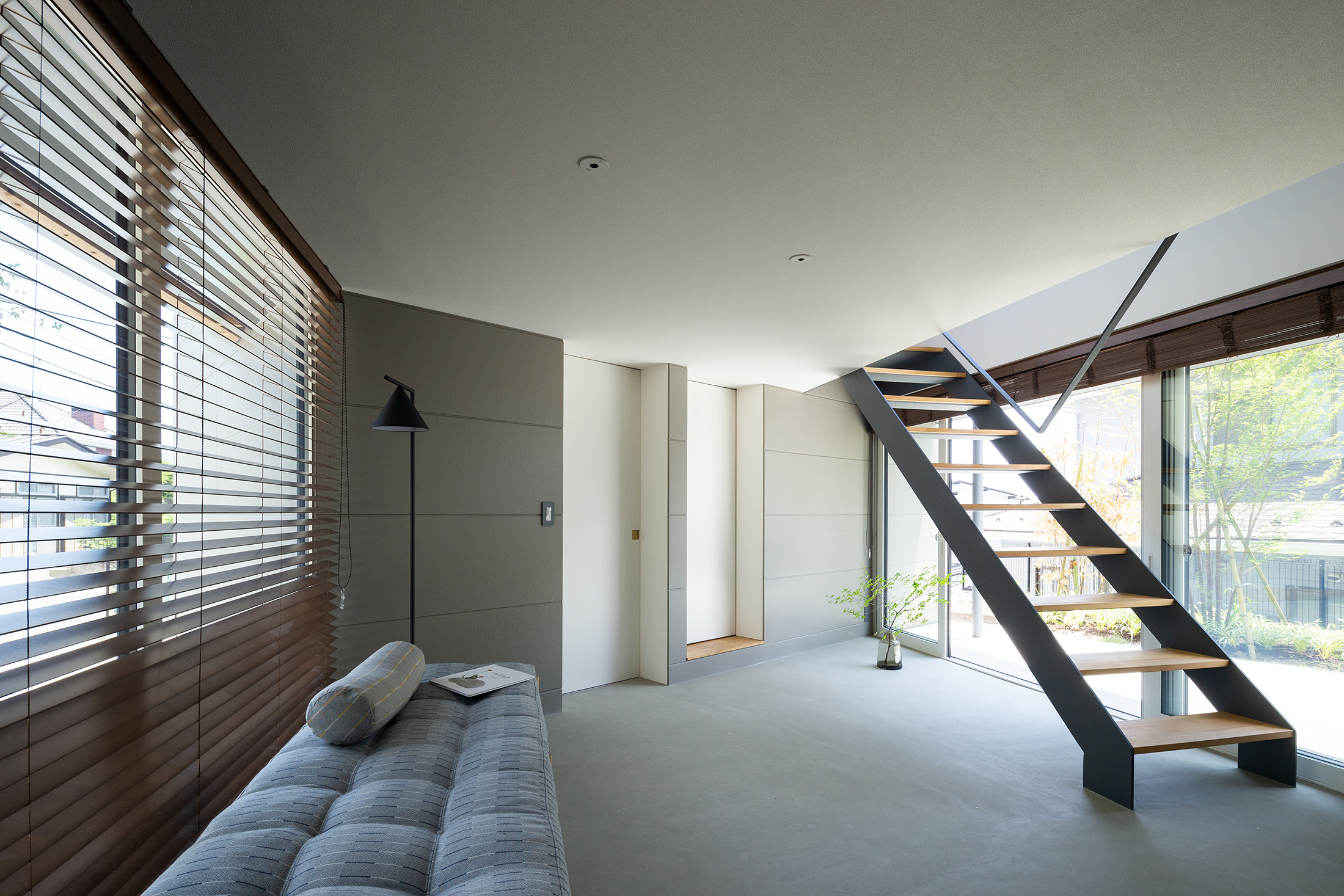
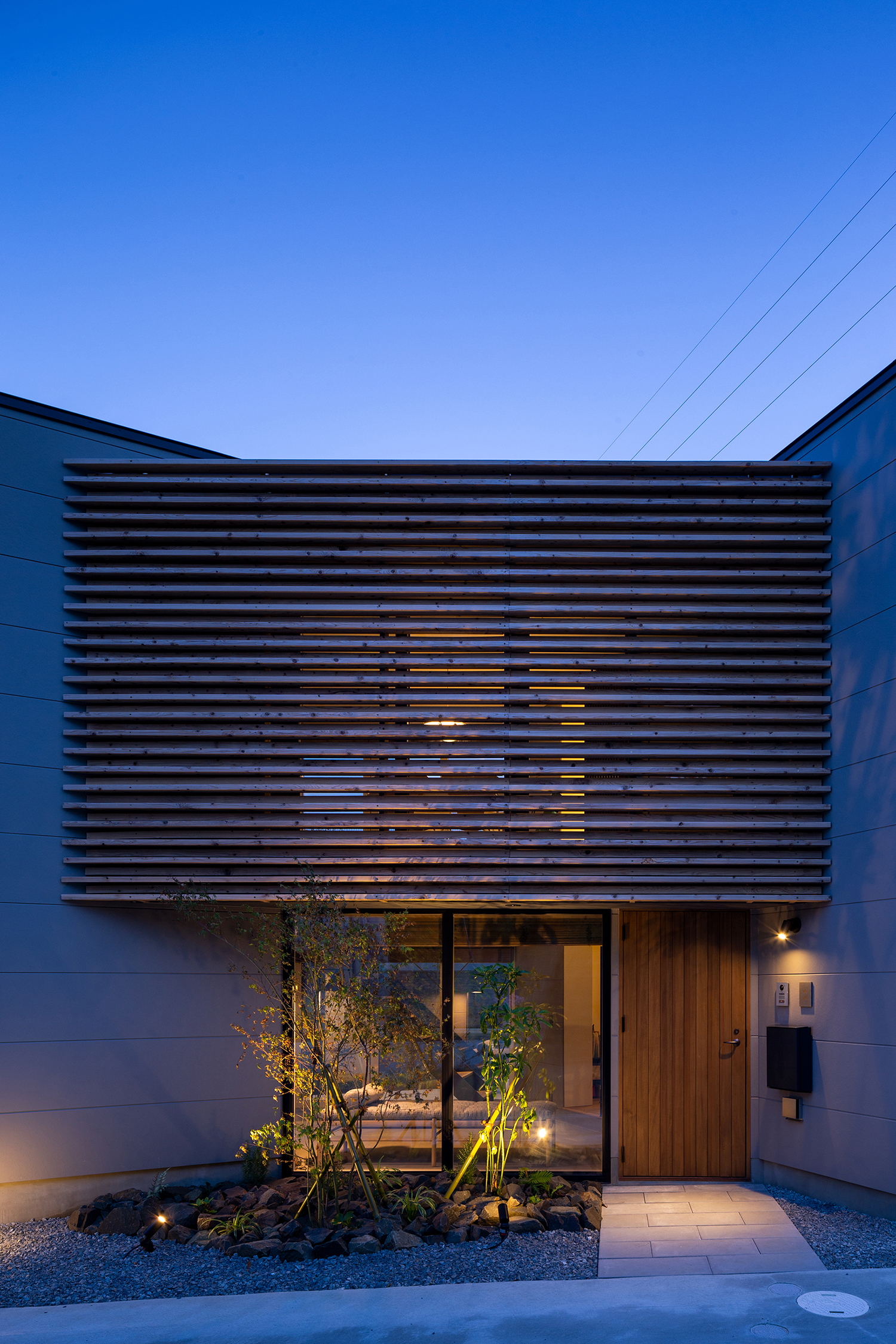
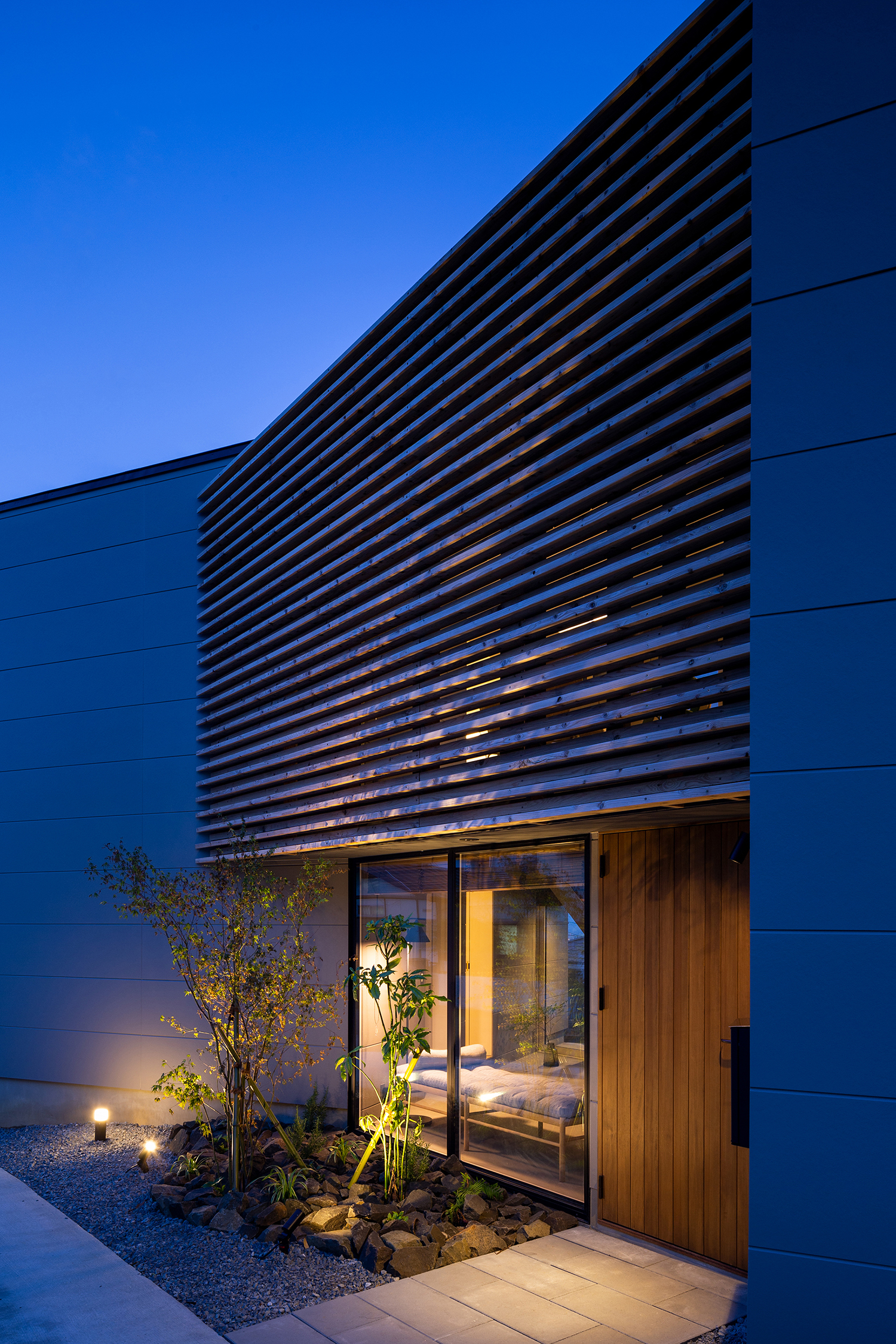
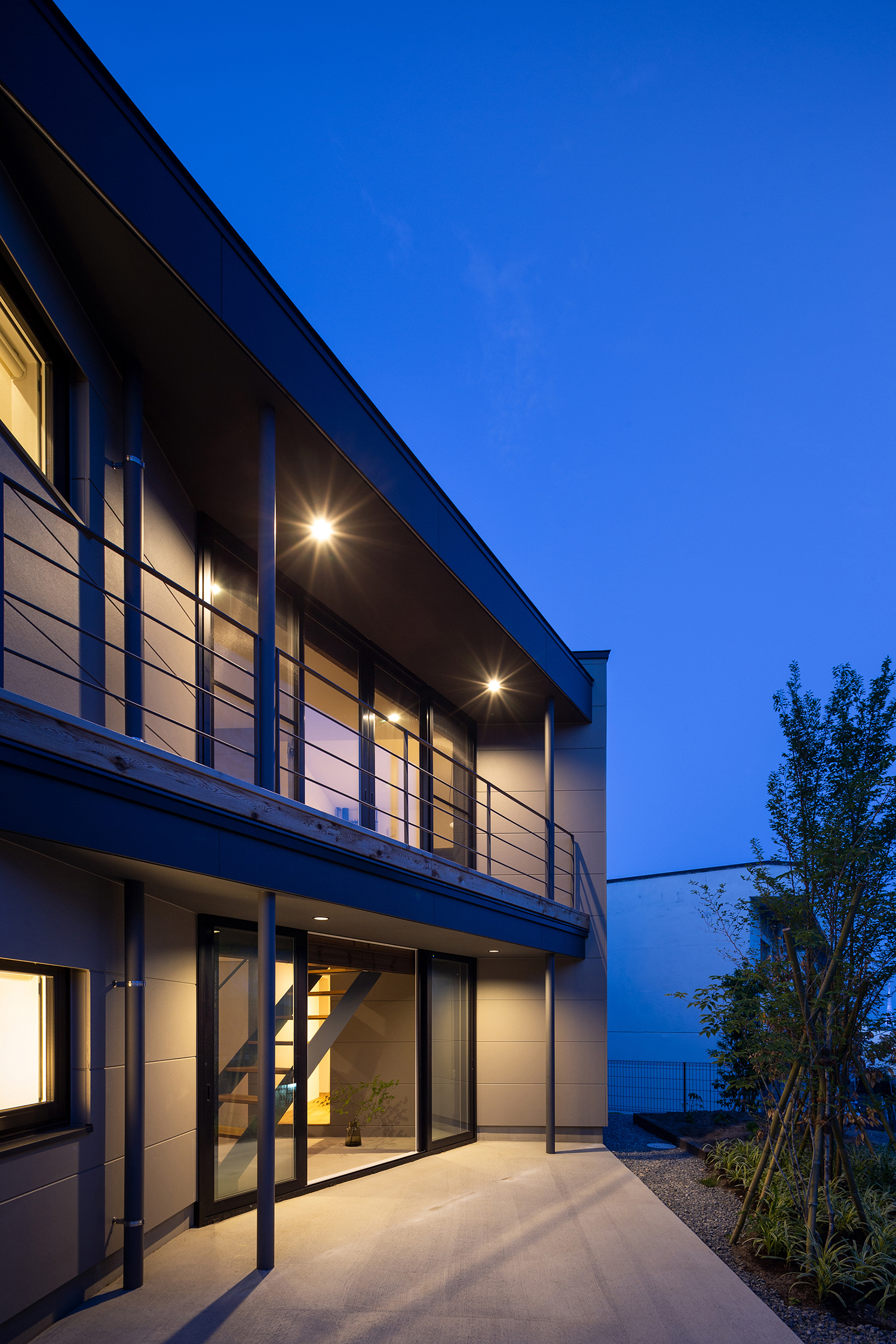
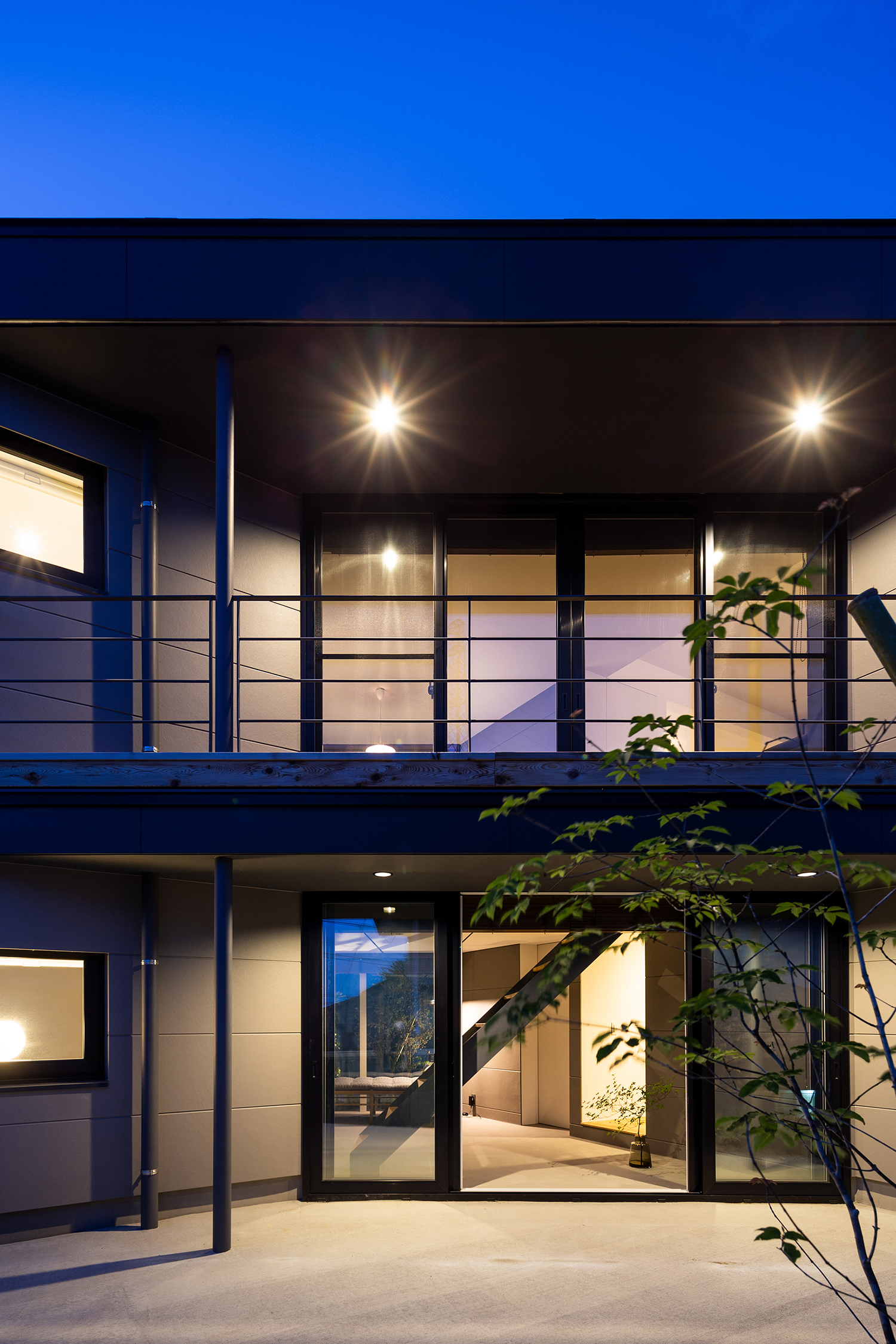
北側の玄関を入ると、土間ホールが広がる。ここには南北に開口を設け、視線・光・風がそのまま建物を貫く構成とした。南面の大開口の外にはコンクリートテラスを設け、窓を開け放つことで、土間ホールは外部と内部をつなぐ中間領域として機能する。
また、単なる玄関ホールにとどめず、全体を大きな土間空間として計画することで、用途を一義的に限定せず、暮らしの変化に応じて柔軟に使いこなせる余白を持たせている。
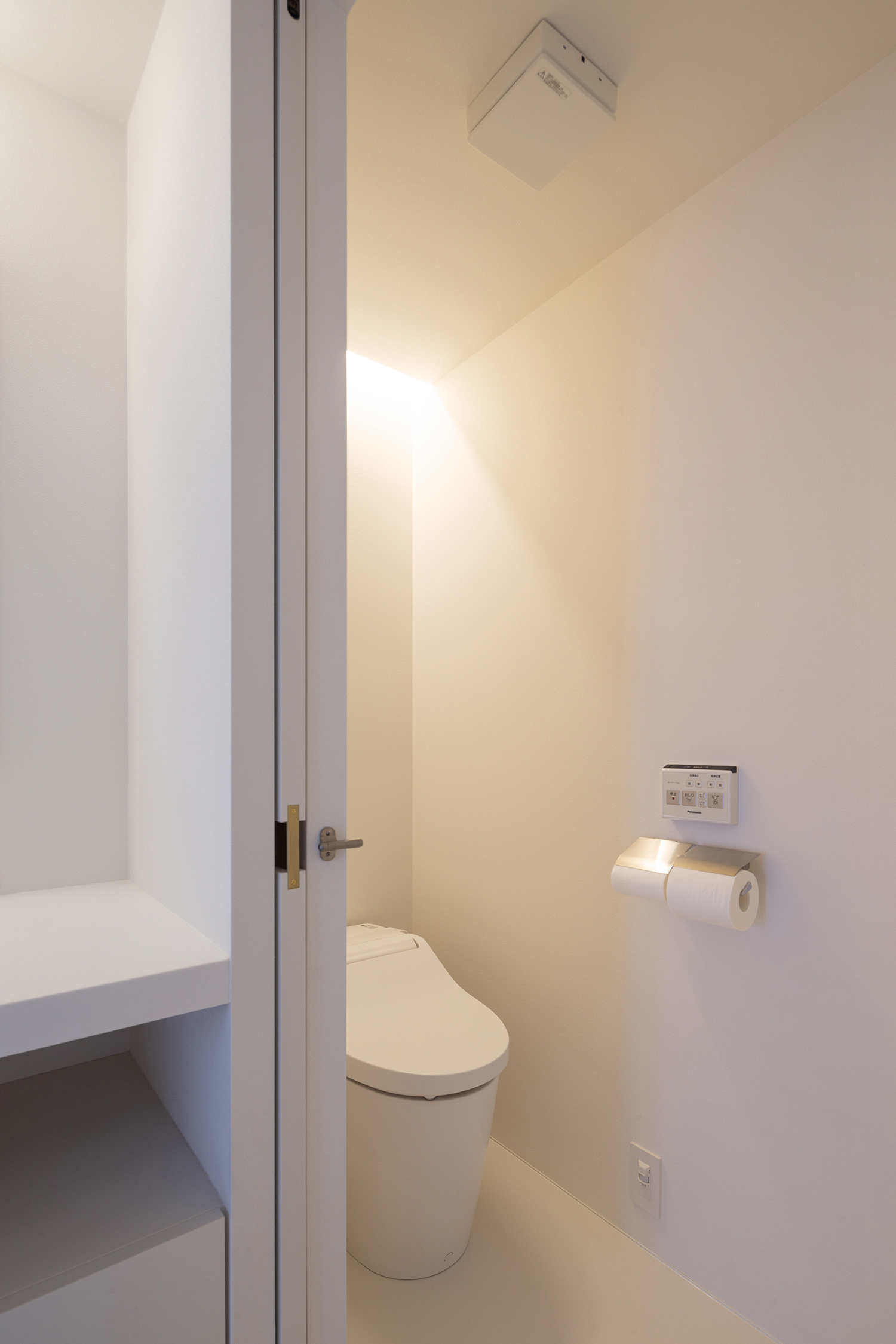
寝室は1階にまとめ、東側の棟に主寝室とクローゼット、西側の棟に子ども室とトイレを配置した。子ども室は将来的な分割を想定し、ライフステージの変化に柔軟に対応できる構成としている。
眺望と日常生活が穏やかに融合する2階
周囲からの視線を避けつつ、眺望を最大限に取り込むため、LDKは2階に配置した。
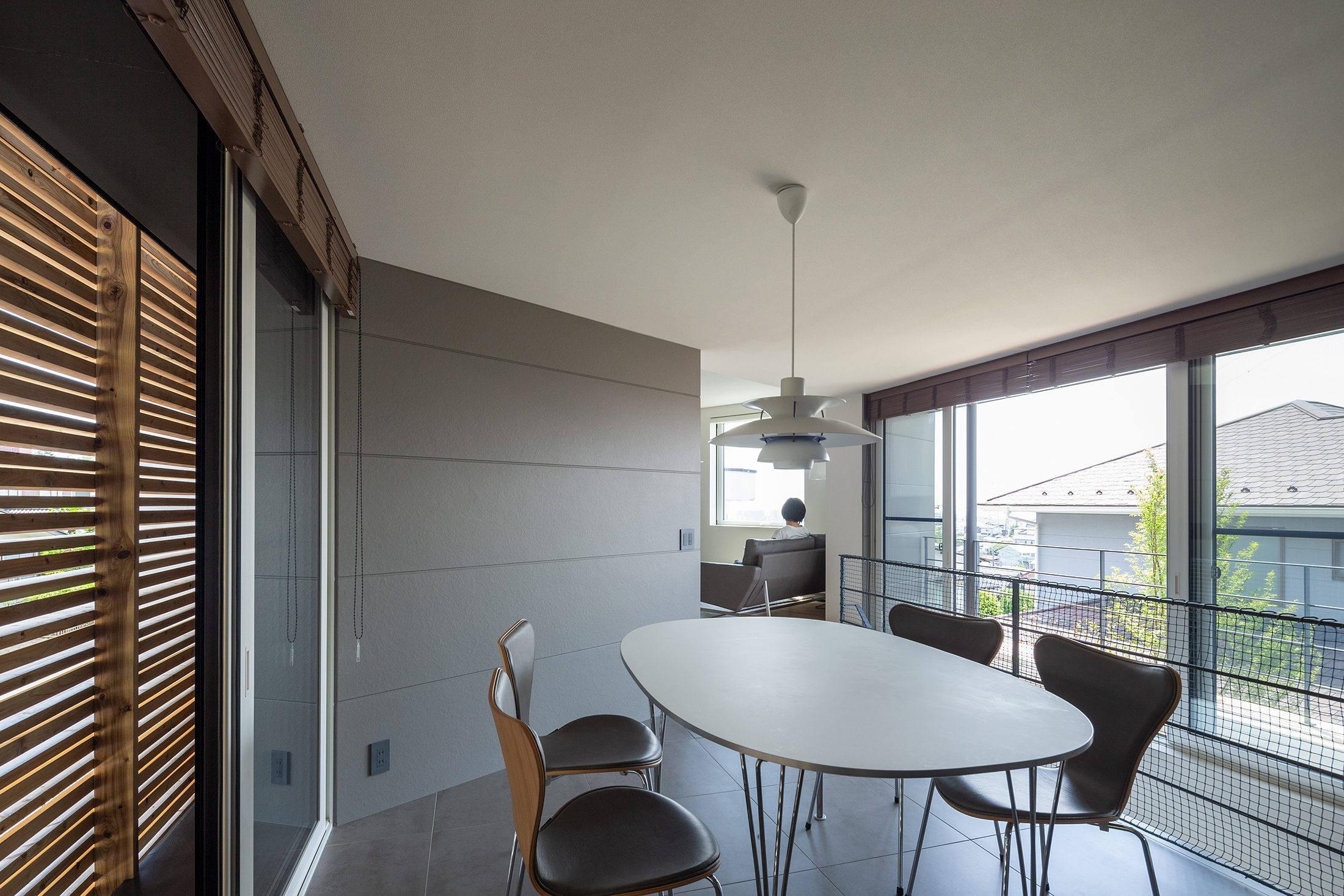
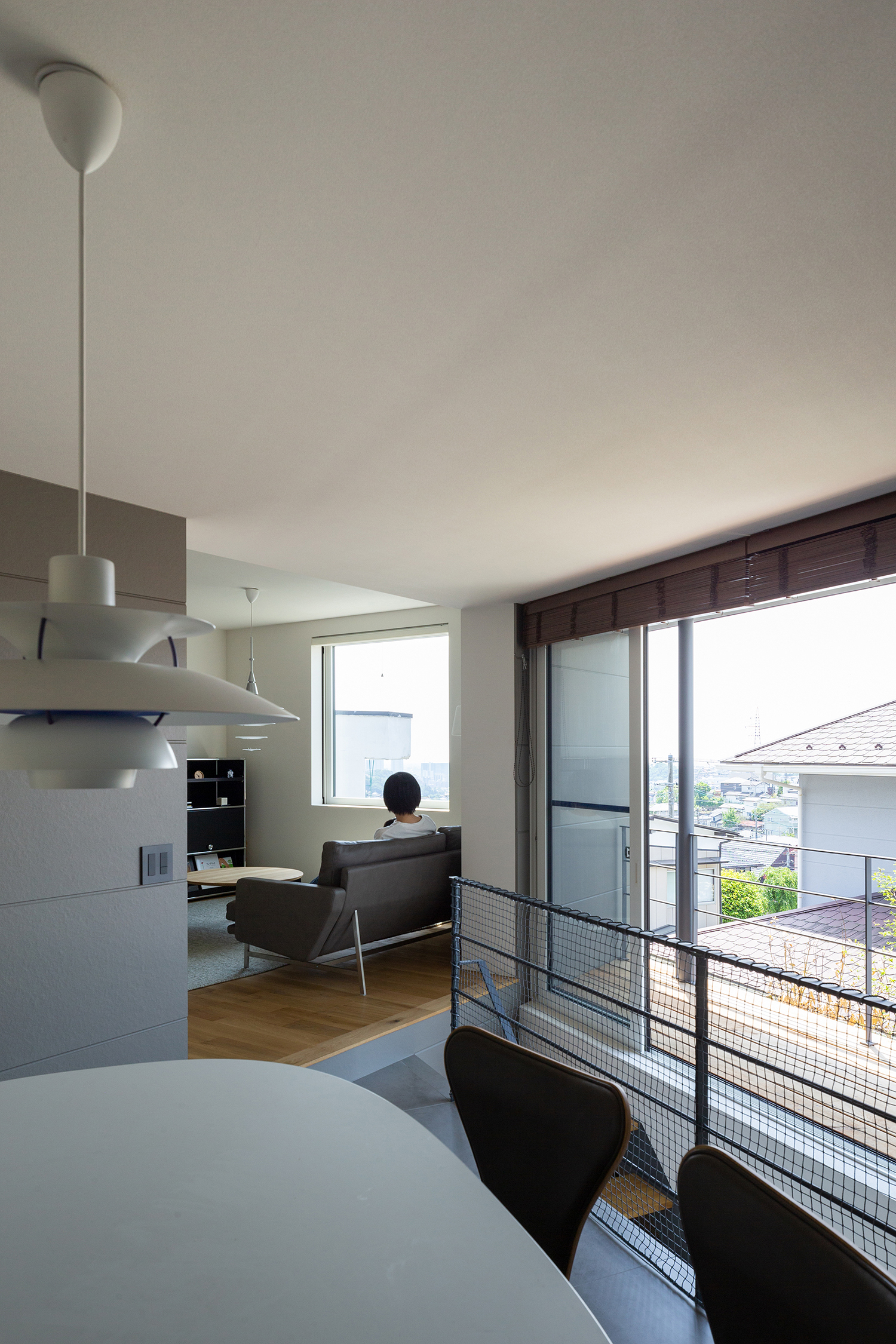
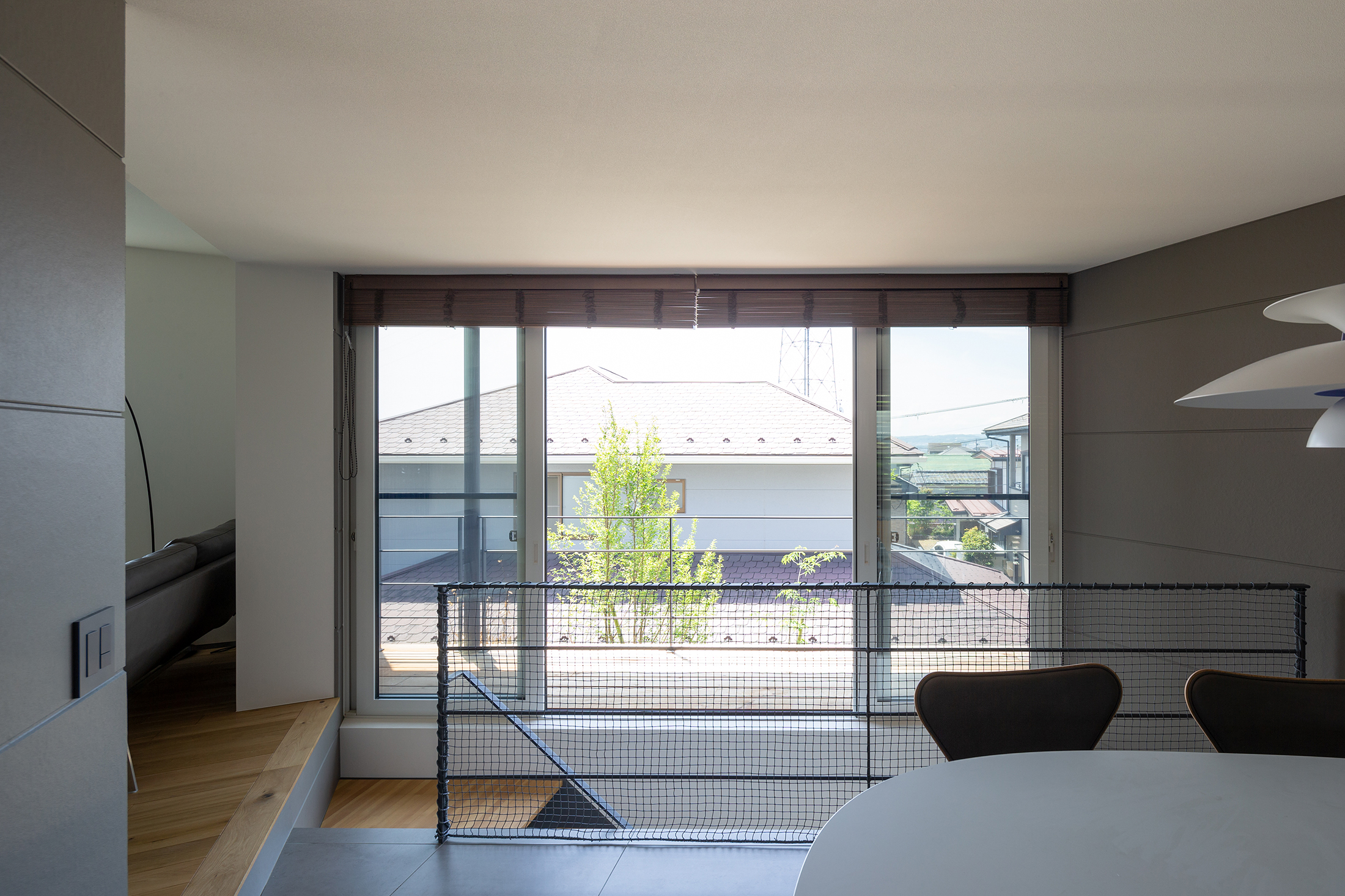
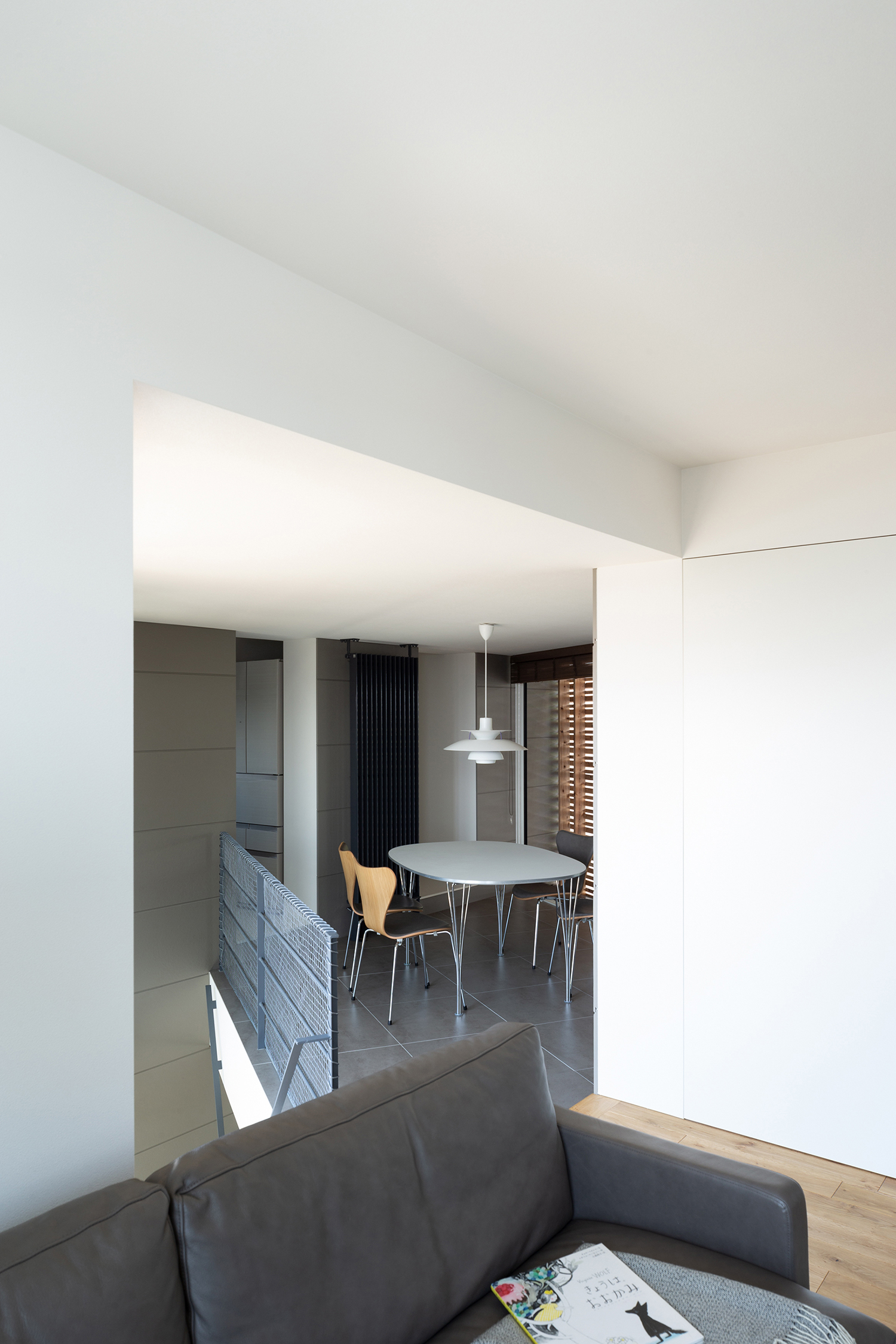
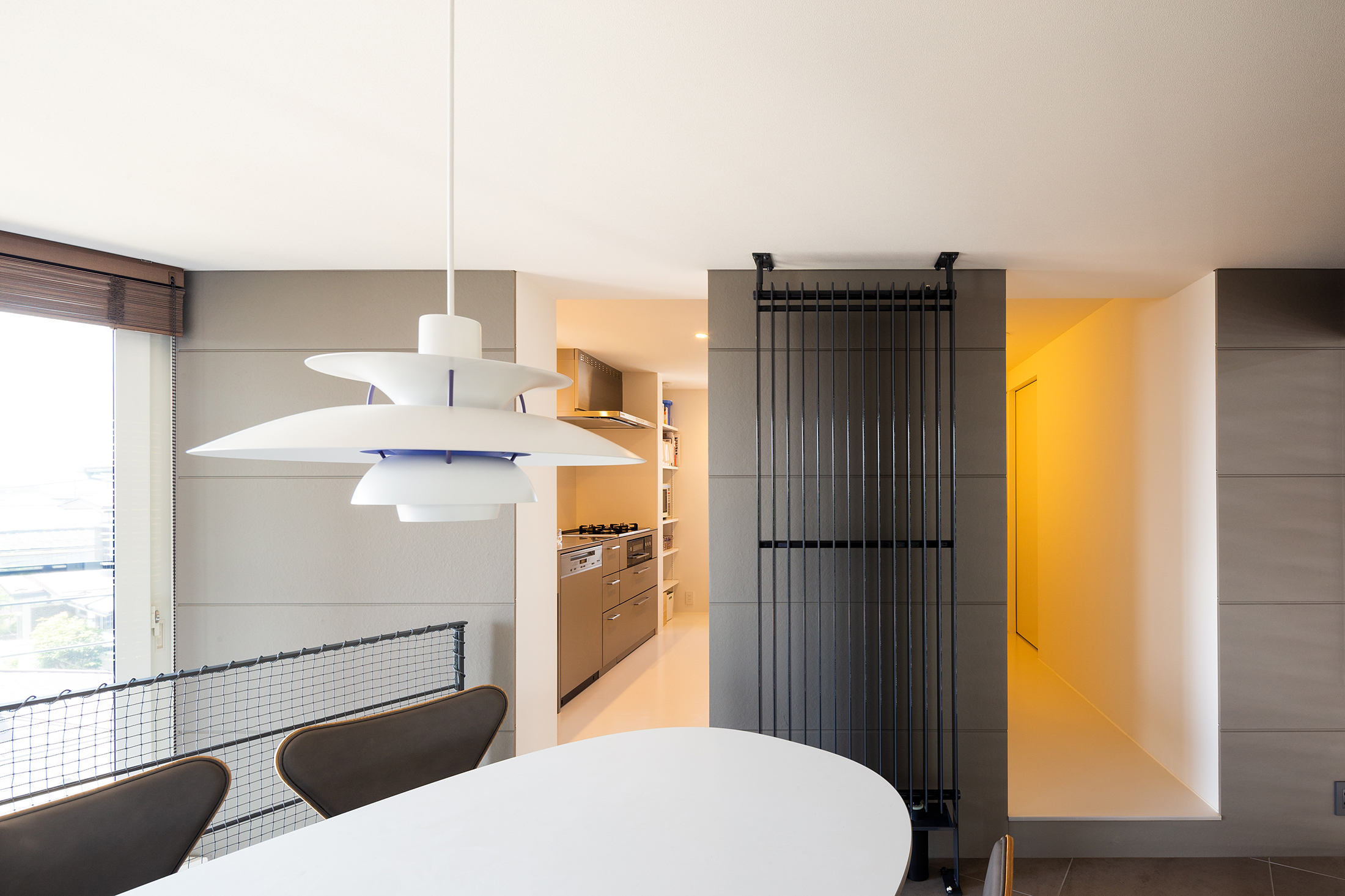
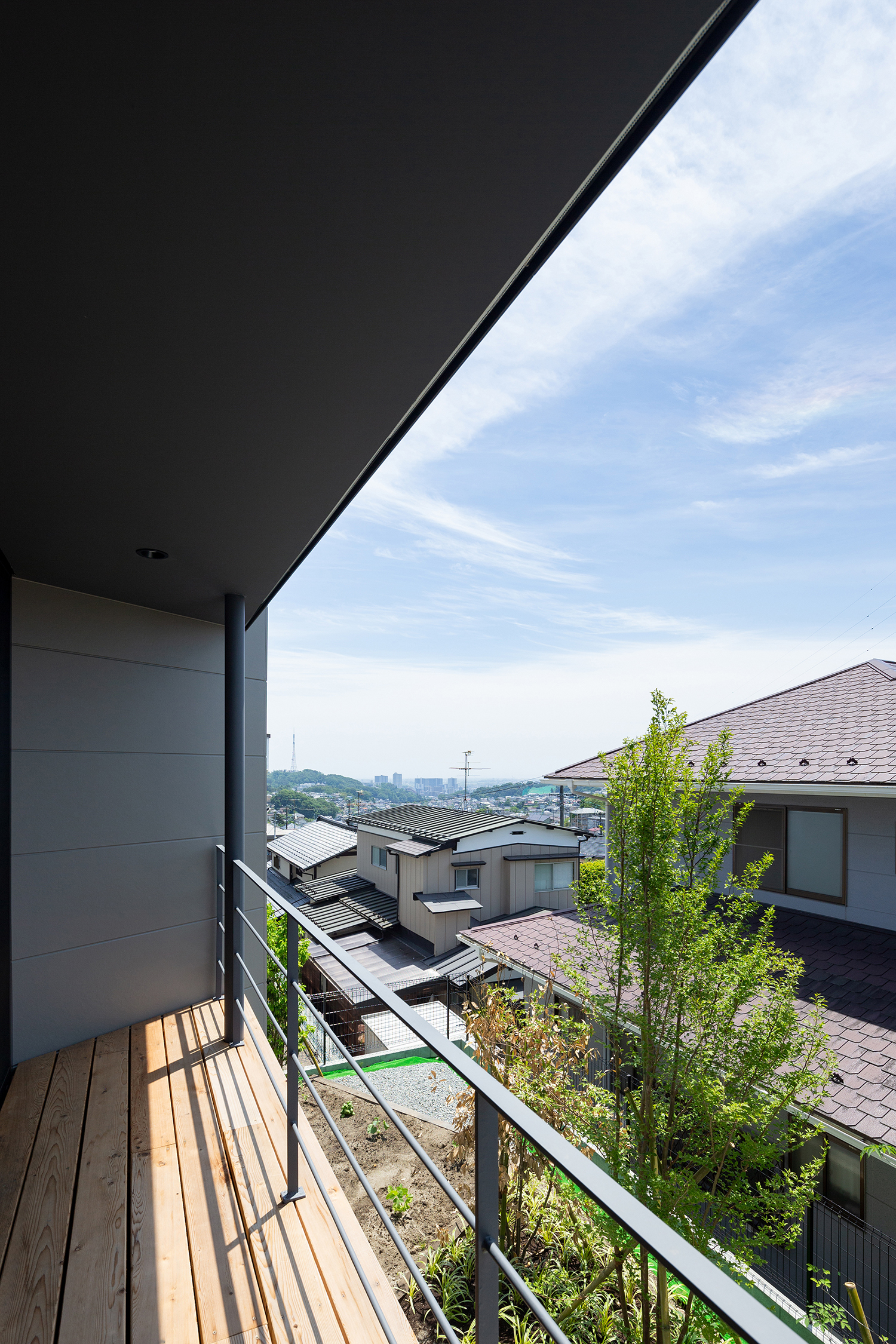
階段を上がると、まず開放的なダイニングが現れる。南面に設けた4連引き違いの大開口によってバルコニーと連続し、視線は街並みを越えて、その先に広がる太平洋へと導かれる。
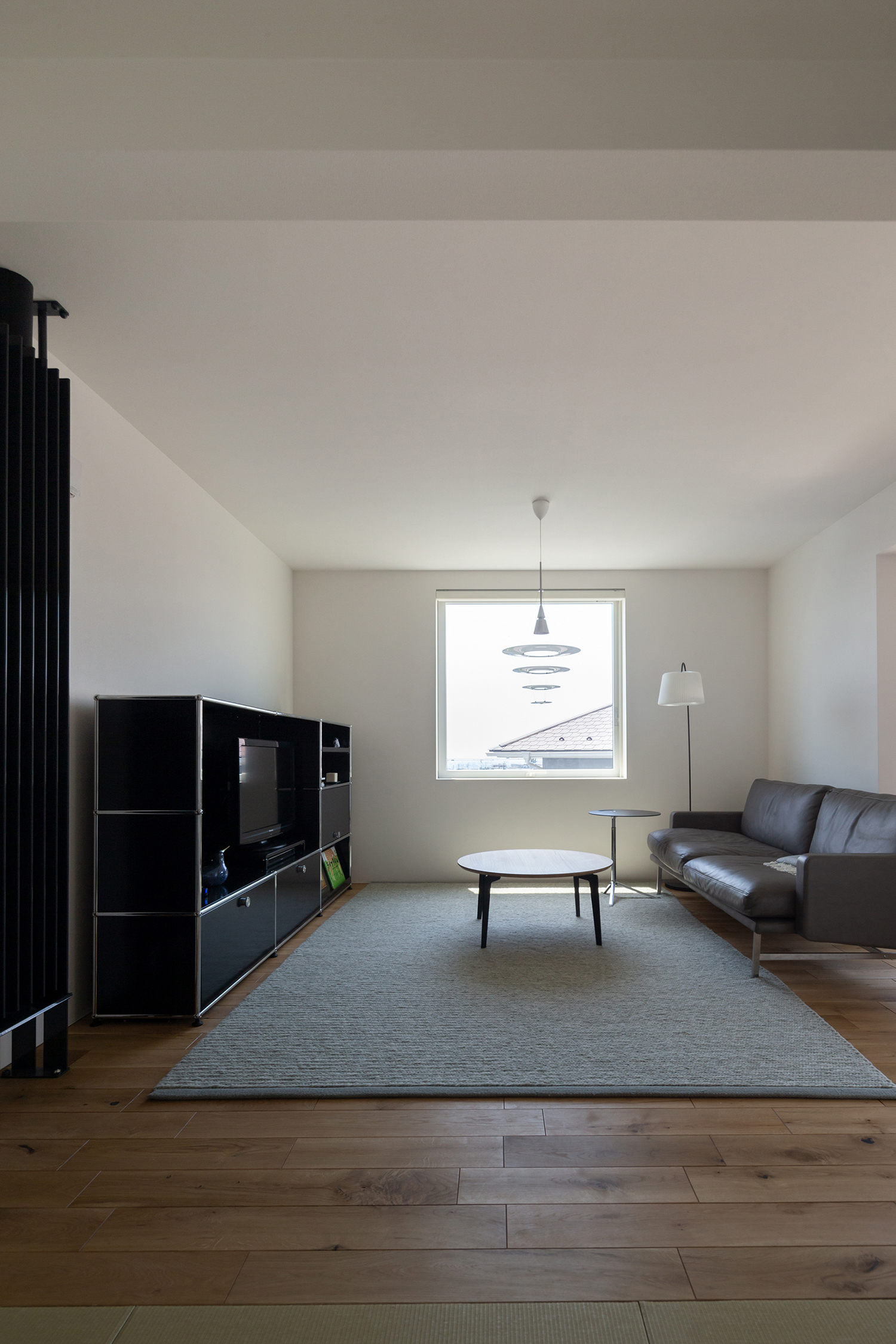
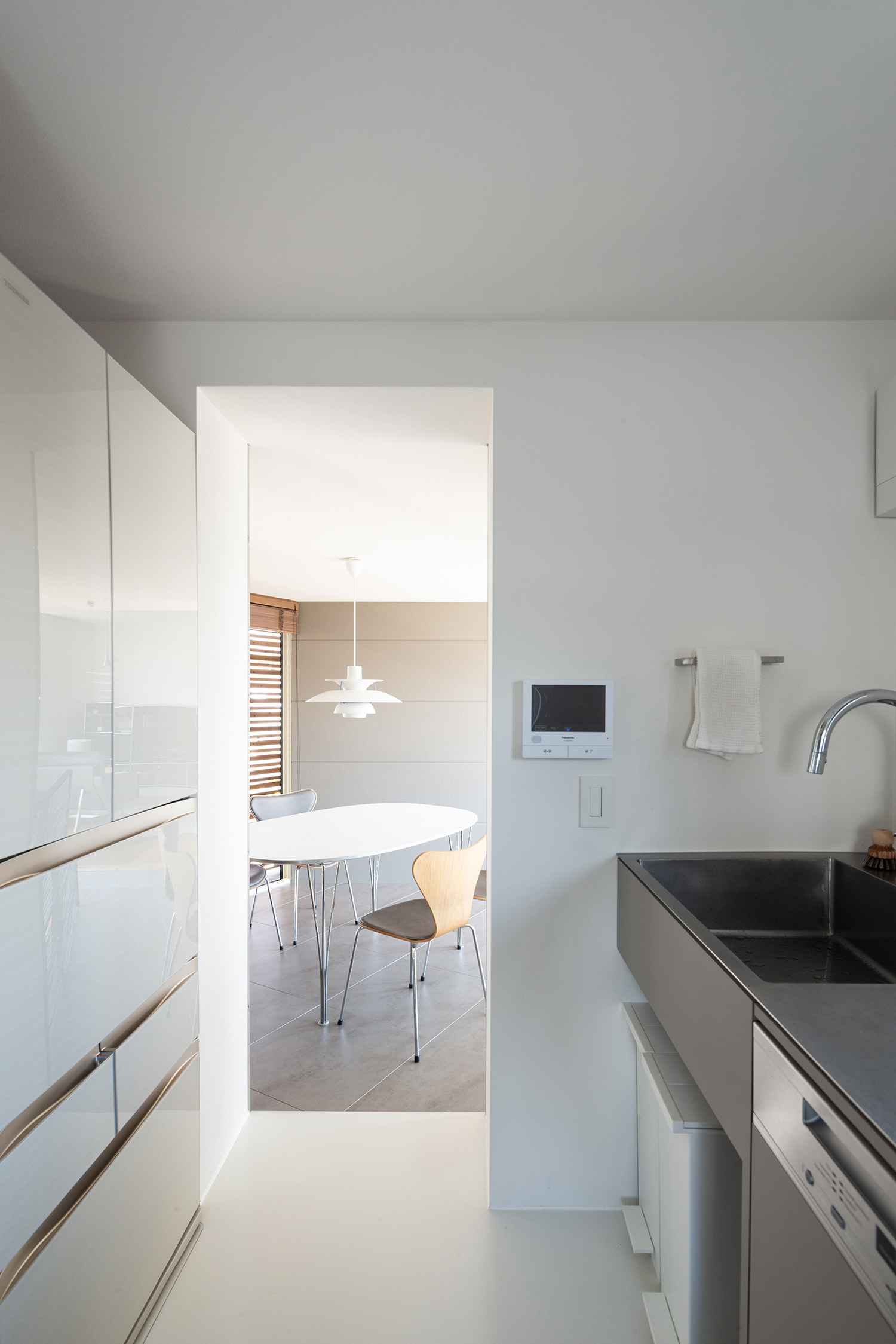
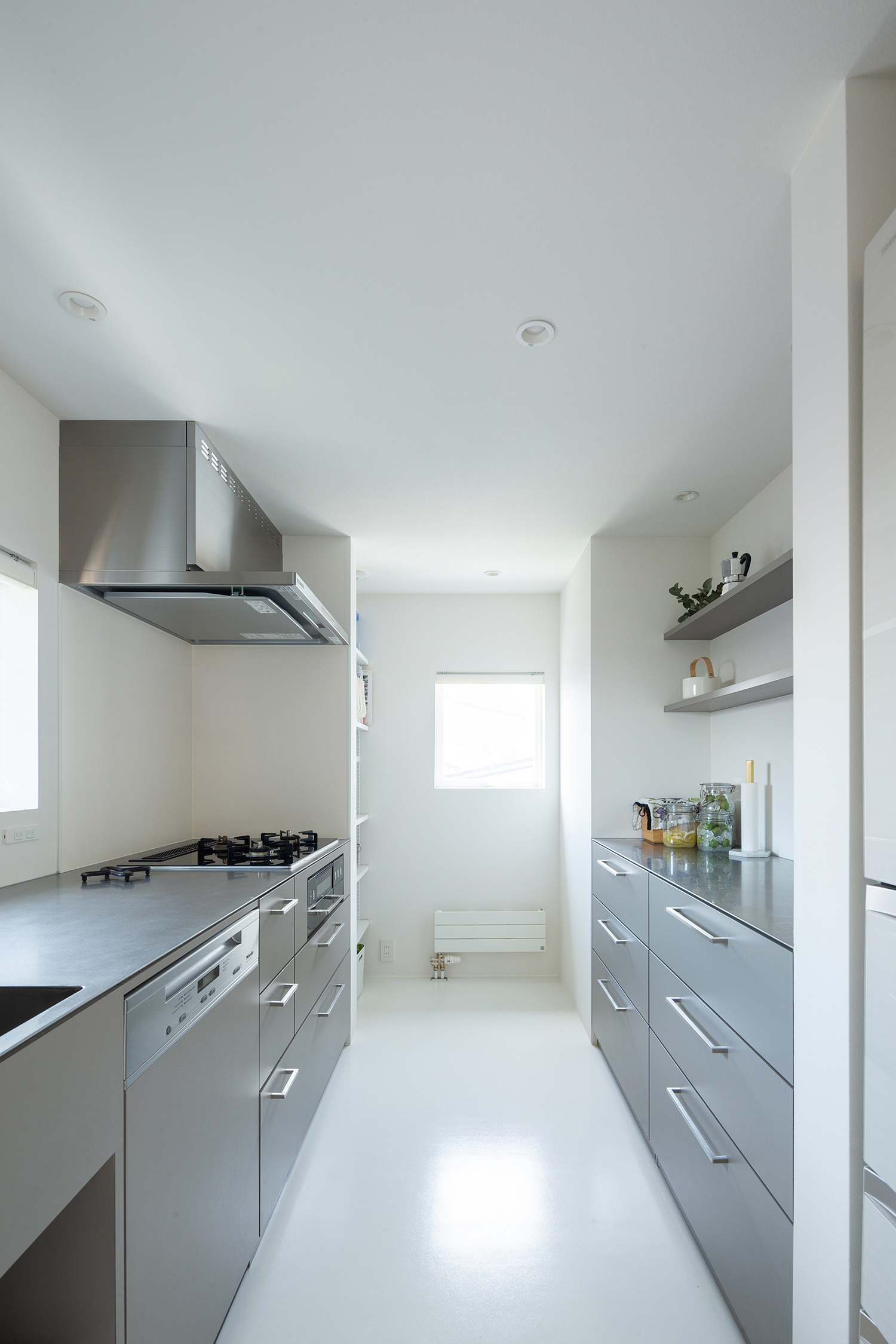
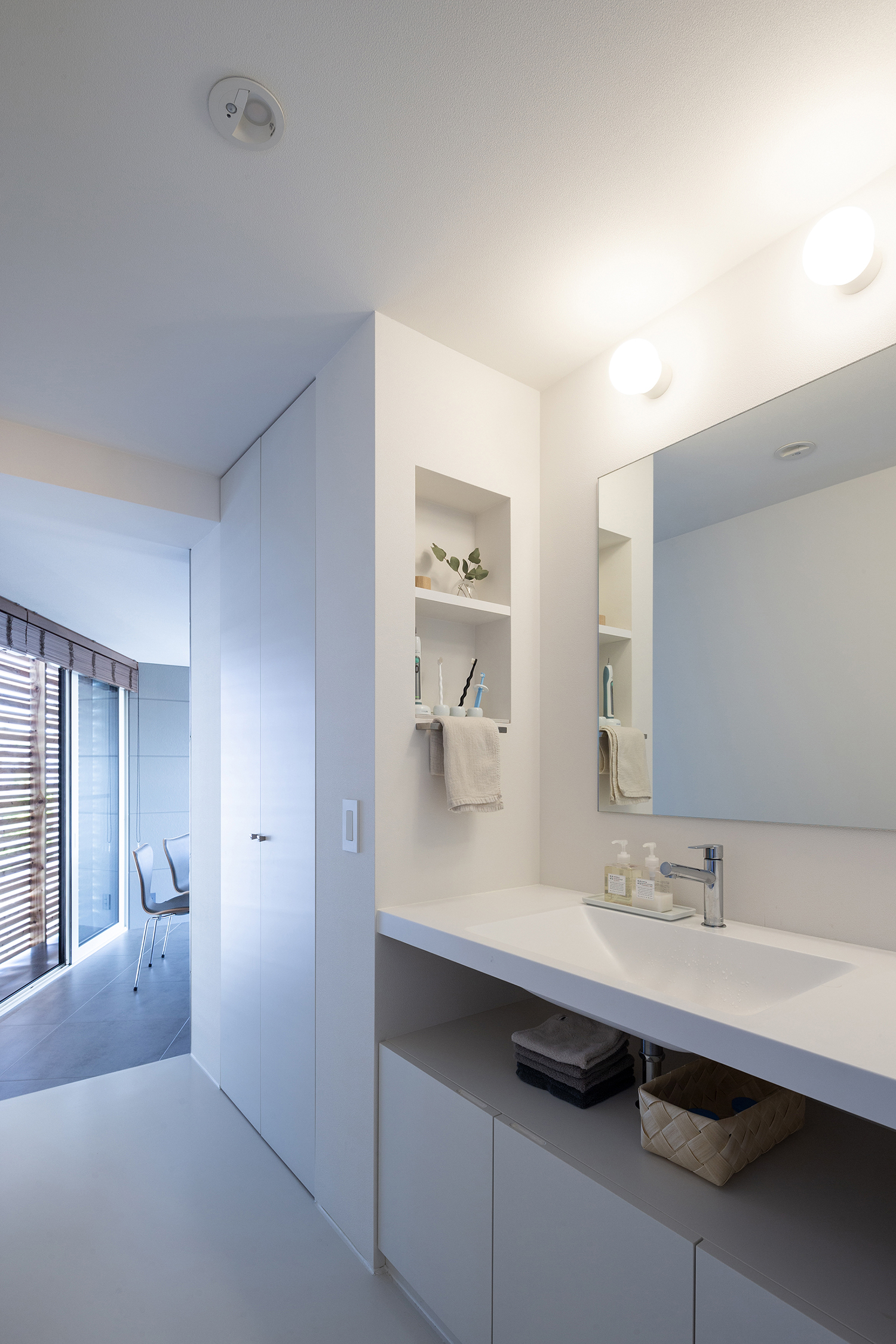
ダイニングの東側にはリビングと畳スペースを、西側にはキッチンと水まわりをまとめて配置し、各所に設けたピクチャーウインドウを通して、異なる角度から景色を楽しめるよう配慮した。
動線や機能を簡潔に整理し、風景と生活が自然に結びつくLDKのあり方を追求した結果、眺望を日常の延長として受け止められる空間が実現している。
快適な暮らしを支える住宅性能と温熱環境
壁には充填断熱と付加断熱を併用し、屋根にも十分な断熱層を設けている。基礎外周には厚めに断熱材を施工することで、1階土間部分の足元環境にも配慮した。開口部はすべて樹脂サッシとトリプルガラスを採用し、南面の大開口については、メーカーの最大製作寸法を踏まえた上で開口幅を決定している。
冷暖房にはパネルヒーターを採用し、輻射熱による安定した温熱環境を目指した。断熱性能と断面構成を一体的に検討することで、過度な設備に頼ることなく、年間を通して快適な室内環境を実現している。
施主の価値観に寄り添ったコストバランス
本計画の特徴の一つは、コスト配分の優先順位が明確であった点にある。
施主は室内の雰囲気やインテリアへの関心が高く、自身の価値観をはっきりと持っていた。その要望に対し、設計者としては、合理性と空間的豊かさを両立させることで応答した。
具体的には、内装や仕上げは必要最小限にとどめ、その分、断熱性能や設備、家具・照明といった、暮らしの質に直結する要素へ重点的に予算を配分している。
結果として、無理のない予算規模の中で、「性能」「眺望」「空間の質」が高い次元でバランスした住宅になったと考えている。
Umi-mi House
Seeking a Balance Between Ocean Views and Interior Comfort
This residence was planned on elevated land within Sendai City, in an area characterized by significant changes in elevation and highly varied site conditions from one plot to another. The site faces a road to the north and is surrounded by neighboring houses on the east, west, and south. The ground slopes downward by approximately two meters to the south and continues to descend gently toward the east, offering the latent possibility of capturing views of the sea beyond the cityscape by directing sightlines toward the southeast.
At the same time, the project was subject to a constrained construction budget. Within these limitations, the central challenge of the design was how to successfully reconcile three key elements—performance, views, and spatial quality—within a limited cost framework.
A Building Form Derived from the Site Geometry
With a total floor area of approximately 37 tsubo (about 122 m²), the house is relatively compact compared to other residential projects undertaken by the architect.
The site faces a gently curving road, and in response to this condition, the building was placed at an angle. This diagonal placement secures appropriate distances from neighboring houses while guiding views toward the southeast.
The house is composed as a two-story structure made up of two rectangular volumes, each assigned a distinct role by floor. These volumes are arranged diagonally and connected by a parallelogram-shaped hall. By composing the building as an aggregation of smaller boxes, the overall mass is kept restrained, while generating a variety of interior spaces and layered sightlines.
The vertical volume is also deliberately suppressed, allowing views to be naturally drawn toward openings and beyond, where exterior scenery expands the perceived scale of the interior.
A Ground Floor Organized Around an Intermediate Zone of Sight, Light, and Air
Entering from the north, one arrives in a spacious doma (earthen-floored) hall. Openings are provided on both the north and south, allowing sightlines, light, and airflow to pass directly through the building. Beyond the large south-facing opening lies a concrete terrace; when the windows are fully opened, the doma hall functions as an intermediate zone that seamlessly connects interior and exterior.
Rather than serving solely as an entrance hall, the entire first floor is conceived as a generous doma space. By avoiding rigid, single-purpose programming, the space retains flexibility and can adapt to changes in lifestyle over time.
Bedrooms are consolidated on the first floor. The eastern volume contains the main bedroom and closet, while the western volume houses the children’s rooms and a toilet. The children’s rooms are designed with future subdivision in mind, enabling flexible responses to changing family needs.
The Second Floor: Where Views and Daily Life Gently Converge
To avoid surrounding sightlines while maximizing views, the LDK (living–dining–kitchen) is placed on the second floor.
Ascending the stairs, one first encounters an open and airy dining space. A large four-panel sliding window on the south façade connects directly to the balcony, drawing the eye beyond the cityscape toward the Pacific Ocean in the distance.
To the east of the dining area are the living room and a tatami space; to the west are the kitchen and wet areas, grouped efficiently. Picture windows are carefully positioned throughout, allowing the scenery to be enjoyed from multiple vantage points.
By simplifying circulation and functional layout, the design seeks a natural integration of landscape and everyday life, resulting in an LDK where the view is embraced as an extension of daily living.
Residential Performance and Thermal Comfort Supporting Daily Life
The walls combine cavity insulation with additional exterior insulation, while the roof is also equipped with a sufficient thermal layer. Thick insulation is applied around the perimeter of the foundation, ensuring thermal comfort even at floor level in the first-floor doma space. All openings utilize resin window frames with triple glazing. The width of the large south-facing opening was determined based on the manufacturer’s maximum production dimensions.
Panel heaters are used for heating and cooling, aiming to create a stable indoor environment through radiant heat. By considering insulation performance and sectional composition as an integrated system, the house achieves year-round comfort without relying on excessive mechanical equipment.
Cost Balance Aligned with the Client’s Values
One defining characteristic of this project is the clarity with which budget priorities were established.
The clients placed strong emphasis on interior atmosphere and furnishings, holding a clear sense of their own values. In response, the design sought to balance rational construction with spatial richness.
Interior finishes were kept to a necessary minimum, allowing a greater portion of the budget to be allocated to elements that directly affect quality of life—thermal performance, building services, furniture, and lighting.
As a result, the house achieves a high-level balance between performance, views, and spatial quality within a realistic and sustainable budget framework.
海見の家
所在地/宮城県仙台市
主要用途/住宅
<設計>
意匠 菊池佳晴建築設計事務所 担当/菊池佳晴 古山紗帆
構造 図設計事務所 担当/高橋雷人
<施工>
建築 共栄ハウジング 担当/原
植栽 藤造園 担当/伊藤権一
<構造・構法>
主要構造・構法/木造在来構法
基礎/べた基礎
構造/耐震等級3(許容応力度計算)
<規模>
階数/2階建て
軒高/5260mm 最高高さ/5360mm
敷地面積/255.04m2(77.14坪)
延床面積/122.04m2(36.98坪)
<工程>
設計期間/2018年10月〜2019年3月
工事期間/2019年4月〜2020年3月
<敷地条件>
都市計画区域内 市街化区域
用途地域 第一種低層専用地域
第1種高度地区 壁面後退1m
許容建蔽率50% 許容容積率80%
地域地区 22条地域
地区計画 −
道路幅員 北6.5m(公道)
<外部仕上げ>
屋根/シート防水0勾配工法(イーアステック)
外壁/窯業系サイディングt16/エクセレージ新フラット16(ケイミュー)
開口部/樹脂トリプルサッシ(シャノン)
<内部仕上げ>
床/1階ホール:モルタル仕上げ
2階ダイニング:タイル仕上げ
リビング:北海道なら節なしフローリングt15(チャネルオリジナル)
浴室、キッチン:塩ビシート
壁/ビニルクロス
天井/ビニルクロス
<キッチン>
コンロ:Dual Chef(クリナップ)
水栓金具:F914ZC
食洗機:ミーレG6620Sci
レンジフード/アンジェリーナANGL-951(アリアフィーナ)
<浴室>
ユニットバス1616 サザナSタイプ
<設備システム>
冷暖房/パネルヒーター(ピーエス)
換気/3種換気
給排水 給水方式/直結
排水方式/下水道直結
給湯 給湯方式/エコジョーズ(リンナイ)
<断熱仕様>
基礎下/防蟻ビーズ法ポリスチレンフォーム100mm
基礎立上り/防蟻ビーズ法ポリスチレンフォーム100mm
壁 /高性能グラスウール20kg充填120 mm +付加105mm
屋根/高性能グラスウール32kg300mm
<温熱計算>
Ua値/0.28W/m2K
C値/0.30cm2/m2
<撮影>
西川公朗