
WORKS
丸森の家


丸森の家
地元の丘に根を下ろす住まい
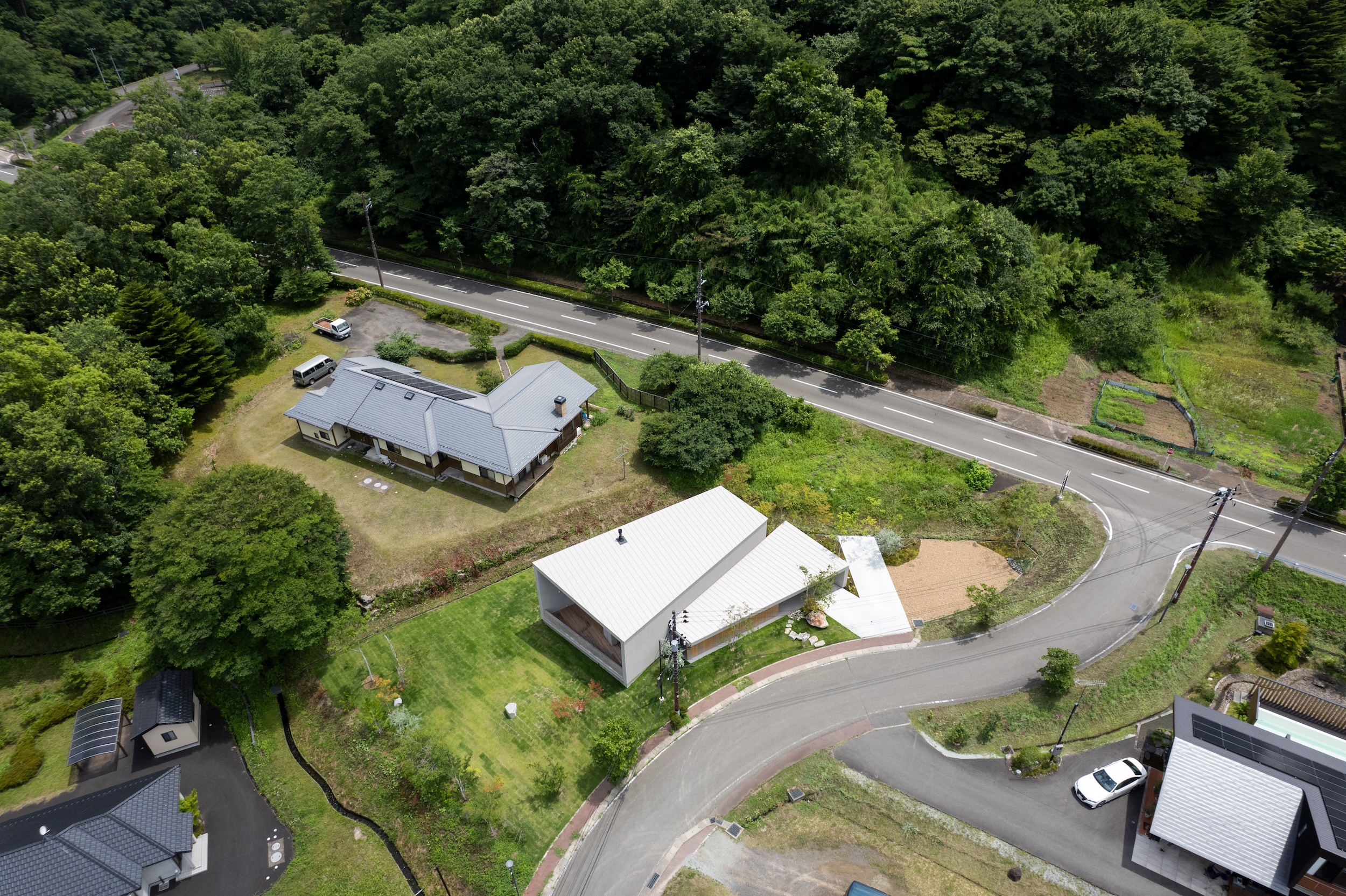
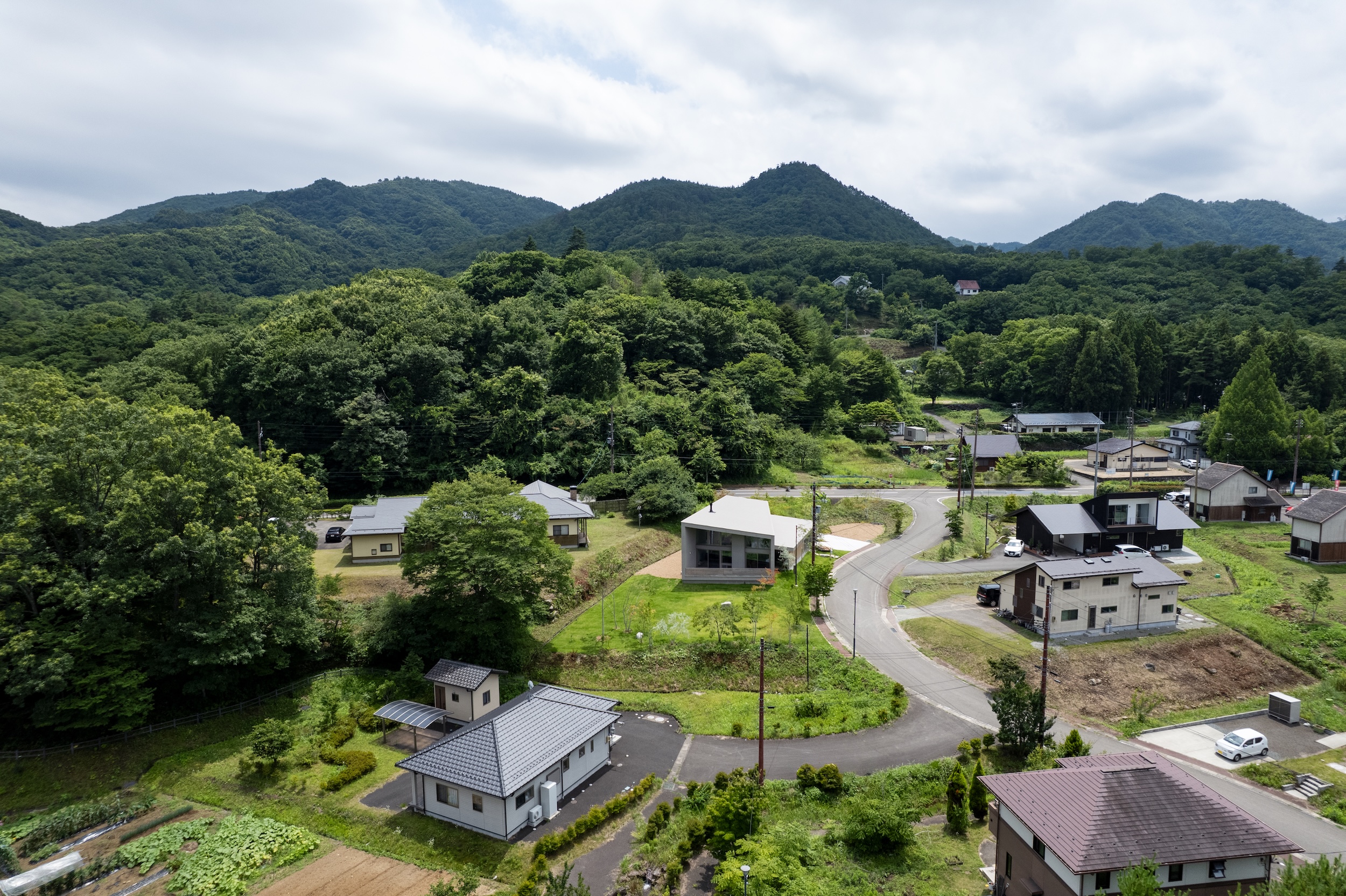
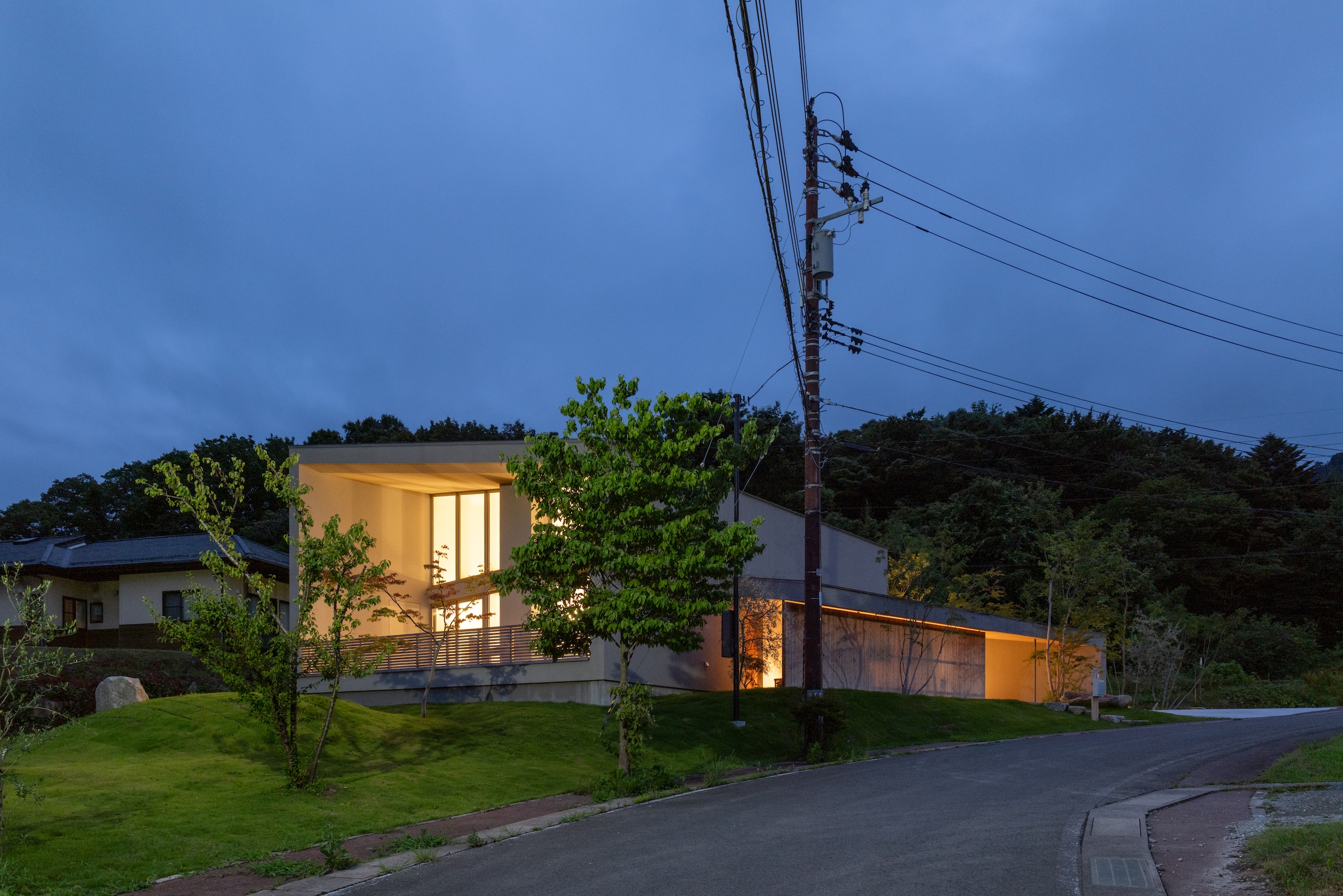
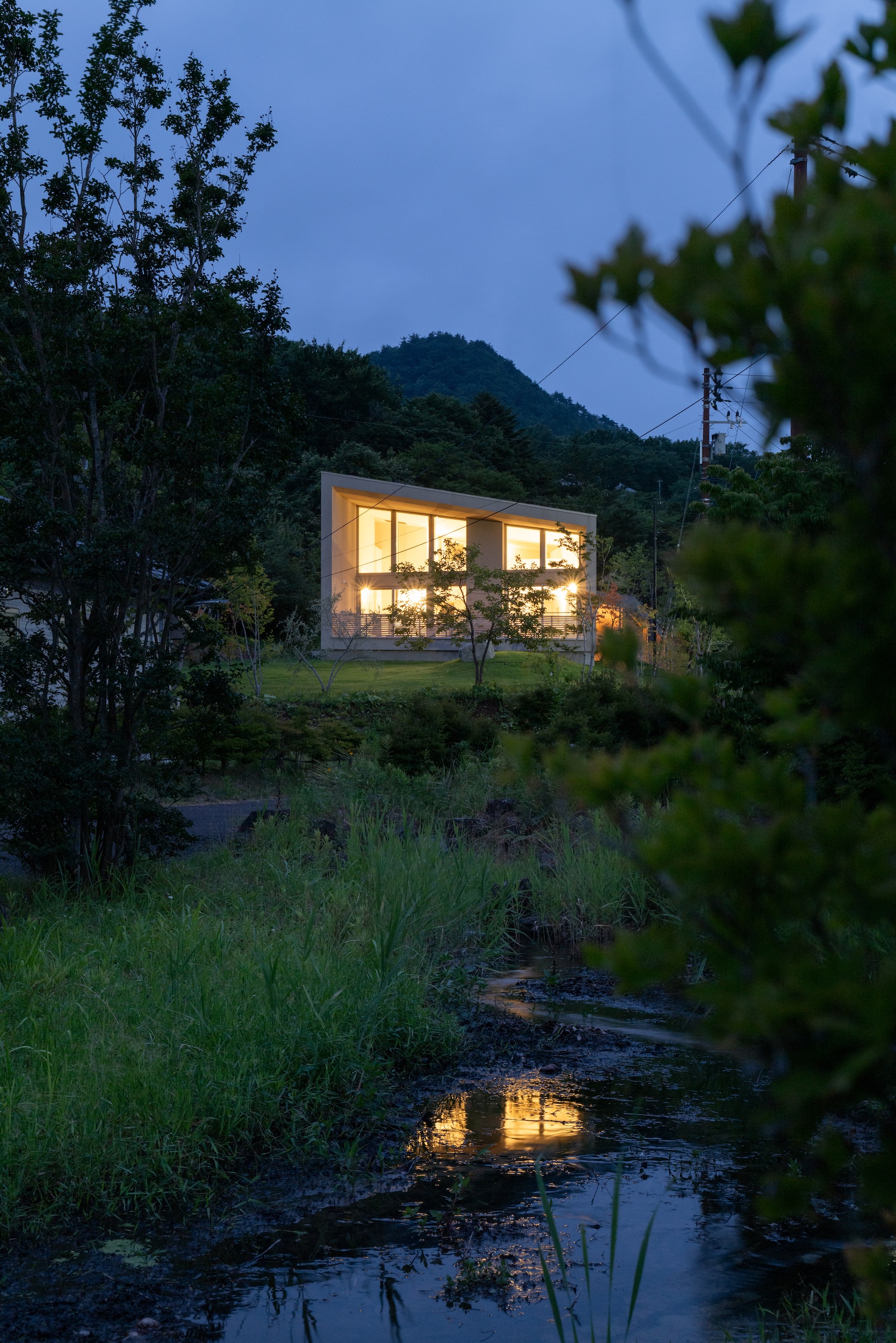
宮城県南部、阿武隈川流域に位置する丸森町。町の中心部から車で約15分、緩やかな丘陵地に造成された住宅地の一角に「丸森の家」は建つ。
敷地はやわらかな曲線を描く不整形地で、北へ向かってゆるやかに傾斜し、南側には深い森が広がる。周囲には適度な距離で家々が点在し、土地の持つおおらかさが暮らしの背景を形づくっている。
建て主は丸森町出身のクリエイティブディレクター。東京を拠点に活動しながら山形と東京を行き来する多拠点生活を送っていたが、子どもの誕生を機に地元に根を下ろす決意をした。造成地特有の平坦な敷地づくりではなく、土地の形状をそのまま受け入れ、地形と風景と共に暮らす、自然体の住まいを目指した。
不整形地に描く、地形との共存のかたち
建物は東側を敷地境界に沿わせ、西側を道路方向へわずかに振ることで、南北に開きをもたせている。
造成コストを抑えるため掘削は最小限にとどめ、敷地内で土を循環させることで緩やかな起伏をつくり出した。これにより、庭やアプローチに自然な立体感と豊かな表情が生まれている。
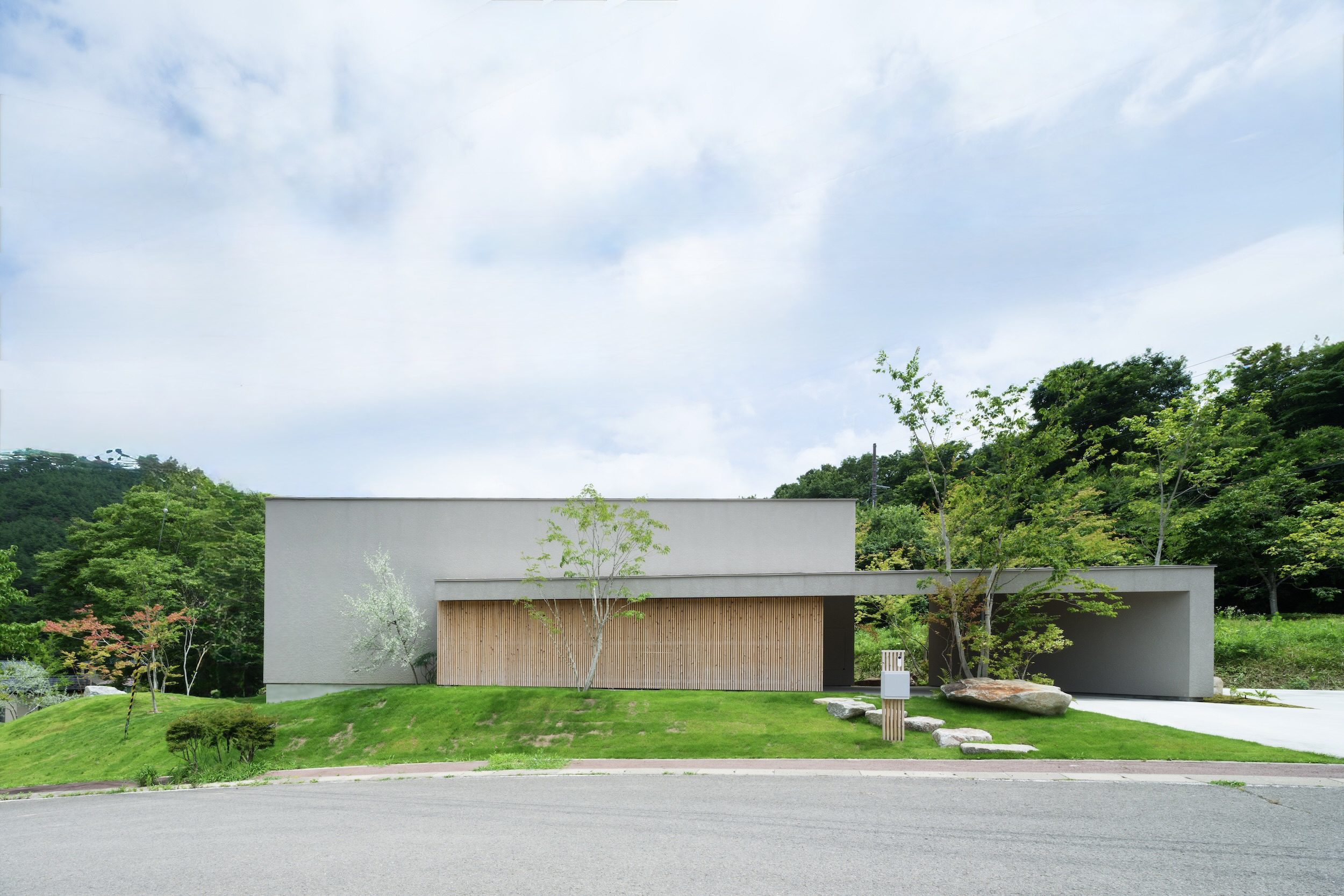
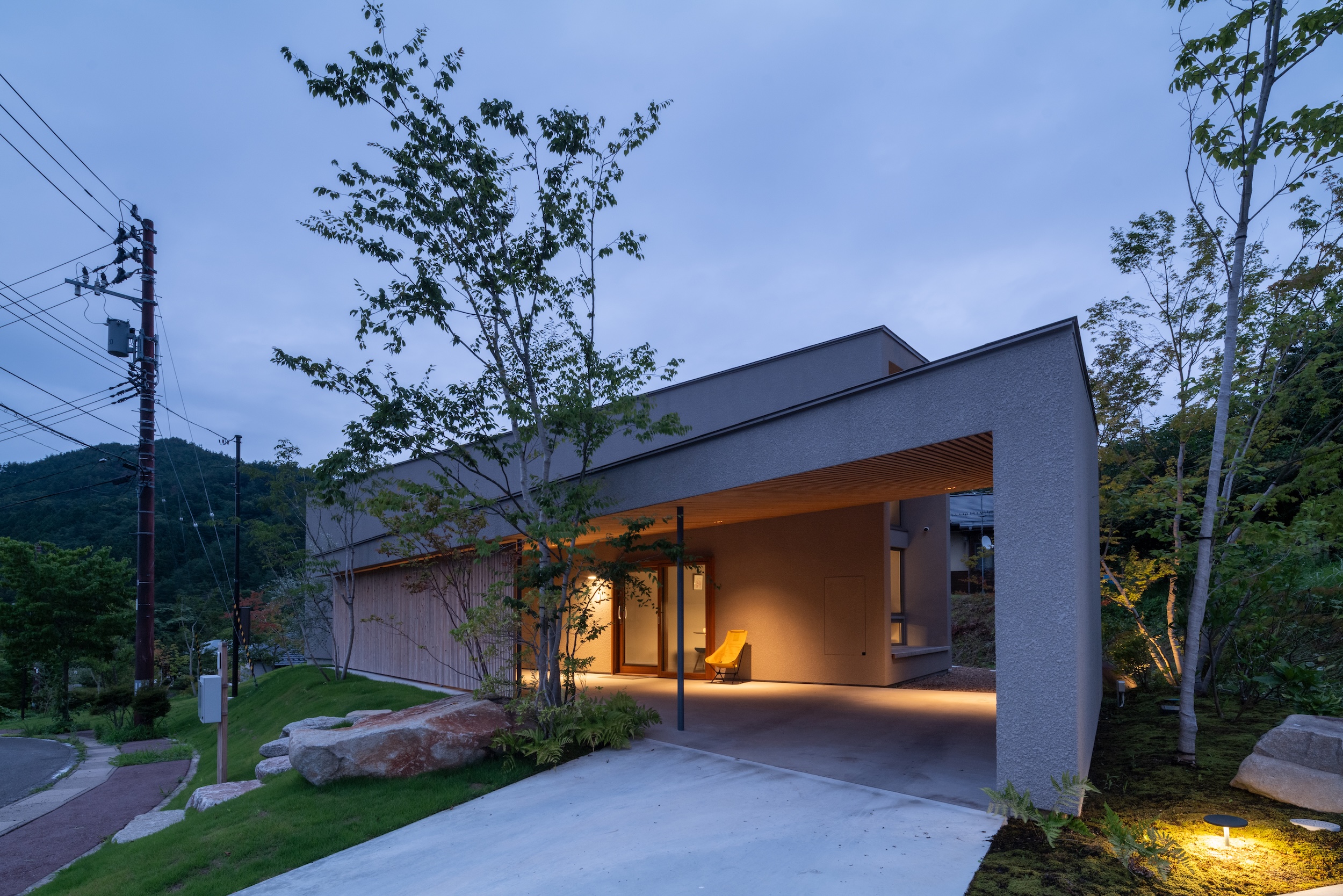
建物は大小2つの矩形ヴォリュームをずらして重ねたシンプルな構成。屋根と外壁には、ややグレーを帯びた白のガルバリウム鋼板を採用し、ポーチや開口部の格子が軽やかな陰影を生む。閉じすぎず、伸びやかで落ち着いた佇まいを目指した。
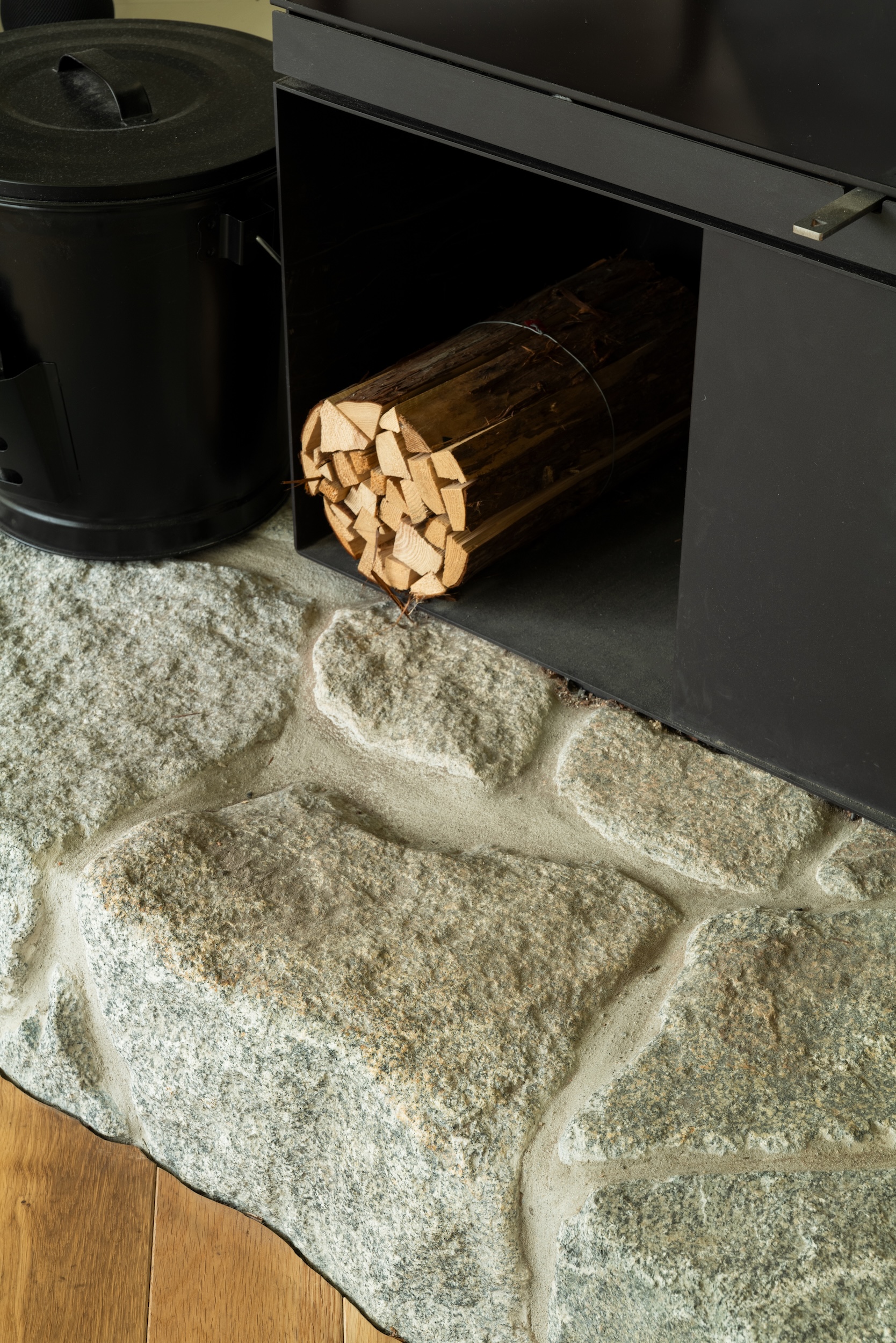
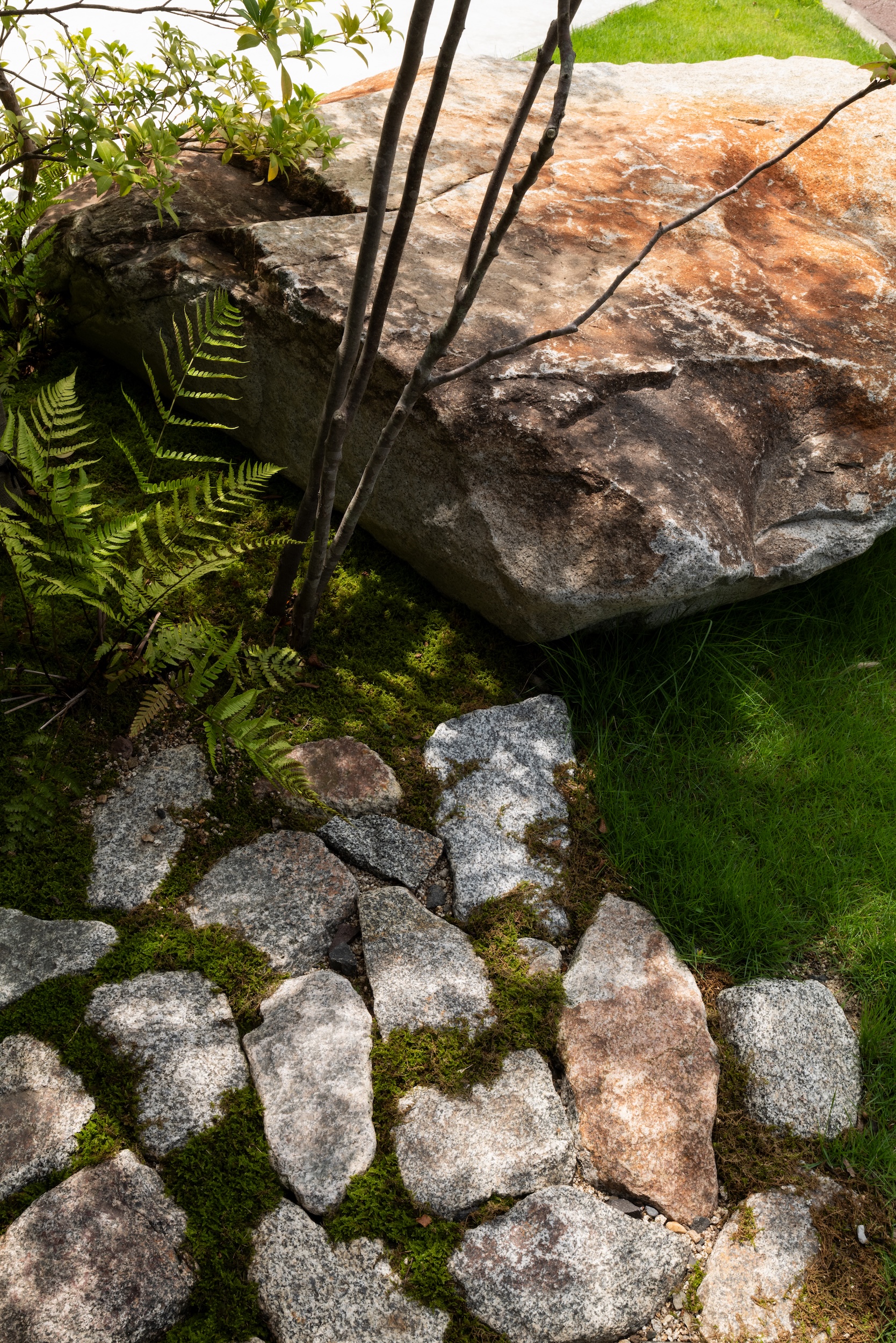
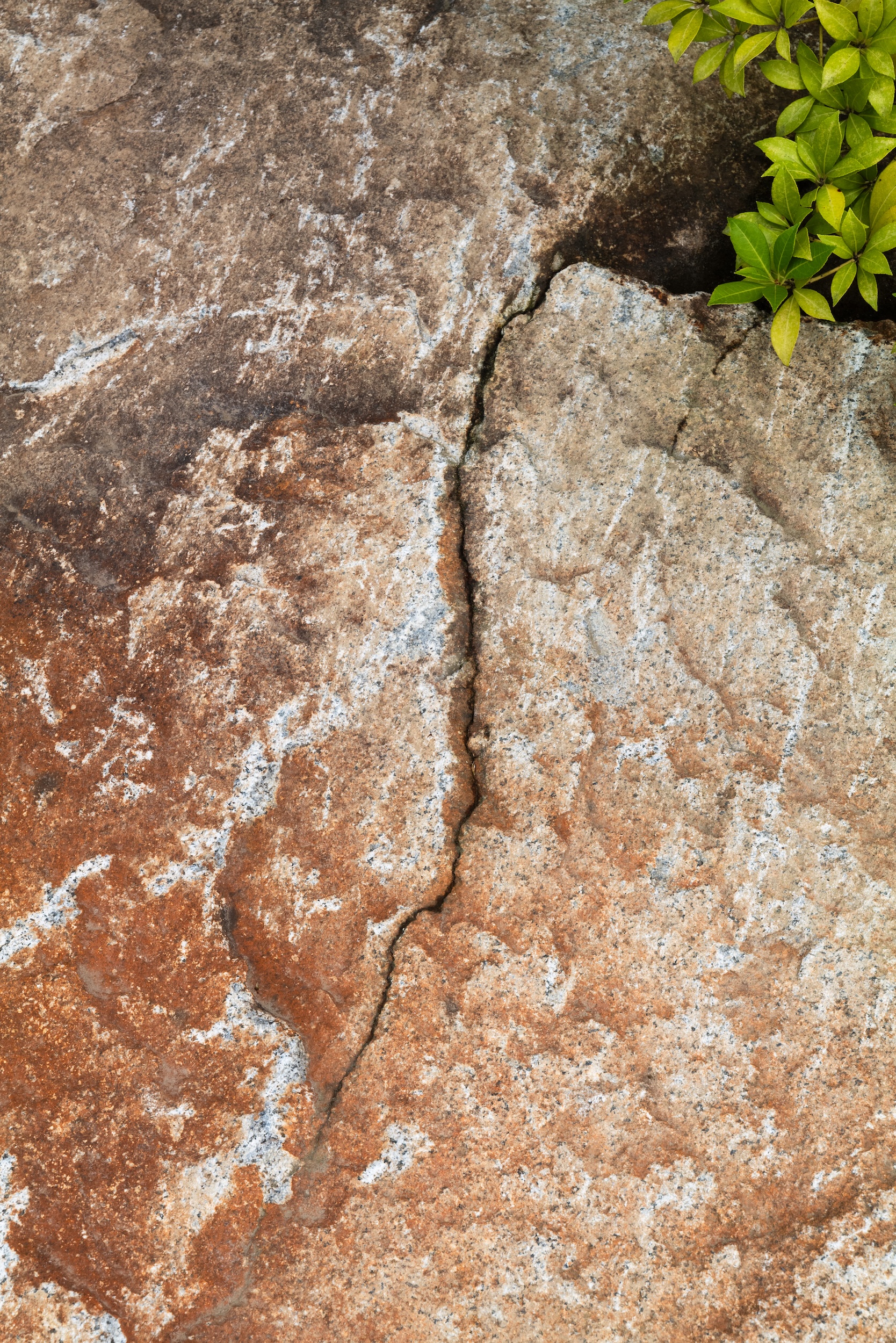
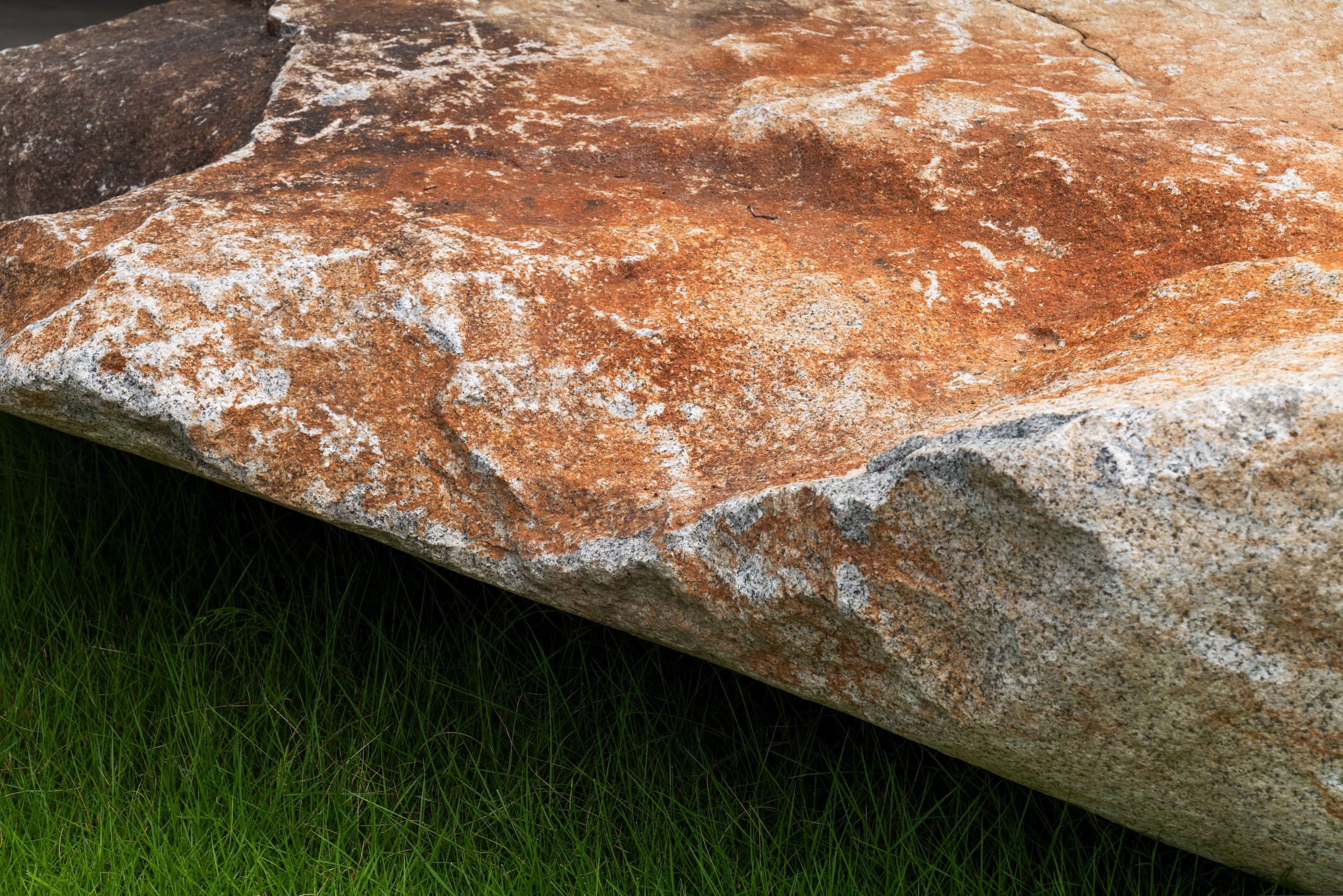
アプローチには地元産の「丸森石」を使用。施主とともに石置き場を巡り、素材の表情をひとつひとつ選び取った。
ポーチとオフィスがつなぐ、地域との距離感
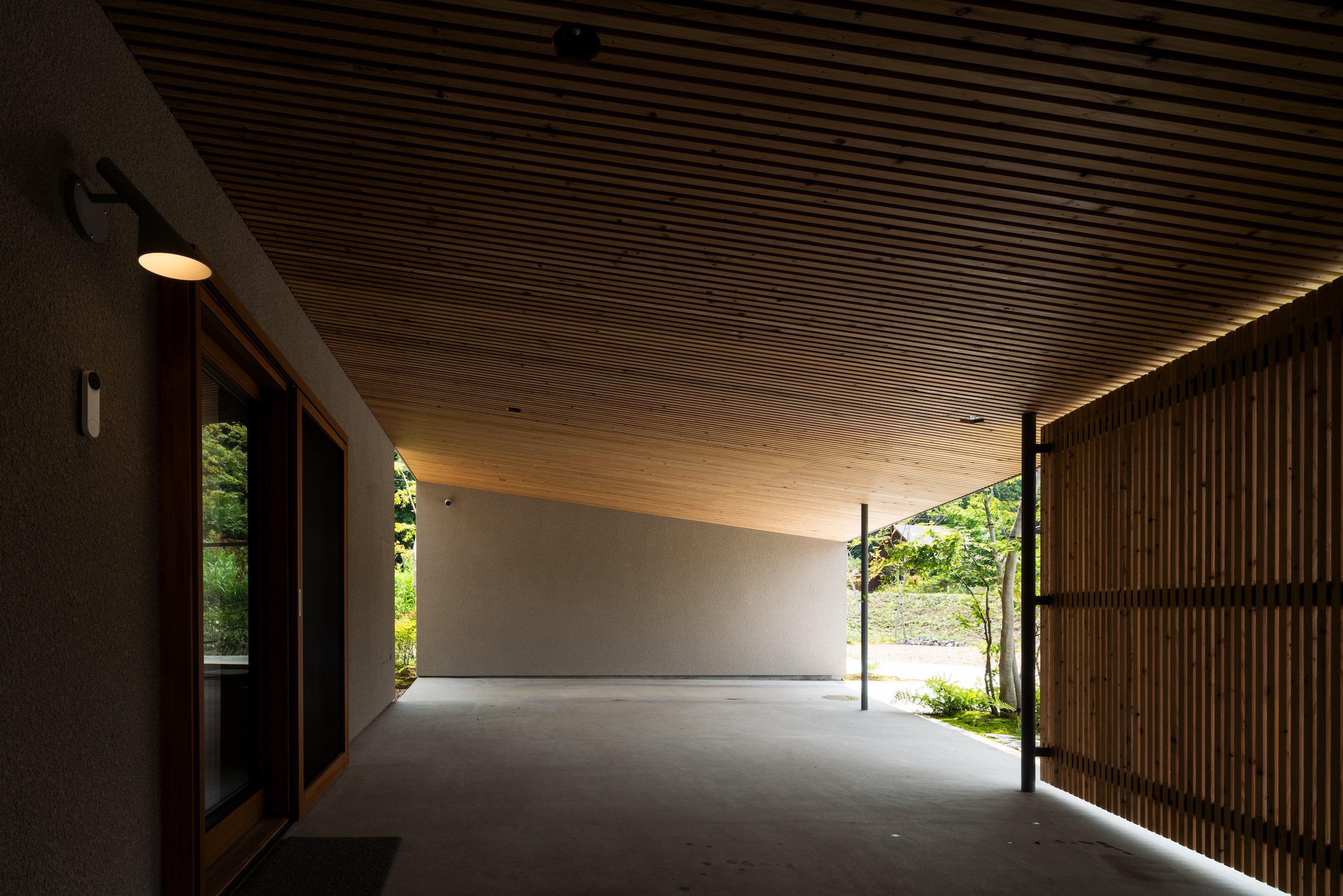
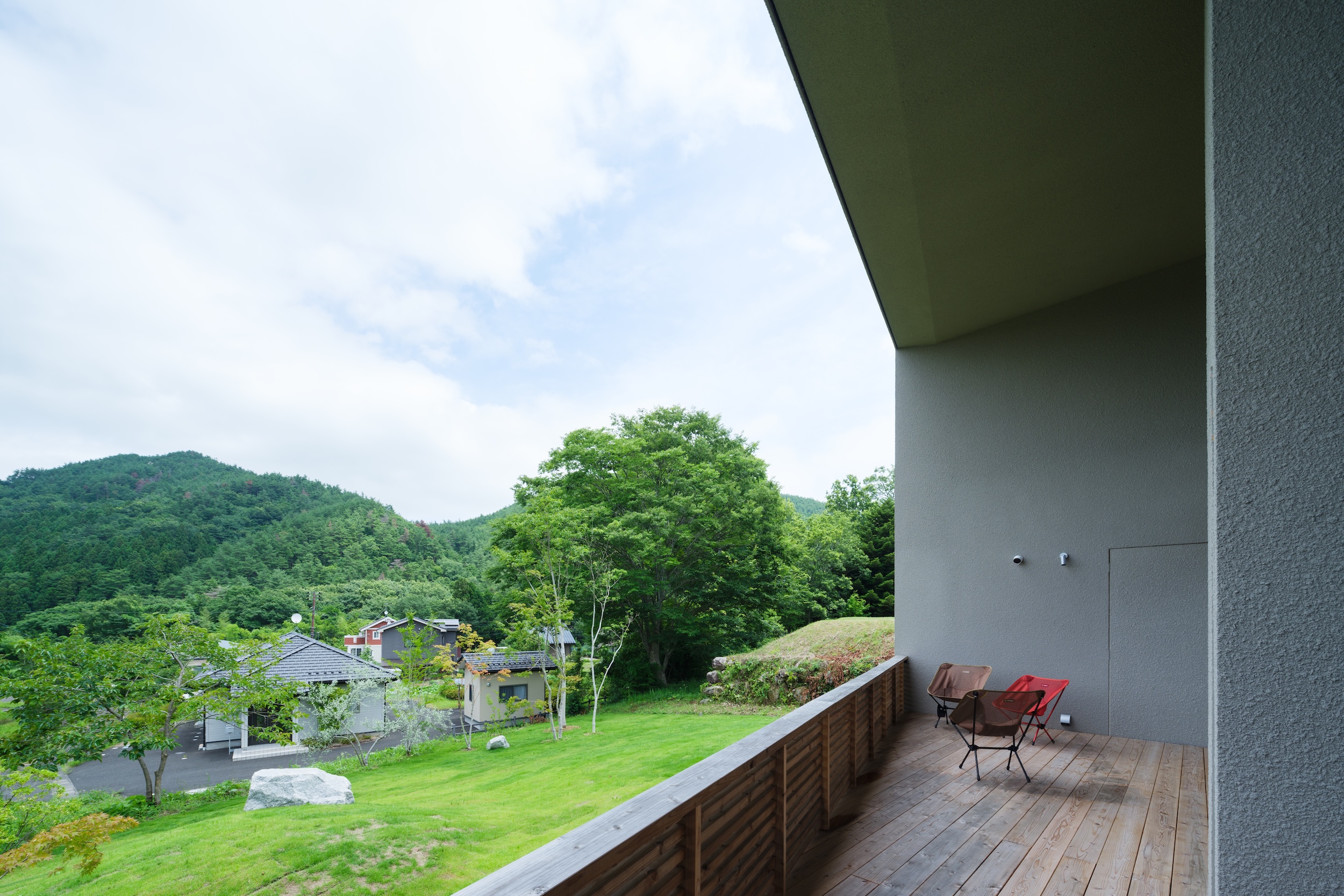
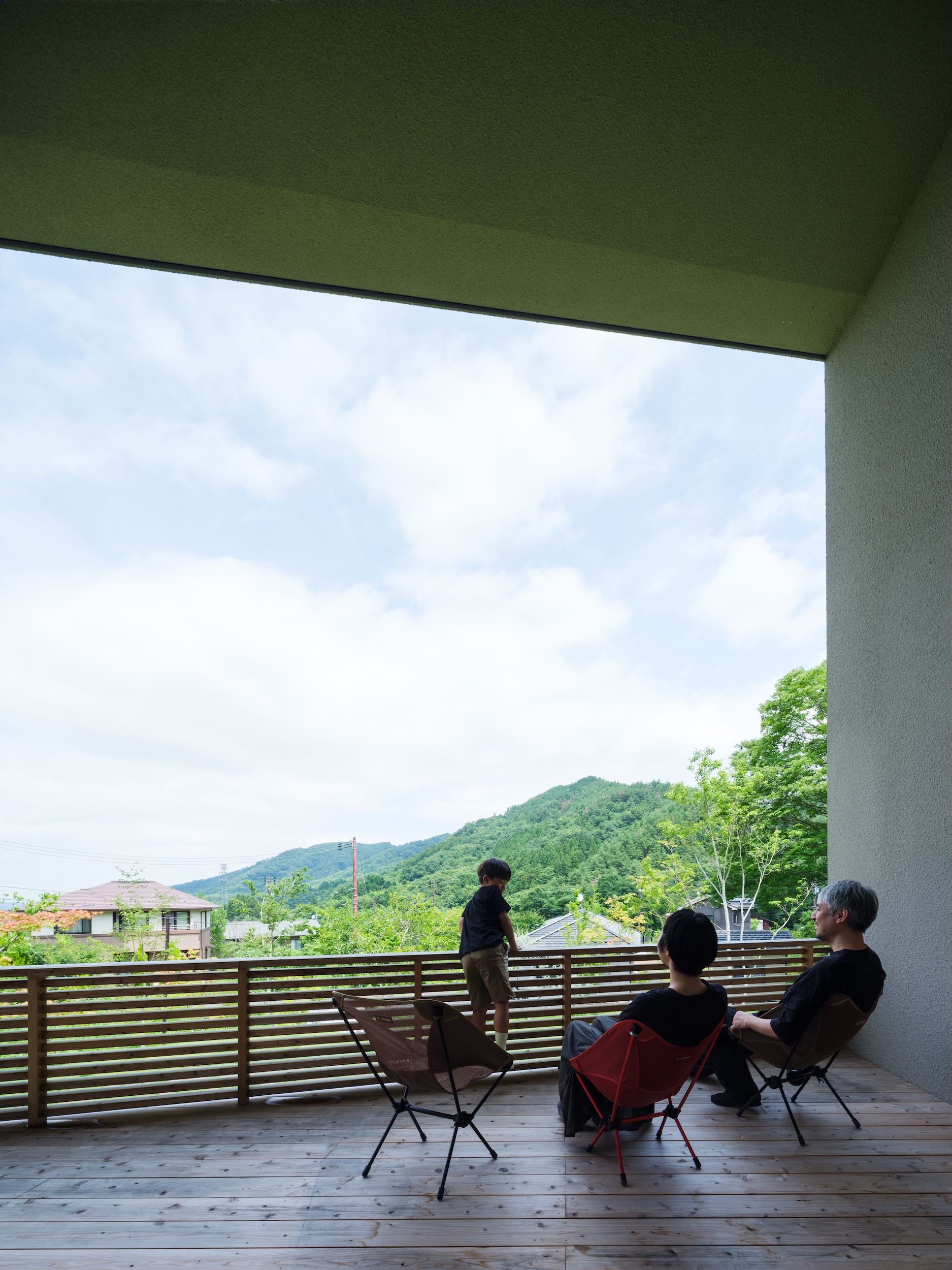
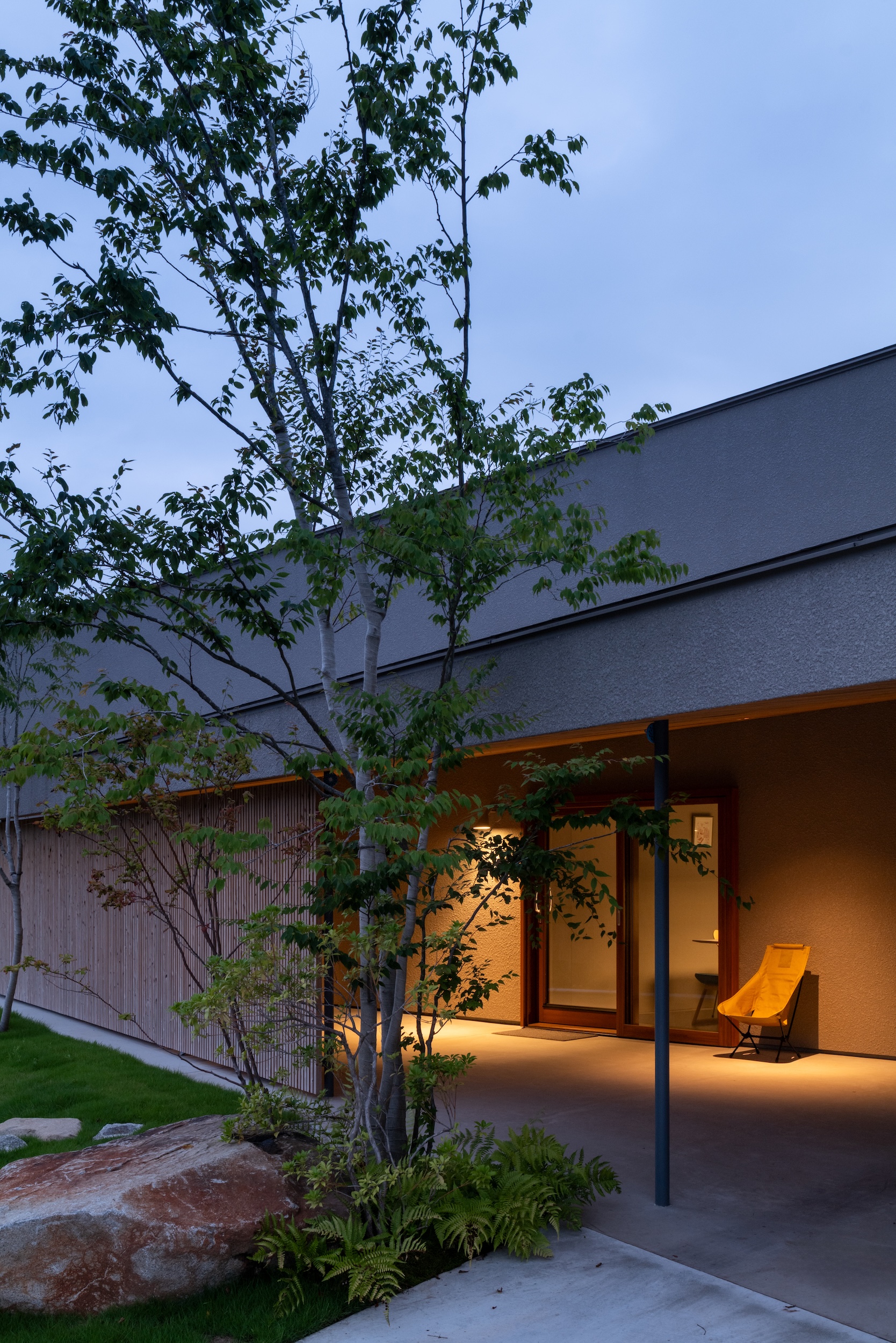
ポーチは、縁側のような半屋外空間として計画。格子越しに適度なプライバシーを保ちながらも、地域の人々が自然に立ち寄れる場所を意図した。
バーベキューや小さなマルシェなど、地域交流のハブとしても活用できる。
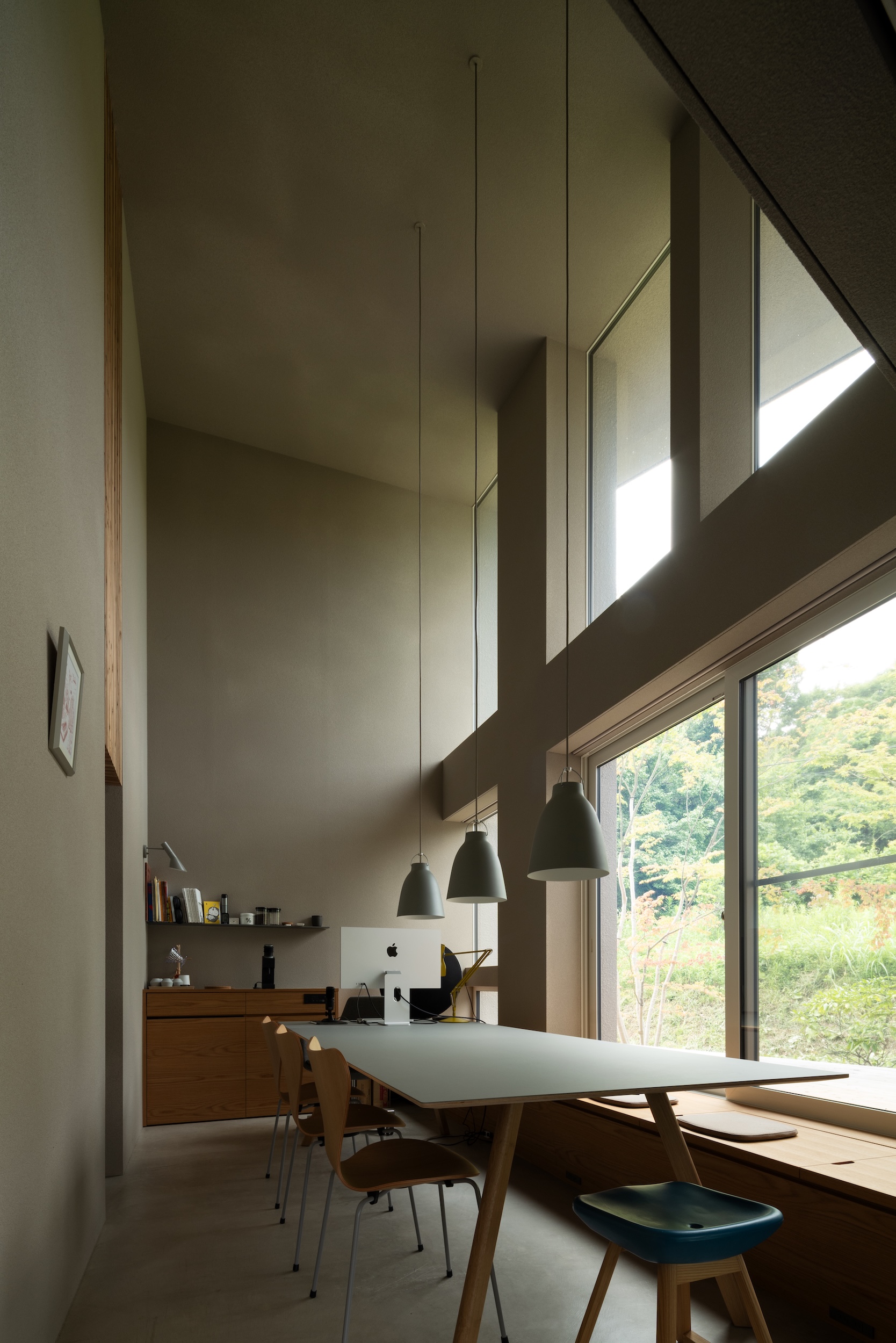
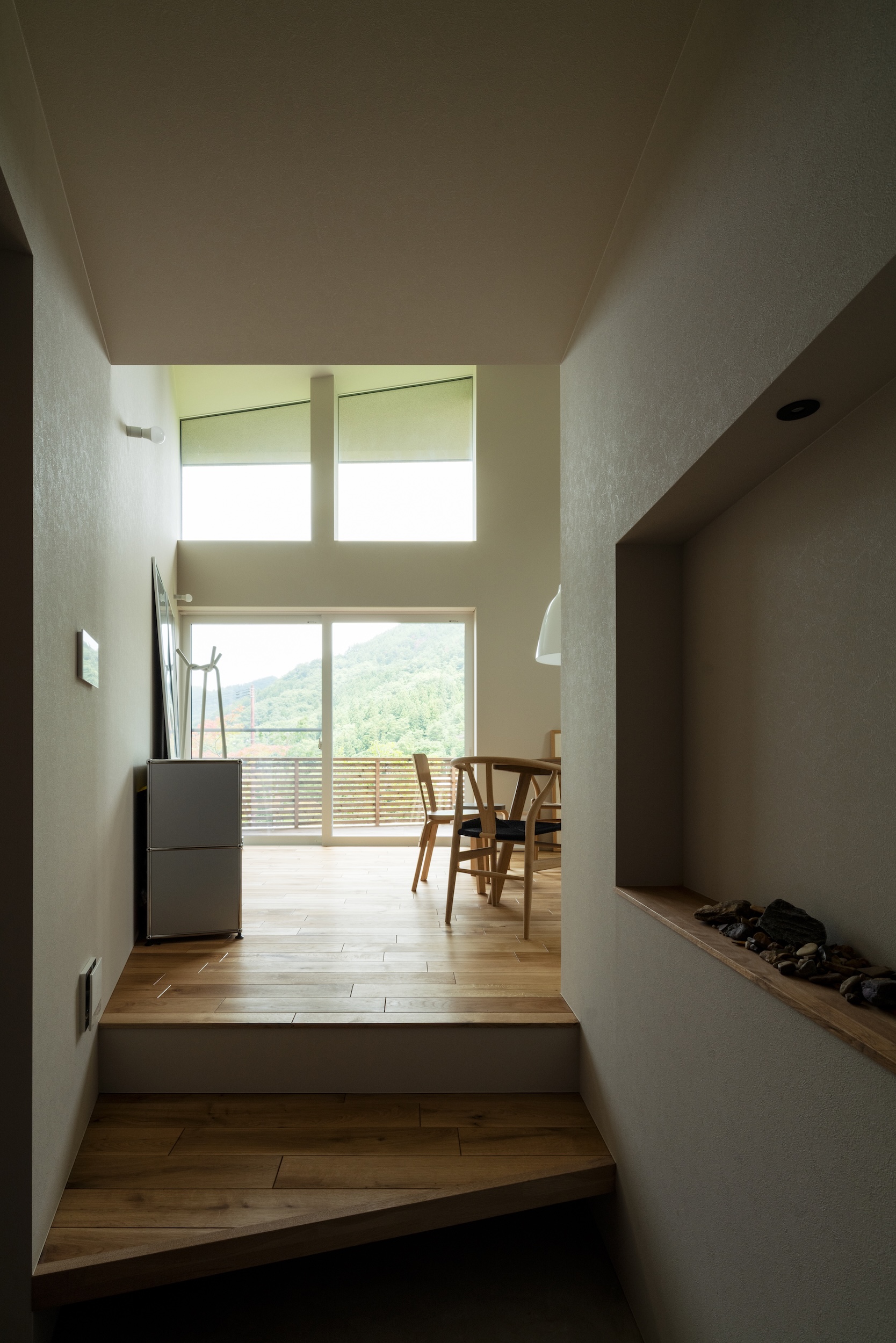
ポーチに面したオフィスは、南面に大開口を設けた土間空間。外壁と同素材の塗り壁が内外をつなぎ、連続した印象を与える。
全面開口の前にはベンチシートを造作し、FIX窓と換気窓を組み合わせることで、外の森の風景を存分に楽しめるよう設計されている。
施主は現在、丸森町のブランディングにも携わるクリエイティブディレクターとして活動しており、この空間は仕事場でありながら、来客を迎えるサロンとしての役割も果たしている。
光と風が通り抜ける、開放的な空間構成
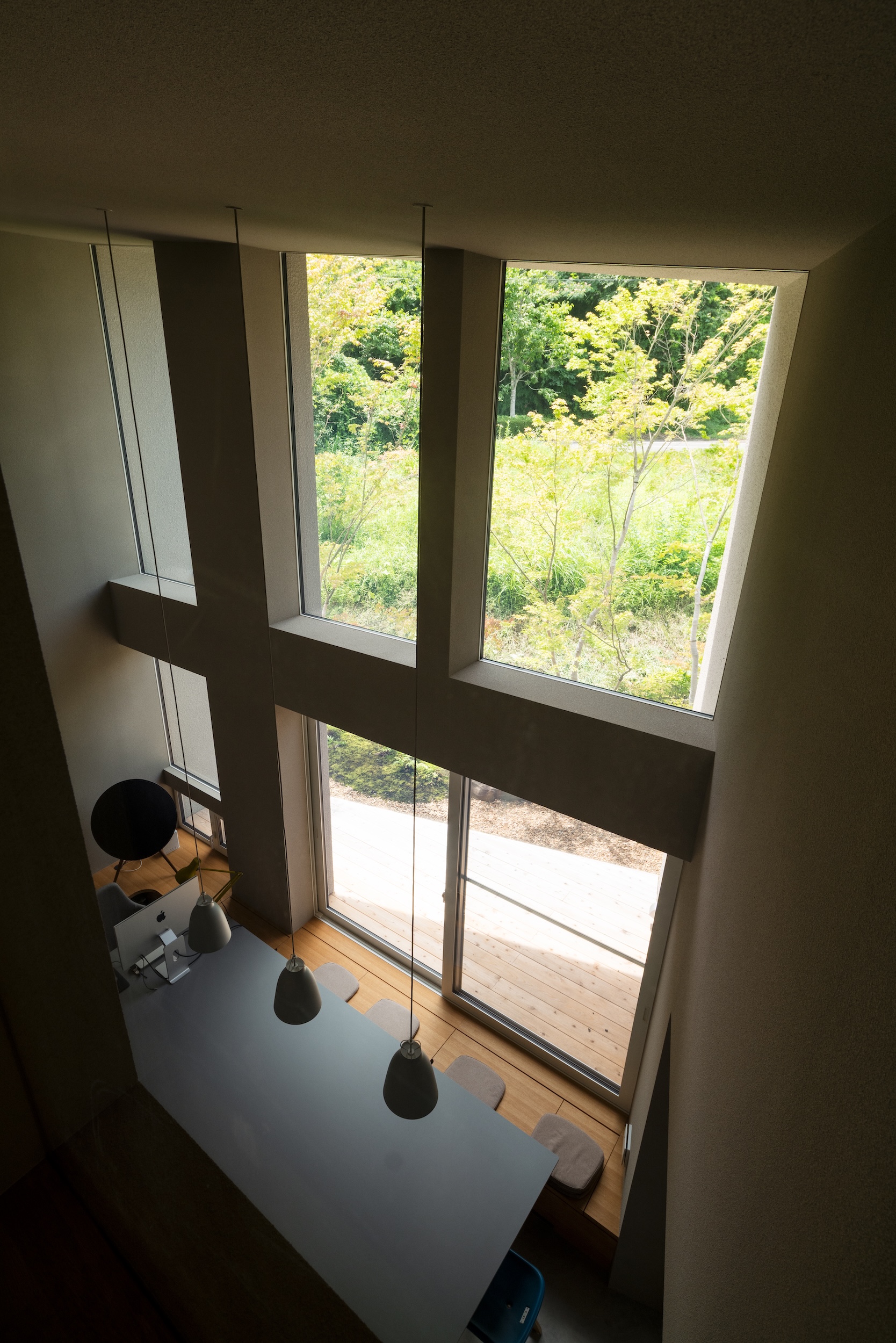
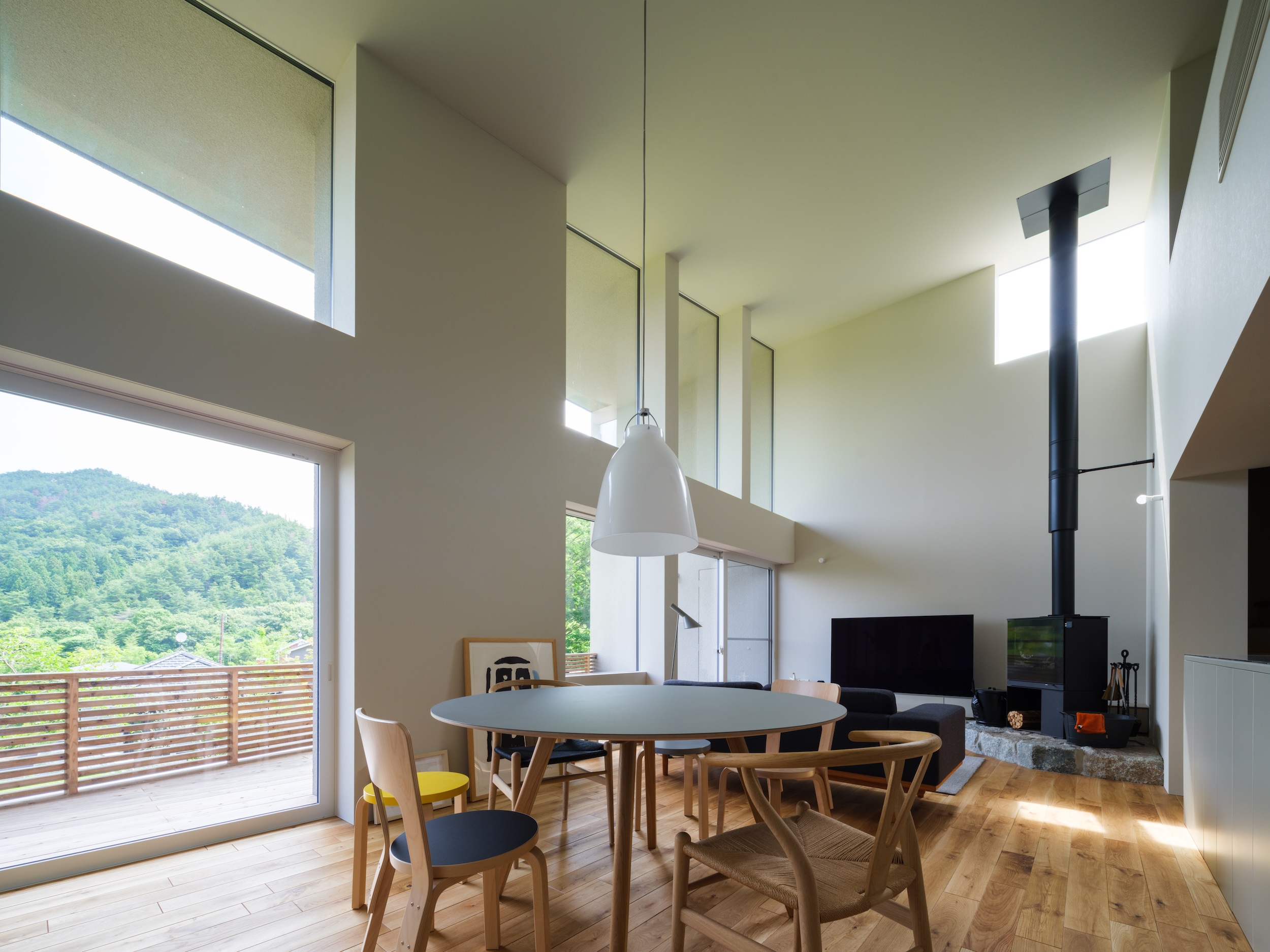
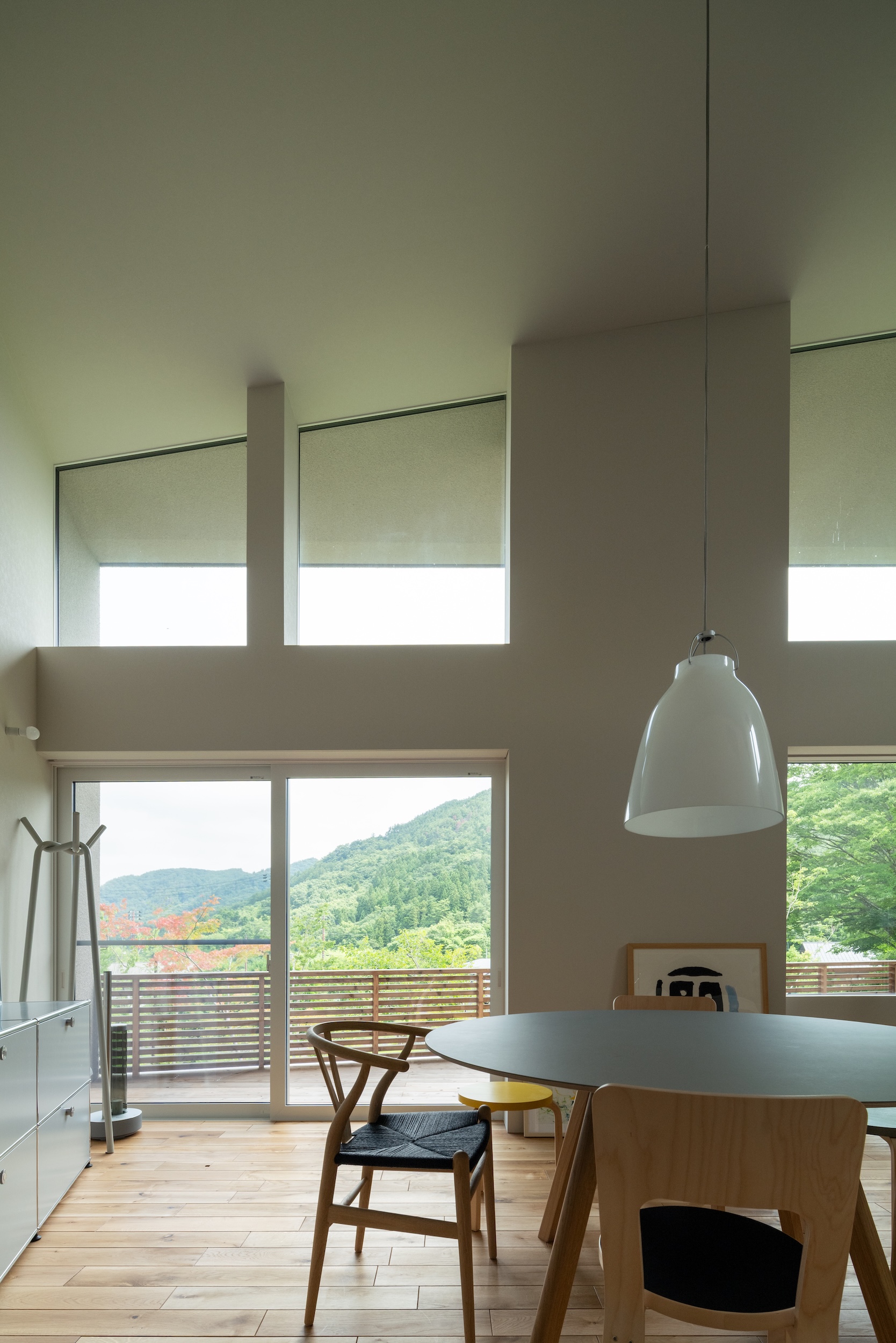
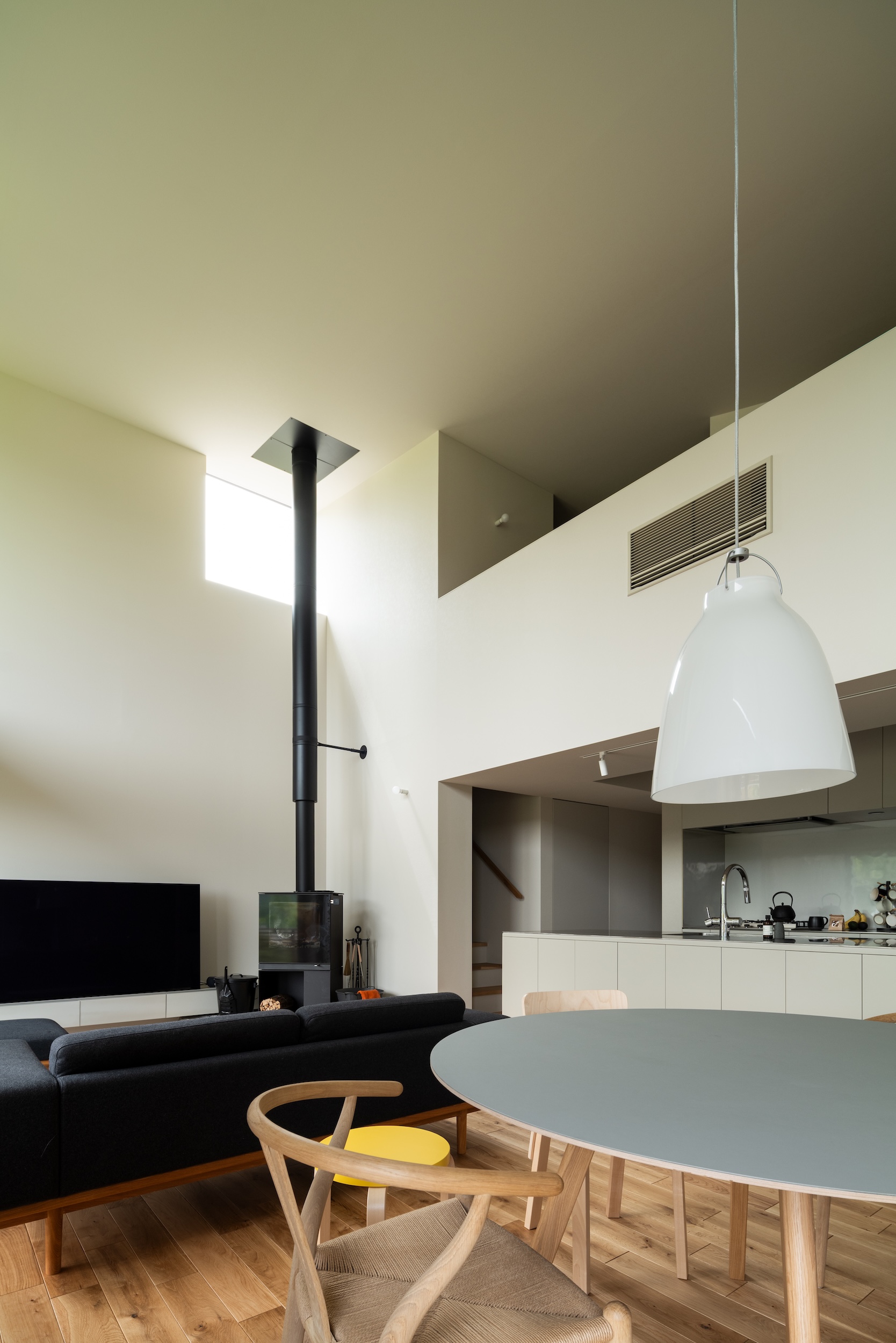
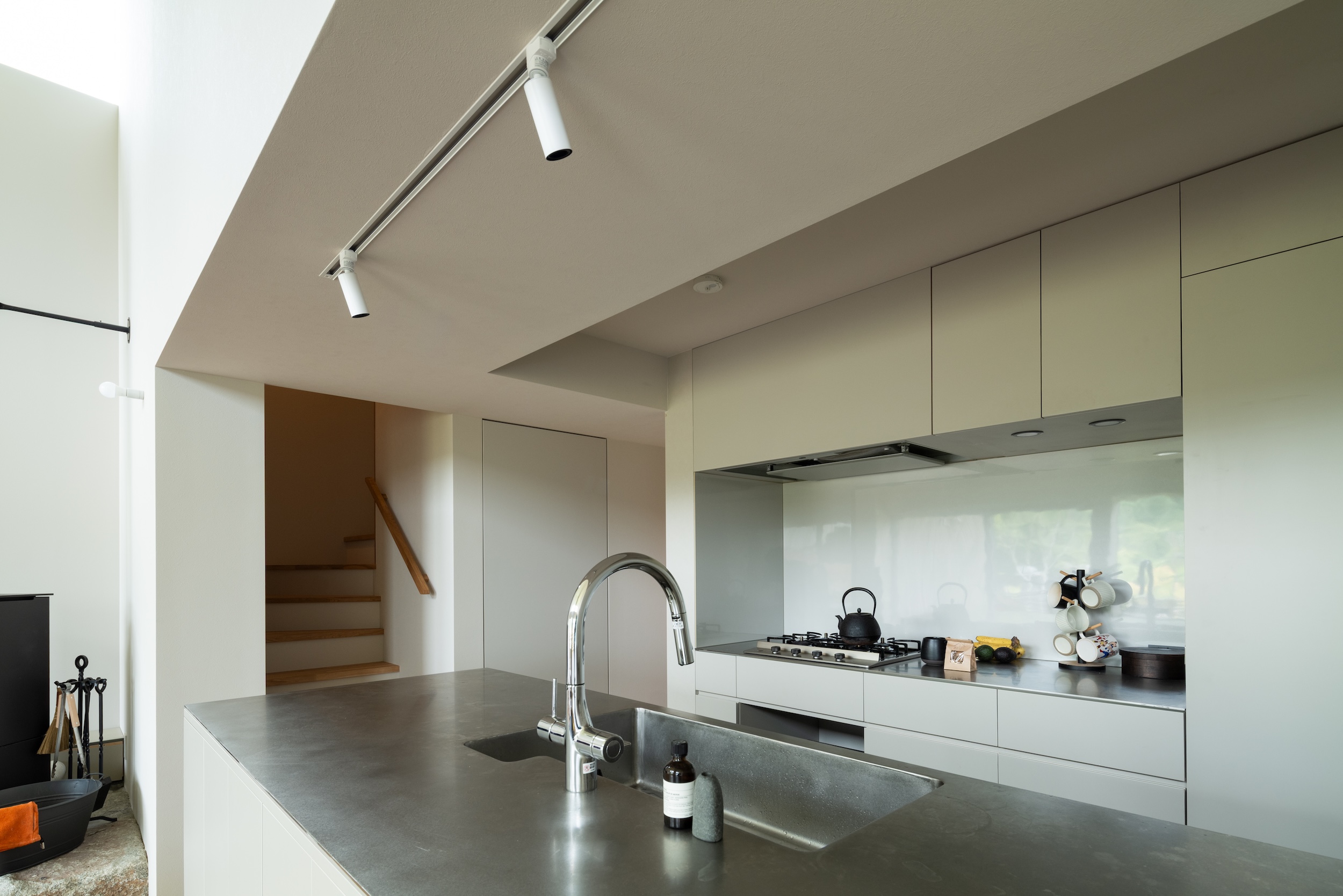
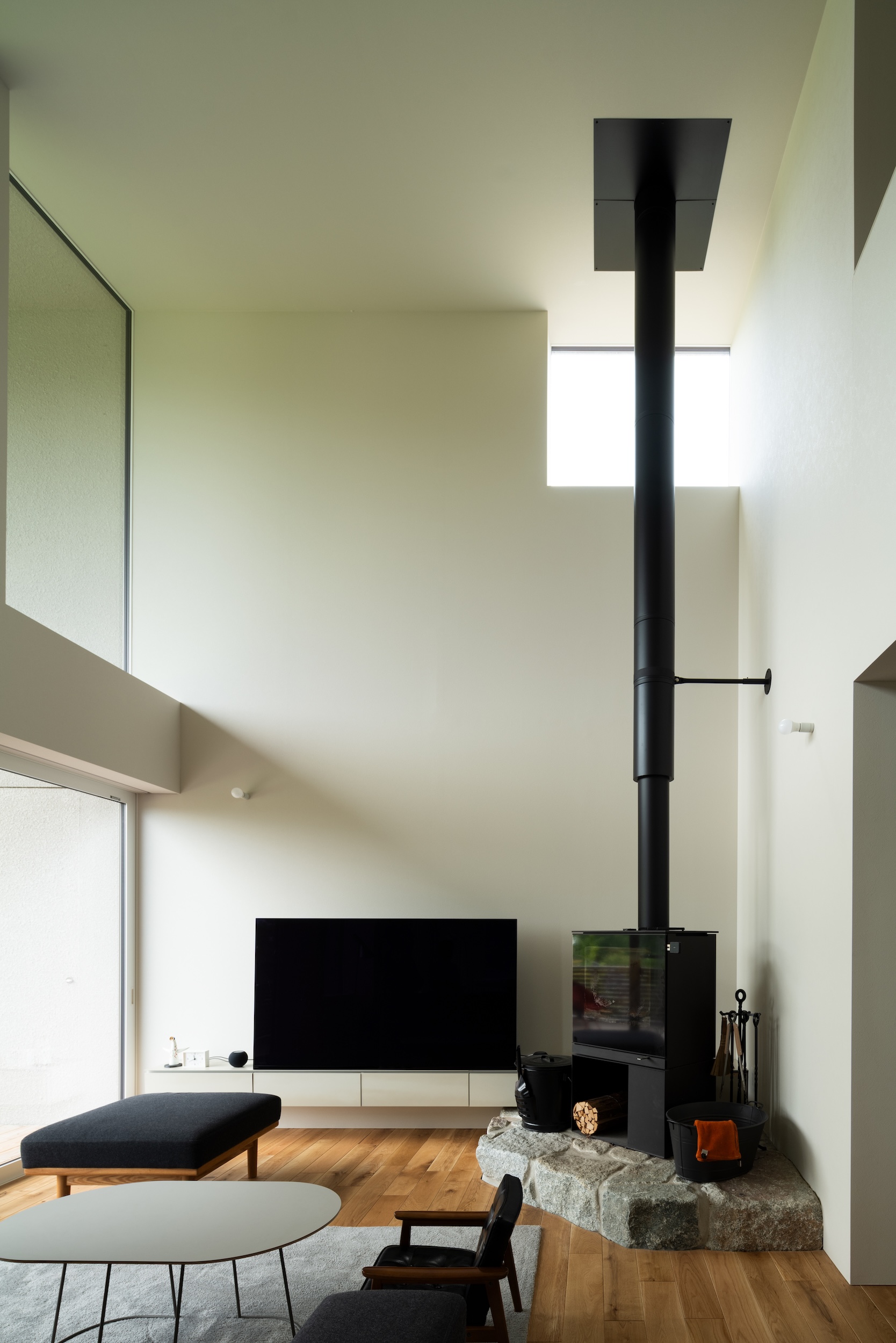
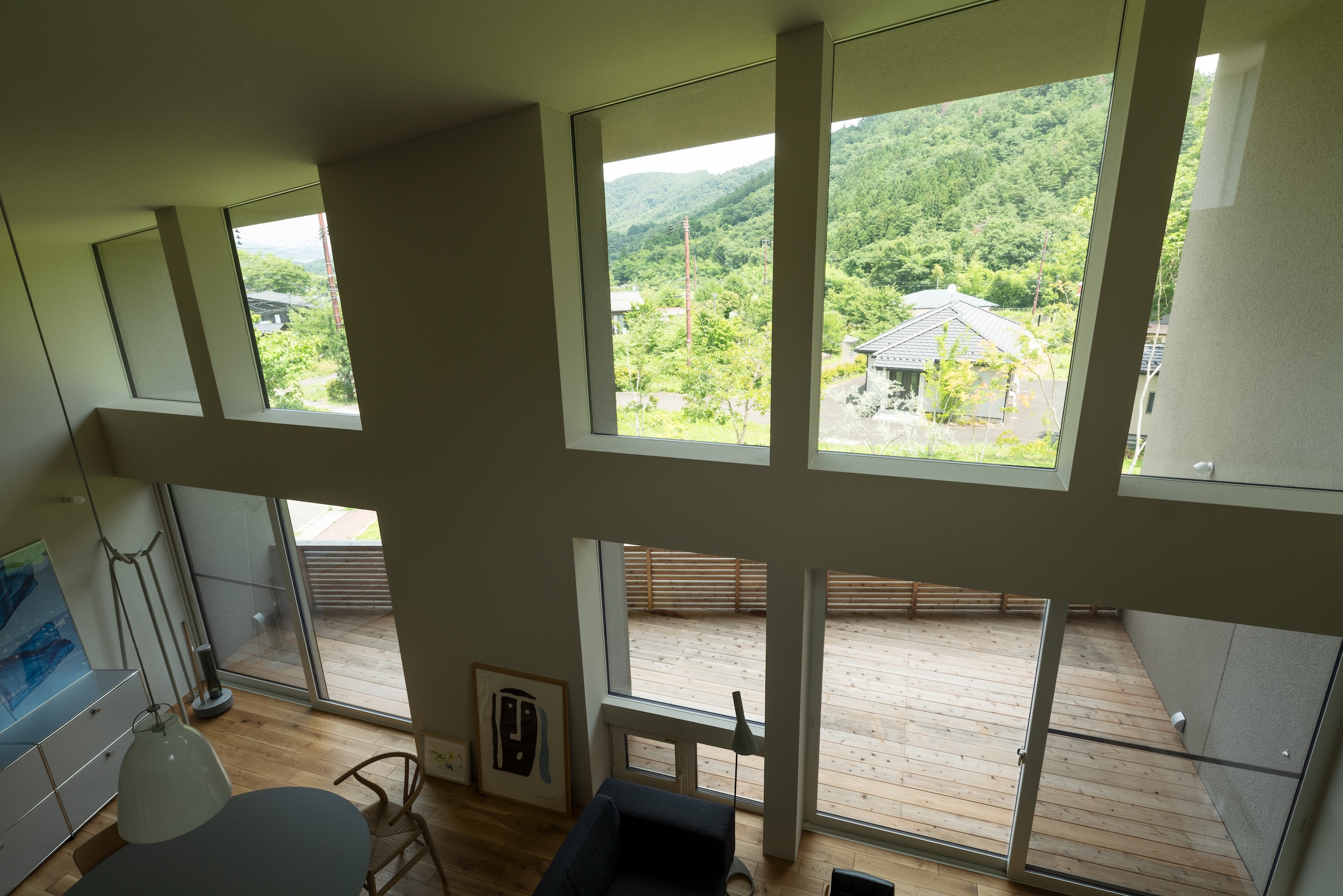
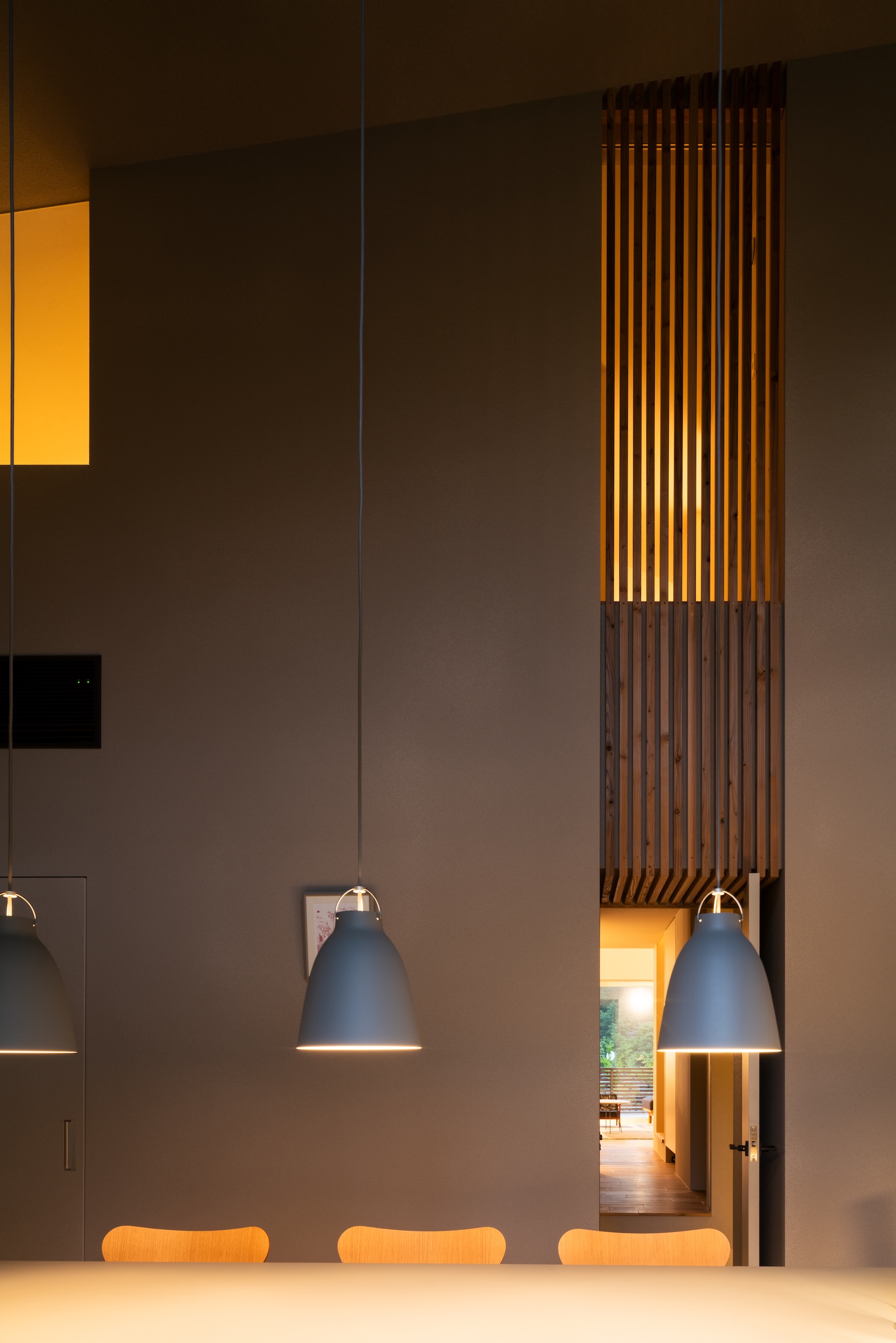
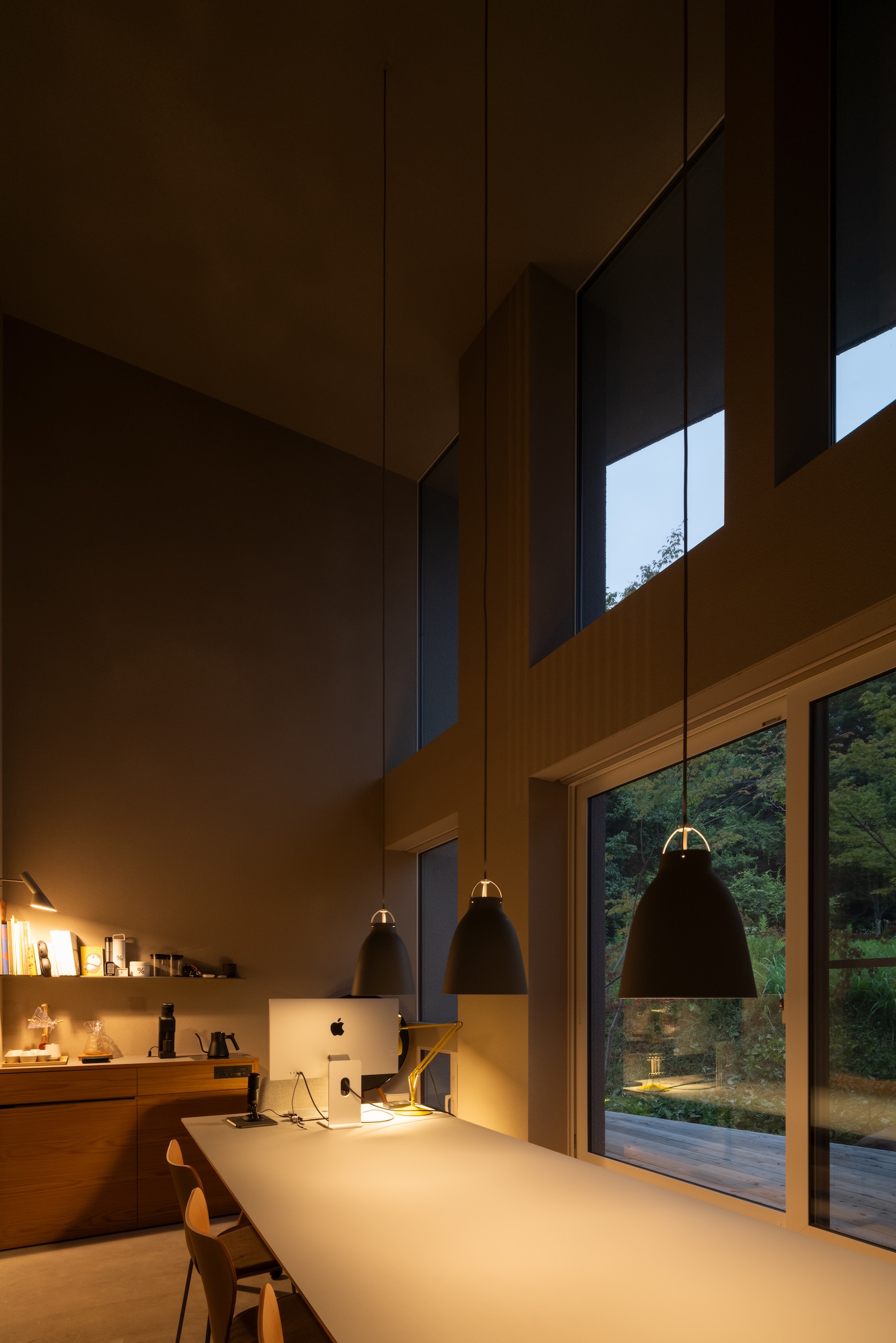
LDKは建物の中心に大きな吹き抜けをもつ一体空間。構造計算を重ね、東西方向に門型フレームを設けることで梁のないスパンを実現し、視線を遮る要素を最小限に抑えた。
開口部上部には梁型を集約し、そこに電動ロールスクリーンを納めることで、意匠性と機能性を両立させている。
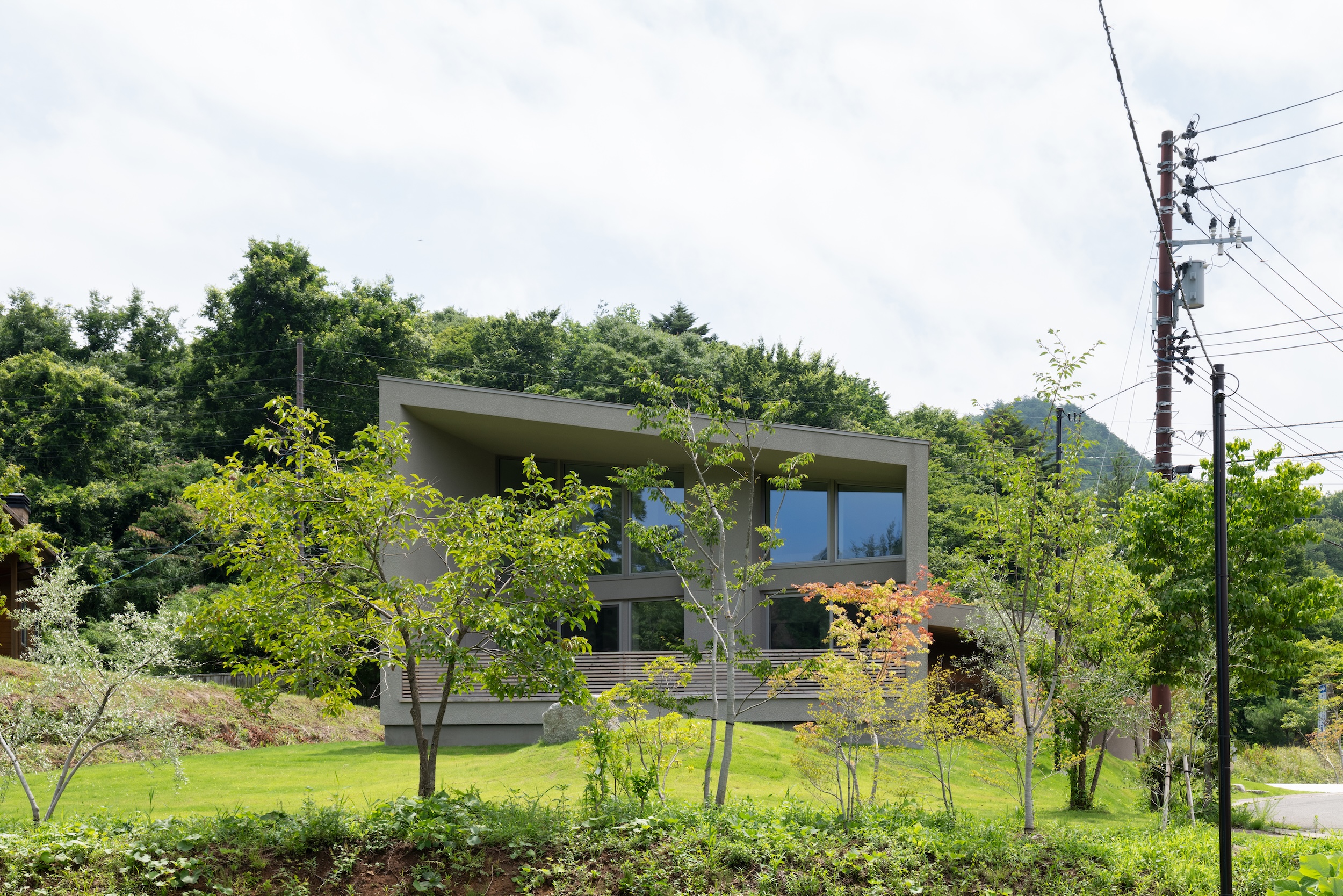
リビング南側には屋根付きのテラスを設け、全面ガラスの開口で外部との一体感を高めた。
浴室は2階に配置し、1階の家事室へ直結するダストシュートを設置。縦方向の動線を意識した立体的なプランとなっている。
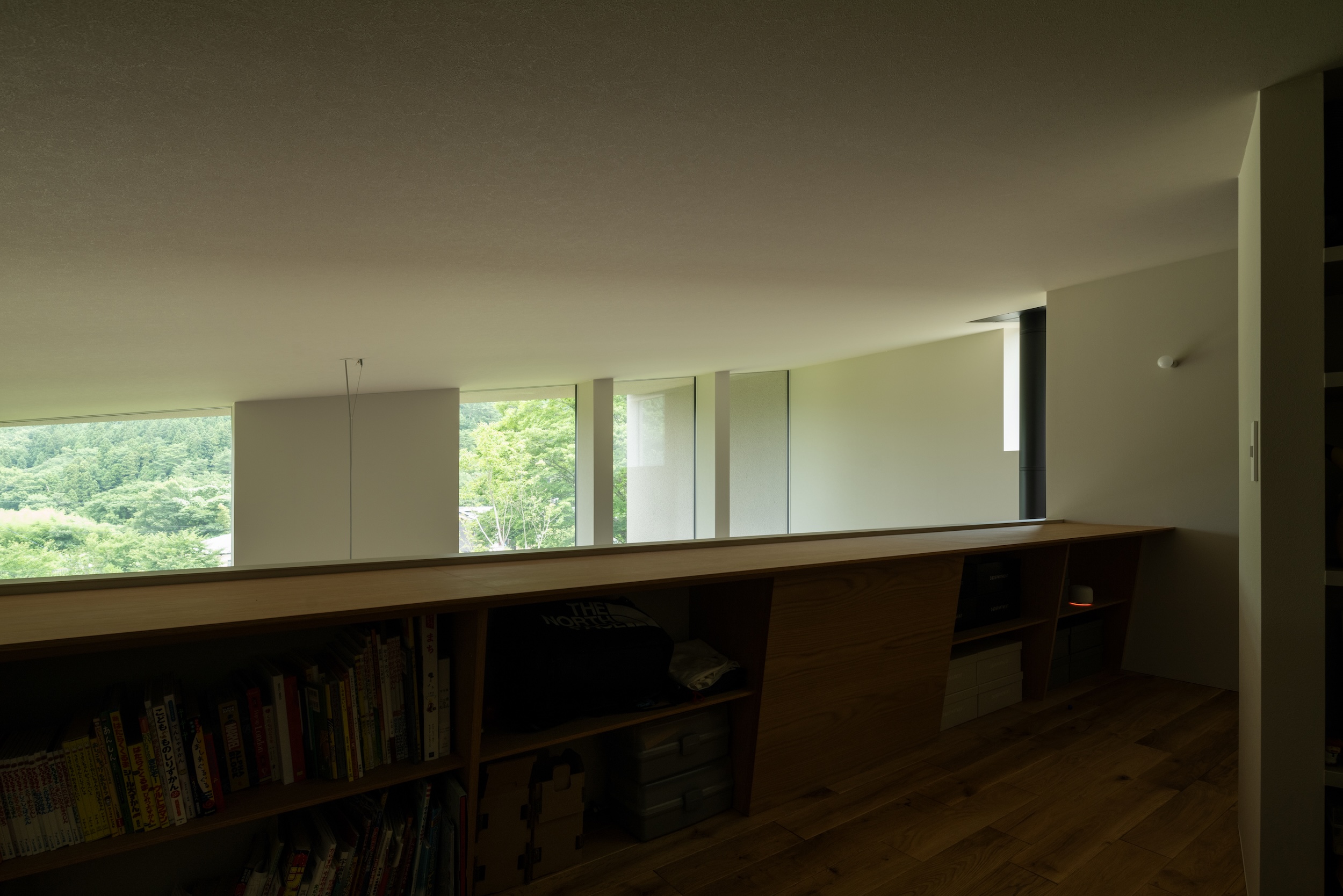
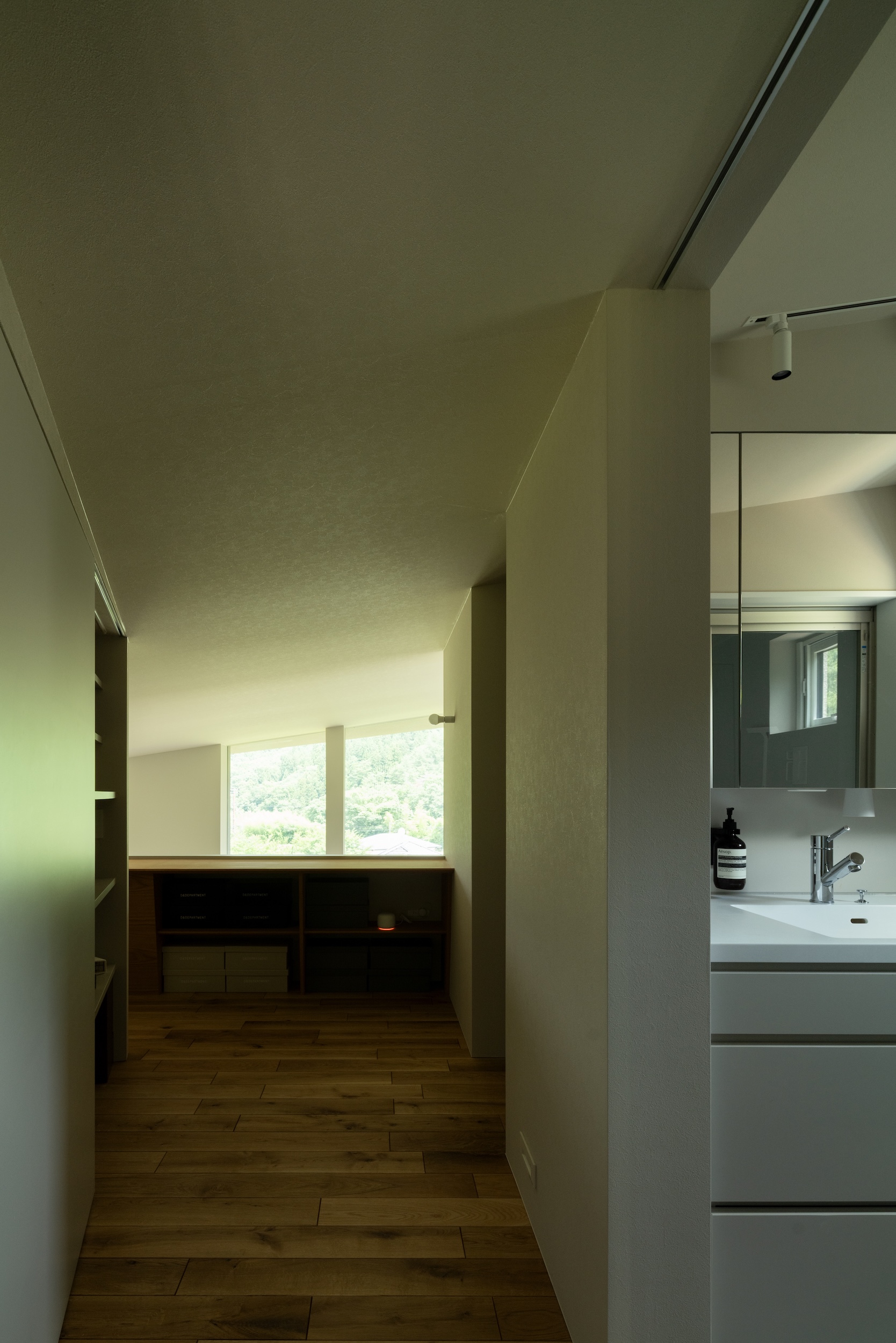
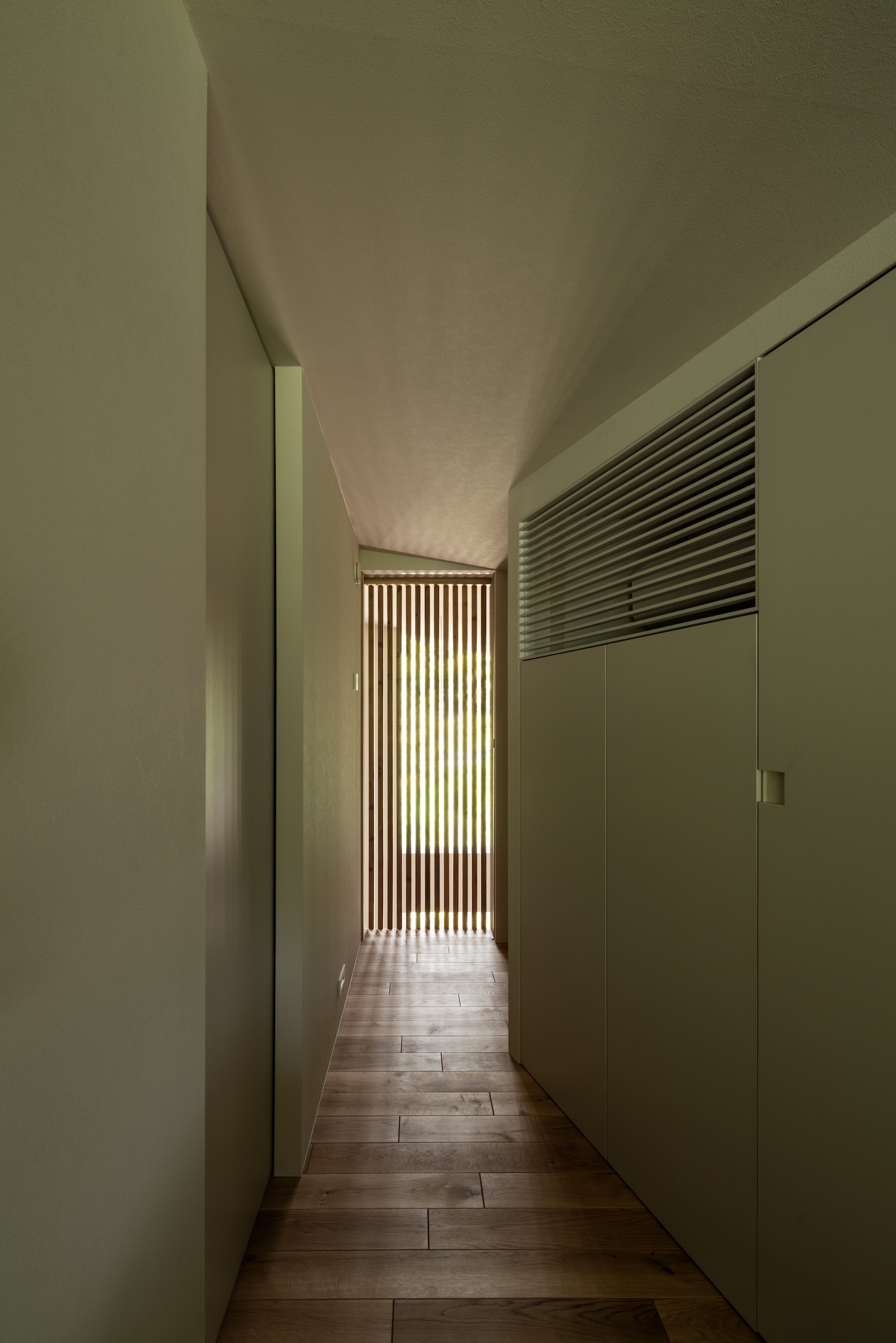
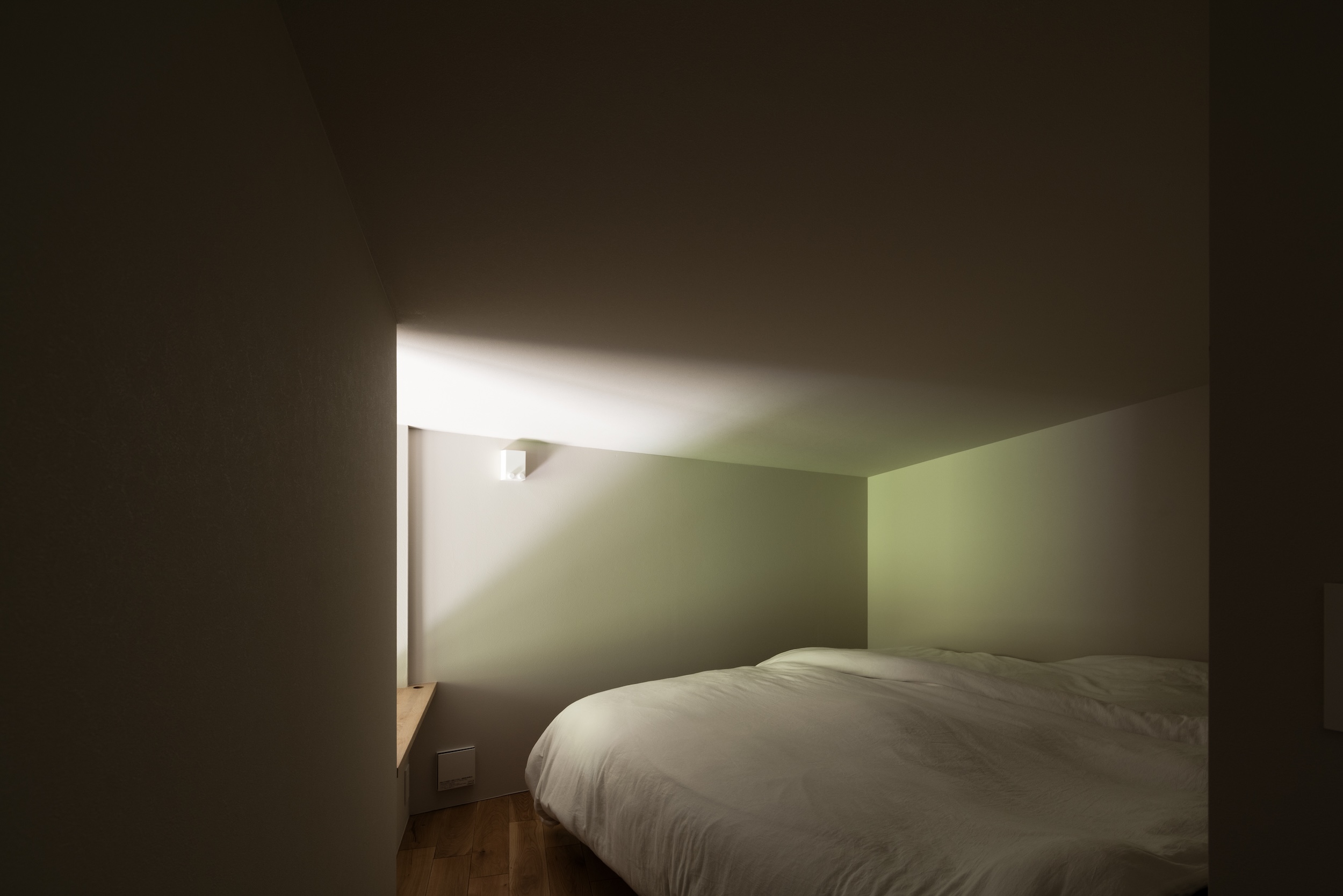
2階は天井の傾斜を生かして空間に変化をつけ、南北の通風を確保。収納棚でゆるやかに仕切られた寝室には、北側の大開口からやわらかな光が差し込み、静かな落ち着きを生んでいる。
全館に行き渡る快適性
南北に設けた大開口により、家全体を風が心地よく通り抜ける。
断熱は高性能グラスウール225mm(充填150mm+付加75mm)、屋根は300mmを採用。
サッシは性能と視認性のバランスに優れた日本製樹脂トリプルガラスを選定した。
冬はデンマーク製薪ストーブの暖気を吹き抜けを通して循環させ、夏はエアコンで冷気を全館に行き渡らせる。
高断熱・高気密仕様により、吹き抜けがあっても室内の温度ムラが少なく、どこにいても心地よい環境が保たれている。
丸森町の魅力を伝える、地域発信の場として
施工や外構工事には丸森の事業者を選定し、地元産の丸森石をはじめ、地域の素材を積極的に活用した。
丸森町のクリエイティブディレクターでもある建主家族が住まうこの家は、地域の素材と人の手によってつくられた住まいであると同時に、丸森町の文化やものづくりの魅力を伝える“地域発信の場”としての役割も担っている。
House in Marumori
A Home Rooted in the Hills of Its Hometown
Marumori is a small town in southern Miyagi Prefecture, nestled along the Abukuma River.
About fifteen minutes by car from the town center, House in Marumori stands on a gentle hillside within a residential area developed on undulating terrain.
The irregularly shaped site slopes softly to the north, while a deep forest spreads out to the south.
With neighboring houses scattered at a comfortable distance, the landscape’s natural openness forms the backdrop for everyday life.
The client, a creative director originally from Marumori, had been living a multi-base lifestyle between Tokyo and Yamagata.
Upon the birth of his child, he decided to return to his hometown and put down roots.
Rather than flattening the site into a typical suburban lot, he envisioned a home that embraces the contours of the land—one that lives with the terrain and the surrounding landscape in a natural, effortless way.
Living in Harmony with the Land
The building follows the eastern boundary of the site while gently pivoting westward toward the road, creating an open north–south orientation.
To reduce development costs, earthworks were kept to a minimum, and the excavated soil was reused within the site to form gentle undulations.
This approach gave the garden and approach path a natural sense of depth and expression.
The house consists of two offset rectangular volumes, simply stacked.
Both the roof and exterior walls are finished with white galvanized steel panels with a soft gray tint, while latticed wood screens at the porch and openings create a play of light and shadow.
The result is a composition that feels calm and open, yet quietly distinctive.
For the approach, locally quarried Marumori stone was used—each piece carefully selected by the client and architect together from the local stockyard.
A Porch and Office that Connect to the Community
The porch was designed as a semi-outdoor space reminiscent of a traditional engawa (veranda).
Filtered through the wooden lattice, it maintains privacy while remaining visually and socially open to the neighborhood—a place where passersby can naturally stop and chat.
It also functions as a community hub, suitable for small gatherings such as barbecues or local markets.
Facing the porch is the home office—a sunken-floor space (doma) with a large south-facing opening.
The same plaster finish used on the exterior walls continues inside, creating a seamless connection between indoors and out.
A built-in bench along the full-height windows allows one to relax and enjoy the forest view beyond, while a combination of fixed and operable windows ensures comfortable ventilation.
As a creative director involved in branding projects for Marumori Town, the client uses this space not only as a workplace but also as a salon for welcoming visitors and collaborators.
An Open Space Where Light and Wind Flow Freely
At the center of the house is a spacious, double-height living–dining–kitchen area.
After careful structural calculations, a series of portal frames running east–west made it possible to eliminate beams across the span, minimizing visual obstructions and enhancing openness.
Beams above the windows were integrated with motorized roller screens, achieving both a clean aesthetic and functional shading.
A covered terrace extends from the south side of the living room, connecting indoors and outdoors through full-height glazing.
The bathroom is located on the second floor, connected to the first-floor utility room via a vertical laundry chute—an efficient, three-dimensional circulation plan.
The second floor makes use of the sloped ceiling to create spatial variety and ensure cross-ventilation from north to south.
In the softly lit bedroom, open shelving defines the space loosely, while gentle northern light filters in through a large window, creating a serene and restful atmosphere.
Comfort That Fills the Entire House
Large openings to the north and south allow breezes to flow naturally through the house.
Walls are insulated with 225 mm of high-performance glass wool (150 mm between studs + 75 mm exterior), and the roof with 300 mm.
Triple-glazed resin windows made in Japan were chosen for their balance of performance and visual clarity.
In winter, the warmth from a Danish wood stove circulates through the central atrium; in summer, air-conditioning cools the entire house efficiently.
Thanks to its high insulation and airtight construction, the indoor temperature remains consistent and comfortable throughout, even with the large open volume.
A Place That Shares the Spirit of Marumori
Local builders and craftspeople were selected for the construction and landscaping, and regional materials such as Marumori stone were used extensively.
For the client and his family—deeply involved in promoting Marumori’s identity and creativity—this home is not only a place to live but also a showcase for the town’s materials, craftsmanship, and culture.
House in Marumori thus stands as both a residence and a living platform for sharing the charm and potential of the region with the wider world.
丸森の家
所在地/宮城県丸森町
主要用途/住宅
<設計>
意匠 菊池佳晴建築設計事務所 担当/菊池佳晴 片山佳紀 古山紗帆
構造 リズムデザイン 担当/中田 琢史 斉藤 美幸
<施工>
建築 今野建業 担当/今野真幸 大工/佐久間
植栽 伊具緑化 担当/阿部秀一
<構造・構法>
主要構造・構法/木造在来構法
基礎/べた基礎
構造/耐震等級2(許容応力度計算)
<規模>
階数/2階建
軒高/6165mm 最高高さ/6275mm
延床面積/建築物167.81m2(50.7坪)
<工程>
設計期間/2020年5月〜2021年4月
工事期間/2021年5月〜2022年2月
<敷地条件>
都市計画区域外
用途地域の指定なし
許容建蔽率70% 許容容積率200%
地域地区 22条地域
地区計画 なし
道路幅員 西48.76m(公道)
<外部仕上げ>
屋根/ガルバリウム鋼板t0.35横葺き
外壁/ジョリパットネオJQ-620ロック仕上(アイカ工業)
開口部/木製トリプルサッシ(ノルド)
樹脂トリプルサッシ(YKKap 430)
日射遮蔽/庇
<内部仕上げ>
床/北海道なら節ありフローリングt15(チャネルオリジナル)
壁/ビニルクロス、ジョリパット
天井/ビニルクロス、ジョリパット
キッチン/製作キッチン
レンジフード/FY+9HTC-S(panasonic)
<浴室>
ユニットバス
<設備システム>
暖房/エアコン
冷房/エアコン
換気/3種換気
給排水 給水方式/直結
排水方式/下水道直結
給湯 給湯方式/エコキュート460L(三菱)
<断熱仕様>
基礎下/防蟻ビーズ法ポリスチレンフォーム50mm全面敷き
基礎/防蟻ビーズ法ポリスチレンフォーム100mm
壁 /高性能グラスウール16kg225mm
屋根/高性能グラスウール32kg300mm
<温熱計算>
Ua値/0.25W/m2K
C値/0.30cm2/m2
<撮影>
西川公朗