
WORKS
栗生の家
栗生の家
平屋の特性を踏まえた最適解を模索
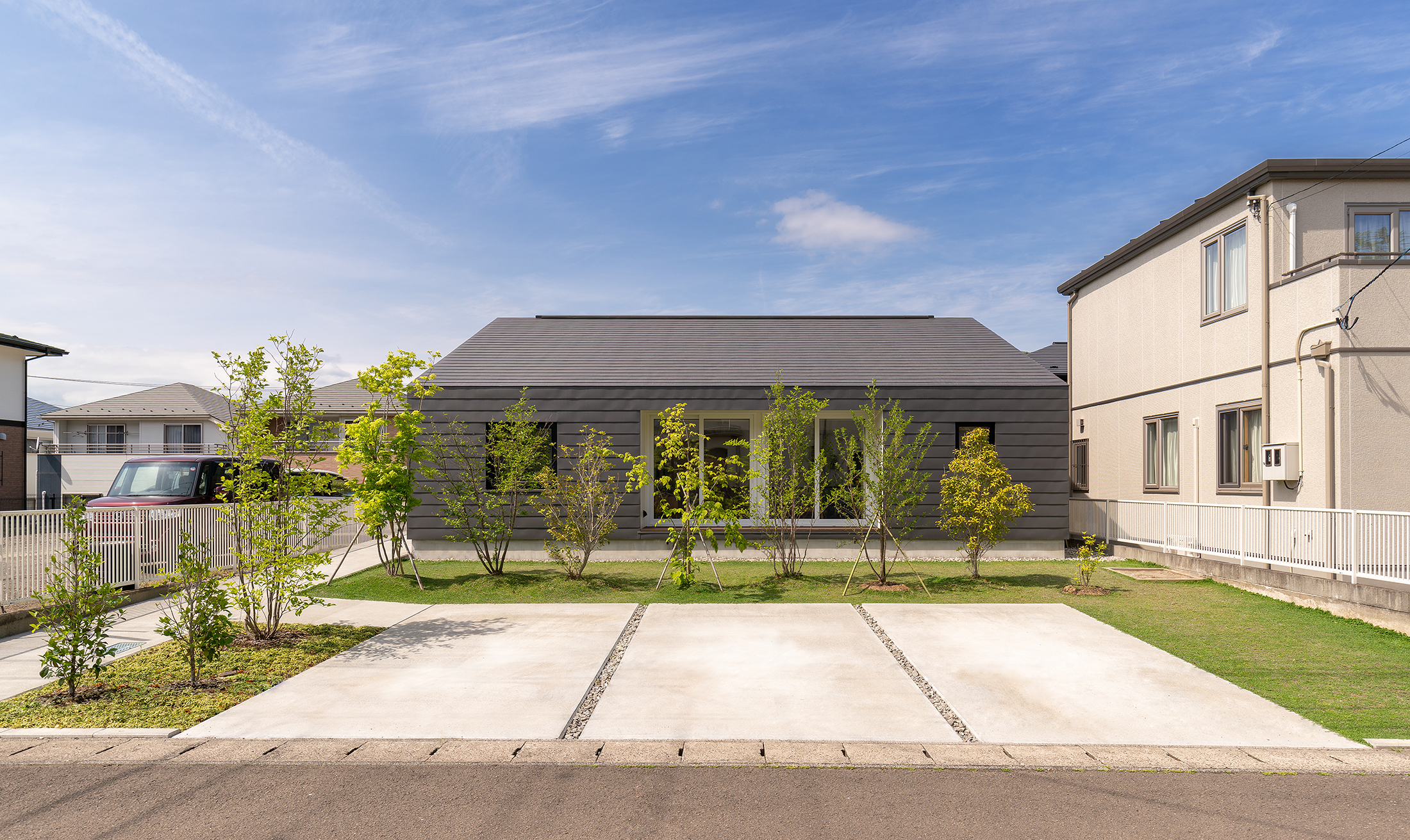
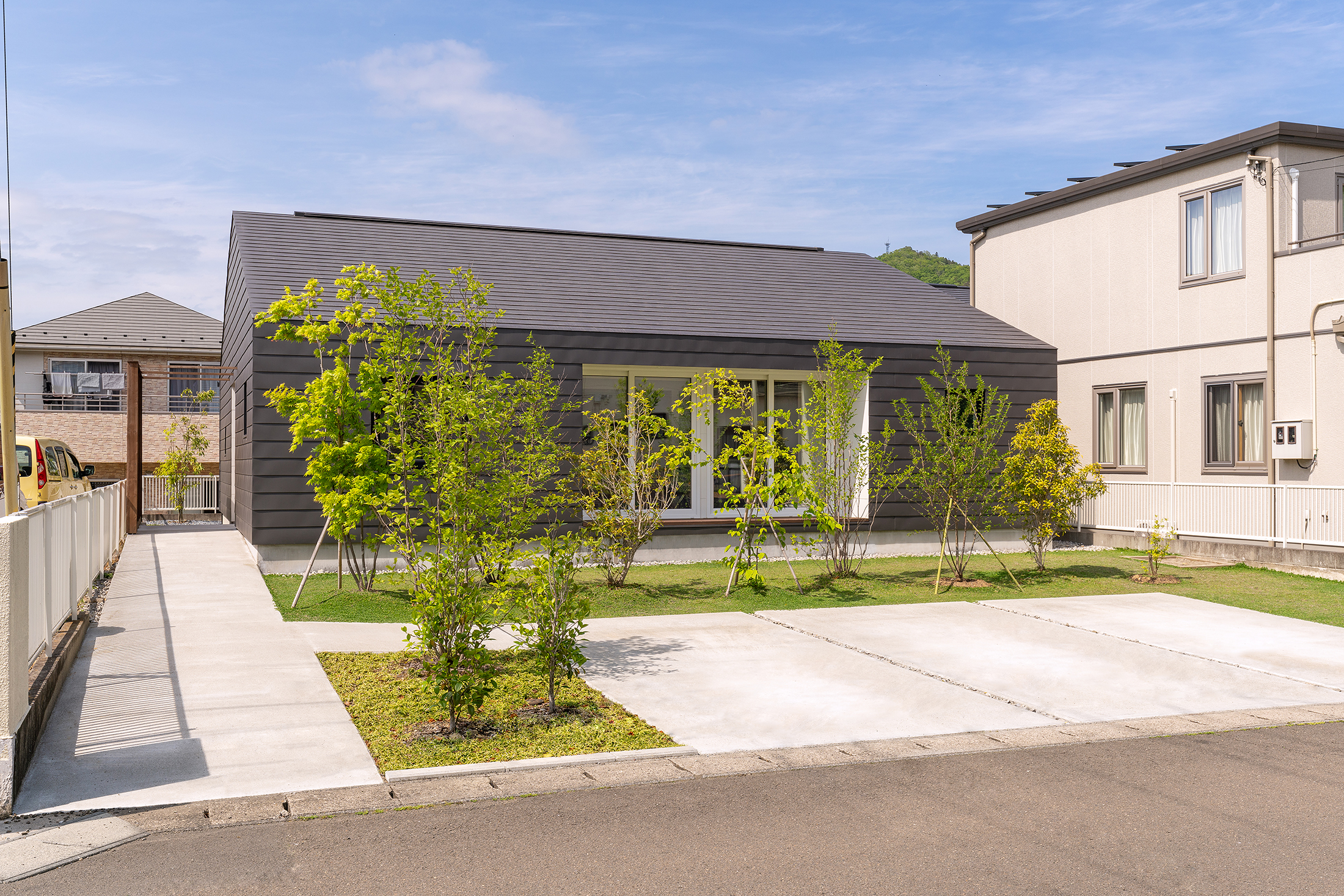
仙台市郊外の住宅地に計画した平屋の住まいである。建物はほぼ正方形とし、その上に南北へ傾斜する切妻屋根を架けた、単純明快な構成とした。ワンフロアで生活が完結する利便性、将来を見据えた安心感、設備を集約できる合理性など、平屋には多くの利点がある。一方で、総二階に比べて外皮面積が増えるため断熱・気密計画のコストは上がりやすい。さらに南面を十分に確保しづらいことから、北側居室の採光も課題となる。平屋の合理性と環境性能をいかに両立させるか。それが本計画の出発点であった。
平屋における高断熱・高気密への試行
本邸の竣工は2016年。当時は高断熱・高気密住宅に本格的に取り組む担い手はまだ多くなく、私自身も挑戦を始めて数年の時期であった。知見を深めながら設計に臨んだ一棟である。
屋根には厚い断熱層を確保し、壁は充填断熱と付加断熱を併用、基礎断熱も施した。開口部には樹脂サッシとトリプルガラスを採用している。現在では標準仕様となりつつあるが、当時としては先進的な内容であった。
換気は第一種換気を採用し、冷暖房はエアコン2台で全館をまかなう。過度な設備に依存せず安定した温熱環境を保てるのは、高い外皮性能ゆえである。外皮面積の大きい平屋では、性能設計の質がそのまま空間の質に直結する。本邸はそのことを強く実感させた住宅となった。
必要最小限の中に機能と快適性を組み込む
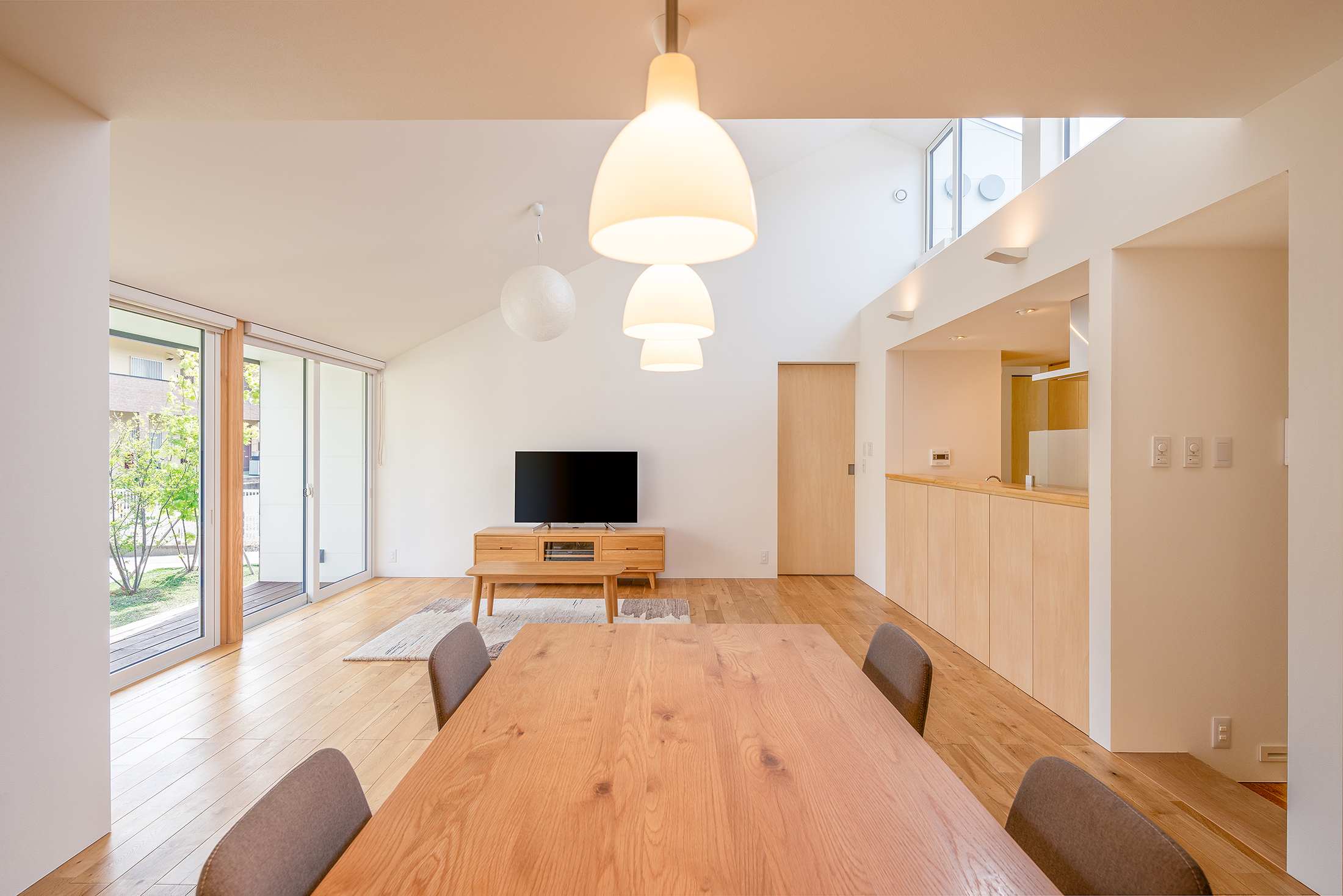
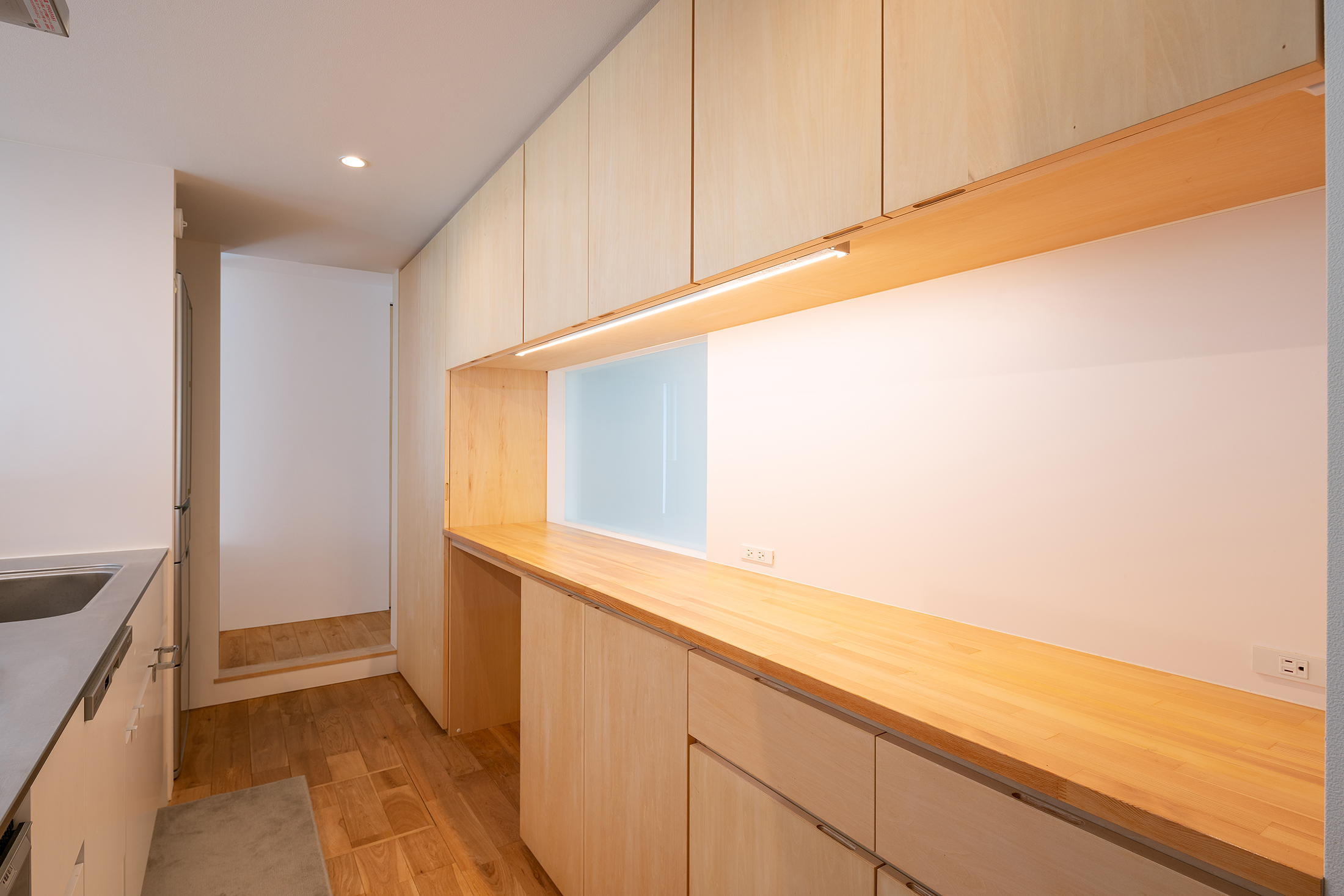
間取りは極めてシンプルかつ合理的である。キッチンを中央に据え、そこを基点とした回遊動線によって、リビングダイニング、子ども部屋、主寝室、水まわりへと短い歩数でアクセスできる構成とした。
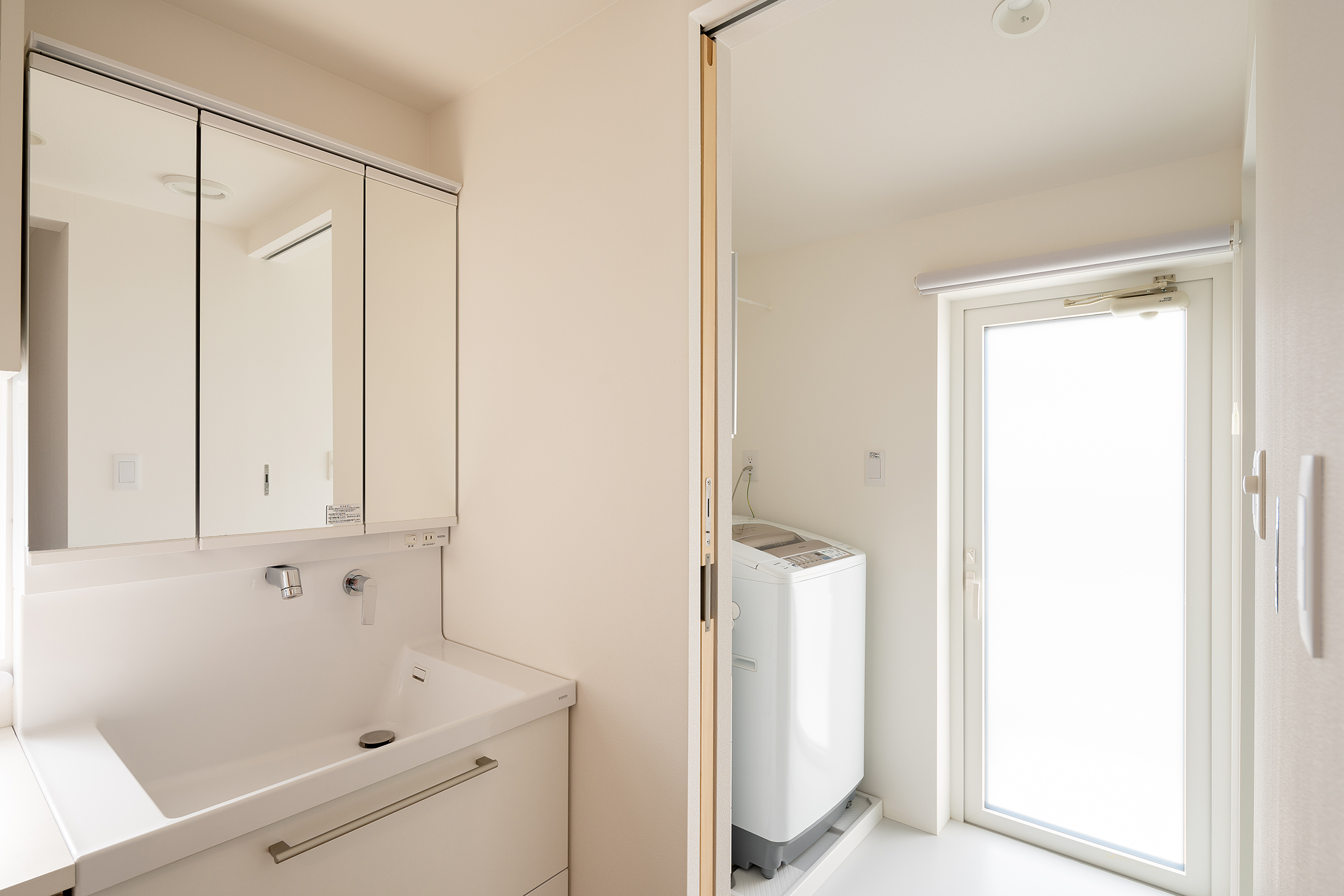
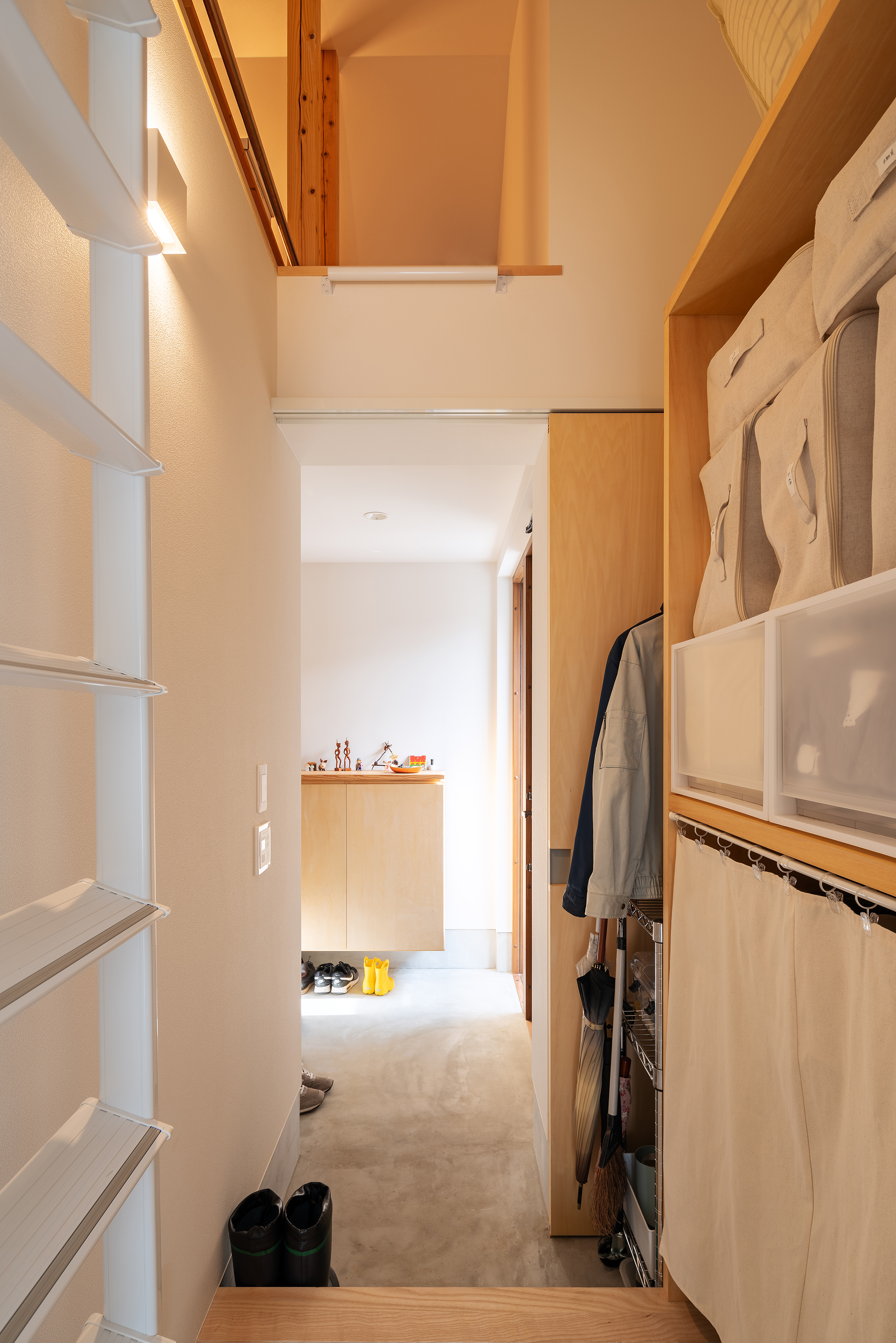
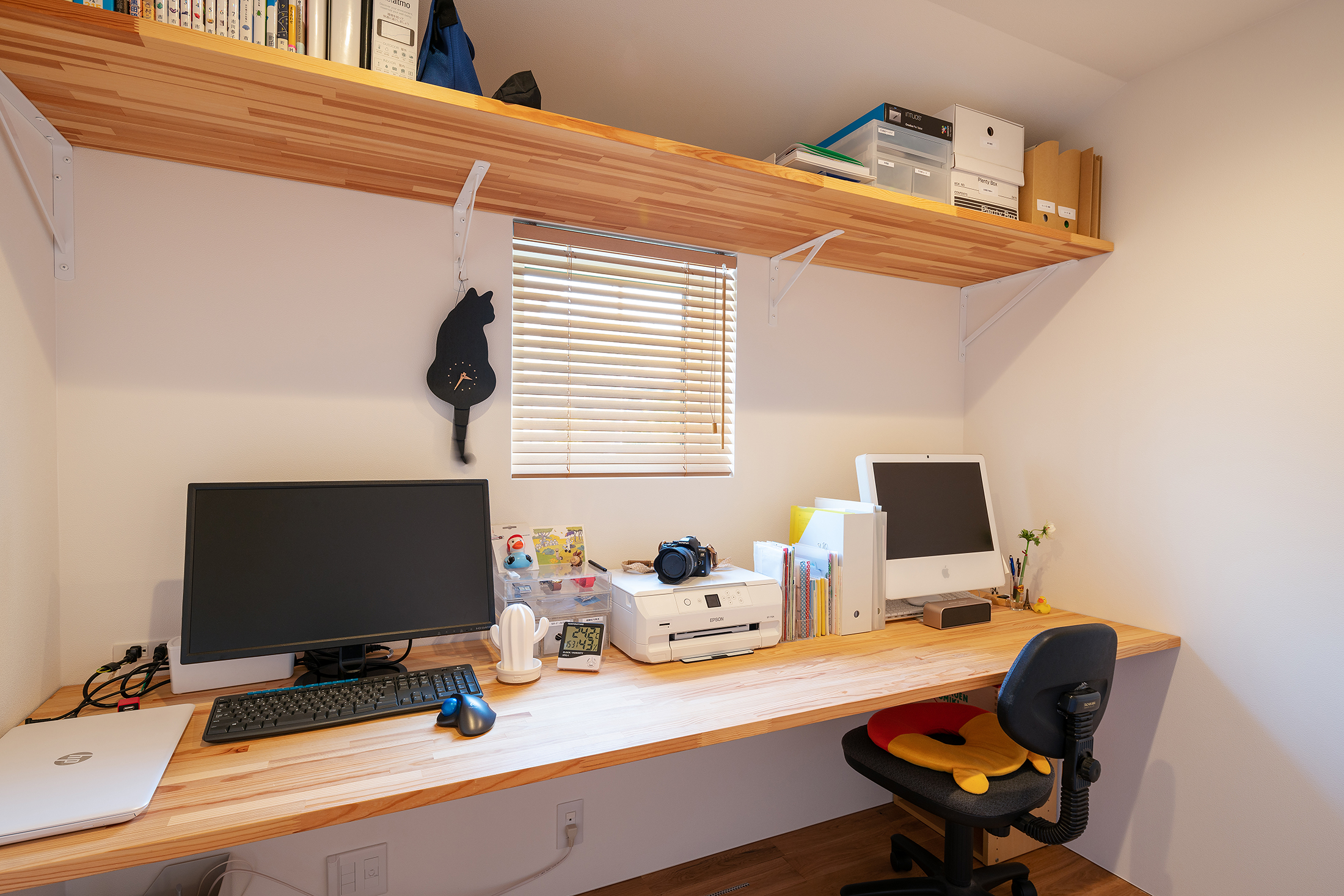
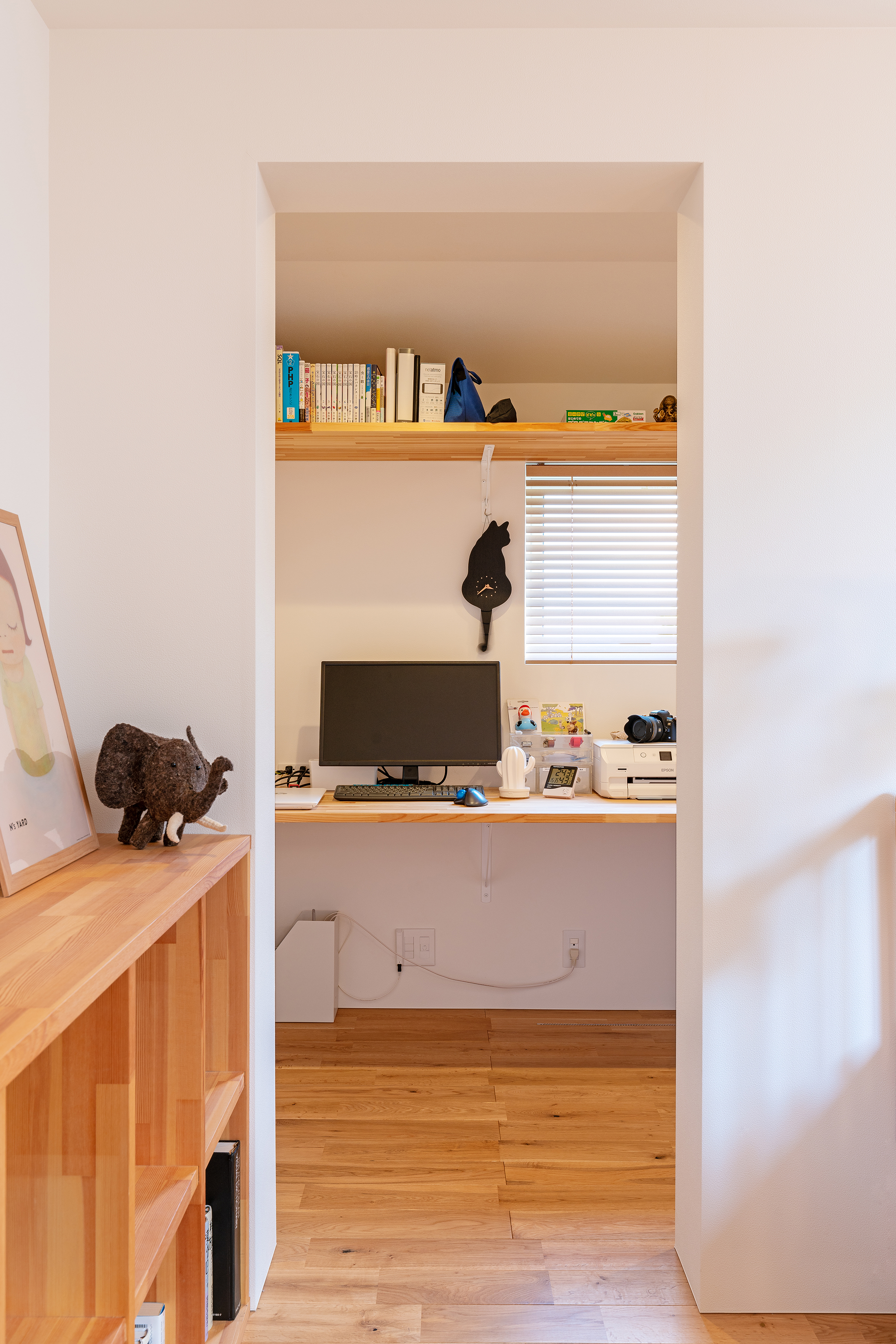
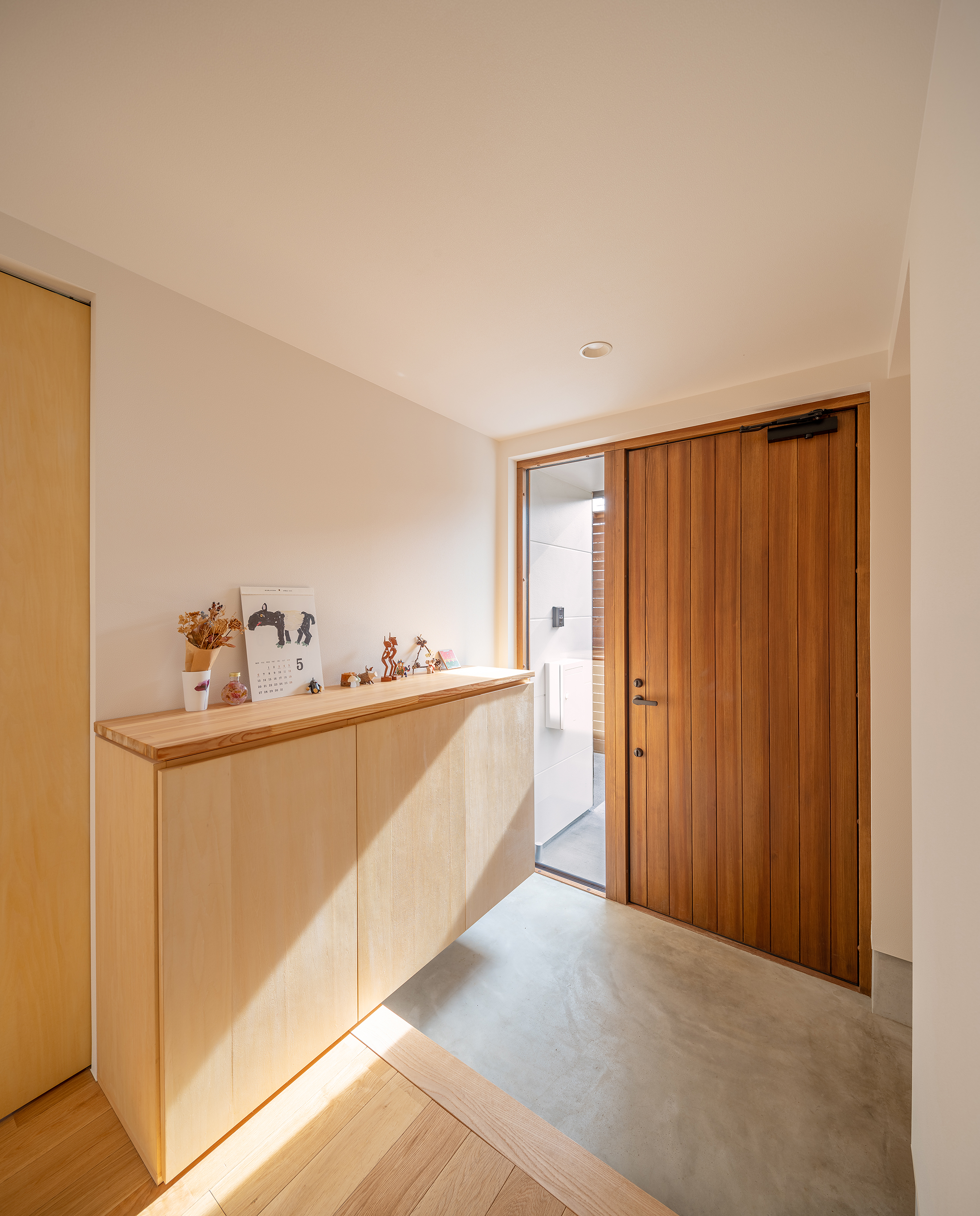
玄関から収納、洗面、脱衣へと一直線につながる動線も、日常動作の流れを踏まえた計画である。機能的な平面に書斎や十分な容量を備えた小屋裏収納を加え、日々の居住性を補強した。
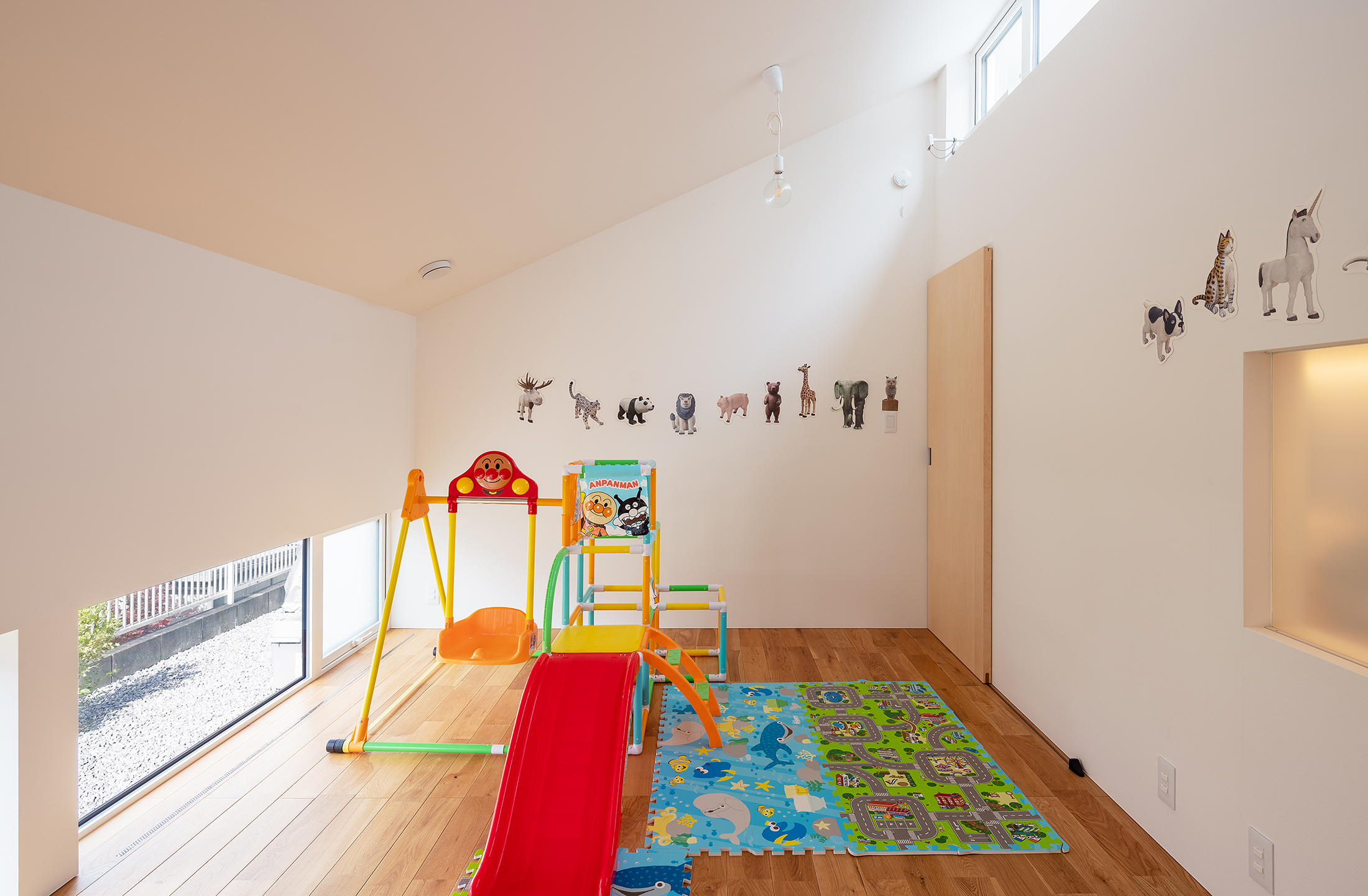
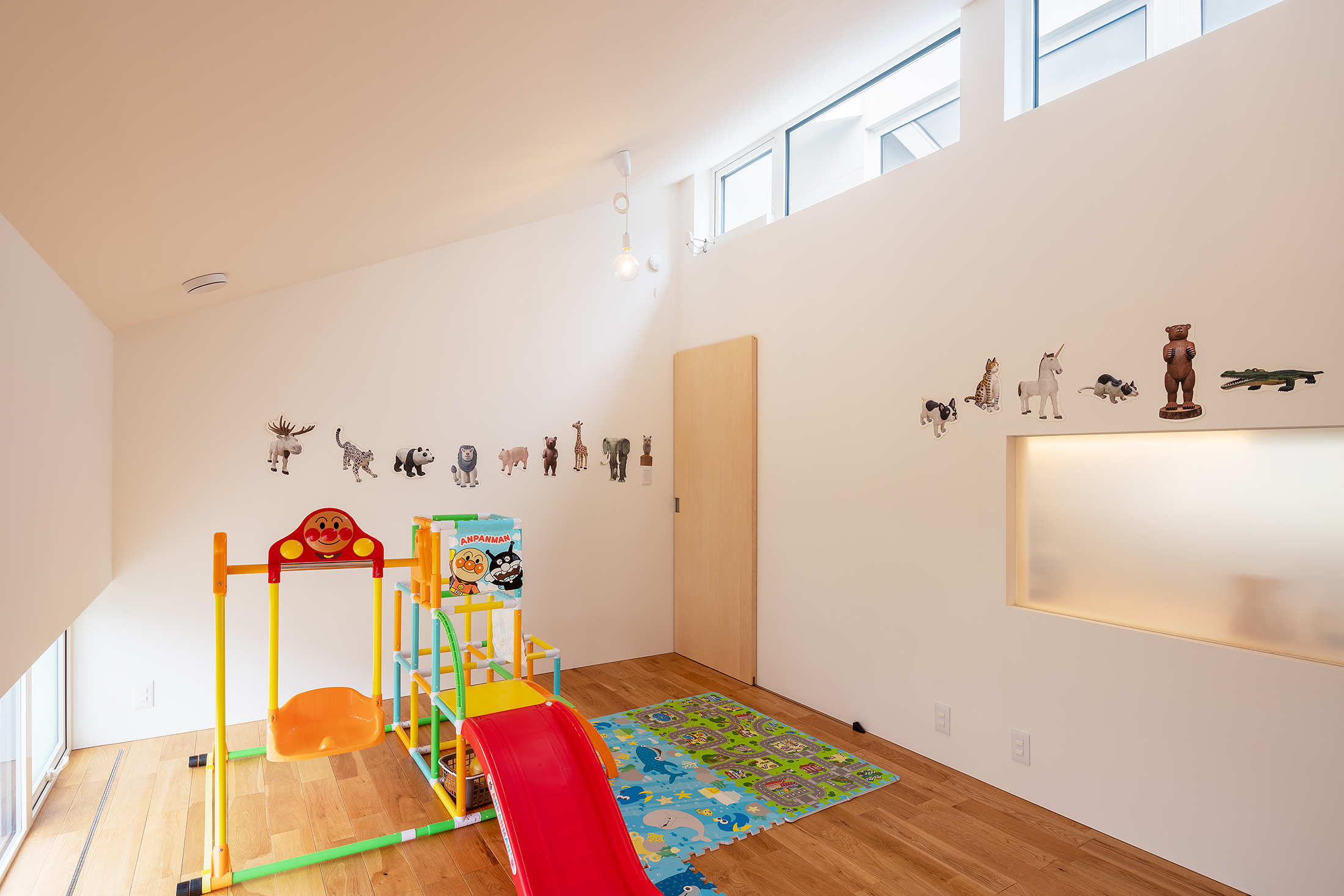
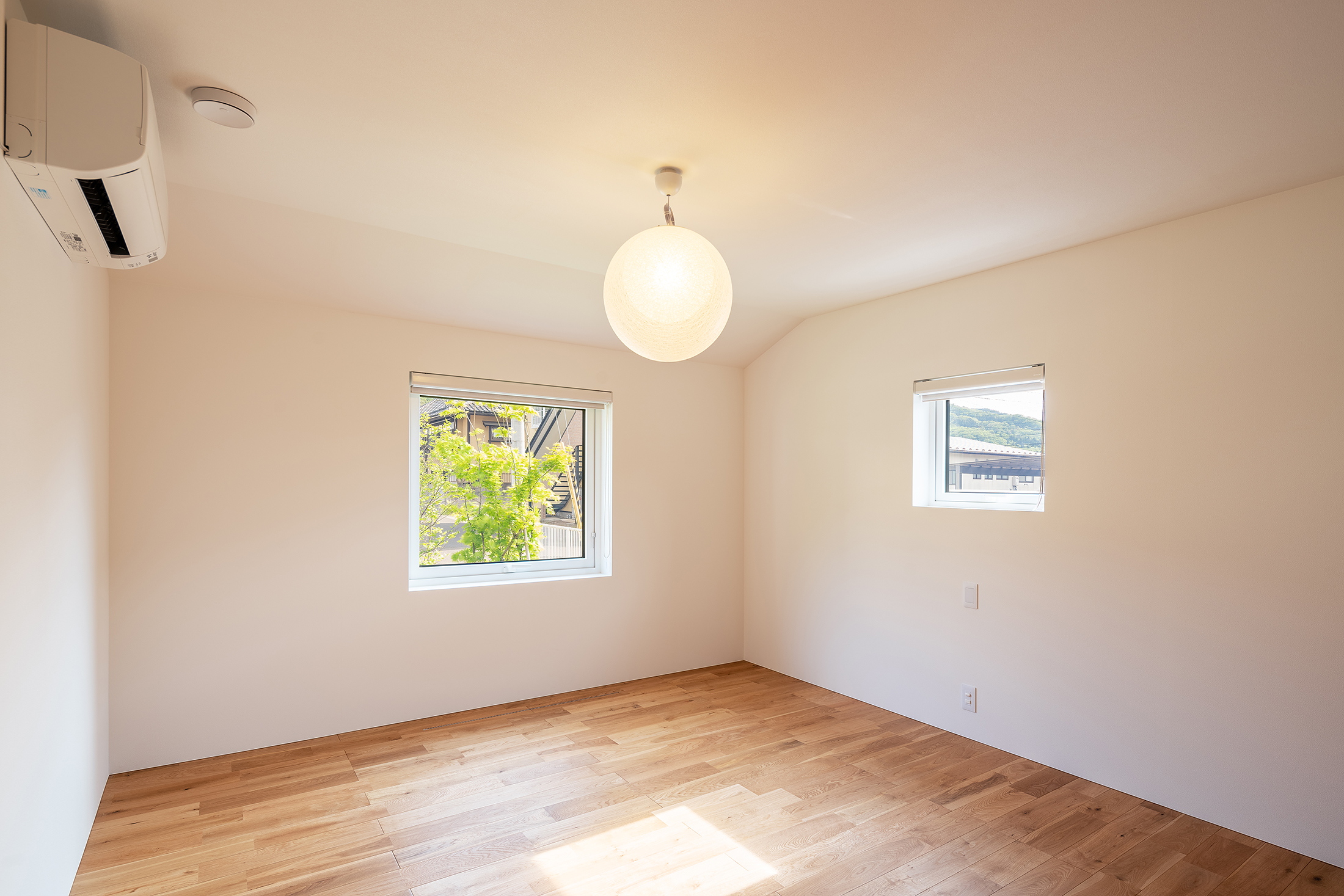
さらに、両親との同居を見据えた客間や、将来二室に分けられる子ども室など、変化に対応できる余白も確保している。必要最小限に整理しながらも、生活の合理性と将来性を自然に取り込んだ構成である。
ハイサイドライトがもたらす「空を見る暮らし」
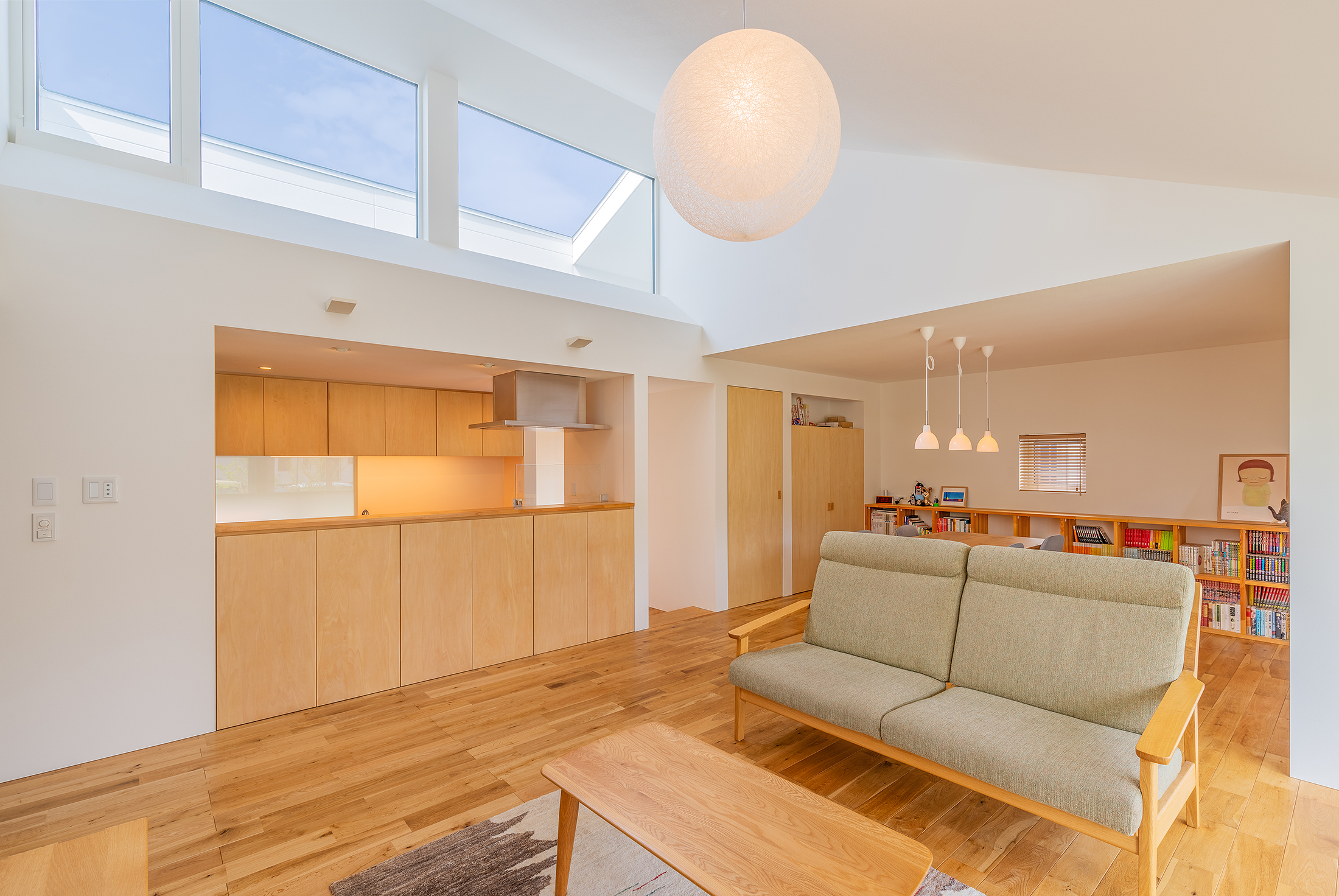
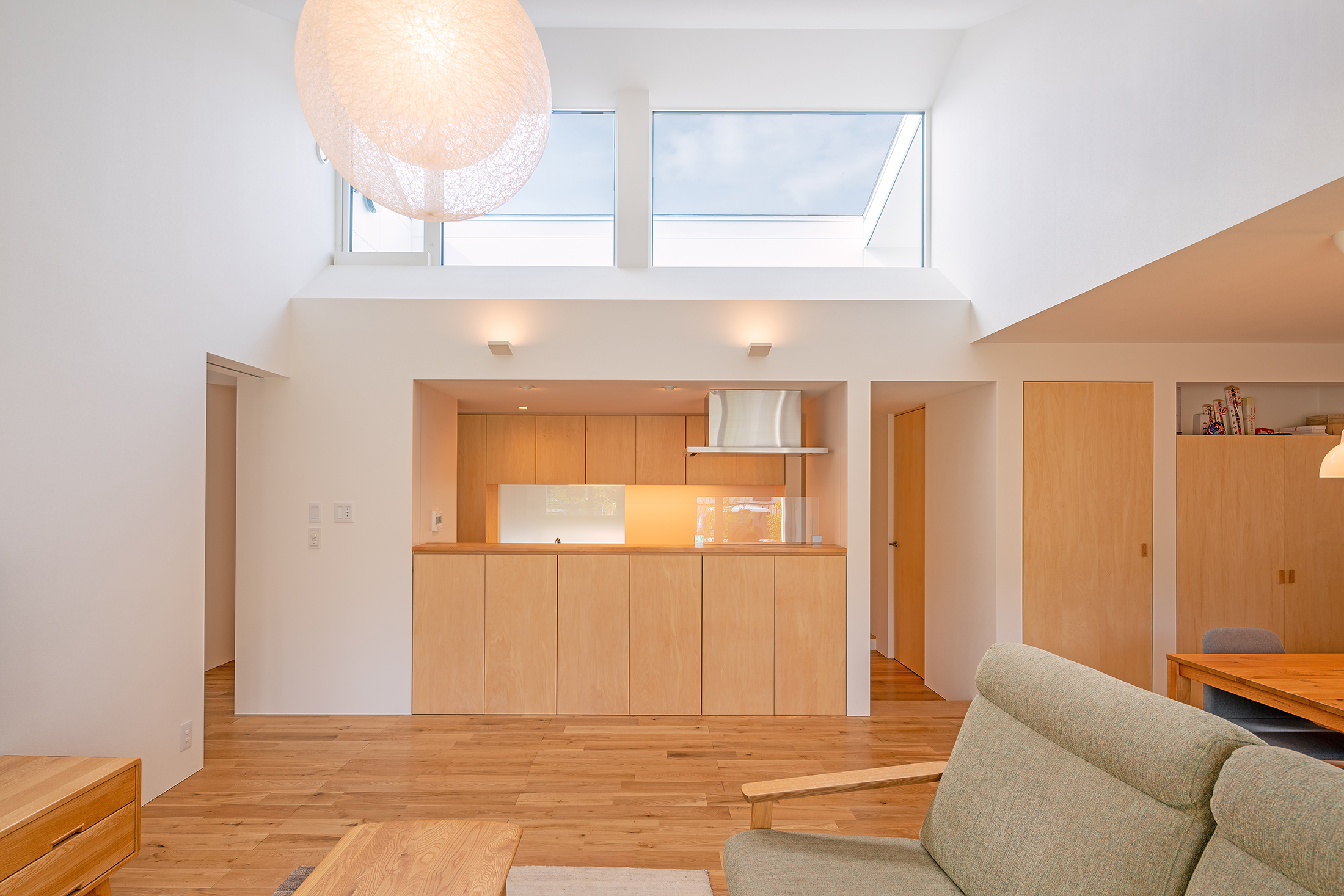
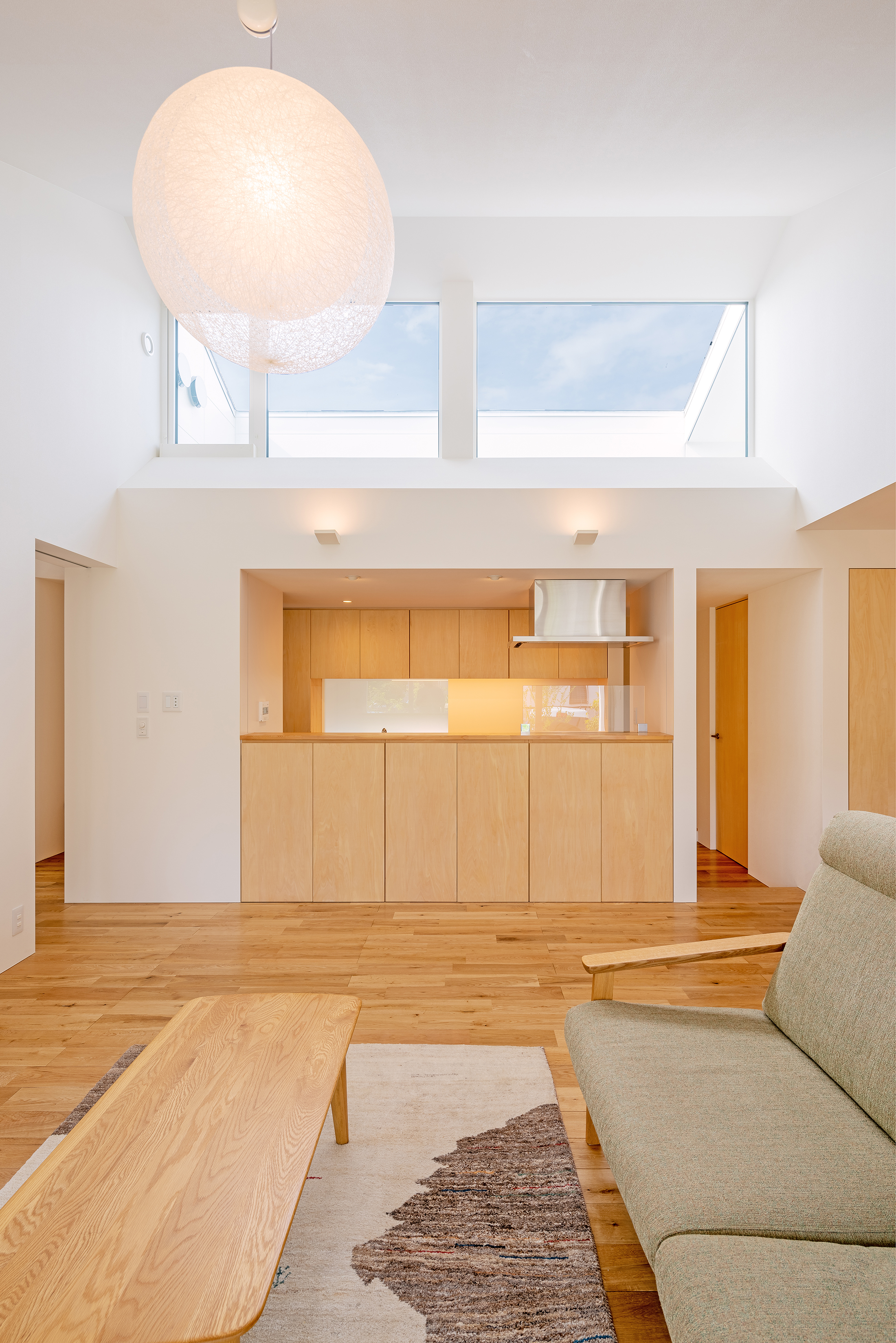
最大のテーマは北側居室、特に子ども部屋への採光であった。その解決策として、キッチン上部の天井をぐっと下げて凹型に切り欠き、南北の側面にハイサイドライトを設ける断面操作を行った。
窓を開ければ通風が生まれ、リビング南面の窓や子ども室北側の地窓と併せて開放することで重力換気も促される。何より、ハイサイドライト越しに空を見上げる日常を住まいに組み込めたことが大きな成果であった。
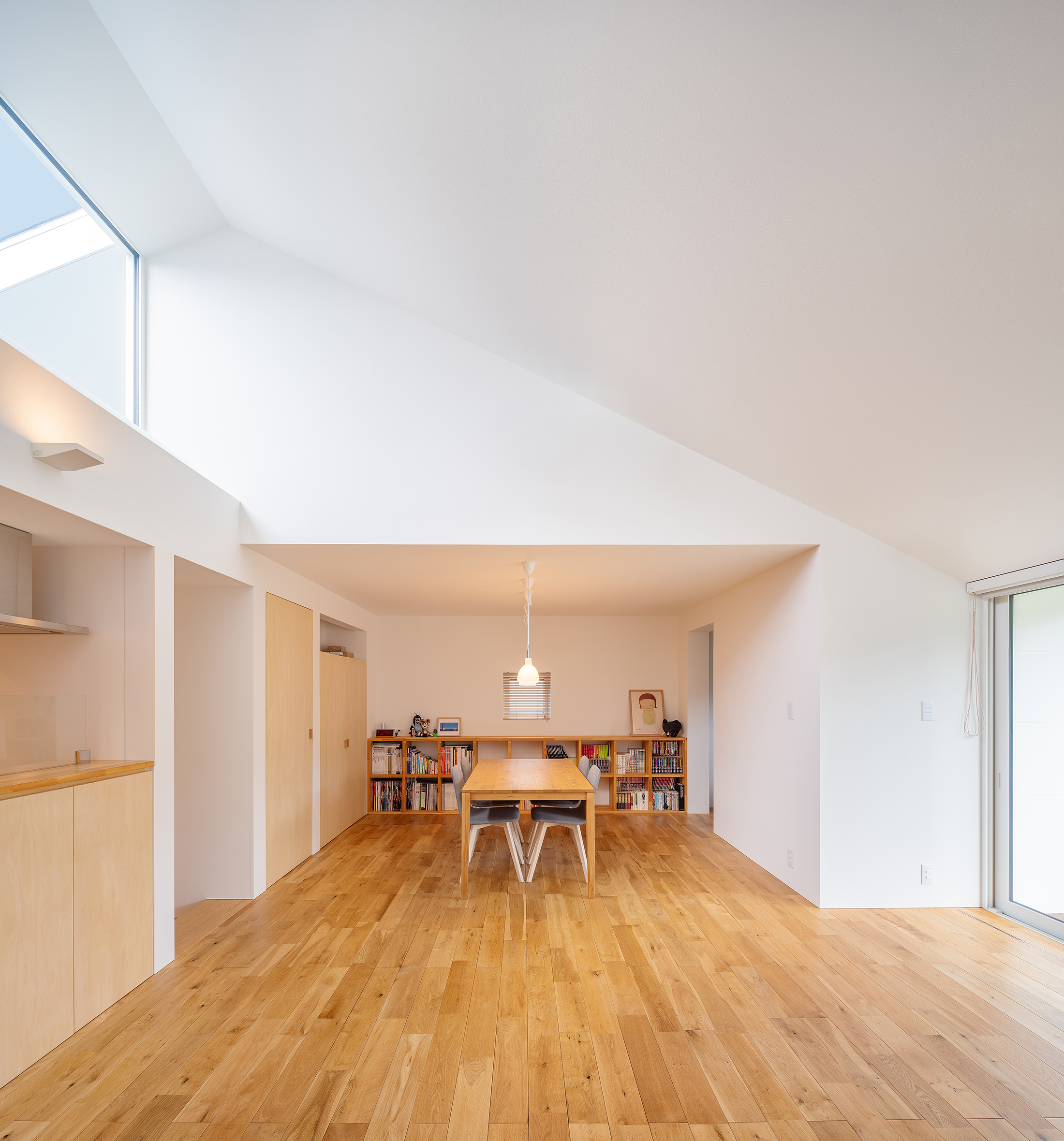
平屋の特性を活かし、空間ごとに天井高を変えている点も特徴である。容積と空調効率のバランスを図りつつ全体の高さは抑え、リビングと子ども室は屋根なりの勾配天井として開放感を確保。ダイニングや寝室は低めに設定し、落ち着きを演出している。
性能・動線・光と風が生む上質な住み心地
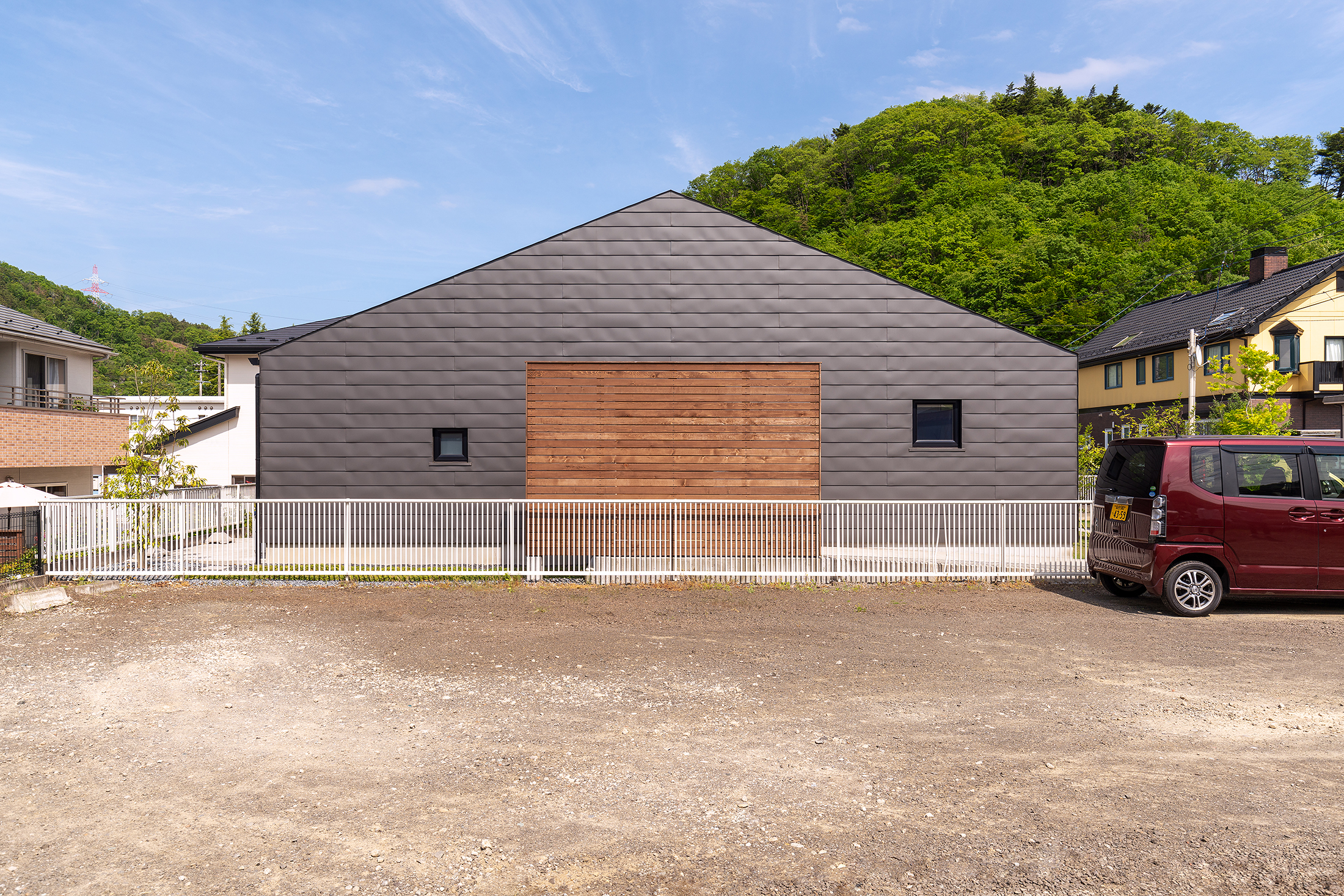
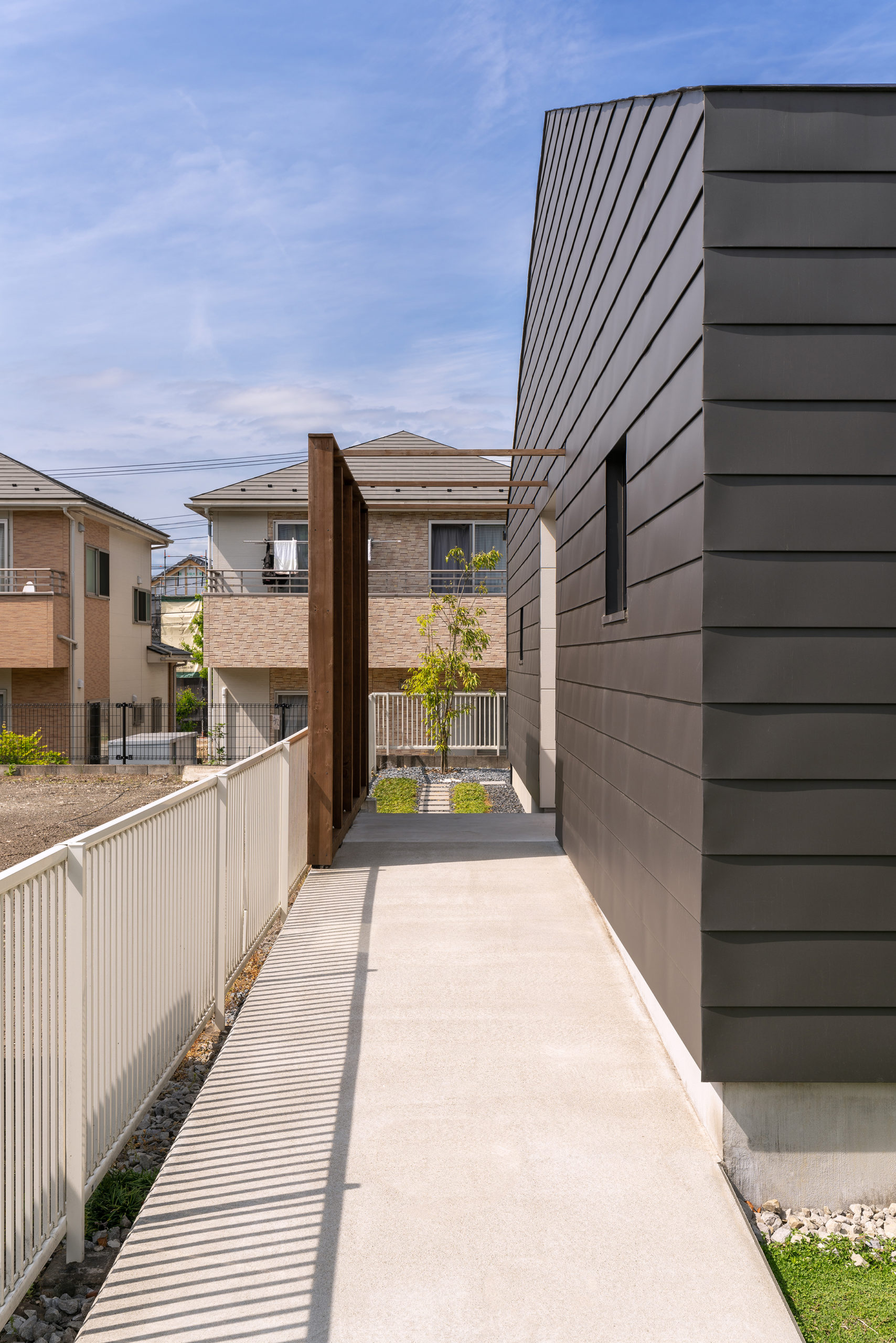
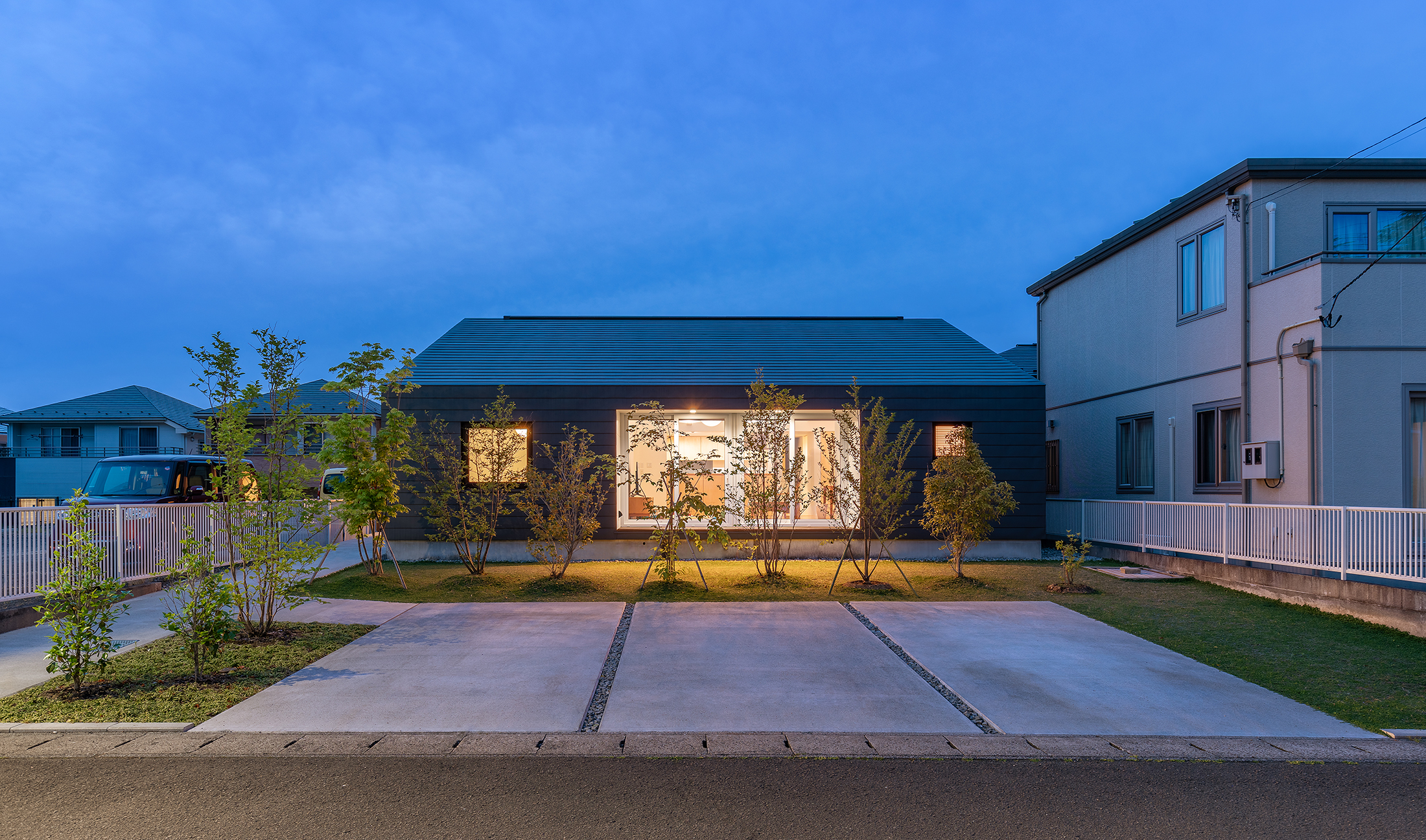
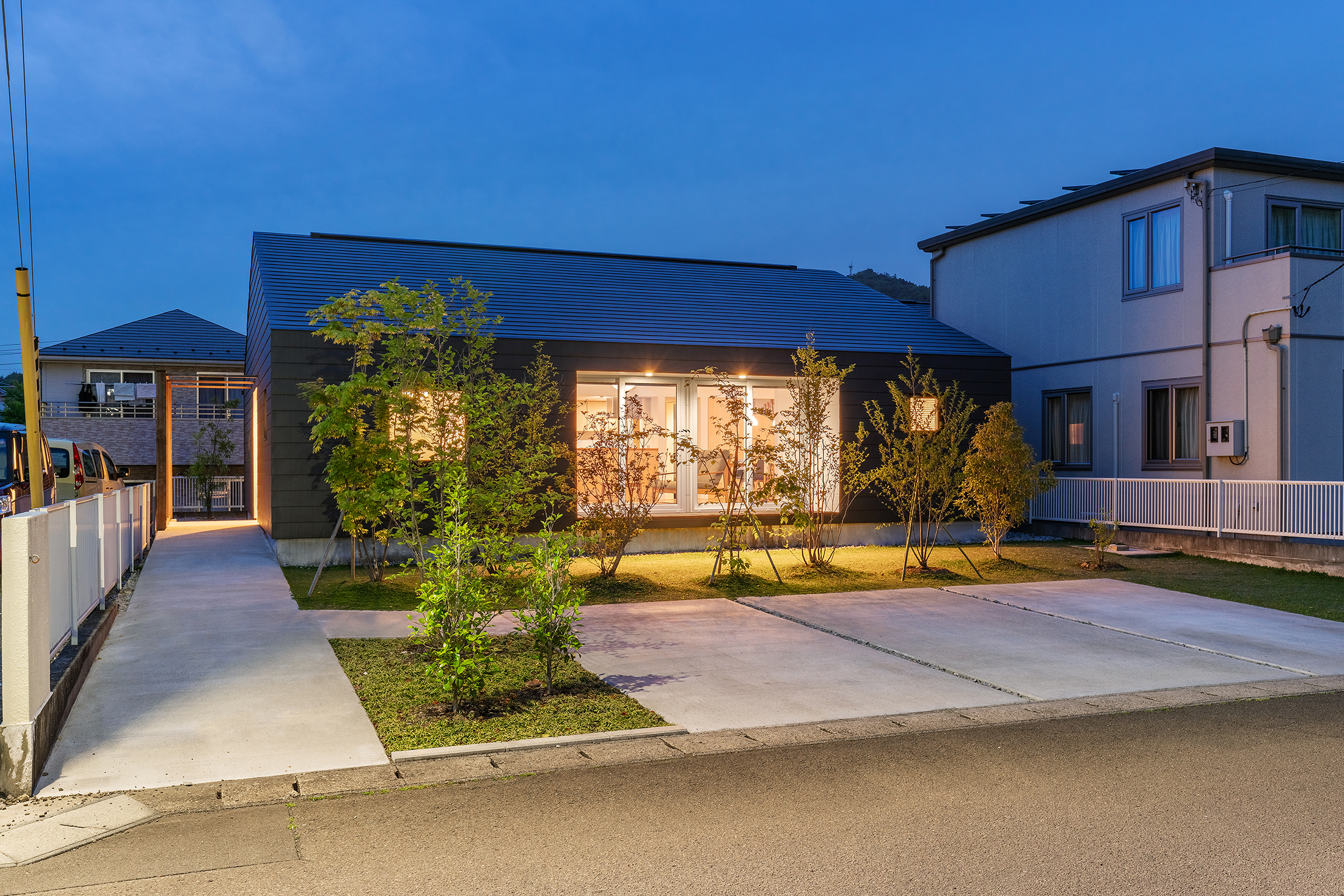
外壁と屋根には同一のガルバリウム鋼板を用い、長尺材を現場加工しながら施工した。目地を揃え、軒や見切りの納まりを整理することで、輪郭の明快なマッシブな箱として立ち上がっている。
西側玄関前には木塀を設け、南面には植栽を配し、周囲の視線をやわらかく遮る構成とした。
内装は北海道産ナラ無垢材の床、クロス、シナ合板による造作建具や収納で構成している。高価な素材に依らずとも、性能、動線、光と風の質を統合すれば、住まいは十分に上質たり得る。その確信を本邸を通して得ることができた。
“用の美”を追求した平屋のスタンダード
切妻屋根もハイサイドライトも、中央に据えたキッチンも、抑制的な外観も、すべては採光・通風・温熱環境・動線計画といった要請から導かれた帰結である。
「必要最小限の要素」「合理性」「快適性」を高次元で掛け合わせ、機能に形態を従わせる。
この原則を平屋住宅で初めて明確に実践できたのが本計画であり、私にとって平屋設計の指針となる、思い出深い住宅である。
Kuriyu House
Seeking the Optimal Solution for a Single-Story Home
This single-story residence was planned in a suburban neighborhood of Sendai. The building takes on an almost square plan, topped with a simple gabled roof sloping north to south—an intentionally clear and straightforward composition.
A single-story home offers many advantages: daily life is completed on one floor, it provides long-term security for the future, and building services can be efficiently consolidated. On the other hand, compared to a two-story box, the exterior surface area increases, which raises the cost of insulation and airtightness. Securing sufficient southern exposure can also be challenging, making daylighting for north-side rooms a critical issue.
How could the rationality of a single-story house be reconciled with high environmental performance? That question formed the starting point of this project.
Exploring High Insulation and Airtightness in a Single-Story House
The house was completed in 2016. At the time, relatively few practitioners were seriously pursuing high-performance, high-airtightness housing, and I myself had only recently begun working intensively in this field. This project became an important step in deepening that knowledge through practice.
A thick insulation layer was secured in the roof; the walls combine cavity insulation with additional exterior insulation, and foundation insulation was also implemented. Resin window frames with triple glazing were installed. While such specifications are becoming standard today, they were considered advanced at the time.
A first-type mechanical ventilation system was adopted, and the entire house is conditioned by just two air-conditioning units. The ability to maintain a stable indoor thermal environment without relying on excessive mechanical equipment is made possible by the building’s high envelope performance. In a single-story house, where the exterior surface area is larger, the quality of performance design directly determines the quality of space. This project made that relationship tangible.
Integrating Function and Comfort Within a Minimal Framework
The floor plan is extremely simple and rational. The kitchen is positioned at the center, forming the hub of a circular circulation route that allows short and direct access to the living-dining area, children’s rooms, master bedroom, and wet areas.
A linear sequence connecting the entrance to storage, washroom, and dressing area follows the natural flow of daily routines. To this functional plan, a study and a generously sized attic storage space were added to enhance everyday livability.
A guest room anticipating possible cohabitation with parents and a children’s room designed to be divided into two rooms in the future provide flexibility for life’s changes. While reduced to essential elements, the plan naturally incorporates rationality and long-term adaptability.
“Living with the Sky” Through High-Side Windows
The greatest challenge was daylighting the north-side rooms, particularly the children’s room. The solution was a sectional intervention: the ceiling above the kitchen was lowered and carved into a concave form, and high-side windows were installed on both the north and south faces of this recess.
Opening these windows creates natural cross-ventilation, and when combined with the south-facing windows of the living room and the low window on the north side of the children’s room, stack ventilation is also encouraged. More importantly, this strategy introduced a daily experience of looking up at the sky through the high-side windows.
Taking advantage of the characteristics of a single-story structure, ceiling heights vary by space. While the overall building height is kept low to balance volume and air-conditioning efficiency, the living room and children’s room feature ceilings that follow the roof slope, creating openness. In contrast, the dining area and bedrooms are set lower to provide a sense of calm.
A Refined Living Environment Created by Performance, Circulation, Light, and Air
The exterior walls and roof are clad in the same galvanized steel sheets, processed on site in long lengths. By aligning joints and carefully resolving eaves and edge details, the building rises as a clear and massive volume.
A wooden fence screens the entrance on the west side, while planting along the south softens views from the surroundings.
Interior finishes consist of solid oak flooring from Hokkaido, painted surfaces, and custom-built doors and storage in plywood.
Without relying on expensive materials, a residence can achieve refinement through the integration of performance, circulation, light, and air. This house reaffirmed that conviction.
A Single-Story Standard Pursuing the Beauty of Utility
The gabled roof, the high-side windows, the centrally placed kitchen, and the restrained exterior expression—all are the results of requirements related to daylight, ventilation, thermal comfort, and circulation.
By combining “essential elements,” “rationality,” and “comfort” at a high level—and allowing form to follow function—this project became my first clear realization of these principles in a single-story house. It remains a deeply memorable work that established my design standard for single-story architecture.